
1. Myth: Only women with a family history of breast cancer are at risk.
Reality: Roughly 70 percent of women diagnosed with breast cancer have no identifiable risk factors for the disease. But the family-history risks are these: If a first-degree relative (a parent, sibling, or child) has had or has breast cancer, your risk of developing the disease approximately doubles. Having two first-degree relatives with the disease increases your risk even more.
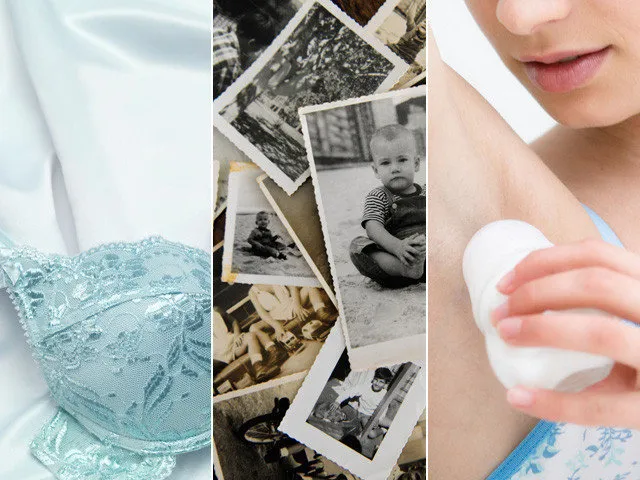
2. Myth: Wearing an underwire bra increases your risk of getting breast cancer.
Reality: Claims that underwire bras compress the lymphatic system of the breast, causing toxins to accumulate and cause breast cancer, have been widely debunked as unscientific. The consensus is that neither the type of bra you wear nor the tightness of your underwear or other clothing has any connection to breast cancer risk.
3. Myth: Most breast lumps are cancerous.
Reality: Roughly 80 percent of lumps in women's breasts are caused by benign (noncancerous) changes, cysts, or other conditions. Doctors encourage women to report any changes at all, however, because catching breast cancer early is so beneficial. Your doctor may recommend a mammogram, ultrasound or biopsy to determine whether a lump is cancerous.
More from Health.com:
4. Myth: Exposing a tumor to air during surgery causes cancer to spread.
Reality: Surgery doesn't cause breast cancer and it doesn't cause breast cancer to spread, as far as scientists can tell from the research so far. Your doctor may find out during surgery that your cancer is more widespread than previously thought, however. And some animal studies have shown that removing the primary tumor sometimes enables metastatic cancers to grow, but only temporarily; this has not been demonstrated in humans.
5. Myth: Breast implants can raise your cancer risk.
Reality: Women with breast implants are at no greater risk of getting breast cancer, according to research. Standard mammograms don't always work as well on these women, however, so additional X-rays are sometimes needed to more fully examine breast tissue.
6. Myth: All women have a 1-in-8 chance of getting breast cancer.
Reality: Your risk increases as you get older. A woman's chance of being diagnosed with breast cancer is about 1 in 233 when she's in her 30s and rises to 1 in 8 by the time she's reached 85.
7. Myth: Wearing antiperspirant increases your risk of getting breast cancer.
Reality: The American Cancer Society pooh-poohs this rumor, but admits that more research is needed. One small study did stumble on traces of parabens in a tiny sample of breast cancer tumors. Parabens, used as preservatives in some antiperspirants, have weak estrogen-like properties, but the study in question made no cause-and-effect connection between parabens and breast cancer, nor did it conclusively identify the source of the parabens found in tumors.
8. Myth: Small-breasted women have less chance of getting breast cancer.
Reality: There's no connection between the size of your breasts and your risk of getting breast cancer. Very large breasts may be harder to examine than small breasts, with clinical breast exams -- and even mammograms and MRIs -- more difficult to conduct. But all women, regardless of breast size, should commit to routine screenings and checkups.
9. Myth: Breast cancer always comes in the form of a lump.
Reality: A lump may indicate breast cancer (or one of many benign breast conditions), but women should also be on the alert for other kinds of changes that may be signs of cancer. These include swelling; skin irritation or dimpling; breast or nipple pain; nipple retraction (turning inward); redness, scaliness, or thickening of the nipple or breast skin; or a discharge other than breast milk. Breast cancer can also spread to underarm lymph nodes and cause swelling there before a tumor in the breast is large enough to be felt. On the other hand, a mammogram may pick up breast cancer that has no outward symptoms at all.
Women with a rare type of breast cancer called inflammatory breast cancer (IBC) rarely have a breast lump. Symptoms of IBC include swelling, redness, itchiness, or warmth in the breast; tenderness or pain; a change in the nipple, such as retraction; skin that appears thick and pitted like an orange peel or with ridges and small bumps; an area of the breast that looks bruised; or swollen lymph nodes under the arm.
Doctors encourage women to report any changes that they notice in their breasts.
10. Myth: You can't get breast cancer after a mastectomy.
Reality: Some women do get breast cancer after a mastectomy, sometimes at the site of the scar. Or the original cancer may have spread. For women at high risk of breast cancer who have their breasts removed as a prophylactic or preventive measure, there's still a chance, though a small one, that they can get breast cancer. After prophylactic mastectomy a woman's risk for developing breast cancer is reduced by an average of 90 percent.
11. Myth: Your father's family history of breast cancer doesn't affect your risk as much as your mother's.
Reality: Your father's family history of breast cancer is just as important as your mother's in understanding your risk. But to find out about the risk stemming from your father's side of the family, you need to look primarily at the women; while men do get breast cancer, women are more vulnerable to it. Associated cancers in men (such as early-onset prostate or colon cancer) on either side are also important to factor in when doing a full family-tree risk assessment.
12. Myth: Caffeine causes breast cancer.
Reality: No causal connection has been found between drinking caffeine and getting breast cancer; in fact, some research suggests that caffeine may actually lower your risk. So far it's inconclusive whether breast soreness may be linked to caffeine.
13. Myth: If you're at risk for breast cancer, there's little you can do but watch for the signs.
Reality: There's a lot that women can do to lower their risk, including losing weight if they're obese, getting regular exercise, lowering or eliminating alcohol consumption, being rigorous about examining their own breasts, and having regular clinical exams and mammograms. Quitting smoking wouldn't hurt either. Some high-risk women also choose to have a prophylactic mastectomy to decrease their risk by roughly 90 percent. They can take other proactive steps such as having regular MRIs, exploring chemo prevention with treatments such as tamoxifen, and participating in clinical trials. The important thing to do if you think you might be at high risk is to talk to an expert who can evaluate your situation and discuss your options. High-risk women's clinics and preventive-care programs are great places to start.
14. Myth: Women with lumpy breasts (also known as fibrocystic breast changes) have a higher risk of developing breast cancer.
Reality: In the past, women with lumpy, dense, or fibrocystic breasts were believed to be at higher risk of getting breast cancer, but there doesn't appear to be a connection after all. However, when you have lumpy breasts, it can be trickier to differentiate normal tissue from cancerous tissue, so you may experience false alarms. Women with fibrocystic breasts often follow up their mammograms with an ultrasound.
15. Myth: Annual mammograms expose you to so much radiation that they increase your risk of cancer.
Reality: While it's true that radiation is used in mammography, the amount is so small that any associated risks are tiny when compared to the huge preventive benefits reaped from the test. Mammograms can detect lumps well before they can be felt or otherwise noticed, and the earlier that lumps are caught, the better one's chances for survival. The American Cancer Society recommends that all women age 40 and older receive a screening mammogram every year.
16. Myth: Needle biopsies can disturb cancer cells and cause them to spread to other parts of the body.
Reality: There's no conclusive evidence for this claim. Despite some previous concerns, a 2004 study found no increased spread of canceramong patients undergoing needle biopsies compared to those who did not have the procedure.
17. Myth: After heart disease, breast cancer is the nation's leading killer of women.
Reality: Breast cancer kills roughly 40,000 women a year in the United States but stroke (96,000 deaths), lung cancer (71,000), and chronic lower respiratory disease (67,000) are each responsible for more deaths annually.
18. Myth: If your mammography report is negative, there is nothing else to worry about.
Reality: Despite their importance for breast cancer screening and diagnosis, mammograms fail to detect around 10 percent to 20 percent of breast cancers. This is why clinical breast exams and, to some extent, breast self-exams are crucial pieces of the screening process.
19. Myth: Hair straighteners cause breast cancer in African-American women.
Reality: A large 2007 study funded by the National Cancer Institute found no increase in breast cancer risk due to the use of hair straighteners or relaxers. Study participants included African-American women who had used straighteners seven or more times a year for 20 years or longer.
20. Myth: Removing the entire breast gives you a better chance of surviving cancer than having a lumpectomy with radiation therapy.
Reality: Survival rates are about the same for women who have mastectomies and for women who choose the breast-conserving option of removing only part of the breast and following the surgery with radiation treatments. However, there are some cases -- such as with extensive DCIS disease, the presence of BRCA gene mutations, or particularly large tumors -- when lumpectomy and radiation may not be an appropriate treatment option.
21. Myth: Overweight women have the same breast cancer risk as other women.
Reality: Being overweight or obese does increase your breast cancer risk -- especially if you're past menopause and/or you gained the weight later in life.
22. Myth: Fertility treatments increase the risk of getting breast cancer.
Reality: Given estrogen's connection to breast cancer, fertility treatments have come under suspicion -- most recently when Elizabeth Edwards's breast cancer recurred. (She'd previously had fertility treatments.) But several studies have found that these prospective moms are likely to have no higher risk of breast cancer. As yet, no large, long-term, randomized studies have eliminated this concern entirely; it merits more research to find a definite answer.
23. Myth: Living near power lines can cause breast cancer.
Reality: A 2003 study aimed at explaining what appeared to be a high incidence of breast cancer in certain counties on Long Island, N.Y., found no link between the disease and electromagnetic fields emitted by power lines. An earlier study conducted in the Seattle area yielded a similar conclusion. Research into potential environmental risk factors is ongoing.
24. Myth: Having an abortion raises your risk of getting breast cancer.
Reality: Because abortion is believed to disrupt hormone cycles during pregnancy and breast cancer is linked to hormone levels, numerous studies have investigated a causal link -- but found no conclusive evidence for one.
25. Myth: Breast cancer is preventable.
Reality: Alas, no. Although it is possible to identify risk factors (such as family history and inherited gene mutations) and make lifestyle changes that can lower your risk (reducing or eliminating alcohol consumption, losing weight, getting regular exercise and screenings, and quitting smoking), roughly 70 percent of women diagnosed with breast cancer have no identifiable risk factors, meaning that the disease occurs largely by chance and according to as-yet-unexplained factors. It's crucial, however, to get regular breast exams and mammograms and always consult with your doctor whenever you notice any changes in your breasts. When identified and caught early enough, breast cancer is treatable and very often beatable.