iPhone app iPad app Android phone app Android tablet app More

Right to Rent: The Foreclosure Crisis Solution Banks Love to Hate

Foreclosure

First Posted: 11/11/11 03:03 PM ET Updated: 11/11/11 05:45 PM ET

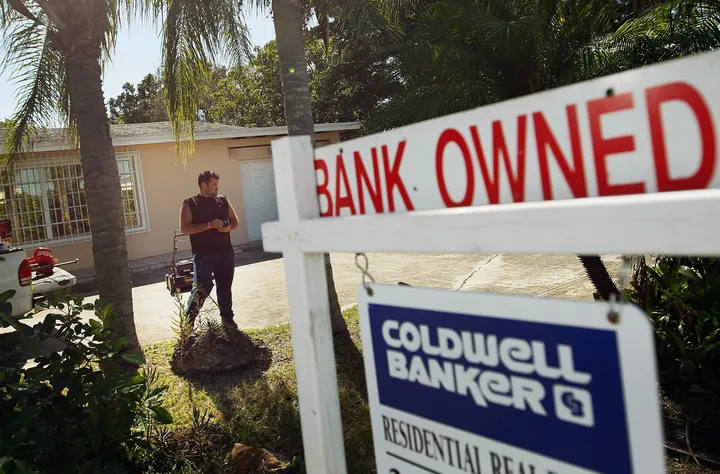
Brad Meyer occupies the real estate equivalent of the twilight zone. He lives in Milwaukee with his wife and children in the three-bedroom ranch house they purchased a decade ago. Except today, they rent it through American Homeowner Preservation, a small, Ohio-based company that purchases distressed properties and leases them back to the previous homeowner.

The rental program -- the brainchild of Dean Baker, co-director of the Center for Economic and Policy Research -- is part of a broader effort to identify alternatives to traditional foreclosure. Instead of having to give up their homes, delinquent borrowers are able to remain under their roofs, albeit as tenants.

"It's weird," Meyer said. "You have to remind yourself that it's not really your house anymore, at least for the time being. But you still have to maintain it as if it's your own, so there's some internal conflict there. We'd like to redo the kitchen, but it's not really our kitchen right now."

Five years into the national housing crisis, policymakers and mortgage industry officials are increasingly engaged in the pursuit of pragmatic alternatives to foreclosure, which has displaced millions of families and left properties vacant. Programs that allow homeowners to continue to rent the same properties they used to own have emerged as one potential fix.

Economists generally agree that a glut of foreclosed properties sitting on the market must be turned into productive homes for ordinary people. Vacant homes blight communities and devalue neighboring properties. Excess real estate inventory presses down on home prices in many communities, adding to the drag on the broader economy. Turning delinquent borrowers into rent-paying tenants presents one way to address these challenges.

"It's a reasonably good idea to try to move people headed down the foreclosure path to rental," said Mark Zandi, chief economist at Moody's Analytics.

But the details are both complex and controversial, confronting the same question that has dogged seemingly every effort to slow the foreclosure juggernaut: Who absorbs the financial loss when a homeowner who can no longer make payments is given relief -- the lender, the taxpayer or someone else?

In the plan Baker proposed in 2007, the former homeowner of a foreclosed property could remain in the house as a renter indefinitely, paying fair market rent as determined by an independent appraiser. Baker aimed to create an explicit homeowners' right to rent.

"After the foreclosure, the mortgage holder would now own the house and be free to sell it to another person," Baker wrote in Talking Points Memo. "But the former homeowner would still have the right to remain as a renter, regardless of who owned the house."

Though Baker's idea has been endorsed by a political hodgepodge, including Andrew Samwick, former chief economist on George W. Bush's Council of Economic Advisors; Simon Johnson, former chief economist of the IMF and Senators Dick Durbin (D-Ill.) and Chuck Shumer (D-N.Y.), the proposal remains controversial, because it would fundamentally change the foreclosure process while challenging the sanctity of contracts.

"If you're going to change the rules of the game for the current mortgage holders, that becomes a problem," Zandi said. "I feel uncomfortable about changing the law on someone who made investments or made decisions based on another set of laws. That's a very slippery slope and, I think, a very dangerous one."

Three years ago, Rep. Raul Grijalva (D-Ariz.) introduced the Saving Family Homes Act, a modified version of Baker's plan. It was designed to exclude speculators by limiting eligibility to homeowners who have been in their properties at least two years, and who only own one home. The proposed legislation never made it out of the House Committee on Financial Services.

"We had good support from conservative economists, from cities, towns, community banks and credit unions," Grijalva said. "But the bill endured serious opposition from large banking institutions and mortgage companies."

The primary objection from mortgage companies was that the plan would devalue homes that they acquired via foreclosure by forcing them to rent at distressed market rates, Grijalva said. But he dismisses that objection, asserting that the market itself has devalued the homes, not his bill.

Representatives at Bank of America, J.P. Morgan Chase and Wells Fargo -- three of the nation's largest mortgage companies -- either declined to comment or did not respond.

Last year, Grijalva and his co-sponsor Rep. Marcy Kaptur (D-Ohio) reintroduced the legislation as the Right to Rent Act. It is currently stuck in a Congressional no-man's-land, awaiting a hearing.

"All the housing programs, if you look at what's been going on the last three years, basically have been trying to negotiate with the banks," Kaptur said. "That hasn't been working very well. We need an approach that helps us transition from the large numbers of foreclosures to reoccupying them and stopping the damage that's being done across the country to communities and housing valuation itself."

The Obama Administration has signaled support for some type of rental program. In August, the Federal Housing Finance Agency, the Treasury Department and the Department of Housing and Urban Development jointly issued a request for ideas on how best to convert the 250,000 properties owned by Fannie Mae, Freddie Mac and the Federal Housing Administration into rental properties, either managed externally or sold in bulk to investors.

A senior administration official, who spoke on the condition that he not be named, said the approach gaining favor targets houses that have already completed the foreclosure process and are vacant. By contrast, Baker's proposal would give delinquent homeowners a right to rent even before the lender completes foreclosure proceedings.

For now, borrowers like Meyer who want to rent back their foreclosed homes are reliant on the willingness of individual mortgage-holders.

American Homeowner Preservation, the company that now owns Meyer's home, was founded in 2008. A profit-making venture, the firm negotiates with mortgage companies to purchase distressed homes, and then rents them back to their previous owners.

The company has completed roughly 400 transactions to date. That is both a testament to its growth, and a minute fraction of the roughly half-a-million foreclosed properties awaiting resale, with hundreds of thousands more yet to hit the market.

In Meyer's case, the company negotiated a so-called short sale -- a purchase for less than the value of the outstanding mortgage -- with his lender, Ocwen Financial Corporation. The deal went through only hours before Ocwen was to sign papers authorizing a sheriff's sale, the final step in the foreclosure process.

Once the owner of multiple restaurants, Meyer landed in bankruptcy in 2005. He was allowed to keep the home, but was prohibited from making mortgage payments during the seven-month restructuring process.

After he cleared bankruptcy and resumed payments, Ocwen raised his monthly payment from $1,100 to $1,900, citing delinquency fees. For four years, the Meyers made the higher payments, while also pursuing a loan modification that they hoped would lower their payments.

In 2009, Ocwen denied the Meyers' request for relief, citing the fact that their household income was nearly $100,000. Prepared to cut their losses and lose their home -- by then worth less than half of the $124,000 they had paid a decade earlier -- the Meyers stopped making payments. They still owed $150,000 on their mortgage.

A year later, Meyer began renting back the house for $1,150 a month. Though the rental payments do not count towards a down payment on the home, Meyer has five years to buy the house for a predetermined price of $85,000, which he hopes to do.

In the meantime, he is just happy to be able to stay in the home.

"We have three little girls," he says, "and they got to keep their rooms, which was refreshing. We didn’t have to explain why mommy and daddy are moving."

FOLLOW HUFFPOST BUSINESS
Subscribe to the HuffPost Money newsletter!
Brad Meyer occupies the real estate equivalent of the twilight zone. He lives in Milwaukee with his wife and children in the three-bedroom ranch house they purchased a decade ago. Except today, they r...
 
 
  • Comments
  • 1,342
  • Pending Comments
  • 0
  • View FAQ
Comments are closed for this entry
View All
Favorites
Highlights
Recency  | 
Popularity
Page: 1 2 3 4 5  Next ›  Last »  (18 total)
12:58 PM on 11/17/2011
"Who absorbs the financial loss when a homeowner who can no longer make payments is given relief -- the lender, the taxpayer or someone else? "

Am I missing something? It's not called "relief". It's called "the lender taking a risk on a loan in order to try to make a lot of money."

The LENDER took the risk, and probably made plenty on their leveraged mortgages. And the LENDER can absord THEIR losses when THEIR stupid loans turn out to be, well, stupid, and way too risky. When the risk pays off, it's great...you make a lot of money. Well, that happened. But when the risk comes back to bite you, you don't get to ask who should cover it. YOU DO!! And somebody ought to slap you for even having the balls to ask!
photo
HUFFPOST SUPER USER
rMatey
old, recovered Xtian, Liberal
11:09 AM on 11/15/2011
Oh, thank you kind banker. You've short-sold my house so I'm still owing you money. You bought it and now you want me to rent it from you????
Burn it down the next time.
04:09 PM on 11/14/2011
Sounds like their is some fraud going on at the banks. My company can help with that. We do mortgage audits all the time and find fraud. Contact me info at predma dot com.
ReaItors Are Liars
NAR is corrupt
05:38 PM on 11/14/2011
Sounds like you're attempting to screw debtors even more.

FLAGGED
05:59 PM on 11/14/2011
Not screw anyone. Just show debtors how the bank screwed them, and if they wish could use our findings to hire a lawyer to screw the bank for fraud.
12:23 PM on 11/14/2011
You call that a solution?
ReaItors Are Liars
NAR is corrupt
12:35 PM on 11/14/2011
The Problem: Grossly Inflated Housing Prices

The Solution: Dramatically Lower Housing Prices

The Solution is coming to every city, town and state in America.
photo
Ed Baker
All Hail Big Mother
12:23 PM on 11/14/2011
Look at that picture - global warming sure has changed the climate in Milwaukee - there are palm trees growing there now!!
photo
Ed Baker
All Hail Big Mother
12:02 PM on 11/14/2011
So why am I supposed to feel sorry for someone who makes $100k a year, runs up so much debt that he files for bankruptcy, then doesn't make any mortgage payments for 7 months?
ReaItors Are Liars
NAR is corrupt
07:42 AM on 11/14/2011
Unbelievable

"Realtors and banksters bribing congressmen to get and keep buyers ever deeper in debt"

http://www.washingtonpost.com/politics/congress-weighs-home-loan-limits/2011/11/09/gIQAdbvQ6M_story.html

Why are reaItors advising the public to buy housing when prices are falling?
photo
SeenItBefore
Ya want to super size that?
09:12 AM on 11/14/2011
You do understand everybody bribes Congress people. Our elected officials are in it for the money, pure and simple. Washington is totally devoid of morals, ethics and values.

People SHOULD look into buying assets when their value bottoms out. But, people, with herd instincts, tend to stand in line for gold at$1,800 an ounce... never considered buying 4 years ago when it was 1/3 that price. Some properties and houses are a good deal at the moment, IF one believes this country isn't in total economic collapse.

If the country is headed to hades on a sled, everything will be pretty much worthless, so, pay you dollar and takes your choice.
ReaItors Are Liars
NAR is corrupt
09:46 AM on 11/14/2011
If you think there are good deals on resale housing right now, you're going to pass out when the real deals appear over the next few years.
photo
HUFFPOST SUPER USER
Paul Sta
09:15 AM on 11/14/2011
For the same reason realtors told borrowers what a great investment housing is.
photo
HUFFPOST SUPER USER
Siebenstein
> there is no endless growth
06:59 AM on 11/14/2011
Part-3

Overnight, the bonds were to high risk securities, the community had to pay higher interest rates. In addition there were path-breaking tax revenues and the costs of tornadoes.
Billion-euro debt remain
The bankruptcy was only a matter of time. "The poorest paying the Bill now", says a resident of Jefferson County - for the greed of Wall Street bankers and the corrupt state district administration. 3 Billion dollar debt accounted for the financing of the new sewerage system. 1 Billion go to the account of the economic crisis.
The bankruptcy of Jefferson County meets the Bayrische Landesbank. BayernLB had to do with the waste water deal, but among the donors of the Alabama community with a 52-million loan. And Jefferson is not unique: America's car Centre Detroit and the cities of Harrisburg in Pennsylvania and Pritchard in Alabama are also acute at risk of bankruptcy.
• United States fear bankruptcies such as in Jefferson County [R. Sina, WDR Washington]

The best my translater could do:-(
photo
HUFFPOST SUPER USER
Siebenstein
> there is no endless growth
06:58 AM on 11/14/2011
Part-2

That was irresponsible, says Debbye Guye of the Jefferson prison administration of the local TV station. "We are much less than the US federal guidelines require it here." We were always already almost filled. "But this situation brings us now also in danger."
Only the first of many bankruptcies?
Local authorities are essential in the economically weak U.S. Democratic Alabama. Therefore, for many, the bankruptcy of a whole district is a disaster. And he makes national headlines.
The four billion dollar bankruptcy has made the District of Jefferson and Birmingham's capital overnight to the deterrent example of urban mismanagement and corruption. Investors will make a very wide arc around this circle. And the 650,000 residents expect a fee explosion, reports the local radio station - as in the waste water.
"Disinterested tips" bankers
The Birmingham disaster had begun already in the 1990s with the totally overpriced and oversized renovation of urban sewage. The project is no problem at all, suggested Wall Street bankers.
Jefferson County should simply print bonds, or bonds, such as the American State also do it. We'll keep the debt already tricky low, the Manager promised the US bank JPMorgan Chase.
Helped by bribery
Municipal employees were simply bribed to come with Jefferson County in the business. But then came the great financial bubble 2008. Somewhat banking giants like Lehman and two finance companies, which had insured the bonds of Jefferson County, also collapsed.
photo
HUFFPOST SUPER USER
Siebenstein
> there is no endless growth
06:57 AM on 11/14/2011
Part-1

Bankruptcy of the entire U.S. District
Setting in the sewers
Wily banker and corrupt employees pushed a whole district in the bust in the United States. In Jefferson County, Alabama, United States, billion-euro debt charge because the commune a totally overpriced regeneration project talk to themselves. The citizens paying the Bill.
By Ralph Sina, WDR Radio Studio Washington
The bankruptcy of an entire American District along with its capital at Birmingham is a new situation for all says David Carrington, the Commission President of Jefferson County in the U.S. Democratic Alabama. "We as entering new territory and must learn all", so the Chairman of the County.
Jennifer Brown from Jefferson County had the learning experience already behind him. The municipal employees was announced already a month ago, as already started the countdown to the largest bankruptcy of a community in the history of the United States. "It's devastating," the single mother says the broadcaster CBS.
For two weeks she cried only. And now, where the municipality bankrupt have stated, she must fear even the food brand.
Saved themselves in prison
Just as Jennifer Brown, it is many other employees of Jefferson County. In the prison of the district, the cell population in the future are largely left to itself. Because of the empty town cashier and a debt billions of dollars in a part-time must oversee now 100 prisoners.
photo
HUFFPOST SUPER USER
Siebenstein
> there is no endless growth
06:46 AM on 11/14/2011
Amazing that we don't hear this. I just got this from my mom. If you can read German fine, otherwise you could translate it with your Microsoft Translation, if you are interested.

Its about JP Morgan Chase and how they made a whole city --Birmingham--go down the drains.

OWS !!

Here you go: http://www.tagesschau.de/wirtschaft/alabama148.html
photo
HUFFPOST SUPER USER
Siebenstein
> there is no endless growth
02:17 AM on 11/14/2011
This is ridiculous.
If you want to stay sane and save your health, do not stay in the home that has been foreclsoed on you and now crushes your self-esteem even further by being the renter of your own place.
Go rent another place and leave the betrayal and theft by the bank behind--far behind.

Bad idea? You bet !
ReaItors Are Liars
NAR is corrupt
07:36 AM on 11/14/2011
Why do you reaItors and bankers want people to continue to make inflated payments on a rapidly depreciating house?
photo
SeenItBefore
Ya want to super size that?
09:02 AM on 11/14/2011
Hey, a lot of 'really' smart investment counselors put their clients into Cisco in 1999 when it hit $120/share. Then let them ride the dot/com bubble down till their investments were worth half or less.

The home owner should have called BS when they were earning $15,000 a month, with three kids and a new pick up and discovered they qualified for a nothing down $250,000 home. The realtors did not make this possible, the lenders did. And the lenders are the ones who then groveled at the feet of our elected officials and got bailed out.

I have never met a realtor who got a bail out check.
photo
MichaelMcKLA
I'm moving to Pandora.
08:49 PM on 11/14/2011
Because they want the money. :)
02:52 PM on 11/13/2011
Right to rent?
Niet!
photo
HUFFPOST SUPER USER
munki
Global to Local now Local to Global
02:34 PM on 11/13/2011
Flex payment during downturn with minimum... May work... Have to think through, perhaps with a 5 year cap?
11:04 AM on 11/13/2011
Many of us may have fallen victim to this housing fraud, but we are not door mats. These banks hold the majority of the wealth and a lot of power, but it's still our money that gives them this power. Let's take back our economy, REMOVE your money from these big banks and find a credit union or small local bank to do business with.

If your house is underwater or you're behind on your payments and the banks aren't willing to work with you to modify the loan. MODIFY it yourself, send them reduced payments. We can't support the economy if all our money is tied up in an overpriced home while the cost of living is steadily increasing and our wages are falling. Our elected officials are bought and paid for by the lobbyist of big business.

The BOTTOM LINE, The BANKS would rather BANKRUPT you than give up their bonuses.

WE need to stop BLAMING each other and band together to correct our economy.

WE HAVE THE POWER! WE JUST NEED TO DO IT!
photo
HUFFPOST SUPER USER
IndyFem
11:24 AM on 11/13/2011
Problem is that if you send them a smaller payment than what is due....they will still consider you "delinquent" for that month. Better off to just pay nothing at all...or you're just throwing good money after bad.
12:09 PM on 11/13/2011
You have a good point and each homeowner can make that decision to make a partial or NO payment..

We just have to band together to let them know we're serious about taking our economy back and ending their GREED!

If any of you have a facebook page....please post it there.
02:53 PM on 11/13/2011
Deadbeat 101.
This user has chosen to opt out of the Badges program
07:59 PM on 11/13/2011
BOTTOM LINE, the bank PAID cold hard capital (from someone else's hard-earned mortgage payments, deposits, etc.) for "your" house, and it's not YOUR money that's tied up in the home YOU'VE been living in and are now refusing to pay for.

Soooo, which is greedier? The bank that PAID for the house... or the folks who want to live for free in the same house the BANK paid for?

Newsflash: Banks aren't Landlords and it doesn't benefit a bank one bit to foreclose.
photo
Ed Baker
All Hail Big Mother
12:05 PM on 11/14/2011
And this guy makes $10k a month.... but can't pay his mortgage payment? Ran up so much debt that he had to go BK? He defaulted - and not by accident - who can blame him? He gets to live in his house for much less per month and stick the lender with the loss.