iPhone app iPad app Android phone app Android tablet app More

Insomnia In The U.S. Is Still A Pressing Public Health Problem, Study Shows

Insomnia

Posted: 01/20/12 08:29 AM ET

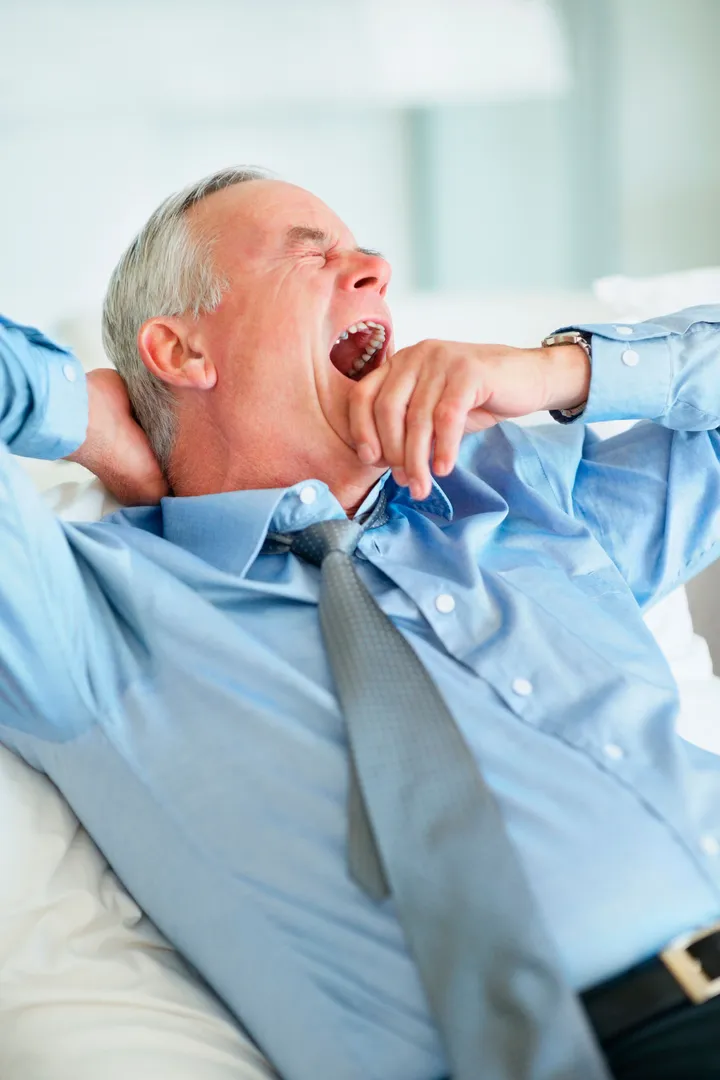
Sleep is a major problem for many Americans, according to a new report that acts as a kind of "state-of-insomnia" in the U.S. The review, published online Thursday night by the medical journal The Lancet, finds that nearly a quarter of adults are unhappy with their sleep patterns, while up to 10 percent meet the criteria for full-fledged insomnia -- putting them at a greater risk for depression, hypertension and diabetes.

"Insomnia has traditionally been trivialized," paper co-author Charles Morin, Ph.D, a sleep researcher and professor at the Universite Laval in Quebec City, told HuffPost. "Now that we know a little bit more about its long-term consequences, it's getting a bit more attention."

More attention, maybe, but experts agree that insomnia remains a pressing public health problem.

To better assess just how pressing it is, researchers studied several scientific databases, synthesizing findings from major original studies, meta-analyses and systemic reviews from the last five or so years.

Their results spotlight a need to better identify and treat insomnia early, given the sleep disorder's association with other serious health consequences. As an example, the authors cite a 2002 report suggesting that insomniacs are more than twice as likely to have congestive heart failure than individuals without the disorder, and five times as likely to have anxiety or depression.

They also write that long-term studies suggest insomnia may be a risk factor for numerous psychological disorders, including "substance misuse."

Yet despite this information having been available for years, much insomnia still goes undiagnosed and untreated, Morin said. He recommended that anyone having trouble falling or staying asleep several nights a week over the course of several weeks without a clear explanation should consider seeking professional help.

"Insomnia remains vastly under-diagnosed," agreed Russell Rosenberg, Ph.D, a board-certified sleep specialist and HuffPost blogger who was not associated with the report.

"There's still a fair amount of confusion about where to go for help, and what kind of help there is for this very common -- if not the most common -- sleep disorder," he continued.

If there is a bright spot in the new report, it is that treatment is, indeed, possible.

A 2005 National Institute of Health conference concluded that there is "adequate" evidence supporting the effectiveness of cognitive behavioral therapy and benzodiazepine receptor agonists, or hypnotics, in treating chronic insomnia. The former is a drug-free process done with a therapist and typically conducted in up to six weekly sessions, though the process is tailored to individuals.

"CBT produces sleep improvements that are sustained over time, which is a clear advantage compared with drug treatment," the report's authors write.

However, CBT is often not readily available, as relatively few clinicians are properly trained in it. Because of that, the paper's authors call for research into the efficacy of alternate treatment delivery models, like support groups and telephone consultations, to help treat insomnia. They also call for research into new drugs not currently approved by the Food and Drug Administration for the primary use of treating the sleep disorder.

"There's no single treatment that works for everyone," Morin said, adding that people should not assume sleep problems will take care of themselves, and that health care providers should pay close attention to the various treatment options. "We should really keep our eyes open."

FOLLOW HUFFPOST HEALTHY LIVING

Sleep is a major problem for many Americans, according to a new report that acts as a kind of "state-of-insomnia" in the U.S. The review, published online Thursday night by the medical journal The Lan...
 
 
  • Comments
  • 48
  • Pending Comments
  • 0
  • View FAQ
Post Comment Preview Comment
To reply to a Comment: Click "Reply" at the bottom of the comment; after being approved your comment will appear directly underneath the comment you replied to.
View All
Favorites
Recency  | 
Popularity
Page: 1 2  Next ›  Last »  (2 total)
photo
HUFFPOST SUPER USER
Willow712
democratic socialst
08:16 AM on 02/10/2012
I'm a nurse (see? Micro bio says it too). I've worked night shift probably 15 out of 20 years. And while I am sure there are real insomniacs in this world, i think there is a much larger group of people that perceive their night's sleep as insomnia. I cannot tell you how many people I have checked on every hour, to hear their snoring and deep long slow breaths. and in the am when they wake up to tell me that they tossed and turned all night. Some of these people that think they sleep 1-5 hours, are probably sleeping much more than they think they are. Surely they aren't just sound asleep only when I check on them. I think 20 minutes in the middle of the night seems to be hours long. Sure, I know that there are some insomniacs out there, but my night shift checks every hour don't add up to the people who tell me they hardly ever sleep.
05:45 AM on 01/24/2012
Not many answers. I get 5-51/2 hrs at a time. I've worked graveyard for the better part of 30yrs. At 56yrs old, 5hrs just isn't cutting it when working a 12hr shift. I do get naps in on some days...45min to an hr. A beer or a shot doesn't seem to help.I quit pot years ago...maybe I should take it up again, I did sleep better.
02:41 AM on 01/22/2012
Folks who have too many responsibilities and thus suffer from sleep deprivation due to inadequate time for sleep probably have the same health impacts as insomniacs and I'd guess are probably at least twice as common, so lack of sleep is putting us all at risk since there are so many folks on the road while sleep deprived. Some of my past jobs did this to me. I wish there was more of an effort to address this problem. Even folks who don't have salaried jobs that cause them to do unpaid overtime and are able to keep their work to no more than 40 hours a week often have parenting or caretaking roles at home that deprive them of sleep. I wish we had a comprehensive public transit option for all so that sleep deprived folks weren't behind the wheel, and could nap on their way to work.
photo
HUFFPOST COMMUNITY MODERATOR
Phoebe917
old hermit who lives in the woods
08:54 PM on 01/21/2012
i need about 8-10 hours a night. sometimes it is hard to fall asleep, ( my mind has a habit of racing) so i have a "night cap". puts my worried little behind right to sleep and i wake up fairly refreshed and ready to face the day. (unless it is one of those nights when one of my doggies needs to go out and i need to haul myself out of bed to let him/her out)
photo
HUFFPOST SUPER USER
WhereIsTheTruth
We need more chlorine in the gene pool!
04:18 PM on 01/21/2012
CBT is an acronym commonly used for something other than Cognitive Behavioral Therapy... I think CBT is more likely to keep you awake, but it may be helpful afterwards. What I do know is that I'm not going to try it!
joefoss
They'll never take my panache!
03:44 PM on 01/21/2012
What a surprise. There's a problem and the American medical establishment recommends drugs
as the solution.
=There certainly may be individuals suffering from such a debilitating form of insomnia that they might require medication, at least as an initial treatment. But, for most of us, sleep problems are a symptom not a cause--and it's the causes that need to be treated.
=I bet 90% of people with "insomina" have lifestyle issues that interfere with the body's natural
sleep rhythms. Hardly shocking in a country where 1 out of 5 women, for example, are on some kind of anti-depressant medication, a known factor in messing up sleep routines. Overall,
I imagine it would be hard to find an American adult who doesn't use some kind of
"drug" to cope--whether it's prescription medicine, illegal substances, or alcohol or food in excess.
=The best cure for most "sleep disorders" is to end those habits and put the individual on a healthy routine that involves proper nutrition, exercise and, since stress is a contributing factor in severe cases, counseling.
=Often, the answer is as simple as, instead of having those 2 or 3 drinks after work,
go to the gym; or, instead of a nap after dinner, take a nice, relaxing walk.
Sadly, these "common sense" suggestions are the last things patients are likely to hear from U.S. physicians, who are themselves overworked, overscheduled and over-stressed.
photo
HUFFPOST SUPER USER
Afterschool Carl
02:30 PM on 01/21/2012
My brother gets good sleep whenever I knock him out. Does that count?
nothingchanges
too soon old, too late smart
02:26 PM on 01/21/2012
Based on personal experience, I would have to say that most Doctors don't take it seriously.

"It's a normal part of the aging process" is the refrain I've most often heard.
11:11 AM on 01/21/2012
Zombie powder and a nice big tall glass of mad dog 20/20 should work.
photo
HUFFPOST SUPER USER
littleraerae
10:41 AM on 01/21/2012
Wow, what a waste of time. I read this hoping to find maybe a thing called "news" or maybe helpful advice. I received neither. Not sleeping for long periods of time causes health problems?? Who knew!?
This user has chosen to opt out of the Badges program
photo
10:07 AM on 01/21/2012
Legalize marijuana! Google it!!

http://www.justicepartyusa.net/
photo
HUFFPOST SUPER USER
Tikiman
Just out taking my dogma for a walk.
01:54 PM on 01/21/2012
Agreed, I sleep like a baby after some good OG.
10:10 PM on 01/21/2012
x3.
photo
HUFFPOST SUPER USER
spkninglsh
'Poor' Fridge Owner
07:16 AM on 01/21/2012
4:16 am and I'm reading insomnia articles.
photo
HUFFPOST COMMUNITY MODERATOR
CabinAgue
We are ALL in this together.
02:35 PM on 01/21/2012
Did it help? :)
photo
HUFFPOST SUPER USER
spkninglsh
'Poor' Fridge Owner
04:10 PM on 01/21/2012
Haha eventually!
02:23 AM on 01/21/2012
It’s no wonder insomnia is a growing problem, just look at the sea of electromagnetic fields most people are living. All these wireless devices (cell phones, modems etc) and other electromagnetic field emitting technologies don’t just create stress, studies show there are adverse biological effects. Oxidative stress and a reduction in melatonin (the sleep hormone) are two of the best documented. Do yourself a favor rid your bedroom of cell phones, cordless phones, switch off your WiFi and replace your electric clock radio with a battery version.
09:32 PM on 01/20/2012
a high CBD strain of cannabis works very well and doesn't leave you groggy the next day
photo
HUFFPOST SUPER USER
spkninglsh
'Poor' Fridge Owner
07:15 AM on 01/21/2012
CBD?
10:09 PM on 01/21/2012
http://en.wikipedia.org/wiki/Cannabidiol

Since most sources of cannabis won't know the specific CBD (or other cannabinoids) content of a paticular strain/harvest/sample, just try to find strains that are considered to be Indica dominant. Only thing that's ever helped with my sleep issues.
photo
HUFFPOST SUPER USER
Marc1940
09:18 PM on 01/20/2012
The doc gave me sleeping pills. I have never slept better and no side effects. Age will do it to you. I guess I could run a mile before bedtime. Nope. Sleeping pils.
This user has chosen to opt out of the Badges program
photo
10:04 AM on 01/21/2012
Smoke pot at the end of the day. Far less harmful.
photo
HUFFPOST SUPER USER
Stoopid American
Trooth, justice, and the American way ...
01:58 PM on 01/21/2012
Hm. Not sure I agree pot is a treatment for insomnia. In my experience, I am too interested in what I am thinking about to drift off. Certainly it has many medical uses, but I'd be interested to see a study whether this is one of them.
photo
HUFFPOST SUPER USER
Unshriven
I ALWAYS vote.
03:39 PM on 01/21/2012
Unless you are prone to cardiac arrythmia, in which case it is a bad idea.
11:28 AM on 01/24/2012
Sleeping pills have no side effects? Try taking benzos daily for a good period of time and then attempt to withdraw. When, as a result of the very long and insidiuos withdrawal process from benzos, if in fact you are successful, where chances are good you will lose your financial stability, the most important relationships in your life and your health, then tell me again how you believe there are no side effects.
photo
HUFFPOST SUPER USER
Marc1940
12:46 PM on 01/24/2012
Holy crap. I take a mild sleeping aid called Zolpidem. It makes my days better and I having lost any money or relationships. This sleeping disorder started about age 70. I have no side effects except I feel great when I wake up.