
Ben Hallman reported and wrote this story as a staff writer at the Center for Public Integrity. He recently joined The Huffington Post.
Like millions of stories from the great recession, this one begins with homeowners struggling to keep up with a mortgage payment they simply couldn't afford.
By 2009, the adjustable interest rate for Cassandra and Bernard Gray's Durham, N.C., home loan had spiked to more than 12 percent. "I didn't know if we were going to be on the street or in a shelter," Cassandra recalls. "We couldn't afford groceries. It got pretty bad."
They were thrilled to sign up for a modification plan with their loan servicer, GMAC Home Mortgage, Cassandra Gray said.
The modification lowered their payment from $1,128 to $768 per month. But after three months, GMAC began returning their payments, the Grays claim in a complaint filed with the North Carolina Commissioner of Banks.
GMAC customer service representatives told them there was a "computer glitch" and that the problem would be resolved. Instead, GMAC twice started a foreclosure action.
GMAC claimed it had no record of any payment being received. The Grays have submitted bank statements that appear to show GMAC returning the $768 payment -- several times. GMAC has since assessed more than $20,000 in interest and fees.
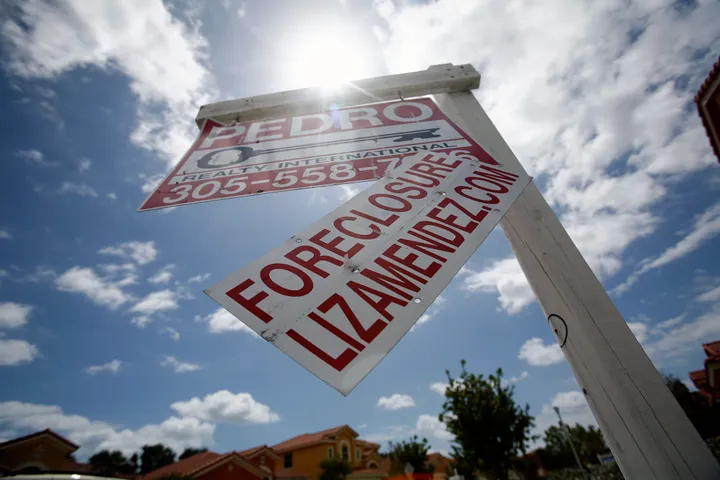
"I thought I was doing the correct thing" by obtaining a loan modification, Cassandra Gray said in a recent interview. "But I came home one day and there was a foreclosure notice on my door and a sign in my yard. I called constantly, but it was as if the dots were not connecting."
A North Carolina clerk of court recently dismissed the foreclosure on grounds that GMAC had not properly demonstrated that it had standing to bring a foreclosure. But once GMAC gets its documentation in order, the loan servicer can foreclose again.
GMAC said it could not comment without borrower consent. The Grays did not sign a form authorizing the lender to talk about their case. But the lender did say that it is "working directly with the borrower to address their claims."
Since 2007, nearly 9 million homes have been lost to foreclosure, according to data from RealtyTrac. About 4 million are currently in default on or in some stage of foreclosure. Some of these homeowners saw their payments skyrocket, some lost their jobs, and some bought a more expensive home than they could afford.
But many, like the Grays, say that their foreclosures or defaults were triggered by an error made by the mortgage servicing company. Common errors include late fees generated through questionable accounting and imposed without notice, excessive charges for property inspections and maintenance, and inflated or unnecessary attorneys' fees.
Many homeowners who have tried to correct what seem to be simple accounting mistakes say that the servicers -- often, an arm of a major bank -- are unable or unwilling to help them resolve even the most basic problems.
"Every time I would call I'd get a different person," said William Allen, a retiree near Baltimore who is fighting a Bank of America foreclosure. "I worked on it nearly a year and it didn't do me any good."
Most banks and independent loan servicers now say that they have cleared the decks on systemic problems that led to the errors and that they now make it much easier for homeowners to easily resolve their problems with bank representatives.
Federal regulators also say they have done their part: last year, Bank of America, Wells Fargo, JPMorgan Chase and other big servicers agreed to give more than 4 million borrowers who were in some stage of foreclosure between Jan. 1, 2009, and Dec. 31, 2010, the option of an independent audit of their loan account.
But veterans of the foreclosure wars tell a different story. More than four years after reports of these kinds of errors began bubbling to the surface, homeowners are still fighting to fix servicer mistakes that threaten their homes, they say.
"Almost all loans in default have something wrong with them," said Tara Twomey, a lawyer at the National Consumer Law Center who recently completed a study of the servicing industry.
Negotiations over a proposed $25 billion settlement with the states over the use of robo-signers to speed foreclosures and other servicing mistakes are ongoing. California rejected the proposal Wednesday.
So why are things such a mess?
Much of the blame can be directed at a foreclosure machine created during the housing boom to deal with the mad rush of mortgage applications. The automated system prizes efficiency over customer service, makes frequent errors in the administration of troubled home loans, and, according to one study, pays servicers more for foreclosures than loan modifications.
"They don't want to spend enough money to not make mistakes," said Kurt Eggert, a law professor at Chapman University, who testified about servicing errors at a Senate hearing in 2010 and has written extensively about the industry.
Machine created to feed Wall Street
Many of the problems in the modern loan servicing business can be traced back 30 years to the invention of the mortgage-backed security.
In the early 1980s, the wizards on Wall Street learned they could convert humdrum home loans into financial instruments -- a process known as securitization -- enriching themselves as investors gobbled them up. By the early 2000s, securitization was standard practice among all of the largest lenders.
Most home loans are bought by Wall Street banks or by Fannie Mae and Freddie Mac, bundled together and placed into pools of 5,000 or more. They are then sliced up and sold as securities. Mortgage servicers bid on the rights to manage these loan pools before they are sold to investors.
Often, the servicer is a branch of the same Wall Street bank that created the investment. Bank of America, which acquired Countrywide's notoriously troubled loan portfolio (along with its legal headaches), is the biggest servicer, managing 12.5 million loans.
The basic job is straightforward: servicers collect payments and pass them along to the trust that represents the investors. They are also responsible for handling foreclosures. In exchange, servicers typically collect one-half of 1 percent of the value of the outstanding loans each year in fees.
For a $200,000 loan to a borrower with good credit, a servicer might collect about $50 per month, with income dipping slowly as the balance of the loan drops. Servicers also make money from the "float" -- interest earned during the short time the servicer holds the loan payment.
During the boom years, from 2002-2007, when few loans defaulted, profits soared, with margins averaging about 20 percent. Lenders with big servicing arms made piles of money from originating loans, packaging them for sale to investors, and then at the back end, from collecting fees from investors to service the loans.
Eventually, the wheels came off. Securitization encouraged lenders to stop caring whether the loans they were making were sound. Mortgage giants like Countrywide approved as many loans as possible knowing that Wall Street would purchase them, no matter how toxic.
The bankers, in turn, packaged the securities and sold them with gold-plated ratings to investors such as large pension funds and foreign banks. When the lending market dried up, so did new servicing contracts. Defaults and foreclosures soared.
But rather than hire and train enough employees to personally manage troubled loans in a way that minimizes foreclosures and encourages loan modifications, servicers entrusted management of troubled loans to old computer software that legal experts say isn't up to the task.
The end result is a system with little accountability and a whole lot of angry homeowners.
It is impossible to know how many loans have been subject to wrongful fees and accounting errors, but foreclosure war veterans say the number is high.
Jay Patterson, a forensic accountant who has examined hundreds of mortgage loans in bankruptcy or foreclosure, said that "95 percent of these loans contain some kind of mistake," from an unnecessary $15 late fee to thousands of dollars in fees and charges stemming from a single mistake that snowballs into a wrongful foreclosure.
Invalid charges
By September 2005, New Orleans homeowner Dorothy Stewart and her since-deceased husband had filed twice for bankruptcy protection and were having frequent problems keeping current with the payments on the small home they bought six years previous.
On Sept. 12, agents working for Wells Fargo Home Loans generated two "broker price opinions"--estimates, basically, of the value of the Stewart home. As loan servicer, Wells Fargo was in charge of collecting payments and managing a default or foreclosure if the borrowers fell behind.
A charge of $125 for each opinion was posted to the Stewart's mortgage account. There was only one problem -- Jefferson Parish, where the home was located, was under an evacuation order and closed to all but emergency personnel, thanks to Hurricane Katrina.
In an April 2008 ruling, Elizabeth Magner, a U.S. bankruptcy judge in New Orleans, rejected the two charges as invalid. She also disallowed 43 home inspections, 39 late charges, and thousands of dollars in legal fees charged to the Stewarts' account.
Almost every disallowed fee was imposed while the Stewarts were making regular monthly payments on their home, the judge said.
The charges were assessed under circumstances contrary to Wells Fargo policy and were "unreasonable under the circumstances," she ruled, after spending months unraveling the complicated loan file.
Magner determined that Wells Fargo had been "duplicitous and misleading" and ordered the bank to pay $27,000 in damages and attorneys' fees. She also took the unusual step of requiring the servicer to audit about 400 home loan files in cases in the Eastern District of Louisiana.
Wells fought successfully to keep the results of the audit under seal, and last summer a federal appeals court overturned the part of Magner's ruling that required the audit. But two people familiar with the results told iWatch News that Wells Fargo’s audit had turned up accounting errors in nearly every loan file it reviewed.
Wells Fargo declined to comment on the Stewart case or the subsequent audit.
Problems occur everywhere
Magner, the New Orleans judge, has dug into the accounts of more than 20 borrowers in her court since the Stewart case and found mistakes in every one of them, she said in a recent interview.
"These are loans of working-class people who bought homes they could afford and whose loans were not administered correctly from an accounting perspective," she said. "I think that these types of problems occur in almost every [defaulted] loan in the country."
So far, the most muscular attempts to rein in mortgage servicer bad practices have come in U.S. bankruptcy courts, where many judges, including Magner, have an accounting background. Justices in New York, Texas, Mississippi, Louisiana, North Carolina, California, and Massachusetts have sanctioned servicers for abusive practices.
In a 2010 ruling, David Houston III, a U.S. bankruptcy judge in Aberdeen, Miss., ordered American Home Mortgage Servicing Inc. to pay borrower Glen Cothern's legal expenses due to its "egregious" conduct. The judge noted the "obvious mental anxiety, stress, and frustration" Cothern suffered when the servicer charged him for insurance he didn't need, triggering two wrongful foreclosures and a customer-care experience that the judge described as "Kafkaesque."
Stephani Humrickhouse, a federal bankruptcy judge in Raleigh, N.C., ordered Ocwen Financial Corp. to pay more than $70,000 for incorrectly reporting the mortgage of a couple as being in foreclosure. Ocwen still had not repaired the borrowers' credit more than two years after they brought the accounting mistake to the servicer's attention, the judge noted.
Due, in part, to the efforts of federal bankruptcy court judges, the U.S. Supreme Court amended bankruptcy rules to require servicers to include "an itemized statement of the interest, fees, expenses, or charges" with any claim they make in a bankruptcy filing involving an individual debtor. That rule went into effect December 1.
Phantom default
When a borrower defaults on a loan, servicers are still on the hook for making monthly payments to investors.
This would seem a strong incentive to do everything possible to help homeowners avoid a default, which is usually what investors want. But the system isn't necessarily set up that way.
Servicers can charge fees for late payments, title searches, property upkeep, inspections, appraisals and legal services that can total hundreds of dollars each month and can all be charged against a homeowner's account. Servicers have first dibs on recouping those fees if a foreclosed home is sold at auction, meaning they usually collect no matter what.
These fees can be lucrative. In 2010, Ocwen reported $32.8 million in revenue from late fees alone, representing 9 percent of its total revenue.
Before Countrywide imploded, late fees reportedly covered the company's entire servicing operating costs, leaving its servicing fees and float as pure profit.
Christine Jackson, an Indiana consumer lawyer and retired Internal Revenue Service fraud investigator, said accounting mistakes are often to blame when modifications fall apart.
The problem she sees most often is when the loan servicer fails to advance the due date on its computer to reflect the new due date on the loan modification. So a homeowner might make her last payment under the old mortgage in July, and start making new, lower payments on a modified loan in September.
But the mortgage servicer mistakenly applies the first payment to the August balance. Because the payment amount under the modification is less than what the borrower previously paid, the computer assesses a late fee.
Late fees then continue to accumulate whether they are appropriate or not, eventually triggering a default. Jackson--who is fighting what she claims are wrongful insurance charges on her own home loan--calls this situation “phantom default.”
"The simplest mistakes can take 18 months to two years to correct," Jackson said.
Servicer was wrong, wrong and wrong
One of the most searing rebukes to a loan servicer came last year from Judge Diane Weiss Sigmund, a federal bankruptcy judge in Philadelphia who sanctioned HSBC and its attorneys for failing to check whether computer-generated documents in a bankruptcy case were true before submitting them to the court.
The documents were wrong about the value of the home, the amount of the monthly payment, and falsely stated that the homeowners, Niles and Angela Taylor, had missed payments that they had actually made, the judge concluded.
"The thoughtless mechanical employment of computer-driven models and communications to inexpensively traverse the path to foreclosure offends the integrity of our American bankruptcy system," Sigmund wrote. A U.S. district judge reversed the sanctions she imposed, but eventually a federal appeals court reimposed most of them.
Alan White, a professor at Valparaiso University Law School who has written about foreclosures, said he doesn't think that there is any “evil intent,” but rather "neglect."
"They are unwilling to devote the resources," he said. "The technology used with servicing hasn't kept up with complexities of modifications and foreclosures."
Kathy Holler, a consumer activist in Pennsylvania, disagrees.
"It is by design," she said of servicer errors. "You never see credit unions doing this. The servicers take unsuspecting people and put them out on a financial tightrope."
Kept in the dark
William Allen and his wife Ann, a garrulous elderly couple, are fighting to keep their home in a picturesque mill town near Baltimore where they raised six children. Their troubles began in 2007 when a third-party service they hired to pay down their loan faster missed a single payment.
In a federal lawsuit filed earlier this year, the Allens claim they were not aware anything was amiss until a year later when they received a letter from Bank of America, which had recently purchased the servicing rights on their loan, demanding $2,752 to bring the loan current.
Their normal monthly payment was just over $900. No one at Bank of America ever alerted them that there was a problem with a payment, the Allens claim. Nor were any of their many attempts by phone to resolve what they say seemed like a minor accounting mistake successful.
The Allens allege that Bank of America saddled their account with more than $6,000 in unnecessary fees and charges stemming from misapplied mortgage payments, home insurance they didn't need, and a wrongful foreclosure, violating federal law and servicing guidelines set by Fannie Mae, which owns their loan.
Bank of America did not respond to requests for comment, but in a court filing said that the default fees are justified because the Allens missed several payments.
William Allen said he suffered sleepless nights and a flare up of his diabetes as he sought to resolve a problem he didn’t understand.
"We ain't never sued anybody in our lives," Ann Allen said. "We just want this all to go away."
'Rolling default'
One of the accounting errors that the Allens allege that Bank of America made in calculating their loan balance was the misapplication of their mortgage payments to late fees the servicer had assessed.
An accountant who reviewed a partial loan history at the request of iWatch News said that the servicer appears to have improperly paid itself $601 for fees it had assessed on one occasion and $45 on three other dates. Fannie Mae and Freddie Mac servicing guidelines (page 301-2) say that payments on loans made after 1999 must be applied first to any outstanding interest and principal before a servicer can pay itself any late fees.
"They have these rules, but servicers universally ignore them," said O. Max Gardner III., a North Carolina bankruptcy attorney. Payment application order is important because when a servicer deducts fees first, not enough is left over to cover the monthly bill.
This can trigger what consumer lawyers call a "rolling default" as fees and charges snowball until the servicer decides to foreclose. (Some banks have argued in court that loan agreements between borrowers and lenders entitle them to collect late fees first.)
A recent academic study found that mortgage servicers can make more money from a defaulted loan in some instances than they can from a healthy loan, or even from modifying a home loan.
Adam Levitin, a professor at Georgetown Law School and Twomey with the National Consumer Law Center, concluded in a recent article published by the Yale Journal of Regulation that a loan kept in default for a year or two can prove more profitable to a servicer than a typical healthy, performing loan.
The "cost-plus" structure, they write, gives the servicer "an incentive to levy as many fees as it can, as [those fees] will be paid off the top of the foreclosure sale proceeds."
"The potential incentive misalignments from this form of compensation are so severe that it is prohibited for most federal government contracts," the authors write.
Loan servicers that responded to requests for comment say there is no financial incentive for them to pursue a foreclosure.
"It's generally in the servicer's best business interest to keep loans performing and out of default," said Paul Koches, the general counsel for Ocwen, a large subprime loan servicer. "Consequently, it's usually good business to take advantage of any opportunity to modify a delinquent homeowner's loan into a sustainable modification, and do so as efficiently as possible."
JPMorgan Chase, one of the four big bank-owned servicers along with Bank of America, Wells Fargo, and Citigroup, says that it concluded that modification is a better alternative by about $2,600 per loan [page 50]. The servicers also said they have taken big strides in better servicing the loans of customers in default or foreclosure.
Wells Fargo said it hired an additional 10,600 "home preservation" staff since last year, and it now assigns one employee to work with a customer on a modification from beginning to end. Ocwen said it has invested $150 million to build a servicing platform that minimizes foreclosures and hired hundreds of additional staffers to help people stay in their homes.
It has also modified 250,000 home mortgages, a rate significantly higher than the industry average, the servicer said. GMAC Home Mortgage said it created a "single point of contact" team in 2010 to work directly with borrowers who are struggling to make payments and to help them file a loss mitigation application.
But consumer lawyers say that muddled financial benefits for mortgage servicers help explain why the government's much-heralded Home Affordable Mortgage Program (HAMP) has been such a disappointment. HAMP was intended to help 3 million to 4 million financially struggling homeowners avoid default, but as of the third quarter of 2011 fewer than 900,000 borrowers had received a permanent modification on their mortgage.
Nationwide problem
The problems with wrongful foreclosures have drawn the attention of government regulators and law enforcement officials.
President Barack Obama pledged in his state of the union address Tuesday to create a special unit of state and federal prosecutors to "expand our investigations into the abusive lending and packaging of risky mortgages that led to the housing crisis."
The president said "this new unit will hold accountable those who broke the law, speed assistance to homeowners, and help turn the page on an era of recklessness that hurt so many Americans."
Obama also pitched his newest plan to stem foreclosures, an expansion of a plan to allow homeowners to refinance at historically low rates.
On Dec. 7, the Treasury Department announced that it would withhold payments through HAMP to JPMorgan Chase and Bank of America for the third straight quarter because neither servicer has fixed problems the government found.
The Treasury Department warned it would "permanently reduce" payments owed to Chase unless the problems were fixed by the first quarter of 2012.
Meanwhile, the mortgage market remains in historically rotten shape. Foreclosure rates dropped sharply at the end of 2011, in part because of increased scrutiny, but home seizures may jump as much as 25 percent in 2012 as banks push through delayed foreclosures, according to RealtyTrac.
Last April, the nation's largest loan servicers agreed to stop pursuing foreclosures on loans that have been approved for modification and to address a laundry list of other bad practices as part of a deal with the Office of the Comptroller of the Currency.
The OCC recently said that that "work is under way" on the actions necessary for the servicers to live up to their promises. Those promises include applying payments in the proper order and new procedures for "promptly considering and resolving borrowers' complaints, including a process for timely communication of the resolutions."
Consumer advocates and some in Congress have raised doubts about the scope of the audit, which would exclude millions of borrowers with troubled loans; the independence of the auditors; and whether the process, which is now underway, will provide measurable relief for homeowners who have battled a wrongful foreclosure.
Cassandra Gray, and most other homeowners interviewed for this story, said that communication with their loan servicer has been anything but timely, and processes for resolution anything but clear.
It is this feeling of helplessness, coupled with the fear of losing their most prized asset, that homeowners say is the worst part of the experience.
"When I talk about it I get emotional," said Cassandra Gray, who is waiting to see if GMAC brings another foreclosure action or tries to settle the case. "I can't think about it. I can't think about my home no longer being my house. I have a child with special needs. I don't know where we would go."