iPhone app iPad app Android phone app Android tablet app More

Facebook IPO Filing Reveals Its Stunning Size: A Private Jet, $1 Billion In Profits, And More

Facebook Ipo Filing

The Huffington Post   First Posted: 02/ 1/2012 9:04 pm Updated: 02/ 3/2012 1:47 pm

We knew Facebook was big -- you don't get to 800 million users without making a few bucks -- but until today, we didn't know just how big.

Facebook filed papers for an initial public offering on Wednesday, pulling back the curtains on the inner workings of the world's largest social networking site and opening a new phase in the company's ambitious plan to compile, and make money off of, our personal information. Facebook seeks to raise $5 billion in an IPO that looks likely to be the largest by a web company since Google in 2004 and could place the social network's value as high as $75 billion to $100 billion.

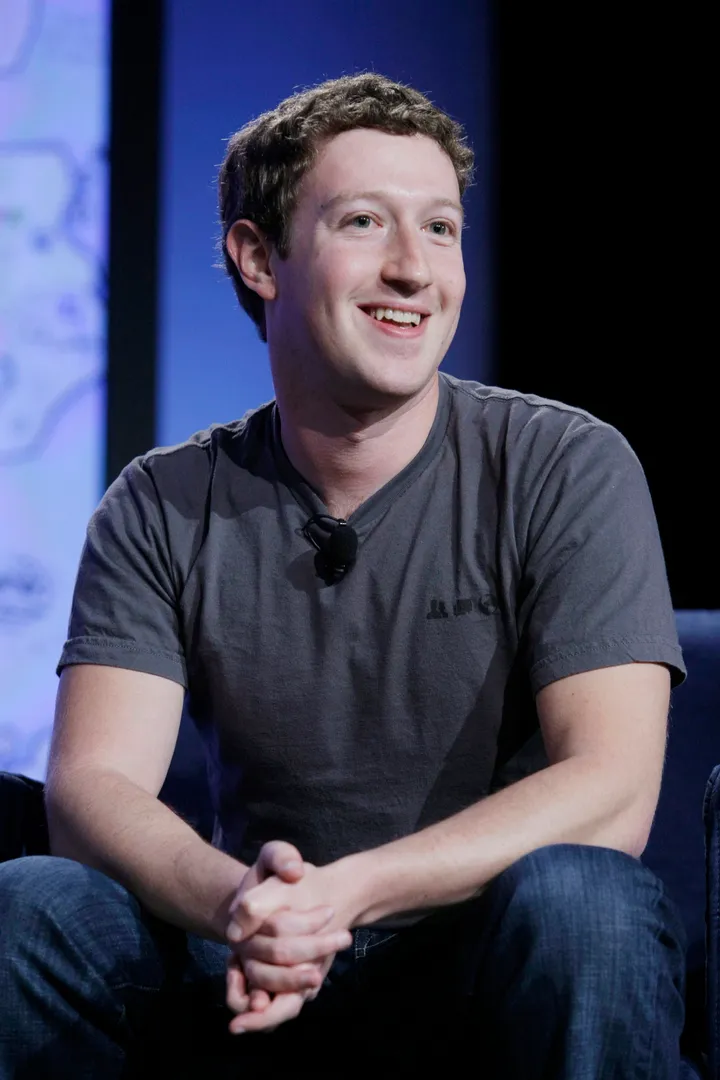
The portrait of Facebook that emerges in Facebook's over 150-page S-1 filing with the Securities and Exchange Commission is of a mature company -- by Silicon Valley standards -- already enjoying robust revenues thanks to a vast, active userbase churning out data for the site. Facebook CEO and co-founder Mark Zuckerberg also enjoys the use of a private plane, the filing revealed, and earned a base salary of $500,000 last year, more than triple the salary of Google co-founders Larry Page and Sergey Brin when Google filed for its IPO.

Facebook looks more seasoned than many of its Silicon Valley peers had when they announced plans to go public. According to the prospectus it filed with the SEC, Facebook has been profitable for the past three years. The company reported revenues of $3.7 billion last year, an 88 percent increase over the prior year, and earned a $1 billion profit, more than Google's total revenue the year it debuted on public markets. Facebook's income also dwarfs that of other internet companies that recently completed their IPOs. Zynga's profits totaled $90.6 million in 2010, for example, while LinkedIn had barely flirted with profitability when it filed for its IPO and Pandora was still hundreds of millions of dollars short of breaking even.

Advertising comprises a full 85 percent of Facebook's revenues, down from 98 percent in 2009. Zynga alone accounts for 12 percent of Facebook's total revenues, as the social gaming company must pay Facebook a cut of purchases made in Zynga's Facebook games.

Facebook revealed impressive statistics about its growing and active userbase, which totals 845 million members, more than half of whom, or 483 million, return to the site daily. These hundreds of millions of users have shared more than 100 petabytes (100 quadrillion bytes) of photos and videos with Facebook, and produced an average of 2.7 billion "likes" and comments a day in the final three months of 2011.

The company's stunning growth will prove difficult, if not impossible, to sustain, however. Facebook has reached a 60 percent penetration in the U.S. and U.K., according to the company's own estimates, and Facebook warned investors to expect its expansion to slow.

"We anticipate that our active user growth rate will decline over time as the size of our active user base increases, and as we achieve higher market penetration rates," Facebook wrote. "To the extent our active user growth rate slows, our business performance will become increasingly dependent on our ability to increase levels of user engagement in current and new markets."

Facebook users could also be wooed away by the very features the social network introduced, Facebook noted. The company has made a push to grow its platform and attract third-party app developers, such as the Washington Post and Spotify, to build apps that run on Facebook. But, the filing cautioned, "[o]ur efforts to expand the Facebook Platform may result in users increasingly engaging with our Platform developers' Facebook-integrated websites instead of engaging on Facebook, which may negatively affect our advertising revenue and harm our business."

Zuckerberg might dress the part of low-key Silicon Valley startup CEO, but the tech visionary has already made a mint, has a private plane at his disposal, and stands to make tens of billions of dollars off of Facebook's IPO.

Facebook's filing provides a glimpse into the scores of cash being accumulated by the company and doled out to its investors and employees.

Zuckerberg's base salary, which amounted to $500,000 in 2011, was the highest of any employee at Facebook. By contrast, Google co-founders Larry Page and Sergey Brin earned a salary of $150,000 each when Google filed for its IPO in 2004.

Facebook chief operating officer Sheryl Sandberg and chief financial officer David Ebersman tied for second place, with a base salary of $300,000 each. Yet Sandberg's total compensation in 2011, or $30,873,579, made her the highest paid of any Facebook employee, followed by Facebook's vice president of engineering Mike Schroepfer, who took home $24,727,128.

Zuckerberg owns 28 percent of the company, which could be worth $28 billion following the IPO, and the 27 year-old CEO plans to take a $1 per year salary beginning in 2013, much like former Apple CEO Steve Jobs did while at the helm of Apple.

Being CEO of Facebook comes with a few perks. The filing noted, "[o]ur compensation committee has also authorized our CEO and COO to use private aircraft for business purposes," and continued, "Mr. Zuckerberg may use private aircraft for personal purposes in connection with his comprehensive security program. On certain occasions, Mr. Zuckerberg may be accompanied by family members or others when using private aircraft."

In his letter to investors, Zuckerberg included a manifesto entitled "The Hacker Way" that spelled out the company's priorities and focus on delivering features first and improving later.

"Done is better than perfect” is painted on Facebook's walls, Zuckerberg wrote.

"The Hacker Way is an approach to building that involves continuous improvement and iteration. Hackers believe that something can always be better, and that nothing is ever complete. They just have to go fix it -- often in the face of people who say it’s impossible or are content with the status quo," wrote Zuckerberg. "Hacking is also an inherently hands-on and active discipline. Instead of debating for days whether a new idea is possible or what the best way to build something is, hackers would rather just prototype something and see what works. There’s a hacker mantra that you’ll hear a lot around Facebook offices: 'Code wins arguments.'"

"We don’t build services to make money," Zuckerberg added. "We make money to build better services."

Take a look at the slideshow (below) to view what Facebook thinks are the biggest threats to its future success.

Mark Zuckerberg Controlling Too Much
1  of  11
PLAY
FULLSCREEN
ZOOM
SHARE THIS SLIDE 
Perhaps the most eye-popping risk listed in the S-1 is the idea that Mark Zuckerberg's bad decision-making could lead to a decline in company value. Along with "users fleeing" and "decline in advertising revenue," the following was listed as a major risk factor:

Our CEO has control over key decision making as a result of his control of a majority of our voting stock.


Zuckerberg owns 28 percent of Facebook stock*, which means that he "has the ability to control the outcome of matters" that come before stockholders. Furthermore:

As a stockholder, even a controlling stockholder, Mr. Zuckerberg is entitled to vote his shares, and shares over which he has voting control as a result of voting agreements, in his own interests, which may not always be in the interests of our stockholders generally.


Should stockholders fear the man who controls the company they hold stock in?

*While Zuckerberg owns roughly 28 percent of Facebook shares, an additional 30 percent of shares are subject to voting proxy by Zuckerberg, giving the CEO a total voting power over nearly 57 percent of the company.

FOLLOW HUFFPOST TECH

We knew Facebook was big -- you don't get to 800 million users without making a few bucks -- but until today, we didn't know just how big. Facebook filed papers for an initial public offering on We...
 
 
  • Comments
  • 726
  • Pending Comments
  • 0
  • View FAQ
Post Comment Preview Comment
To reply to a Comment: Click "Reply" at the bottom of the comment; after being approved your comment will appear directly underneath the comment you replied to.
View All
Favorites
Bloggers
Recency  | 
Popularity
Page: 1 2 3 4 5  Next ›  Last »  (23 total)
04:25 PM on 06/22/2012
Well you don't have to be as rich as Mark to have a private plane once in a while. Want an adventure by a private jet? Vacation with these guys...I can only dream, but am sharing it in the hopes someone will invite me too http://www.travcoa.com/find-a-journey/journey-type/group-travel/private-jets
thanks
This user has chosen to opt out of the Badges program
photo
02:50 AM on 05/04/2012
nothing could be more useless than the repeated speculations about Zuckerberg's base salary.

anyone know the difference between $500k and $28 billion?
This user has chosen to opt out of the Badges program
photo
02:47 AM on 05/04/2012
"controlling too much?" so long as he doesn't perpetuate the propaganda that Israel doesn't have the bomb and start buying Superdelegates in our Democratic primaries (like the billionaire Saban), we should be o-kay.
photo
HUFFPOST SUPER USER
RichardRider
Chairman, San Diego Tax Fighters
03:15 PM on 03/20/2012
Recently the WALL ST JOURNAL published my letter concerning California Governor Jerry Brown's predicted Facebook capital gains tax windfall.

http://online.wsj.com/article/SB10001424052702304450004577277682992330176.html?mod=WSJ_Opinion_MIDDLEThirdBucket#articleTabs%3Darticle

WALL ST JOURNAL
March 14, 2012

Pushing Those Golden Geese Away

The California Facebook capital gains tax windfall is largely illusionary ("Facebook to the Non-Rescue," Review & Outlook, March 8). If the recipients get any tax advice at all, they will consider relocating outside the state to make the sale. Indeed, they only have to live outside California for over half a calendar year to establish residency somewhere else.

If a shareholder takes such a one-time $10 million capital gain in California, he will pay about $1 million CA capital gains tax. If Brown's new retroactive tax increase passes in November, he would pay about $1.3 million.

If such a recipient moves to income tax-free Nevada for only six months, he'll save anywhere from $165,000 to over $200,000 for each month residing there just on capital gains, not counting the California income tax he'd save.

Other tax avoidance possibilities include charitable remainder trusts and donations. California's best hope is that these lucky shareholders avoid the capital gain and later return to high-tax California to live. But many likely will find that income tax-free states are pleasant places to live after all—especially when one is rich.

Richard Rider
San Diego
photo
HUFFPOST SUPER USER
RichardRider
Chairman, San Diego Tax Fighters
02:09 PM on 03/20/2012
A fast-growing company with a billion dollars current annual profit, and the CEO draws a $500,000 salary? And (gasp!@) has access to the company's private jet?? Oh the Occupy horror!

That's an INCREDIBLY small compensation package for such a successful company Founder/CEO -- yet, to read this hype part of this article, you'd think Zuckerberg was raping his shareholders (and the Occupiers, I suppose) with this opulent pay package.
02:03 AM on 03/15/2012
He doesn't look very happy in the pic maybe his viewers didn't CONNECT with the visionary
12:17 AM on 02/22/2012
Uh Oh. Facebook has grown up into a ...gasp...Coporation...and they are...gasp...profitable. Time for all you lefties to hate them, to demand a government takeover, and to cry and whine that they aren't paying enough in taxes. Mark Zuckerberg has more money than you....he must be destroyed!!!
makemesmile
it makes you wonder
07:35 PM on 02/09/2012
According to one of the local news channel today, the cost of home rentals and houses for sale will be going up due to the new crop of Facebook millionaires. Hopefully, people won't be so foolish as to allow themselves to live beyond their means this time.
01:30 PM on 02/06/2012
Huffington: WE all knew how big Facebook was.
05:00 PM on 02/05/2012
The article says in one paragraph that Zuckerberg owns 28% of Facebook, and later on that he owns 58% -- which is it, and can you please find writers and proofreaders who can actually write and read?
07:56 PM on 02/07/2012
Hmmm why don"t you focus less on proofreading at Huff Post and try actually reading the words that are there. He actually owns 28% but the other 30% is stock subject to voting proxy which means Zuckerberg gets to act in behalf of them when it comes to decision making. So, by extension, when referring to how much he controls he is in control of 58% of the stock.
08:18 PM on 02/07/2012
If that's the case they should state that clearly for those of us who don't follow Zuckerberg's finances quite so closely.
01:41 PM on 02/05/2012
Why is Facebook now popular and MySpace not? Social media all seems rather faddish to me, and no single entity worth such value.
This user has chosen to opt out of the Badges program
01:26 PM on 02/05/2012
If Facebook is doing so well, why does it need an IPO to raise $5 billion? I think has nothing to do with 'business' and someone feels is well past time he was officially a billionaire. The ego is strong in that one.
12:34 PM on 02/20/2012
Having more than 500 investors and remaining public doesn't mean much sense. This is the very reason Microsoft went public back in the day while Bill Gates was not really in favor of it.
12:36 PM on 02/20/2012
I mean remaining private.

http://www.cnn.com/2012/01/31/opinion/rushkoff-facebook-ipo/index.html
photo
HUFFPOST SUPER USER
Tikiman
Just out taking my dogma for a walk.
12:56 PM on 02/05/2012
Even though I never click on any of the ads or play any of the games, for some reason I feel guilty helping make millionaires of people who sit behind computers all day trying to figure out ways to get me to spend money on their clients.
12:51 PM on 02/05/2012
I live in the shadows of these billionaires. Its disgusting how little trickles down. The Bay Area is a huge country club, and regular people with kids are punished by these billionaires.
HUFFPOST SUPER USER
Danny Dan
12:06 PM on 02/05/2012
Is it Burg or Berg.Is it German or Jewish.Well maybe both.