iPhone app iPad app Android phone app Android tablet app More

Tsunami Anniversary 2012: Nuclear Plants Around The World

Reuters/The Huffington Post  |  By   |  Posted: 03/ 9/2012 1:47 pm

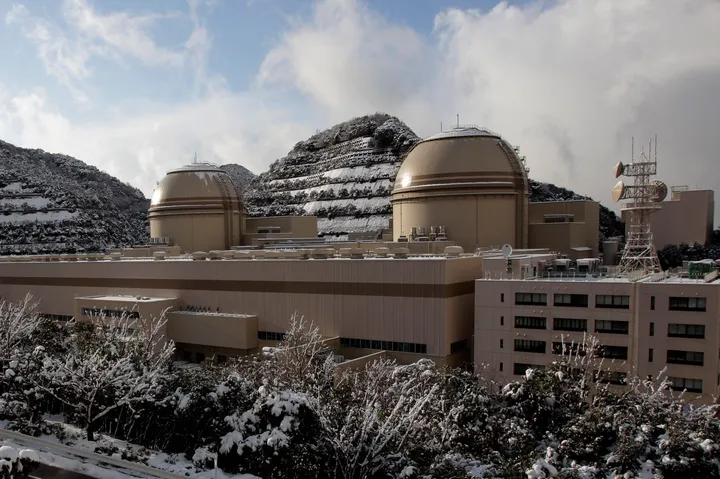
World Nuclear Plants

On March 11, 2011, an earthquake off the coast of Japan triggered a massive tsunami that killed more than 19,000 people and left thousands missing. The wave also heavily damaged the Fukushima Daiichi nuclear plant. Shortly after the tragedy, three of the plant's reactors went into meltdown, triggering the largest nuclear disaster after Chernobyl in 1986.

As in many other countries, nuclear energy had been a priority in Japan for decades, according to Reuters. When the tsunami hit, the country had 54 reactors, which provided some 30 percent of the nation's energy. Yet the tragedy at Fukushima spurred debates, both in Japan and in the rest of the world, on the dangers of nuclear power plants.

According to Yukiya Amano, the UN's nuclear energy chief, Fukushima was a "wake-up call." In an interview with Reuters, Amano says measures have been implemented to improve standards.

"I believe nuclear power is safer than before," he told Reuters. Yet he added: "There is nothing like 100 percent."

One year after the disaster at Japan's Fukushima Daiichi, HuffPost World takes a look at the state of nuclear energy around the world. Take a look at the slideshow below to learn more about nuclear plants in Europe, Asia and the Americas.


Read Reuters' full report on the safety of nuclear energy below:

VIENNA, March 9 (Reuters) - Nuclear power is safer than it was a year ago when an earthquake and tsunami hit the area around Japan's Fukushima nuclear plant, the U.N. atomic energy chief said on Friday, but environmental group Greenpeace said no real lessons had been learnt.

In a statement issued ahead of Sunday's first anniversary of the world's worst nuclear crisis since Chernobyl in 1986, Director General Yukiya Amano of the International Atomic Energy Agency (IAEA) said meaningful steps had been taken since Fukushima to strengthen global nuclear safety.

Fukushima was a "wake-up call" and robust measures have been implemented to improve standards, the veteran Japanese diplomat separately told Reuters in an interview.

"I believe nuclear power is safer than before," he said at the U.N. agency's headquarters, adding that countries with atomic reactors are now "much more serious" about such issues.

But he did not rule out the possibility of more nuclear accidents in future: "There is nothing like 100 percent."

In the statement, Amano said: "We know what went wrong and we have a clear course of action to tackle those causes - not only in Japan, but anywhere in the world ... Now we have to keep up the momentum. Complacency can kill."

The Fukushima tragedy was triggered on March 11, 2011, when a powerful undersea earthquake unleashed a tsunami that left 19,000 people dead or missing. It also smashed into the coastal power plant causing a series of catastrophic failures at the facility.

Images of the stricken plant and the enormous devastation the tsunami wrought across Japan shook public confidence in nuclear power and forced the nuclear industry to launch a campaign to defend its safety record.

After Fukushima, Germany, Switzerland and Belgium decided to move away from nuclear power altogether and build up alternative renewable energy sources instead.

Nearly 50 other countries that had been operating, building or planning to construct new nuclear plants continue to rely on nuclear energy, however, even though they face higher costs.

STILL EXPANDING

Amano told Reuters he expected nuclear power to continue expanding but at a slower pace than forecast before Fukushima, saying there would be at least 90 new reactors by 2030 to add to the existing 435 units now operating.

In the U.N. agency's high-level scenario, there would be 350 new reactors, he said. Its lowest forecast still predicted the construction of 90 reactors.

Most of the expansion is taking place in fast-growing Asia, where 44 of the world's 65 reactors now under construction are being built.

The IAEA statement said it recognised last year's accident was a jolt to industry, regulators and governments, but it said much could be done to prevent a repeat.

"It was triggered by a massive force of nature, but it was existing weaknesses of design regarding defence against natural hazards, regulatory oversight, accident management and emergency response that allowed it to unfold as it did," the IAEA said.

Amano added: "Human failings such as these are not unique to Japan ... Countries around the world are searching out the weak links in their own systems and taking action to strengthen them."

But environmental campaign group Greenpeace, which opposes nuclear energy, said that "no real lessons" appeared to have been learnt from Fukushima.

"Industry and politicians around the world quickly (carried out) so called stress tests only to conclude that no single reactor in the world is unsafe and needs to close," said Jan Beranek, head of Greenpeace's nuclear campaign.

"No doubt even Fukushima ... would have passed those tests," he said in an e-mail to Reuters.

The IAEA "even said that the main problem was how to restore public confidence - instead of looking into how to better protect people," Beranek said.

"This must change, or (the) next nuclear disaster is inevitable."

Amano gave a different picture, saying 12 reactors had been "permanently retired" last year as a direct result of Fukushima. (Editing by Andrew Osborn and Robin Pomeroy)

FOLLOW WORLD

On March 11, 2011, an earthquake off the coast of Japan triggered a massive tsunami that killed more than 19,000 people and left thousands missing. The wave also heavily damaged the Fukushima Daiichi ...
 
 
  • Comments
  • 67
  • Pending Comments
  • 0
  • View FAQ
Post Comment Preview Comment
To reply to a Comment: Click "Reply" at the bottom of the comment; after being approved your comment will appear directly underneath the comment you replied to.
View All
Favorites
Recency  | 
Popularity
02:54 PM on 04/05/2012
I wasn't aware any of Canada's nuclear power plants had cooling towers.
01:38 PM on 03/22/2012
Electricity from the wind farms, solar plants, wave energy and biomass drew $187 billion last year compared with $157 billion for natural gas, oil and coal, according to Bloomberg.

Safe, clean alternative energy is the future.

The price of wind and solar keep dropping. The price of oil, coal and nuclear keep rising.
Genders
Love, Tolerance, Enlightenment
03:48 PM on 03/18/2012
Would it be more appropriate to talk about the advanced that green energy has made?

90 reactors by 2030?

rooftop solar is already cheaper than nukes, wind and waste half that, and efficiency half that again.

By 2030 solar will be 1$ per W installed, 2 cents per KWH or less.

Waste bio char bio fuels can backup solar and wind using existing fossil generators but without the heavy metals mercury and mountain top destruction.

Most nuclear power plant plans fall through, many nukes are canceled before commissioning, and the costs always explode during construction.

Nukes are cancer from trillion dollar disasters and million year wastes and the end of civilization from proliferation.

Without the 500M$ per reactor per year in breaks, nukes could not survive.

Stop all breaks to nukes and fossils.

Put ALL that and more into rooftop solar, offshore wind and waste bio char bio fuels.

solar is increasing in installation and investment every year by 30-70%
http://bnef.com/PressReleases/view/180
http://www.treehugger.com/renewable-energy/solar-industrys-dead-not-hardly-us-or-china.html

Double in 2010.

http://www.treehugger.com/renewable-energy/worlds-new-solar-power-installations-doubled-in-2010-total-capacity-up-70.html

16GW in one year! minimum that would be 288GW of solar by 2030.

At growth rate 7 years to more than the world peak energy.

Wind and waste are also growing very fast.
photo
HUFFPOST SUPER USER
Michael Mann
Nuclear Educator
05:46 PM on 03/13/2012
China will accelerate the use of new-energy sources such as nuclear energy and put an end to blind expansion in industries such as solar energy and wind power in 2012, Chinese Premier Wen Jiabao says in a government report published on March 5.
http://www.electroiq.com/photovoltaics/2012/03/12/china-to-drop-solar-energy-to-focus-on-nuclear-power.html
Genders
Love, Tolerance, Enlightenment
07:48 AM on 06/03/2012
So now we all follow the communist Chinese?
photo
HUFFPOST SUPER USER
Michael Mann
Nuclear Educator
11:15 AM on 06/03/2012
Unfortunately the anti-nuclear activists in this country seem to make us follow instead of lead...
This user has chosen to opt out of the Badges program
08:12 PM on 03/11/2012
From Germany, a tale of a small town that decided to do something, in a big way.

http://www.spiegel.de/international/germany/0,1518,820369,00.html
cosmicdart
paragon of paradigms
08:39 AM on 03/11/2012
The more nuclear power plants we have the greater the chance of one being hit by a meteor traveling at 100 times the speed of a rifle bullet. What happen in ten years when most every country on Earth switches to rail guns that shoot sub-orbital projectiles form thousands of miles away that do the same thing when they land? Unless we are planning to have a world at peace, we're in big trouble! We could outlaw rail guns? It's a good thing that Iran isn't building a rail gun.
HUFFPOST SUPER USER
Harley 2
11:15 PM on 03/10/2012
Manifesto of Why Shut Them All Down
I discovered just how poorly these plants were being run and how poorly
they were designed from the get-go. And then I discovered how one of
the basic premises of risk control, separation of risks, was completely
ignored. That being that the used fuel rods were the most dangerous

http://nukeproffesional.blogspot.com/p/manifesto-why-shut-them-down.html
photo
ShamsT
The door has opened, so there's no escape...
01:03 PM on 03/11/2012
Love #2 in your Manifesto Action Plan. Who's this ruler of the "whole world" who's going to make a law against new permits for nuclear power plants:

"2) Disallow any new permits, make a law against it, and by this, I mean the whole world."

The only other person besides you that I ever heard of having a "Manifesto" is the Unabomber and your incoherent ramblings make the Unabomber look like Mother Teresa by comparison.
HUFFPOST SUPER USER
Harley 2
08:12 PM on 03/11/2012
The new world disorder (NWD TM)

Only he who refuses to use his own eyes would mistake ranting for ramblings....another TM
Genders
Love, Tolerance, Enlightenment
03:54 PM on 03/18/2012
Just take away nukes breaks and taxpayer paid insurance.

But they should not get permits, since they are too dangerous.
Genders
Love, Tolerance, Enlightenment
03:53 PM on 03/18/2012
Agreed, we need to install solar wind and waste bio char systems as fast as possible to allow us to retire these aging plants being run past their design lifetimes and with record low amounts of maintenance during refueling. They are accidents waiting to happen.

Big money always cuts corners till things break.
HUFFPOST SUPER USER
Harley 2
11:14 PM on 03/10/2012
Solar has become really inexpensive. Just a few years have made a massive difference in cost.

Solar is now 3 cents per kWH and that is using top quality name bran US panels and best installation methods with beefy stainless steel and thick anodized aluminum for a 30 year plus life.

http://nukeproffesional.blogspot.com/p/renewable-and-energy-efficiency.html
photo
ShamsT
The door has opened, so there's no escape...
12:54 PM on 03/11/2012
Just because you keep repeating the same lie over and over again, doesn't make it the truth.

Even leveled cost estimates in 2016 by the US Energy Information Agency for new generation still make solar the most expensive way to generate electricity while nuclear continues to be very competitive:

Advanced Nuclear - $114.0 /MWh
Solar PV - $211.0 /MWh
Solar Thermal - $312.2 /MWh

http://www.eia.gov/forecasts/aeo/electricity_generation.cfm

BTW, linking trumped up spreadsheets created by "nukeproffesional bloodspot" is not a "reliable" source.
03:34 PM on 03/11/2012
Should be about 5-10 years until solar PV will be on par with Advanced Nuclear (if EIA cost curves are any indication). And solar thermal costs drop dramatically when you build plants to scale. We only have a bunch of model plants in 20 - 50 MW now. NREL cites mid term future costs in range of: $68.2 - 47.6 MWh (page 5-27).

http://www.nrel.gov/docs/fy04osti/34440.pdf
photo
maslin
At 6 bn km, it's mostly small stuff.
06:34 PM on 03/11/2012
'Just because you keep repeating the same lie over and over again, doesn't make it the truth.'

Unfortunately, that's how propaganda works. Lie, keep lying, and sooner or later people who haven't done their homework or their critical thinking will believe it.

This is why we see these people repeat themselves and cut and paste from each other so often, and why we see so little original thinking.
10:46 AM on 03/10/2012
Much of this has to do with risk … and picking up the economic costs of clean-up and remediation when anything goes wrong. We're no longer investing in projects that are "too big to fail," or when they fail, come at too large a cost to the taxpayer. The burden is already high enough on the taxpayer for financing nuclear plants in the first place. New construction starts from 2008-2010 were 38. From 2011-12, the number dropped to two.

http://www.guardian.co.uk/environment/2012/mar/08/fall-nuclear-power-stations-fukushima

We can socialize all the risk, and privatize all the profits (once again). Did we learn any lessons from the past? Or we can simply look at better alternatives, and energy technologies that are doing quite well in free markets, and are attracting a lot of private capital and development dollars (and creating lots of jobs in the process). It's not a complicated decision.
05:02 AM on 03/10/2012
Other alternatives create problems in their own right. Whether a big bang, a slow leak, or a suffocation of the planet by exhaust and toxins... it's all bad. However, what are we going to do instead? It's not like there are energy sources that don't have any negative consequences.
10:27 AM on 03/10/2012
The nano energy revolution is coming

It will be as big as the computer revolution
photo
Silken17
Just a hare in your soup
07:58 PM on 03/11/2012
LMAO! You really like that "nano" word, don't you?
ThinkCreeps
Seriously, it's time.
10:32 AM on 03/10/2012
Insulate, and use electricity to run heat pumps for domestic and commercial building heating. Burning gas to generate heat is spectacularly wasteful. Encourage solar water heating, and solar PV on new and retrofitted buildings, use wind and tidal power as appropriate, and ultimately, build large-scale desert-located solar thermal power.

You can build new nuclear plants, but only governments are willing to underwrite the risks, and the capital cost is as bad as the most expensive of the renewable alternatives.
HUFFPOST SUPER USER
Harley 2
11:11 PM on 03/10/2012
Creeps--you sure nailing alot of good points.
photo
HUFFPOST SUPER USER
Joffan
Time is an illusion. Lunchtime doubly so.
05:36 PM on 03/13/2012
Ok TC, what would you say a good price for a facility that generates say 10000 GWh (ten thousand gigawatt-hours) per year would be? Because I can guarantee that solar PV will be several times the nuclear costs AND the wind costs.
photo
HUFFPOST SUPER USER
Jtt
-
06:19 PM on 03/09/2012
Throughout this Greenpeace has pushed fear and questionable scientific references in promoting a nuclear power free path that has lead to an increase in greenhouse gases.

Thats something I feel is unforgivable. Either they correct that immediately or I will continue to campaign against them as major drivers of extinction and environmental destruction due to climate change.

In the end, past the hype and conspiracy the facts will reveal the truth. If I was Greenpeace I wouldn't want a part of the legacy I am building.
03:12 AM on 03/10/2012
Perhaps you are unaware of an article in Scientific American (hardly greenpeace) entitled

"Nuclear Power Cannot Solve Climate Change"

Meanwhile, alternatives are cheaper than nuclear, growing more so, and only require a political will that YOU oppose
HansB
The only good certainty is a dead certainty
08:12 PM on 03/10/2012
Who says Jtt opposes that political will? It is a FACT that countries that close nuclear plants immediately compensate with coal. I'd be okay with the Greenpeace push against nuclear energy if it was on the condition that no extra CO2 shall be emitted. But that condition is not posed, and it is simply true (whether or not it is also necessary) that countries like Germany which close nuclear plants replace them mostly with fossil fuels.
photo
maslin
At 6 bn km, it's mostly small stuff.
09:12 PM on 03/11/2012
One article does not a slam-dunk case make, but at least this is a respectable outlet.
HansB
The only good certainty is a dead certainty
08:09 PM on 03/10/2012
I agree. I'm cancelling my long-time membership over this issue. Not because I love nuclear energy. But because Greenpeace poo-poos the fact that (as Germany is proving in a big way) closing nuclear plants means opening coal plants. It shouldn't be so, but it is, and to refuse to see the problem is hardly environmentally responsible.