iPhone app iPad app Android phone app Android tablet app More

FDA Close To BPA Decision Crucial For Health Of Poor Children

Posted: 03/29/2012 8:09 pm Updated: 03/30/2012 8:32 pm

UPDATE: 3/30 4:00 p.m. -- The U.S. Food and Drug Administration announced on Friday that it will continue to allow bisphenol-A (BPA) in food and beverage containers -- denying a petition from the Natural Resources Defense Council.


The U.S. Food and Drug Administration is expected to decide by Saturday whether to continue allowing bisphenol-A (BPA) in food and beverage containers, Americans' main source of exposure to the chemical implicated in everything from asthma to diabetes.

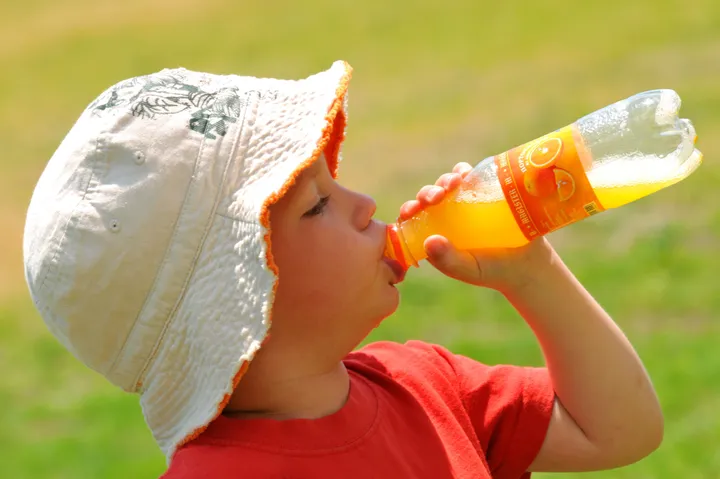
Studies show that developing fetuses and young children are most vulnerable to the risks. Impoverished kids, whose meals more often come out of BPA-leaching plastic packages and coated metal cans, may bear the brunt of the burden.

"Hormonally active chemicals such as BPA have no place in our kids' life," Sarah Janssen, senior scientist with the Natural Resources Defense Council, told reporters last week.

The impetus for the FDA's pending action is a 2008 petition filed by the NRDC. In December, a court ruled that the agency had to answer the NRDC's request for a ban on BPA by March 31. Other environmental groups and individuals, including Rep. Ed Markey (D-Mass.), have since submitted their own petitions seeking similar action.

Meanwhile, in late February, French lawmakers voted to eliminate the use of the endocrine-mimicking chemical from all food packaging.

The chemical industry, however, maintains that BPA is safe.

"We have and will continue to rely on the experts at FDA to evaluate the safety of BPA, and respond on the basis of all the available scientific data," said Steven G. Hentges of the American Chemistry Council, a lobbying group for the plastics industry. "BPA is one of the most thoroughly tested chemicals used today and has a safety track record in food contact of over 40 years."

As NRDC lawyer Nick Morales noted to reporters last week, the FDA approved the use of BPA in the 1960s, long before studies began to show that the chemical could harm humans. He suggested that the FDA is now "obligated by law" to review the substantial new evidence and prove the chemical is safe. If it cannot, he argued, the agency is obligated to impose a ban.

"There is a very large research effort under way," Douglas Karas, an FDA spokesman, told The Huffington Post. Although Karas couldn't say when the decision would be announced, he confirmed that it would come by the Saturday deadline.

Bruce Blumberg, a BPA expert at the University of California, Irvine, is concerned that the agency may not be considering all of the relevant research on BPA's effects as it weighs its decision. "They tend to rely on their own stuff," he said, adding that he doesn't always agree with the scientific methods used by FDA scientists. "I just hope they say that, while the evidence isn't all in yet, they will take interim steps to protect the public."

Because of the widespread use of the chemical in consumer products, nine out of 10 Americans carry BPA residues in their bodies. While the primary exposure comes from food and beverage containers, BPA-infused cash register receipts, dental sealants and toilet paper are among other products likely contributing to the body burden.

The NRDC's Janssen expects levels of BPA to drop quickly and dramatically if the FDA does impose the ban and remove BPA from the food packaging market.

Such a move would be especially good news for poor families, who tend to rely on more canned goods and other packaged foods than well-to-do families. A new study by scientists from Boston University found a strong link between the burden of BPA and poverty.

"People with lower incomes, who may be more likely to suffer from other disparities in health and exposures, have a greater burden of exposure to BPA," wrote the study authors. "The results for children are especially troubling."

"This is almost certainly coming from packaged food," said Blumberg, who was not involved in the Boston University study.

Since the NRDC filed its FDA petition, Janssen said there have been hundreds more published BPA studies that point to a "wide variety of effects," as well as "evidence of harm at low levels of exposure."

In fact, minute amounts of the chemical may be even more potent than larger quantities as an endocrine disruptor, scrambling human hormones and causing a host of health problems. "We found that doses regulatory agencies have calculated to be safe are, in fact, not safe," said Laura Vandenberg, a postdoctoral fellow in biology at Tufts University and lead researcher on another study published this month.

The FDA could decide on a partial ban of BPA, according to Morales, the NRDC lawyer. Use in infant products, for example, might be all that is addressed. But Vandenberg doesn't believe that would go far enough. "To protect a fetus," she said, "we need to remove BPA from products used by pregnant women -- and that's pretty much everything."

"We've never had a chemical with more scientific evidence around it. It's overwhelming the studies that find an effect, and it's overwhelming the number of endpoints affected," Vandenberg added, noting that heart disease and behavioral problems, too, are linked to BPA. "In my opinion, the evidence is tipped completely in one direction."

As The Huffington Post reported last month, calling a product BPA-free does not mean it is safe. Further, the chemical is just one of many endocrine disruptors -- including phthalates, dioxin and arsenic -- that are commonly used in everyday items.

FOLLOW GREEN

UPDATE: 3/30 4:00 p.m. -- The U.S. Food and Drug Administration announced on Friday that it will continue to allow bisphenol-A (BPA) in food and beverage containers -- denying a petition from the Natu...
 
 
  • Comments
  • 292
  • Pending Comments
  • 0
  • View FAQ
Post Comment Preview Comment
To reply to a Comment: Click "Reply" at the bottom of the comment; after being approved your comment will appear directly underneath the comment you replied to.
View All
Favorites
Highlights
Recency  | 
Popularity
Page: 1 2 3 4 5  Next ›  Last »  (7 total)
This user has chosen to opt out of the Badges program
photo
03:22 PM on 03/31/2012
You can't rely on the government to "keep you safe," quite the opposite.

Educate yourself, educate your family and friends. Put companies out of business who continue to use BPA.
01:45 PM on 03/31/2012
Thanks, W., you put the foxes in charge of the hen house. It is a gift (to industry) that goes on giving. Profits Before People, out new national motto. Has a nice ring to it, doesn't it?
This user has chosen to opt out of the Badges program
photo
03:17 PM on 03/31/2012
Obama did the same and appointed Monsanto's VP as a senior advisor in the FDA.

Sorry to burst your partisan bubble.
07:59 PM on 03/31/2012
Thanks for agreeing with my point about how the situation arose under W..

As for Obama, despite the screaming from the radical right, he is the best Republican president we've had since Eisenhower. Obama is not a socialist; he is a corporatist. No one who is otherwise can win an election in this country. We do not have choices between views, only between degrees of the same thing.
photo
HUFFPOST SUPER USER
Act out
Make love not war.
07:21 PM on 04/25/2012
Oh my gosh!! I don't know why I am always shocked by information like this. I just watched the Burzynski documentary involving the FDA. Everybody in the country should watch this. The FDA are nothing but criminals. Also The World According To Monsanto. Why in the world are we letting the FDA get away with this?
04:07 AM on 03/31/2012
Wouldn't want to spoil all those juicy profits for the pharma industry, would they? Not much will change until Americans start hitting the streets en masse every single day. And boycott is another very effective 'weapon' - not one day, but every day until things change.
HUFFPOST SUPER USER
Michael J OConnell
Enduring curiosty and quest for rationality
08:49 PM on 03/30/2012
The FDA is a tool for the chemical and food industries. Nothing more.
This user has chosen to opt out of the Badges program
photo
03:19 PM on 03/31/2012
Not just those industries. I had to deal with them a lot when I was a process scientist manufacturing medical devices.

They were incompetent, rude, egotistical and didn't understand basic scientific concepts.
07:53 PM on 03/30/2012
Corporate money talks and America'a health walks!
06:10 PM on 03/30/2012
Why can't these government ("for the people") agencies stop production and distribution of these deadly carcinogens? A plastic bottle of clean water vs. tap. Hmmm which gamble do we take? Our food and beverages-- plastic lined cans that seep toxins into canned food, plastic bottles, pink slime (oh-sure it's safe-processed with ammonia????) Who do we trust anymore? We must stop this poisoning of our people! Why is the FDA not banning the BPA?? Aren't they supposed to protect us? Why do we not get to vote on these issues, after all, we are the ones who feel the repercussions-strange illnesses, immune disorders, cancer...the list goes on. They are so quick to ban herbs and supplements, but drag their feet on BPA???? Give us a break, at least for the children who are at the highest risk.
01:48 PM on 03/31/2012
Now, now you would need to prove that BPA causes abortions to get their attention. Who cares about actual living, breathing children? The Party of Life has a very limited definition of what constitutes "life"; it ends at delivery.
06:38 PM on 03/31/2012
Wow!
This user has chosen to opt out of the Badges program
photo
05:18 PM on 03/30/2012
Time for the "science is only valid if it supports my opinion" posts
This user has chosen to opt out of the Badges program
photo
03:29 PM on 03/30/2012
gawd, i hope this poison gets banned- i am tired of trying to figure out what has it and what does not.
01:50 PM on 03/31/2012
Use glass bottles and containers, BPA-free water bottles, and eat fresh food. All of those are a good start to freeing your body of nasty chemicals.
06:42 PM on 03/31/2012
Almost all canned food has it, unless the can says in big letters "BPA-free." Lot of snack food packaging has it. Cash register receipts have it (the thermal kind) in the paper. Many countries have banned it. But not USA. We are the most toxic country in the world. Our furniture is filled with formaldehydes and toxic fire-retardants, which are legally required. Sad that children and adults of this country live in toxic houses and eat toxic food and nobody protects them. I buy no packaged food and I have removed all but 100% natural (organic cotton, wool, real wood, metal) products from my house. The house is pretty spare, but we are healthy!
This user has chosen to opt out of the Badges program
photo
09:41 AM on 04/02/2012
Many countries HAVE NOT BANNED IT! Several have banned it in infant products, mostly baby bottles. France has legislation going through the system to ban it in food packaging as well. But I really wish people would use facts.
This user has chosen to opt out of the Badges program
photo
02:42 PM on 03/30/2012
I'm assuming the "Scientific Data" has been supplied by the chemical industry, just like the data supplied by the agriculture giants the FDA used for their cave-in on GMO's.
01:58 PM on 03/31/2012
Same thing exactly! The FDA under an earlier Republican administration (can't remember which one) was made dependent on the drug companies for some of its funding with predictable (and desired) results. W. staffed FDA - along with FEMA, SEC, and as many other agencies as possible - with leadership and staffing (it runs deep in to the muscle of each agency) from the industries the agencies were responsible to regulate. There was a flight of competent veteran staff from these agencies from pressure to leave or compromise their mission. Obama either has not had the time or the ability to get Congress to approve new leadership. So, many of these Trojan horse appointees are still in place poisoning the very agencies that were meant to serve. Clever, no?
photo
HUFFPOST SUPER USER
ttigerlilyx2
02:06 PM on 03/30/2012
"We have and will continue to rely on the experts at FDA to evaluate the safety of BPA, and respond on the basis of all the available scientific data," said Steven G. Hentges of the American Chemistry Council, a lobbying group for the plastics industry'

In other words, the fix is in.
photo
HUFFPOST SUPER USER
kelly socal
Да, это не Рио-де-Жанейро!!!
03:17 PM on 03/30/2012
You read my mind!
photo
HUFFPOST SUPER USER
hardknocks
the future is unwritten
01:13 PM on 03/30/2012
Glass is cheap..........
photo
HUFFPOST SUPER USER
ttigerlilyx2
02:12 PM on 03/30/2012
I remember when many items were packaged in glass. The only disadvantage was breakage and weight. Why can't they put a coating on the outside of glass to stabilise it?
I'm more than willing to go back to that small inconvenience, and our fat buttz need to work a little harder to haul in the groceries. (unless your old or disabled)
02:06 PM on 03/31/2012
The glass bottles had a useful life of 17 returns before they broke and needed to be recycled. Glass is made from silica, one of the most plentiful resources on earth, has no side-effects, and can be recycled indefinitely. Who wants anything that sensible? BTW, bottle bills work great at getting the bottles back for recycling and cleaning up roadsides as a by-product. Once bottles have a monetary value, someone will pick them up and take them to the recycling center! So, we save in several ways: a chemically "clean" resource that reduces health care cost, job creation for recycling centers, and less government spending on roadside trash removal. Oh, dear, that must be socialism! People cannot possibly matter more than chemical industry profits.
photo
HUFFPOST SUPER USER
cj7874
The truth will be drowned in a sea of irrevelance
05:39 PM on 03/30/2012
That's right! I remember searching everywhere for glass baby bottles for my babies back then. People use to though i was too much.

Now, the battle is to ask my kids not to use cell phones. Wonder when will people wake up to that one.
12:55 PM on 03/30/2012
The stuff is toxic, banned in Europe for years: the FDA is a joke.
This user has chosen to opt out of the Badges program
photo
05:14 PM on 03/30/2012
When did they ban it in Europe? Link appreciated.
11:09 AM on 03/30/2012
When China bans BPA, you really can't tell me that the US EPA is going to be any less restrictive in their approach to the issue.

http://www.chinadaily.com.cn/china/2011-06/01/content_12616422.htm

Here are are list of countries that have examined and recommended or placed restrictions on the use of BPA in plastics (either for general use or exclusively in children's products): Australia, New Zealand, Canada, Denmark, Belgium, France, Germany, Netherlands, Switzerland, Sweden, UK, Turkey, Japan, China, Malaysia, UAE, and perhaps many others. To me, it looks like it's just a matter of time.
HUFFPOST SUPER USER
Robert Huber
10:57 AM on 03/30/2012
"In fact, minute amounts of the chemical may be even more potent than larger quantities as an endocrine disruptor, scrambling human hormones and causing a host of health problems."

That sounds a bit like homeopathy.
This user has chosen to opt out of the Badges program
10:40 AM on 03/30/2012
1 in 88 american kids have autism...has to be environmental chemical triggers for such a high rate....