
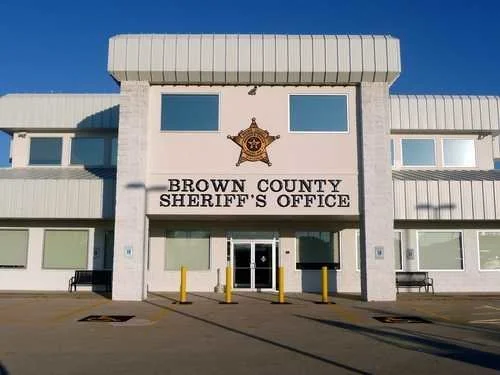
When the Brown County, Wis., Drug Task Force arrested her son Joel last February, Beverly Greer started piecing together his bail.
She used part of her disability payment and her tax return. Joel Greer's wife also chipped in, as did his brother and two sisters. On Feb. 29, a judge set Greer's bail at $7,500, and his mother called the Brown County jail to see where and how she could get him out. "The police specifically told us to bring cash," Greer says. "Not a cashier's check or a credit card. They said cash."
So Greer and her family visited a series of ATMs, and on March 1, she brought the money to the jail, thinking she'd be taking Joel Greer home. But she left without her money, or her son.
Instead jail officials called in the same Drug Task Force that arrested Greer. A drug-sniffing dog inspected the Greers' cash, and about a half-hour later, Beverly Greer said, a police officer told her the dog had alerted to the presence of narcotics on the bills -- and that the police department would be confiscating the bail money.
"I told them the money had just come from the bank," Beverly Greer says. "We had just taken it out. If the money had drugs on it, then they should go seize all the money at the bank, too. I just don't understand how they could do that."
The Greers had been subjected to civil asset forfeiture, a policy that lets police confiscate money and property even if they can only loosely connect them to drug activity. The cash, or revenue from the property seized, often goes back to the coffers of the police department that confiscated it. It's a policy critics say is often abused, but experts told The HuffPost that the way the law is applied to bail money in Brown County is exceptionally unfair.
It took four months for Beverly Greer to get her family's money back, and then only after attorney Andy Williams agreed to take their case. "The family produced the ATM receipts proving that had recently withdrawn the money," Williams says. "Beverly Greer had documentation for her disability check and her tax return. Even then, the police tried to keep their money."
Wisconsin is one of four states (along with Illinois, Kentucky, and Oregon) that prohibits bail bondsmen. So bail must be paid either in cash, with a registered check, cashier's check or credit card. In fact, Donna Kuchler, a Wisconsin criminal defense attorney based in Waukesha, said police aren't allowed to insist on cash.
"I would be suspicious of why they would do that," Kuchler says. "I had a case last year in Fond du Lac County where they tried to say my client could only pay in cash. My guess is that they probably intended to do the same thing that happened here. We brought a cashier's check anyway, and they knew they had to accept it."
But the Greers still fared better than Jesus Zamora, whose family and friends continue to fight for police to return their bail money. Zamora was arrested in January on misdemeanor drug possession and a misdemeanor gun charge. A judge set his bail at $5,000.
"My girlfriend borrowed some money from her sister and mother and a few friends, and they came to bail me out," Zamora says. "But then they started asking her if she had brought drug money. They took the money away and said they were going to have the drug dogs sniff it. She asked them when I would be let out, and they told her, 'He isn't going anywhere'."
The police then seized Zamora's bail money, just as they did with the Greers'. "I stayed in jail for, I think, another 11 days. I lost count. I had never been arrested for drugs before. And this was for a really small amount. Seventeen painkillers, for which I had a prescription, and a small bag they say had traces of cocaine. And they say my girlfriend and I just had $5,000 in drug money lying around."
Zamora's girlfriend borrowed more money from friends and coworkers, which she promised to pay back out of her mother's tax return. They waited until Zamora had a court date, and this time posted his bail in front of a judge, with a cashier's check. Wisconsin law enforcement officials also are required to provide a receipt when they confiscate property under forfeiture laws. Beverly Greer and Jesus Zamora both said they were never given receipts.
Brown County Drug Task Force Director Lt. Dave Poteat says the dog alerts were not the only factors. According to Poteat, the Greers and Zamora's girlfriend appeared nervous when they brought in the bail money. "Their stories didn't add up. Their ATM receipts had the wrong times on them. And they were withdrawing from several different locations. The times just didn't correspond to their stories."
Poteat says an additional reason Zamora's bail money was confiscated was because during calls from the jail to multiple people, he indicated the money was drug-related. "Mr. Zamora made a number of calls in which he appeared to be trying to disguise or hide where the money was coming from," Poteat says. "At one point, he even said to another party, 'of course the money is dirty.'"
According to Poteat, all inmate calls from the jail are recorded, and both the inmate and the party they call are warned before the call begins.
Zamora says he was merely telling his girlfriend where to get the bail money. "There's a guy who still owes me money from a car I sold to him. And where I'm from, everyone has a nickname. So I was telling her who she could go to that might be able to give her some money for my bail. I used nicknames because I didn't want the police to visit their houses."
Zamora says he was not attempting to disguise where the money was from, only telling his girlfriend and sister to find someone else to bring in the money so they wouldn't be interrogated. "I know how police do this. My sister just got her immigration papers. I didn't want them harassing her or threatening to deport her or to change her immigration status. I just wanted to protect them, so I told them to find someone else to bring in the money."
Civil asset forfeiture is based on the premise that a piece of property -- a car, a pile of cash, a house -- can be guilty of a crime. Laws vary from state to state, but generally, law enforcement officials can seize property if they can show any connection between the property and illegal activity. It is then up to the owner of the property to prove in court that he owns it or earned it legitimately. It doesn't require a property owner to actually be convicted of a crime. In fact, most people who lose property to civil asset forfeiture are never charged.
The laws were created to go after the ill-gotten gains of big-time dealers, but critics say they've since become a way for police departments to generate revenue -- often by targeting lower-level offenders. In 2010, the Institute for Justice (IJ), a libertarian law firm, rated the forfeiture laws in all 50 states, assigning higher grades to states with fairer policies. The firm gave Wisconsin a "C." When there's less than $2,000 at stake, law enforcement agencies in the state get to keep 70 percent of what they take. If more than $2,000 is taken, departments can keep half.
But in all states, police agencies can contact the Drug Enforcement Administration (DEA), making the case federal, and under federal law, local police departments can keep up to 80 percent of forfeiture proceeds, with the rest going to the Department of Justice. The institute reports that between 2000 and 2008, police agencies in Wisconsin took in $50 million from the equitable sharing program with the federal government. According to Williams, the DEA recently filed a claim on Zamora's money in federal court, to take possession of the money through federal civil asset forfeiture laws.
But even in the odd world of asset forfeiture, the seizure of bail money because of a drug-dog alert raises other concerns. In addition to increasing skepticism over the use of drug-sniffing dogs, studies have consistently shown that most U.S. currency contains traces of cocaine. In a 1994 ruling, for example, the U.S. 9th Circuit Court of Appeals cited studies showing that 75 percent of U.S. currency in Los Angeles included traces of narcotics. In 2009, researchers at the University of Massachusetts analyzed 234 bills collected from 18 cities, and found that 90 percent contained traces of cocaine. A 2008 study published in the Trends in Analytical Chemistry came to similar conclusions, as have studies by the Federal Reserve and the Argonne National Laboratory.
Zamora says he was referring to the common presence of drugs on money when he told his girlfriend, "of course the money is dirty." "I had talked to my attorney about how all money has some drugs on it," Zamora says. "So I was trying to tell her what to say if they told her a dog alerted to it. That she was supposed to say, 'Of course the money is dirty -- all money is dirty.'"
Stephen Downing, a retired narcotics cop who served as assistant police chief in Los Angeles, says it isn't surprising that a drug dog would alert to a pile of cash, since it usually has traces of drugs.
"I'd call these cases direct theft. They're hijackings," says Downing, who is now a member of Law Enforcement Against Prohibition, an organization of former police and prosecutors who advocate ending the drug war.
Downing says he recently consulted a medical marijuana activist in California who was told to bring his bail money in cash, despite the fact that state law allows payment with a cashier's check, a registered check or a credit card. "It makes me wonder if this seizing of bail is a new idea getting shopped around in law enforcement circles."
Poteat says he's aware of some studies from the 1980s about traces of narcotics on most U.S. currency, but that he didn't know about the more recent research. "Our dogs are trained with currency that's taken out of circulation. So they wouldn't alert to bills that have the same traces most other bills have."
Steven Kessler, a New York-based forfeiture attorney and the author of the legal treatise "Civil and Criminal Forfeiture: Federal and State Practice," said he had never heard of simply confiscating bail. "It's abhorrent. You can reject bail if you suspect the money is dirty. But you don't simply take it and hand it over to the police department."
Virginia attorney David Smith, who wrote a book on forfeiture, says he has seen other cases in which authorities have confiscated bail money, but adds, "No courts have ordered forfeiture simply on the basis of a dog alert. There has to be other evidence."
Forfeitures like these may not hold up in court, but failed cases wouldn't necessarily discourage police departments from continuing the practice. If the defendant never challenges the seizure, the department generates revenue. If the defendant challenges and wins, the department loses little.
Indigent defendants, in particular, may decide not to pursue a forfeiture case due to the expense, particularly if they've already used their savings on bail, or are more concerned with fighting pending criminal charges. In many cases, the amount of cash seized would be exceeded by the costs of hiring an attorney to win it back anyway. In addition, under Wisconsin law, indigent defendants are not entitled to a public defender in civil asset forfeiture cases.
"I would think that one of these cases would be the perfect opportunity for a court to impose punitive damages against the police department," Kessler says. "You need to make it clear that it would be damaging for the police to attempt this sort of thing in the future. Considering how appalling these cases are, I don't see why a court couldn't do that."
Poteat says it "isn't unusual" for his task force to seize bail money under forfeiture laws. "I'd say we've done it maybe eight or nine times this year."