Researchers in Japan say they have found evidence that radiation from the March 2011 Fukushima Daiichi nuclear power plant accident has caused the mutation of dozens of butterflies.
Features such as stunted wings, irregularly developed eyes, disfigured antennas and different color patterns found in butterflies from irradiated regions have led scientists to say they have found evidence to suggest a link between the genetic mutations and the radioactive material that was leaked into the environment last year.
"We conclude that artificial radionuclides from the Fukushima Nuclear Power Plant caused physiological and genetic damage to this species," said the researchers' report, which was recently published in the journal Scientific Reports.
The study is one of the first to explore the genetic impacts of the disaster.
According to the BBC, two months after the Fukushima nuclear accident, researchers collected 144 adult pale grass blue butterflies from 10 locations in Japan, including the Fukushima area.
Lead researcher Joji Otaki from the University of the Ryukyus in Okinawa said the results were surprising.
"It has been believed that insects are very resistant to radiation," Otaki told the BBC. "In that sense, our results were unexpected."
According to the study, the team found that areas with higher levels of radiation in the environment were home to butterflies with more mutant characteristics. In all, about 12 percent of the 144 butterflies were found to be mutant.
(Story continues below)
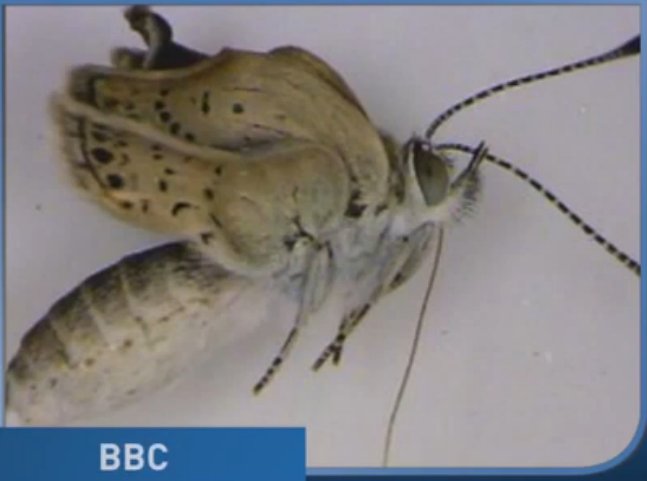
(Photo credit: Newsy/BBC)
Though this news is perhaps disturbing enough, what researchers say is even more alarming is that these mutations are spreading rapidly through subsequent generations.
When Otaki and his team bred the butterflies in a laboratory setting, they discovered that a whole "suite of abnormalities that hadn't been seen in the previous generation" began to appear.
Moreover, six months after the first collection, researchers found that butterflies from the Fukushima area showed a mutation rate "more than double" that of those found two months after the accident.
The researchers concluded that this higher rate of mutation likely came from butterfly larvae eating contaminated leaves and also from mutations of genetic material being passed on to subsequent generations by mutant parents.
“Since we’ve seen these effects on butterflies, it’s easy to imagine that it would also have affected other species as well,” Otaki told NBC. “It’s pretty clear that something has gone wrong with the ecosystem.”
University of South Carolina biologist Tim Mousseau -- who studies the impacts of radiation on animals and plants, but who was not involved in this study -- told the BBC that this research is a crucial step forward in understanding the impact of radiation on humans and other living things.
"This study is important and overwhelming in its implications for both the human and biological communities living in Fukushima," Mousseau said.
The Fukushima nuclear disaster occurred after a 9.0-magnitude earthquake knocked out a power line at the plant last March. The earthquake triggered a tsunami that flooded the facility's emergency generators, causing meltdowns to occur in three reactors. Within days, thousands of residents were evacuated from the area as radioactive material continued to leak into the environment.
For photos from before and after the Japan tsunami of March 2011, click through this slideshow:
Loading Slideshow
Japan Tsunami One Year Later
This combination of pictures shows a catamaran sightseeing boat washed by the tsunami onto a two-story tourist home in Otsuchi, Iwate prefecture on April 16, 2011 (top) and the same area on Jan. 16, 2012 (bottom). March 11, 2012 will mark the first anniversary of the massive tsunami that pummelled Japan, claiming more than 19,000 lives. Credit: Toru Yamanaka, AFP / Getty Images
Japan Tsunami One Year Later
This combo shows an image (top) taken by a Miyako City official on March 11, 2011 of the tsunami breeching an embankment and flowing into the city of Miyako in Iwate prefecture and the same area (bottom image) on Jan. 16, 2012 nearly one year after the March 11 tsunami devastated the area. Credit: Jiji Press / Toru Yamanaka, AFP / Getty Images
Japan Tsunami One Year Later
This combination of pictures shows people evacuating with small boats down a road flooded by the tsunami in the city of Ishinomaki in Miyagi prefecture on March 12, 2011 (top) and the same area on January 13, 2012 (bottom). Jiji Press / Toru Yamanaka, AFP / Getty Images
Japan Tsunami One Year Later
This combination of pictures shows a vehicle sitting on a three-story building in a tsunami hit area of the town of Minamisanriku in Miyagi prefecture on March 13, 2011 (L) and the same area on Jan. 14, 2012 (R). Credit: Jiji Press / Toru Yamanaka, AFP / Getty Images
Japan Tsunami One Year Later
This combination of pictures shows people walking on a bridge upon which a boat lies washed up by the tsunami in Hishonomaki, Miyagi prefecture on March 15, 2011 (top) and the same area on Jan. 13, 2012 (bottom). Credit: Philippe Lopez / Toru Yamanaka, AFP / Getty Images
Japan Tsunami One Year Later
This combination of pictures shows a private plane, cars and debris outside Sendai Airport in Natori, Miyagi prefecture on March 13, 2011 (top) two days after a tsunami hit the region on March 11, 2011 and the same area on Jan. 12, 2012 (bottom). March 11, 2012 will mark the first anniversary of the massive tsunami that pummeled Japan, claiming more than 19,000 lives. Credit: Mike Clarke / Toro Yamanaka, AFP / Getty Images
Japan Tsunami One Year Later
This combination of pictures shows damage caused by the March 11, 2011 tsunami seen from a hill overlooking the city of Kesennuma on March 16, 2011 (top) and the same area on Jan. 14, 2012 (bottom). Credit: Phillippe Lopez / Toru Yamanaka, AFP / Getty Images
Japan Tsunami One Year Later
This combination of pictures shows local residents looking at a tsunami hit area of Minamisoma, Fukushima Prefecture on March 12, 2011 (top) and the same area on Jan. 11, 2012 (bottom). Credit: Kazuhiro Nogi / Toru Yamanaka, AFP / Getty Images
Japan Tsunami One Year Later
This combination of pictures shows a rescue worker walking through rubble in the tsunami hit area of Minamisanriku, Miyagi prefecture on March 18, 2011 (top) and the same area on Jan. 14, 2012 (bottom). Credit: Mike Clarke / Toru Ymanaka, AFP / Getty Images
Japan Tsunami One Year Later
This combination of pictures shows a tsunami hit area of Rikuzentakata, Iwate prefecture on March 22, 2011 (top) and the same area on Jan. 15, 2012 (bottom). Credit: Nicolas Asfouri / Toru Yamanaka, AFP / Getty Images
Japan Tsunami One Year Later
This combination of pictures shows a fishing boat lying amongst the tsunami rubble in Otsuchi, Iwate prefecture on March 31, 2011 (top) and the same area on Jan. 16, 2012 (bottom). Credit: Toshifumi Kitamura / Toru Yamanaka, AFP / Getty Images
Japan Tsunami One Year Later
This combination of pictures shows the view of a tsunami hit area of Ofunato, Iwate prefecture on March 14, 2011 (top) and as the scene appears on Jan. 15, 2012 (bottom). Credit: Toshifumi Kitamura / Toru Yamanaka, AFP / Getty Images
Japan Tsunami One Year Later
This combination of pictures shows cars piled up in front of the airport control tower in Sendai on March 14, 2011 (L) after a tsunami hit the region on March 11, 2011 and the same area on Jan. 12, 2012 (R). Credit: Phillippe Lopez / Toru Yamanaka, AFP / Getty Images
Japan Tsunami One Year Later
This combination of pictures shows the view of a tsunami hit area of Ofunato, Iwate prefecture on March 14, 2011 (L) and on Jan. 15, 2012 (R). Credit: Toshifumi Kitamura / Toru Yamanaka, AFP / Getty Images
Japan Tsunami One Year Later
This combination of pictures shows a tsunami hit area of Rikuzentakata, Iwate prefecture on March 22, 2011 (top) and the same area on Jan. 15, 2012 (bottom). Credit: Nicolas Asfouri / Toru Yamanaka, AFP / Getty Images
Japan Tsunami One Year Later
This combination of pictures shows residents walking on roads covered with mud and debris in a tsunami hit area of Sendai, Miyagi Prefecture, on March 14, 2011 (top) and the same area on Jan. 13, 2012 (bottom). Toru Yamanaka, AFP / Getty Images
Japan Tsunami One Year Later
This combination of pictures shows a cherry blossom tree amongst tsunami devastation in the city of Kamaishi, Iwate prefecture on April 20, 2011 (top) and the same area on Jan. 16, 2012 (bottom). Credit: Yasuyoshi Chiba / Toru Yamanaka, AFP / Getty Images
Japan Tsunami One Year Later
This combination of pictures shows a tsunami hit area of Rikuzentakata, Iwate prefecture on March 22, 2011 (top) and the same area on Jan. 15, 2012 (bottom). March 11, 2012 will mark the first anniversary of the massive tsunami that pummelled Japan, claiming more than 19,000 lives. Credit: Nicolas Asfouri / Toru Yamanaka, Getty Images
Clarification: This article has been amended to reflect that butterfly larvae -- and not adult butterflies -- consumed contaminated leaves.
Related on HuffPost:
By Dominique Mosbergen Posted: 08/14/2012 7:05 pm Updated: 10/11/2012 6:35 pm