
The Most Important Conversation in Our Lifetimes Might Just Begin with Jonathan Safran Foer's Latest Book
Over the next weeks Huffington Post will feature a diverse range of responses to Jonathan Safran Foer's controversial new work of non-fiction, Eating Animals. But these aren't your usual book reviews. They are the start of a conversation that some powerful people in agribusiness would rather we not have.
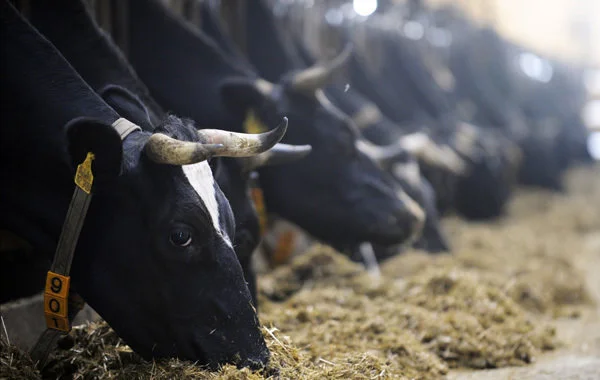
Imagine that tomorrow scientists report that a single action, something that most of us do every day, was discovered to be the leading human cause of global warming. And one of the top two or three causes of every other major environmental problem at the local and global level. Even more, this same action appears to have been a decisive factor in the development of the H1N1 "swine flu" and continues to stimulate the growth of pathogens resistant to antimicrobial drugs. Imagine further that this action causes billions of farmed animals annually to suffer in ways that virtually all Americans say should be illegal. And, finally, that this action has lead to the decimation of American farm communities from North Carolina to central California.
This is real. It is happening. And all these facts about the effects of eating factory farmed animals are thoroughly documented in Foer's new book.
Eating Animals is part personal journey, part modern muckraking and a surprisingly candid and empathetic book on food. Foer doesn't preach but instead invites us to have a conversation with family farmers and factory farmers, animal activists and slaughterhouse workers. His book is important not because he has all the answers (he often acknowledges his own uncertainty), but because he asks the right questions and makes it impossible for us not to ask them too.
There is little dispute that our current way of eating animals sits at the intersection of some of the most pressing problems in America. And there is also little dispute that eating animals is deeply rooted in culture, bound to our national traditions (the Thanksgiving turkey, the Christmas ham), and can be a source of a great deal of human pleasure. Foer's rare accomplishment is that he flinches from neither the complexities of meat's attraction nor the realities about what, in the era of factory farming, the chickens on our plate do to the world in which we live.
It's time we have a more intelligent and reasonable discussion about the state of animal agriculture. And it's time that vegetarian advocates and omnivores who simply want animals and the environment treated with basic dignity insist that we focus our national discussion of food on a challenge we all can agree about: transforming the factory farms that now produce 99 out every 100 farmed animals in America.
Foer's Eating Animals can help open that discussion. In fact, says Natalie Portman in a revealing review that will be posted October 27, it already has. Stay tuned.
Aaron Gross is the founder of Farm Forward, a nonprofit that promotes more humane, sustainable animal agriculture and plant-based diets.
Sarah Newman: Meatless Mondays: 52 Opportunities for Rejuvenation
New York, Calling Farm Animals - The Brooklyn Rail
Jonathan Safran Foer's Nonfiction Book, Eating Animals, Coming in ...
In the Meat Department, We're Pigs (And That's Messing Up the World)
"Everything Is Illuminated" author Jonathan Safran Foer untangles meat and memory
Natalie Portman Back To Vegan After Reading “Eating Animals”
Think of that next time you pile bacon and eggs onto your plate.
Foer writes from the perspectiv
My children grew up without meat. My son as a teen has chosen to try meat here and there. That's to be expected. However, both have all the resources they need to live a vegetarian lifestyle without the trials and tribulatio
One crux of the matter will be that parenting involves two people usually. One parent will resist (father most likely). A power struggle will ensue. How do you resolve that?
Yes, it is good to talk about ways that we can reduce the suffering of the world, but humans are not gods--we didn't create this system. Animals were eating animals before humans separated themselves from other apes, and some current human societies could not possibly exist without continuing to eat animals, i.e. Tibetan, Eskimo. Despite the claims of many vegans, there are some nutrients that are much more difficult to obtain with zero animal sources in the diet: Omega3 is one example.
All human endeavors destroy the environmen
For the record, the author of this very book we're discussing recognizes the value of traditiona
http://www
Simply, what is today's total, wild or penned, versus numbers in the past.? Today's damage vs the past.
I'm all in favor of reducing crowded population
Yes, factory farms exist. Yes, they are cruel to animals, use excessive amounts of grain and create pollution problems because of the concentrat
It is unfair to assume all meat production is based on factory farming, that animals are always fed on land that might be used for other edible crops (with out the necessity of applying massive amounts of fertilizer
What's inhumane is not the fact that animals are killed. It is that we make them suffer so much in life when at an industrial farm. (Just say freaking NO to foie gras, people). This is in turn made possible by lack of knowledge among many consumers (and a social stigma that says caring about this makes them crazy hippies) as well as overpopula
I hate to burst people's bubbles, but I think that a more appropriat
Carmelized tofu actually makes a great snack - even though my offspring isn't a vegetarian
Give it a try, folks! It's SOOOOOOOOO
Everyone should by this point realize that almost everything that is mass market produced has major problems..
STOP EATING FAST FOOD and a ton of this industry will go away!!
If you can afford it, buy local and organic for your home!
The food industry is filled with questionab
The Vegan movement/r
When it gets down to it people will eat the family pet to survive, and eventually each other, so why not in the march to stop any killing of any life form we just stop it all and start making Solent Green, it is the only way to stop all the pollution caused by farming of any kind for food. By converting the dead into a food supply we can then use all the land that was once used for food creation for fuel creation and end the use of oil as a fuel forever. By eating Solent Greens we can do away with the need for graveyards
What say you vegans if your cause is to end the slaughter of animals for food and end pollution caused by farming for food surly this must be the final logical step?
But, really, vegans are not your enemy- i know that we love our corporate masters, but we shouldn't be too afraid to look at their crimes.
As to your assertion, that vegans kill for food,this is based upon what?
Vegans love to point out the pollution farming animals for food causes but convenient
How do you think those veggies get to the super market, they die. Vegans justify their killing with some lame excuse or another but in the end a life is taken.
All food production causes pollution even organic. All people kill something to sustain their own lives be it plant or animal. That is an inconvenie
To raise veggies or meat causes some type of harm to the environmen