More

Abdul Malik Mujahid

Abdul Malik Mujahid

Posted: May 18, 2009 10:52 AM

Why Do Afghans Have a Life Expectancy of Only 44 Years?


The Afghan Tragedy Continues After 30 Years

According to the CIA World Factbook, an Afghan's life expectancy is merely 44 years.

That's 20 to 30 years less than neighboring Pakistan and all other surrounding countries. It is just one result of the ongoing devastation in that country.

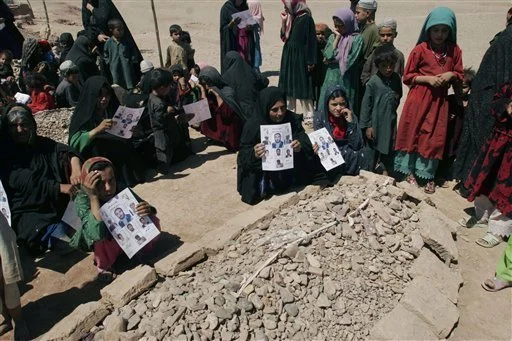
The war in Afghanistan did not start in 2001 with the US invasion. It began 30 years ago in December 1979, when the former Soviet Union invaded the country. The human toll of the conflict is staggering: more than a million Afghans have been killed and 3 million maimed.

Five million (one third of the pre-war population) were forced to leave their country and became refugees. There are still 3.1 million Afghan refugees today, making up 27 percent of the global refugee population. Most of them live in Pakistan. Another two million Afghans were displaced within the country. In the 1980s, one out of two refugees in the world was an Afghan.

Most Afghans alive today have seen nothing but war.

Daily life in Afghanistan is miserable. Only six percent have electricity in a country which gets as cold as Chicago in winter. Even in Kabul, the country's capital, electricity comes for only a few hours a day. Traditional wood heating is difficult since not much wood is left in Afghanistan after 30 years of wars and forest devastation. Over 1,000 people died because of cold weather last year.

"About two million state school students do not have access to safe drinking water and about 75 percent of these schools in Afghanistan do not have safe sanitation facilities," according to the UN Children's Fund (UNICEF).

There is no law and order in most of Afghanistan. Government barely exists in Kabul. Former warlords are the leaders. That is demonstrated by the fact that "Afghanistan is the world's largest cultivator and supplier of opium (93 percent of the global opiates market)." A British daily paper actually reported that "the four largest players in the heroin business are all senior members of the Afghan government."

The Taliban, which has lost its legitimacy due to its brutality, are sometimes remembered by Afghans as those who brought peace to Afghanistan.

Women continue to be the number one victims of the country's 30 years of warfare. According to Malalai Joya, an elected member of the Afghan Parliament and outspoken critic of warlords and war criminals in the government, "the propaganda to the world about liberating Afghanistan and women and fighting against terrorists are lies." In her speech accepting a human rights award in London, she said:

Our nation is still living under the shadow of war, crimes and brutalities of the fundamentalists, and women are the primary and silent sacrifice of this situation. Justice doesn't exist in Afghanistan. Every sector of life in Afghanistan today is a tragedy, from women's rights to security, law and order and domination of a drug mafia.
Almost two generations of Afghan children have grown up seeing nothing but war, bombing, homelessness and hunger. They are an easy target for those who want to play Afghans against each other, through money, drugs and guns.

Afghanistan was almost self-sufficient in food before the Soviet invasion in 1979. The leftist government had instituted many economic and social reforms. But the Soviets went in for the bait set up by the US to take revenge for the Vietnam War, as bragged about by Zbigniew Brzezinski, former US President Jimmy Carter's National Security Advisor. That was the beginning of the Afghan tragedy 30 years ago. Since then, the country has not seen a day of peace except for the brief brutal peace of Taliban era.

America trained, financed and equipped Afghan refugees to become Mujahideen to kill the Communist Soviets. Along the way, we created a cadre of fighters, including Osama bin Laden. Then, we supported and financed the Taliban and now we are trying to kill them as well.

In seven years of US occupation of Afghanistan, the government of Hamid Karzai and American influence have remained limited to Kabul and a few other smaller areas. Now it is not just the Americans, NATO and Pakistan which are playing their cards, but India, Russia and Iran also have increased embassy staff and active participation in carving a realm of power in Afghanistan.

If the British Empire in the 19th century could not succeed in occupying Afghanistan despite close to a century of war on and off, and the Soviets failed to do the same during the twentieth century, we cannot win either. Isn't it about time that we Americans in the 21st century rethink the "good war" in Afghanistan? After seven years of going nowhere, it is surely time for a new strategy.

Consider this: if the Soviets, with 120,000 troops at any given time (500,000 total) could not do it, how can we with only 60,000? An increase of 20,000 to 30,000 American soldiers is unlikely to achieve military victory.

And the Soviet Union was just across the border from Afghanistan, not tens of thousands of miles away as America is.

In Iraq which is half of the size of Afghanistan, the U.S. had more than 150,000 troops plus 190,000 contractors, killing one million people and destroying the whole infrastructure of the country.

Afghanistan has 16 percent more people than Iraq. It has a far more challenging military environment because two-thirds of Afghanistan is mountainous terrain suitable for guerrilla warfare unlike the flat plains of Iraq.

Most Afghans have been raised accustomed to war and hardship during the last three decades, unlike the comparatively more urbanized Iraqis.

That is the reason the outgoing commander of NATO-ISAF, General Dan McNeill, publicly requested anywhere between 100,000 and 400,000 more troops for the fight in Afghanistan.

President Obama has been right to pursue diplomacy with countries like Iran and for extending a hand to the Muslim world. However, he is dangerously wrong for pursuing the military path in Afghanistan. It is one that will only exacerbate terrorism, as well as further destroy a nation crippled by thirty years of war. It will lead to the deaths of more American soldiers. And I have no doubt that it will further lower the life expectancy of Afghans, those who continue to suffer the most.

Abdul Malik Mujahid is a Pakistani-American. He is an Imam in Chicago, President of Sound Vision, and serves as the vice chair for a Council for a Parliament of World Religions.

The Afghan Tragedy Continues After 30 Years According to the CIA World Factbook, an Afghan's life expectancy is merely 44 years. That's 20 to 30 years less than neighboring Pakistan and all other s...
 
 
  • Comments
  • 11
  • Pending Comments
  • 0
  • View FAQ
Comments are closed for this entry
View All
Recency  | 
Popularity
12:02 PM on 05/19/2009
This is a much needed voice on the futility of using military to solve the Af/Pak problem. President Obama must break totally with the previous Bush strategy. Thanks to Malik for his well informed presentation on this topic.
photo
HUFFPOST BLOGGER
Abdul Malik Mujahid
05:28 PM on 05/19/2009
Thank you Jim for your comments. My question to you is when will the peace movement stop considering Afghanistan a “good war.”
11:49 AM on 05/19/2009
Our foreign policy needs to be more comprehensive and to take into account the reality of the countries we which we are dealing.

Daniel Ellsworth wrote he realized we could not win in Viet Nam when he was over there and someone told him that the people of Viet Nam see themselves as the victors over the Chinese occupation though it took them 100 years.

We are seeing this in Afghanistan and sadly it is taking a tool on us but even more so on the population there
photo
HUFFPOST BLOGGER
Abdul Malik Mujahid
05:29 PM on 05/19/2009
Interesting. Viet Nam and Afghan seems to have something else also common between them. Viet Nam is proud of fighting Chinese for 100 years and Afghans are proud of fighting British for 100 years. Afghan flag is probably the only flag in the world which has a year printed on it which corresponds to 1919. It was the year British finally accepted their defeat after 100 years of war to subjugate them.
08:20 AM on 05/19/2009
Good attempt at trying to persuade US to take a holisitc look at the problem. Feel sorry for the poor Afghans; imagine a life expectancy of only 44 years!
photo
HUFFPOST BLOGGER
Abdul Malik Mujahid
05:31 PM on 05/19/2009
Other statistics about Afghanistan are also pretty bad:
Over 2 million: Number of Afghans who do not have regular supplies of food.
50 percent: Percentage of Afghanistan’s population that lives in absolute poverty.
40 percent: Percentage of Afghanistan's population that is unemployed.
http://www.americanprogress.org/issues/2008/08/left_behind.html
02:53 PM on 05/18/2009
I agree with the author in his inference that military solution is not only difficult but also immoral and kills innocent lives. It creates more hatred, resentment and is counter productive. You can not have a military solution in 100 years as the history of Afghanistan tells us. I urge Obama administration to look for political solution based on respect for human life and the will of the people.
photo
HUFFPOST BLOGGER
Abdul Malik Mujahid
05:32 PM on 05/19/2009
Obama’s Comments line is: 202-456-1111. They need to hear more from people of peace. He needs to hear from all of us. Thank you for your post.
12:05 PM on 05/18/2009
Sir, I agree with you. But I don't think that a non-military option will ever be instituted by the US. Making war is simply too profitable.And I believe our leaders are often high on power, this problem isn't a "conservative" or a "liberal" issue as many politicians irregardless of party show worrying signs of meglomania when talking about foreign policy. US Militarism and an admittedly hypocritical Manichean world-view (the Taliban are bad, but we will deal with the Saudis; Cuba is evil, but China is ok since roughly 1990) have made deal making with oppositional groups extremely difficult. Thus, doing development work in Afghanistan is extremely dangerous which drives up costs, allowing contractors to justify cheating the US taxpayers and Afghan aid recipients. To get trained professionals you must offer extremely high wages. Adding to the problem is that many individuals who would help in Afghan development are driven away by the imoral quandry caused by the US occupation and the historical awareness of politically motivated development projects in the past. Locals and expats cooperate with the US at risk to themselves and their families because they are now seen as being traitors. So the people who do come are invariably attracted by the dollars or "adventure" which leads to the abomination that is present day Kabul, as described by Cockburn et al.

ISomething needs to be done, but for political, cultural, and now deep structural reasons the US can't do it, despite our best intentions.
photo
HUFFPOST BLOGGER
Abdul Malik Mujahid
05:40 PM on 05/19/2009
That is an important point, which you have brought in about how aid and human development is problematic during the war period. I am interested learning more about it. However, the US development aid itself is very limited. US is spending $36 billion a year on war in Afghanistan while less than a billion is going to development according to Center for American Progress. And probably most of it is coming right back to the US through contractors etc.

There are areas in Afghanistan where there is no war. The US can turn a city there or two into a showcase where infrastructure development, self-reliance, self-rule can demonstrate to the citizens what it means to see their dreams come true. I am pretty sure that other cities would then like to see similar development in their areas and pretty soon Afghans in the war zone will hear about it. That is one weapon the US failed to use in Iraq and elsewhere.
09:27 PM on 05/24/2009
You are correct! As always our civic funding is miniscule, and then what actually gets to the people is even more paltry. I read that the entire budget for agricultural development in Badakhshan was 40,000$. Is this correct? Moreover, as you said, it just comes back to the US via fees and salaries. We use American crops to feed the hungry of the world, rather than try to set up long term relations with local farmers. I'm no expert, but it seems to me that this has been the way the US has conducted aid for decades.

I agree, it is a shame the US hasn't done more in peaceful areas such as the North, which could serve as a showcase for the South and Southwest. We really let that opportunity escape us.