
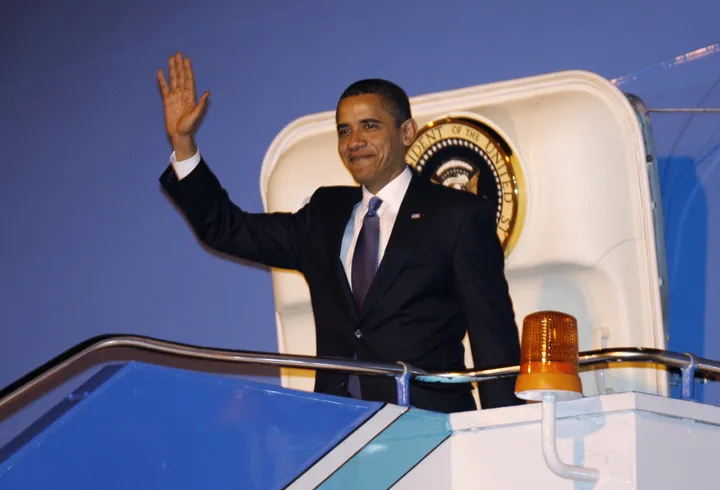
President Barack Obama will travel to Mexico and then to the 5th Summit of the Americas in Port of Spain, Trinidad, beginning on April 16th. He would do well to remember Ronald Reagan's seemingly obvious but fundamentally important comment on returning from his first trip to South America as President: "These Latin American countries are all very different from each other."
It's crucially important for the new U.S. government at its senior levels to take seriously the oft-repeated advice of regional experts to disaggregate "Latin America" -- to understand its complex diversity. Emphasizing this is now more important than ever.
During the past 20 years, under administrations of both parties, Washington has tended to underline the supposed convergence within the region: toward democratic governance, market-oriented economies, regional economic integration and policies of macroeconomic and fiscal balance. These convergent trends were real, though never universal, and they have been significant, though never as fully consolidated as Washington liked to claim.
Key differences persist among the many countries of Latin America and the Caribbean. Some of the differences are growing, not shrinking. And U.S. policy should focus on how different countries of the Americas cluster along five separate dimensions.
The first is the degree of demographic and economic interdependence with the United States: highest and still growing in Mexico, Central America and the Caribbean: lowest and likely to remain low in South America, and especially in the Southern Cone. Countries such as Mexico, El Salvador, Jamaica, the Dominican Republic and others, which have significant fractions of their population living and working in the United States, pose "intermestic" issues -- combining international and domestic facets -- from immigration to medical insurance, pensions to drivers licenses, remittances to youth gangs.
A second dimension is the extent to which the countries have opened their economies to international competition: by far most fully in Chile; a great deal in Brazil, Colombia, Mexico, Peru, Panama and some Central American nations; and less so in other countries. A key challenge in the current world economic crisis will be to shore up the trend toward open economies by resisting domestic pressure for protectionism in our own case.
A third distinguishing dimension is the relative advance of democratic governance (checks and balances, accountability, and the rule of law): historically strong in Chile, Uruguay, and Costa Rica; increasingly, if quite unevenly, robust in Brazil; gaining ground in Mexico over the past twenty years but with ups and downs, hard struggle and major recent setbacks; arguably declining, or at least at risk, in Argentina; under great strain in Venezuela, most of the Andean nations, much of Central America and Paraguay; and exceptionally weak in Haiti. The Obama administration can make an important positive difference on these issues by respecting the rule of law at home and internationally, and by nurturing democratic governance abroad with patience, restraint and skill, mainly through nongovernmental organizations.
A fourth dimension is the relative effectiveness of civic and political institutions beyond the state (the press, trade unions, religious organizations, and nongovernmental entities): strongest in Chile, Uruguay, Costa Rica, the Dominican Republic and perhaps Argentina; growing but still severely challenged in Brazil and Mexico; slowly regaining stature but still quite problematic in Colombia; weak in Peru, Bolivia, Ecuador, Paraguay, Venezuela, most of Central America and Haiti. Washington can help strengthen nongovernmental institutions, but it should do so as much as possible through multilateral organizations, and in strict accordance with each country's laws.
Finally, countries differ regarding the extent to which traditionally excluded populations are incorporated: this includes more than 30 million marginalized, disadvantaged, and increasingly politically mobilized indigenous people -- especially in Bolivia, Ecuador, Guatemala, the Peruvian highlands, and southern Mexico -- and Afro-Latin Americans in countries where they are still the object of racial discrimination. The very fact of President Obama's rise to the presidency has probably done more to affect this issue than years of more direct policies, but enhanced U.S. support for poverty alleviation targeted at excluded populations would also be helpful.
Hemisphere-wide summit conferences like the meeting in Trinidad have their place as a way of building communication and rapport, and they offer mutually convenient photo opportunities. But major progress on substantive issues can only be achieved with clusters of countries with comparable or complementary issues and concerns. Recognizing this reality should be the starting point for reframing U.S. policies in the Americas.
Abraham F. Lowenthal, professor of international relations at the University of Southern California, is co-editor of The Obama Administration and the Americas: Agenda for Change, just published by the Brookings Institution.