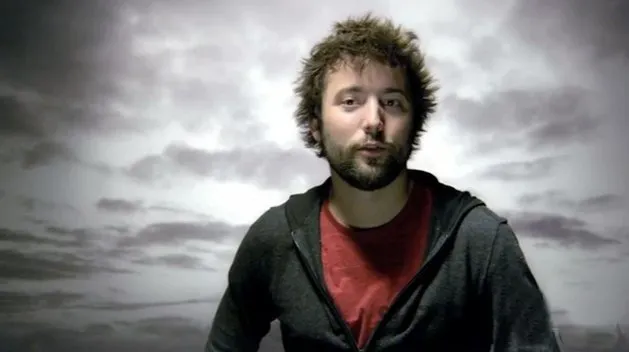
If necessity is the mother of invention, then it's no wonder the state of the environment is driving innovation around the world. At SHFT, we're watching this happen in the private sector at a pace and force that's nothing short of astonishing.
It's a slightly counterintuitive idea, given the huge challenges we're facing and the lack of tangible results at the big international summits. Apathy can set in all too easily. We get overwhelmed with myriad looming issues surrounding climate change and it can leave us numb or full of fear. And then there's the political rationale for why the "conversation" has left the stage in this election year, which goes something like this: More important concerns like the economy and job loss rates eclipse the less important environment issue. But the silver-lined reality is we're in the midst of a burgeoning green economy, and along with it, lots of green jobs.
In fact, we'd argue that the troubled economy, the high unemployment rate, the growing awareness of global warming, and the seismic speed and growth of technology have created a perfect storm of opportunity. We're seeing a proliferation of innovation with the environment at its core in many sectors (business, energy, design, food), and when we take them in the aggregate, it's beginning to look a lot like a paradigm shift.
We explore this bold new landscape in The Big SHFT, our latest original series produced with Ford Motor Company, whose manufacturing innovations forever changed the way things are made. In these short three-minute films, we train the camera lens on 10 innovators who are changing the way we live through innovation and leadership with an eye on the environment.
The Big SHFT, which we're showing here on HuffPost for the first time, harkens back to the industrial revolution in its surge of disruptive innovation, the difference is this current revolution aims to clean up the dirty casualties left in the former revolution's wake.
Sure, it's going to take a lot to clean up the environment and there's no panacea. It will ultimately depend on great efforts from the public sector to work in cooperation with the private sector. But until our government can afford to focus on this, the private sector will be paving great swaths of innovation, application and progress.
Here are the first two episodes: The young entrepreneur Tom Szaky and the green jobs pioneer Van Jones. They are the first two subjects of THE BIG SHFT, who illustrate that despite the many challenges, the times we're living in are damn exciting.
We are personally inspired by these stories and hope that you are too. Share them with your people. Tell us what you think, and we'll respond on Facebook and Twitter.
TOM SZAKY: Tom Szaky is the founder and CEO of TerraCycle, which recycles garbage into innovative new products. From plant fertilizer and tote bags, to park benches and bird feeders, Szaky is a transformer who turns trash into profit.
VAN JONES: To Van Jones, pollution and poverty are two sides of the same coin. The former White House environmental advisor is America's leading green jobs advocate, fighting for a clean economy in the name of justice.
SHFT.COM is a cultural media platform, founded by Actor/Filmmaker Adrian Grenier and Film Producer Peter Glatzer offering original video series, curated shopping, and a host of resources that speak to an inspirationally conscious lifestyle.
We need to quit doing some stupid things.
1. Flushing away good water.
2. Building homes, especially in tornado and fire-prone areas out of wood or fake products. Use stone or masonry and buy them from poorer places.
3. Not allowing wind and solar projects for purely aesthetic reasons (there are other reasons that have validity).
4. Putting stuff in landfills that could be diverted and sent to developing countries..electronics, textiles, old appliances. There are arguments that it disrupts their economies and deprivespeople of work, but I think they can adjust to that if distribution is fair..a lot of labor that can go into repairing things or stripping them for resources. We need to figure out how to transport things cheaply, especially for rebuilding after disasters; we need to get agencies who work with real stuff, and don't merely say send money.
5. Burning coal for electricity when other stuff now going to landfills could be burned.
6. We need to come up with ways to desalinate ocean water and pipe it inland. I don't see why simple evaporation should be overly expensive. There is a lot of sun sometimes where there is need for water.
7. Overpopulation is the main problem..reduce that and watch problems disappear, unless, and this is a big unless, enemy populations take advantage of a decreasing population.
8. Education of course..with strict emphasis on vocational and occupational education
What will it take for the most pessimistic person to entertain optimistic ideas?
What will it take for the most burned-out, sarcastic soul to realize their attitude(s) must change before they become the next log in the sarcasm furnace.
What will it take for never-ending nay-sayers to actually pause just a moment and ponder, then act upon potential solutions?
In gratitude I bow to Tom, Van and all those who applaud Tom and Van's message for their willingness to inspire rain upon the fires of doom. May these message (combined with countless similar messages) re-awaken us to our fullest potential.
Otherwise its, consume, work till your dead, and living in poverty and misery, while the rich party like its 1899.
Based on current population dynamics, consumption metrics, and the sustainability limits of water and energy resources, the tweaking of any of the ways humanity handles the huge challenges will not mean squat. MIT scientists know hydrogen energy development would be hugely helpful, but nothing about such development is anywhere near happening. We had our chance to begin changing significantly way back when President Carter talked about how, and he was laughed at.
President Carter was right. Big Business wanted profit, instead. Even if it would be unsustainable.
While innovation blossoms, education on what it means to be 'abundant' also needs attention. Buying more material possessions got us into the fix we're in. Time to remember the role of money and it's ability to help every single living creature to thrive beyond surviving.
We are doomed!
Have a nice day :)
I believe you are well intentioned but misguided. Greenwashing industry and innovation is merely a distraction which provides us with warm-and-fuzzy feelings we crave to not look at or honestly discuss the core issue of human overpopulation. An endless loop of environmental pressures driving technology, driving resource depletion, driving pollution, and finally driving species extinction, never accounts for the constant demands of exponential growth of human populations. There are not techno-fixes to these problems. Human reproduction entitlements must be abolished. You may want to read the World Wildlife Fund's 'Living Planet Report 2012'.
There is no technological magic bullet on the horizon or beyond--do a little digging. None of these green technologies are possible without a baseload E source. And the only baseload source we have aside from nuclear is the exact same one used by cro-magnon a million years ago--we burn things.
And exponential growth (which is what % growth in population and consumption is) is not sustainable period--there is not enough land and water to support an exponentially growing populations. Hence the ecological term 'carrying capacity'. While no one will state what the planets carrying capacity for humans is, all agree it is certainly not 7 billion and can never be the 9 billion projected for 2050.
I will never understand why people have so much trouble grasping this when its a basic math calculation that one wrangles with routinely whether its figuring out how to pay of your credit card, how much to put away for retirement, etc.
Does anyone think that the entire Southern power elite of the Republican
party actually believes the propaganda (the polite word) that they
persist in cranking out? Does anyone think they are going to
wait around while the south & SW becomes hotter/ dryer with the
risk that things could get exponentially worse faster than
computer models forecast?
They are going to seek a technological fix to bail them
out of the jam consisting possibly of space based
tech to be put in place by 2020-30 as a guess.
An atmospheric Co2 filter & undertaking the huge task
of diverting sunlight.
Then there's the question of predictive intelligent agent software and
our media constantly pointing out incorrect predictions
by selected experts. The above software is to some degree available
to many in industry & media & yet everything is presented as a surprise
or "news".
Many things can be predicted with some degree of certainty.
Obama's first post election
appearance on 60 Minutes saw him say that
nearly all his options in the coming years will be a choice
between terrible & horrible & that he would likely be
a one termer (the impossible task of cleaning up 3 wars & a financial economic disaster).
He essentially knew the basic outlines of his next four years.
The same is true of events surrounding the reality of AGW.
the south both demographically &
economically w/o threatening oil gas coal
& their investments in same. They need
to buy time and they will with tech fixes
in 10-20 yrs or as soon as they feel
the threat is eminent. We will see
"a national emergency" all of a sudden.
http://www.huffingtonpost.com/tom-zeller-jr/ozzie-zehner-green-illusions_b_1710382.html
This is the mindset that controls Washington and the mindset that will most likely be responsible for global environmental catastrophe: a solution to a problem is only viable if some sector of corporate America can make a fortune from it. Whether or not the solution CAN solve the problem is secondary to the potential for profits from the "solution".