The first remarkable episode of global celebrity adoration, as we know it today, comes to us courtesy of the silent film era and Rudolph Valentino, a.k.a The Sheik. (While prodigious talents like Mozart, Michelangelo, and Charles Dickens enjoyed recognition in their lifetimes, twentieth-century inventions like radio, film and television revolutionized the meaning of fame, culminating in the modern phenomenon of super stardom.) When the Italian Hollywood star died in 1926, fans wept, women fainted, and more than 100,000 people marched in his New York funeral. 83 years after his death, his name remains a moniker for the swashbuckling ladies man meets the hopeless romantic.
The first entertainer to uncork a cult-like fan craze of the sort later enjoyed by the Beatles and Michael Jackson was Elvis Presley. Elvis epitomized the vivacious, youthful spirit of his times, becoming a globally recognized icon of, not just American art and entertainment, but of America itself. His burial grounds at Graceland remain one of the most visited anywhere in the nation, and Elvis himself has become the most impersonated figure in history.
The notion of superstardom is not limited to the US or the West. When legendary Egyptian singer and Arab icon, Umm Kulthum, died in 1976, her funeral became the most attended in modern recorded history, with over four million mourners crowding Cairo's streets. Though a classical singer, "the lady," as she was dubbed by French president Charles De Gaul, had left an indelible mark on the social, cultural, and political consciousness of the Middle East and the Arab world. To this day, she is known affectionately as Egypt's fourth pyramid.
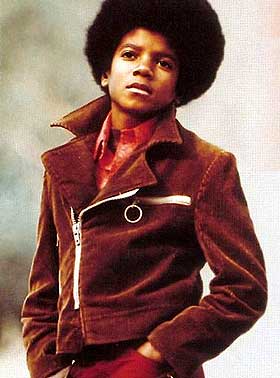
So where does Michael Jackson's legacy fit in?
Quirky tabloid life aside, Michael is widely regarded as the supernova of superstardom.
No entertainer in history has offered as much excitement and enjoyment to as many fans around the world as Michael has for as long as he has; it is likely that no one ever will.
Despite the wealth of competition in a world in which millions dance and sing, he danced and sang better than anyone in the world.
As a starry-eyed child from Gary, Indiana he stunned audiences with his soaring voice, crooning ballads, and composure beyond his years. As an adult, he excited millions with a never-before-seen brand of electrifying entertainment that combined pulsating energy and studied suave.
His trademark infectious beats and moves left him in an uncontested league of his own, much like Pele in soccer and Michael Jordan in basketball.
No entertainer has left the music world with as many popular singles that defined the essence of their times as he has. His album Thriller was the most commercially and critically successful non-anthological album in history, and is expected to remain that way in the future.
Michael Jackson's fan base extends from Morocco to Japan, and from Iceland to Australia. Though it has dimmed in recent years due to a series of bizarre lifestyle choices, most notable of which is a metamorphous plastic face, his gargantuan talent and musical body of work will likely prove enough to secure him a glowing post-mortem legacy.
As I watch the ongoing TV coverage of reactions to Michael's death that pour in from celebrities, politicians, and average people on the street, I am reminded of the same display of emotion shown for Elvis, John Lennon, and Umm Kulthum. This leaves me wondering, what is it about entertainers that so captivates the emotions of people and commands a broad outpouring of love seldom offered to others.
After all, one would think that mass adoration of the highest order would be better reserved for the liberator of the free world, the discoverer of a cure for cancer, or the inventor of a bank that systematically alleviates poverty.
But it is not, it is almost always reserved for entertainers.
The secret to this conundrum lies not in those entertainers, but in us and our narcissist tendencies. Our love for them is but a reflection of how deeply we cherish our personal memories, fleeting moments that we value more than mounds of gold, moments played against a soundtrack provided by those we then grow to love.
Sure, you may love Shakespeare or Hemingway, and you may appreciate your elected officials. But it is highly unlikely that your favorite author or elected official will occupy the same space in your sentimental bank of memories as the folks who provided the score for those special times in your childhood, adolescence, youth, etc. Naturally, love is a sentimental affair.
Ironically, he did not benefit as greatly from what we offered him in turn. Michael's personal life was defined by a constant struggle to cope with a larger-than-life fame that burdened him to his core, causing him deep pain, sadness, and solitude. Robbed of his childhood, the eternal boy could never fully come to terms with his manhood, unleashing the odd behavior that only earned him more public scorn, perpetuating the cycle of pain. No one explains it better than Juan Cole whose thoughtful tribute to Michael I highly recommend.
Want to reply to a comment? Hint: Click "Reply" at the bottom of the comment; after being approved your comment will appear directly underneath the comment you replied to
Well, people can't relate to Shakespeare the person - we know he was a businessman, but scant evidence that he was actually a writer (come on, Statfordians, you can't defend his lack of bio!).
No, no. I embrace a far more cooler alternative to Will: Christopher Marlowe, the shadowy spy and brilliant playwright who probably wrote most of the Shakespeare plays anyway. The guy was a rock star in my book. http://marlowe-shakespeare.blogspot.com tells his amazing story
In ten years time or less, Michael Jackson will be an answer on "Jeopardy" and Shakespeare will still be the greatest writer in the English language. When was the last time that Michael Jackson released a song that anybody cared about? He only stayed in the public eye because of his legal troubles and the fact that he was plain weird.
Your example of Rudolph Valentino is interesting - if you polled a hundred people on the sidewalks of any US city - I would guess that 90 of them would not have any idea who the man was - most would probably tell you that he was one of the three tenors.
MJ made a different, had additions, and had so much new to offers, I think that is what made him the more adored. That and how he allowed African Americans on MTV, before him there was no African American on MTV. That on its own is a great achievement.
MJ will be missed and there will be no other MJ.
Shady:)
sorry i had to post 3 diffrent comments:)
To elaborate on your article, You think we make the starts where the stars make them self’s, according to there talent and ability to make people love there talent. You become an icon when you get recognized, you get recognized when you make a different, you make a different when you apply changes that you created, you create changes when you have ideas, ideas come when you want to make a change, you want to make a change when you believe in your self and believe in your talent.
MJ was full of talent, and he knew that at age 10, when the whole world recognized it. He made a big different in music since then, I could go on and on about what he did and how he changed. What changes UMKalthum made, or what effect did she have on the world, or what did she create that was new? She had a strong voice, and long breath, yet all the music and words were ready for her, no addition from her side! The only thing is that she was the only one of her time with that kind of strong voice strong. Shakespeare on the other hand is a different story, as you are not forced by media to read him or watch him or even listen to him. You might buy a book, or see a play but you will not keep it in your memory to practice it while you showering or driving in the car
Ahmd,
Thank you so much for the dedication, as you know I love MJ, and his art. That includes the music, the dance, the talent for choice of words, the talent to make the listener love the music, dance to it, and remember the words of the song (in most cases if you do understand what he is singing) so you could sing along as you dance and try to do MJ movies. I remember so many moments where my friends and I would just “DANCE LIKE ME”.
MJ was known all over the world, and I think that Armstrong did the moonwalk to MJ music on the moon. LOL.
"His album Thriller was the most commercially and critically successful non-anthological album in history, and is expected to remain that way in the future." Commercially yes. Critically, no. Sorry. It's critically acclaimed, yes, was and is, but I seriously have to wonder about where you got an idea like that it's been universally called the greatest album ever by pop music critics.
and still m in the subject of fame..
as I've noticed when watching documentaries on HISTORY.. usually one will see posters of either.. CLINT.. BRUCE.. MICHAEL.. DECORATING the most humble huts.. in the most hard to reach places..like even TIMBUCkTU..
I chuckled as I recall Bogie's quote.. he was so right!
Ahmed,
You chose your words very carefully. You aren't saying as some here interpret that MJ was somehow better than Shakespeare or anything but that as a product of Western culture he is worshiped, loved to the point of divinity by the masses of the world while Shakespeare isn't.
Is it because of a narcissistic love of ourselves and our memories? I believe that plays a huge part, the nostalgic memories of growing up to those soundtracks of our lives. I do think though that there will and is cross over in which young people were commenting on his life, and a 20 year old girl was saying "though I didn't grow up with his music I love it, appreciate it, and listen to it." Some of his songs will be around forever: Beat it, Dangerous, Thriller, Smooth Criminal and that pop blocking, body rocking dance style will also be around.
Shakespeare is more relevant and of course deeper, much deeper than the King of Pop will ever be. His staying power has already been proved.
Some children and adolescents also have a special place in their hearts for My Little Pony and AC/DC. But your lame reasoning doesn't make them better than Shakespeare. More popular for a time, perhaps, but educated people know popularity is hardly a worthy measure of anything of value.
Those of us over here in the Reality-Based Community understand that it takes education, maturity and experience to be able to understand Shakespeare and similar weighty works of depth and maturity. Shakespeare is also not of our time, not to mention the fact that works of depth and maturity don't translate well into 3-minute pop songs or Saturday morning cartoons. I would hope the reasoning for such would be self-evident, but then I remember what we're dealing with when speaking with hoardes of Michael Jackson fans.
See Ahmed Rehab's Profile
Never said he was "better" than Shakespeare, see my response under Ramblin Jack's for an explanation.
Nobody said MJ was "better" than Shakespeare. Nobody.
I've seen a number of articles and comments posted in the last few days attacking both pop and the popular. This cultural superiority complex is particularly frustrating. I addressed this on my blog www.p0pvulture.blogspot.com responding to an article by Lou Carlozo.
Here are some excerpts:
Having rechristened Jackson as the 'King of Pop Culture', Carlozo accuses pop culture as "valuing the ephemeral over the substantive". Aside from the fact that some of Jackson's most remarkable contributions to both music and dance are almost thirty years old, who's to say that art must be enduring?
Carlozo also accuses pop culture of profiting from other people's pain, but isn't this also true of high culture? After all, Vincent Van Gogh struggled with poverty his entire life, and committed suicide at the age of 37. It was only after his death that the true value of his work was realised.
His final, and most ridiculous claim is that pop culture "worships the wrong gods". In his words, "Music can salve. But it cannot save." Actually, music saves people all the time., offering hope, redemption and even a second chance.
Pop culture is a broad ranging term that covers all kinds of creative expression, in a context that enables the widest possible audience to access it. And it gives them a universal vernacular that cuts across social, racial, gender and age boundaries, allowing them to connect through a shared experience.
Michael Jackson will remain, as the most famous person in the world for generations to come.....
I could not help but think, ( and chuckle ) Ahmed, how so many are fighting for air time , to give their two cents now, to make themselves relevant ! Turn on the television , and there they are, claiming how close they were...
While the real famous ones, have showed enormous restrains, and took time to provide their fond momories...
This is way too much. Christ, he was a has been pop star with a troubled and scarred reputation. He died. It's over. Meanwhile, Iran, unemployment, and bank bailouts go on without a mention. Enough of Michael Jackson.
You might want to stay away from the news for a few weeks... there's gonna be lots more MJ coverage.
While Michael was a great star he is no match for The Bard who will be remembered far longer than Michael
See Ahmed Rehab's Profile
It's one thing for someone to be admired or appreciated as our literary greats admittedly are, it's another thing to be adored or adulated, I chose my words carefully, namely the latter and not the former.
We take it for granted that big pop stars will generate that kind of reaction. But the fan craze is mostly a modern phenomenon. I wonder about how and why it occurs.
I never denied that those who offer us intellectual stimulation will be more influential, and in many cases be more timeless, than those who stroke our sentiment. But I highly doubt Michael Eric Dyson or Maya Angelou will bring an airport to a stop or cause a fan to faint.
It's that unique ability, enjoyed by sports figures and actors, but maxed out by the best of entertainers that intrigues me. I attribute this capacity to two major factors, the extasy they generate, and the sentimental memories they create. Other factors of course include how cool, sexy, charming, etc they personally are, but these are the two main ones in my opinion.
No, I do not believe that Jackson will mean the same to those for whom he created no memories. In 25 years, he will matter to the youth generation the way Frank Sinatra matters to today's generation of youth: hardly at all. And in 50, he'll matter then as Valentino does now: not at all.
And Shakespeare will continue - admired and taught, but never adulated.
I'm sad about MJ and all, I loved him as a kid like everyone else growing up in the 80s.
But I was way more upset when Kurt Vonnegut died. And I got more text messages on my phone from friends when he died then when Michael did.
Nerd.
Nerd? Maybe soon you will learn to write in sentences.
You must be logged in to comment. Log in or connect with