More

Featuring fresh takes and real-time analysis from HuffPost's signature lineup of contributors

Black History Meditation: Remembering The Presence Of Our Ancestors

Posted: 02/20/11 08:22 PM ET

First initiated as Negro History Week in 1926 by the black historian Carter G. Woodson (1875-1950) and the Association for the Study of Negro Life and History to remedy the wide-spread ignorance, neglect and distortion of African-American history due to racism, the observance was extended to a month in 1976 (and every year since) by Presidential Proclamation. Groups, like persons, have memories that serve to preserve their identities as groups. Our nation, constituted by diverse ethnic, racial, and religious groups achieves a unified identity, not only through a set of shared principles articulated in civic institutions, but through memory. A prime source of American identity is history, construed as a set of interlocking stories that we tell one another about our origins and our past (Lincoln's "mystic chords of memory"). Our sense of common history changes over time to accommodate our expanding awareness of the variety of who we are ethnically, racially, and religiously. Usually this expansion of historical vision occurs in response to social pressure from a group whose story has been left out of the national story. So responding to successive and vociferous complaints by African-Americans, Native Americans, Asian-Americans, Hispanic-Americans, and women; books, curricula, and the media, have changed dramatically since the 1960s.

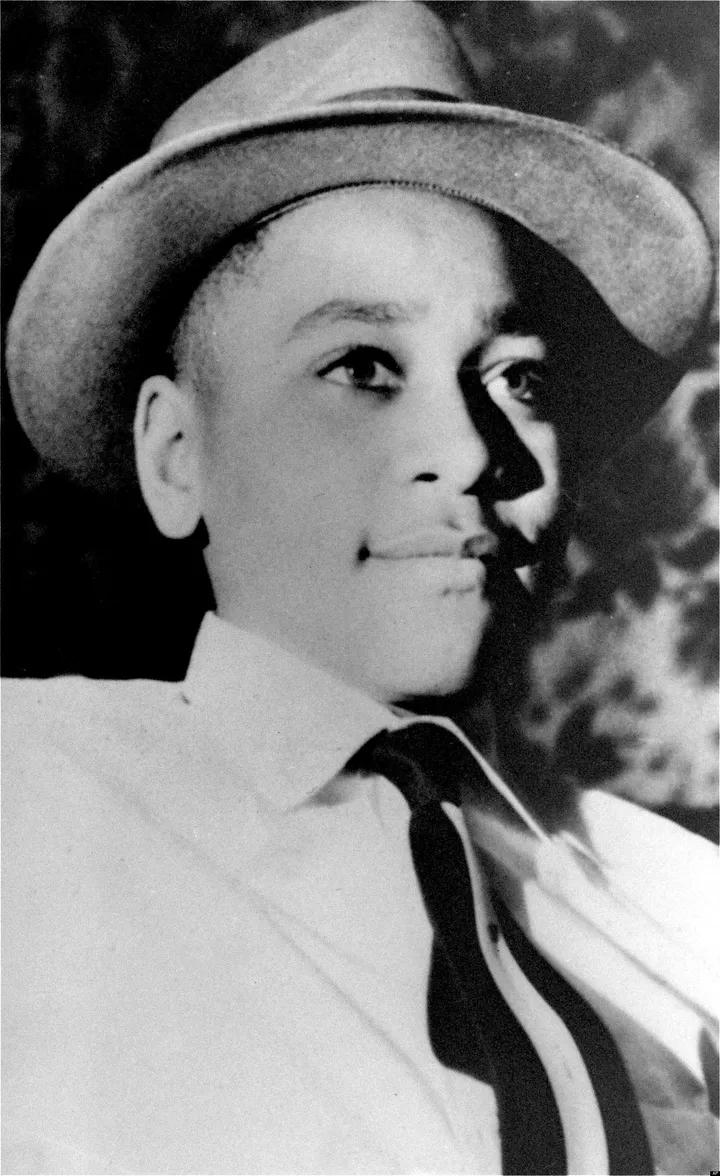
The flexibility of our culture to include the stories of the invisible or the forgotten, disguises the fact that their stories have been included, but not fully incorporated. We, black and white, suffer a form of partial amnesia, which distorts our perceptions because we have not adequately remembered and mourned what we have suffered. I am talking about a mourning that is not an episode, but an attitude, a state of awareness. I experienced a poignant example of our need for memory and mourning during Black History Month several years ago. PBS broadcast a documentary on the murder of Emmett Till, focusing not only on his death, but on the crusade of his mother Mamie Till Mobley to achieve justice in her son's case. A few minutes after the program ended, the telephone rang and a voice at the other end of the line asked to speak with me. It was a college classmate whom I hadn't seen in years, a Jesuit priest and psychologist. He began to sob uncontrollably, as he stammered out an explanation that he had just seen the film about Till. He couldn't stop crying because he was so upset at the atrocity he had glimpsed, a crime committed over fifty years ago, but recalled by vivid images on the T.V. screen. And, in his grief he reached out to me (perhaps because we first met when I was only a year older than Till at the time of his murder.) During that same week a radio interview on NPR featured a panel discussion of race relations during which a black participant (a black historian) broke down in tears when he recalled the question his parents had never been able to answer for him as a child: "Why did white people hate us so? When they lynched us, why did they mutilate our bodies?" His tears brought to my mind Howard Thurman's assertion that black people carry the memory of lynching in their bodies and that the nation as a whole still has not healed from the wound of race. In Brooklyn, St. Paul Community Baptist Church sponsors an annual pilgrimage to the ocean in Far Rockaway to mourn for the millions of Africans who died in the transatlantic slave trade. "We have not properly mourned nor repented past atrocities afflicted upon us as a people of color," the pastor of St. Paul's explains. "Clearly, a trauma of this magnitude in the life of a people must be acknowledged and mourned."

Our nation has need of tears, tears for all those lynched, maimed, whipped, shamed, and debased by our history of race hatred. Our country has need of tears for those who suffered and for those at whose hands they suffered. For they, by denying the humanity of others, denied their own. We remain connected to the past by memory, and the nation, like individuals, must come to terms with the past. There is a way out of the evasion and willed amnesia of our racial trauma -- listening to the voices of our ancestors, expressed in story, song, sermon, and texts, offers one such way as a telling of memories, an expression of mourning, and, by means of listening and mourning, to begin the process of healing the wounds, personal and social, inflicted by racism.

In my work over the past forty years on African-American religious history, I have encountered texts that resonate powerfully within me, stirring up deep memories and awakening mourning. In this series I offer five of these texts for reflection, discussion, and common mourning, as a way for us to move toward re-membering our still riven communities. The first, by way of introduction to the series, is a poem by the Senegalese poet and storyteller Birago Diop (1906-1989), a poem about the ongoing presence of the ancestors in our lives:

Spirits Listen to Things More often than Beings, Hear the voice of fire, Hear the voice of water. Listen in the wind, To the sighs of the bush; This is the ancestors breathing. Those who are dead are never gone; They are in the darkness that grows lighter And in the darkness that grows darker. The dead are not down in the earth; They are in the trembling of the trees In the groaning of the woods, In the water that runs, In the water that sleeps, They are in the hut, they are in the crowd: The dead are not dead.

Each day they renew ancient bonds,
Ancient bonds that hold fast
Binding our lot to their law,
To the will of the spirits stronger than we
To the spell of our dead who are not really dead,
Whose covenant binds us to life,
Whose authority binds to their will,
The will of the spirits that stir
In the bed of the river, on the banks of the river,
The breathing of spirits
Who moan in the rocks and weep in the grasses.

Listen to Things
More often than Beings,
Hear the voice of fire,
Hear the voice of water.
Listen in the wind,
To the bush that is sobbing:
This is the ancestors, breathing.

Source:
The Negritude Poets, ed. Ellen Conroy Kennedy. New York: Thunder's Mouth Press, 1989. For the complete poem: www.hu.mtu.edu/~dshoos/HU3262/Negritudepoems.htm


First initiated as Negro History Week in 1926 by the black historian Carter G. Woodson (1875-1950) and the Association for the Study of Negro Life and History to remedy the wide-spread ignorance, negl...
 
 
  • Comments
  • 27
  • Pending Comments
  • 0
  • View FAQ
Comments are closed for this entry
View All
Favorites
Recency  | 
Popularity
02:17 PM on 02/22/2011
Al, all I can say is 'wow.' Can't believe after all this time and drama that we are still afraid of having a much needed, honest conversation about our racist past and present. I've resolved that that conversation won't take place in this world, but in the next. Thanks for your offering, it was cathartic.
09:37 AM on 02/22/2011
One of the important take away from this site is our individual understand of hisotry in this country. If you saw this picture and immediately remembered the pictures of Emmett Till both including the funeral scenes, then his mother discussing why her son was treated this way, then you likely understand why Black history is important.

on the other hand, if you didn't have a clue without reading the article, perhaps you now understand why you need to understand more

We all stand on the shoulders of those who changed this country before us. It is our time to continue to move our country towards a more perfect union.
05:56 PM on 02/21/2011
Yes I know, black history is very difficult for some to bear. The litany of lynchings and other acts of cruel and savage atrocity are profoundly tragic and horrible to hear. I know of black parents and grandparents who have attempted to shelter their children from this painful legacy, but like a boil that needs lancing, it must come to the surface and be properly mourned. I hate to say this, but it will take more than 150 years, especially when I think of other peoples in the world and some of their situations. For example, the tensions between the Serbs and Croats are over 600 years old. Pain goes on forever and the historic memory thereof is somewhat indelible. There is strife among peoples in places like the Middle East and Africa where it dates back 3,000 years---to Old Testament times. Every act of evil leaves a footprint in the sands of history.
03:33 PM on 02/21/2011
I don't even feel like reading anything.....The photo of Emmit Till saddens me:(
photo
HUFFPOST SUPER USER
tinyrainbows
10:59 AM on 02/21/2011
Why don't we have a white history month, or a white Miss America, or a white college?
photo
HUFFPOST SUPER USER
MarcEdward
likes all cats more than most people
12:07 PM on 02/21/2011
Because racial history is kind of silly.
That said, when my wife started teaching at a rural NC high school in the early 90s they still had a separate"white" and "black" prom, and separate White and Black homecoming queen/king. It was the tradition.
02:16 PM on 02/21/2011
Because white history isn't underrepresented, most Miss Americas are white, and every college the is not HBC is a white college.
photo
HUFFPOST SUPER USER
gwensgal
07:29 PM on 02/21/2011
Amazing that this has to be explained in this day and age. Thanks for having it done it; I wouldn't have been so nice.
HUFFPOST SUPER USER
Drobezisi
04:08 AM on 02/21/2011
For many people of color, the notion of a US government acknowledgment and apology for the institution of slavery and/or the genocide committed against Native Americans is a very visible and important milestone that has never been achieved (and perhaps never will be). Personally, I agree with Dr. Raboteau that what is needed is not episodical, but a more permanent state of awareness - a national consciousness and memory of who we are as Americans (not necessarily of any particular ethnicity). Because the history is a shared history, and the fact that it is an unresolved history still plagues our society in many critical yet unseen ways, and engenders dysfunctionality. It inflames our national political debate and sensitivities even to this day; it underpins our international relations and our willingness to support repressive regimes in various countries around the world in the name of our supposed security interests. One may ask why this is the case, and the answer is quite simple: because underlying much of our national consciousness is a siege mentality. There is still a strong yet invisible awareness of being under attack - but while common wisdom would have us believe the attack is from the outside (either from the Communists, or from the Muslim terrorists, or from the illegal immigrants - you see, there is ALWAYS a bogeyman to blame), what it fails to account for is that a very significant part of the attack is from within us. It is that of a guilty national
HUFFPOST SUPER USER
Drobezisi
05:33 PM on 02/21/2011
My apologies - it seems the last line of my previous post was cut off. It was meant to read: "It is that of a guilty national conscience."
03:18 AM on 02/21/2011
The United States Government has never offered an apology on behalf of the government for the institution of slavery. Or to Native Americans. These two groups at least need an apology.
photo
HUFFPOST SUPER USER
MarcEdward
likes all cats more than most people
07:55 AM on 02/21/2011
I am not sure how an apology would change anything.
photo
Gregor53
Remembering your past gives power to the present.
10:42 AM on 02/21/2011
It wouldn't, but sometimes simple acknowledgement goes a long way.  Unfortunately, where does one draw the line.  There have been many mistreated groups in America although I would admit that slavery and the removal of native Americans from their lands were the most significant.
11:28 AM on 02/21/2011
An apology opens the door. Many longstanding complaints by first nations peple have been addressed which involves huge amount of cash settlements and land being given over/returned in understandng the treaties made with the Brits years ago were not sincere. Australia and Canada have both taken this step to-ward righting ( if possible ) the wrongs of yesteryear. Interesting point. The first NAACP meeting in 1910 was slated for a northern city, specifically Buffalo by reason of good rail connections and plentiful accomodations along with being a stop on the traditional underground railway, but when the 29 delegates arrived they were told there was no space available. The delegates sought and were given accomodations in Ft. Erie, Ontario a tiny hamlet (then) just across the line from Buffalo.
photo
HUFFPOST SUPER USER
LFox6
Always remember you are unique, like everyone else
12:19 AM on 02/21/2011
What a well-written, beautiful, and deeply touching article! You are right, we all still mourn what amounts to a national tragedy several hundred years in the making.
photo
HUFFPOST SUPER USER
gwensgal
10:51 PM on 02/20/2011
There's not much to be uttered other than an exclamation of the beauty and pain conveyed by these reflections. This is a meditation on what it means to be enough of a 20th century American that one is able to look back over that century (and the ones before it that we know from history) and mourn for what was suffered, lost, and withheld. Deeply, deeply resonant.
09:47 PM on 02/20/2011
I am deeply moved by the authors post. Well said, sir!