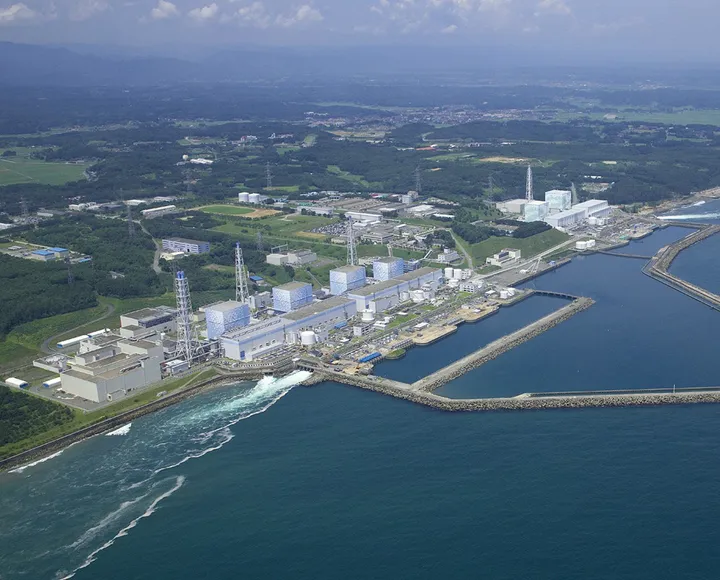
Fascinating and heartbreaking how the Japanese civilian population, once again, has been called upon to teach us a harsh lesson about nuclear energy.
In the past few decades, more details have emerged about the development and deployment of the nuclear weapons dropped on Japan during World War II. Best-selling books report about how some government officials and scientists involved with the project urged Leslie Groves and the military to drop the bomb over the ocean, just off the coast of Japan, as perhaps this measure would scare the enemy into surrendering.
Groves and other military leaders asserted that there were only three finished weapons and that if the "demonstration blast" did not produce the desired effect, the US would have squandered a rare (at that time) and expensive opportunity. Also, some believed that the dropping of the two bombs served some grim purpose as a medical experiment. What would the bomb actually do to a city, its infrastructure and its population?
Who would argue that the results of those two bombs have kept that option at bay since 1945?
In the wake of the recent Japanese nuclear disaster, Kenzaburo Oe writes in The New Yorker about Hiroshima:
What did Japan learn from the tragedy of Hiroshima? One of the great figures of contemporary Japanese thought, Shuichi Kato, who died in 2008, speaking of atomic bombs and nuclear reactors, recalled a line from "The Pillow Book," written a thousand years ago by a woman, Sei Shonagon, in which the author evokes "something that seems very far away but is, in fact, very close." Nuclear disaster seems a distant hypothesis, improbable; the prospect of it is, however, always with us. The Japanese should not be thinking of nuclear energy in terms of industrial productivity; they should not draw from the tragedy of Hiroshima a "recipe" for growth. Like earthquakes, tsunamis, and other natural calamities, the experience of Hiroshima should be etched into human memory: it was even more dramatic a catastrophe than those natural disasters precisely because it was man-made. To repeat the error by exhibiting, through the construction of nuclear reactors, the same disrespect for human life is the worst possible betrayal of the memory of Hiroshima's victims.
I had written two pieces deconstructing the bizarre claims of the nuclear power industry. The incessant lie that nuclear is clean power, forever discounting the filthy and contaminating processes that mine, refine and enrich fissionable material for utility reactors. Although we must never set aside other factors such as vulnerability to terrorism and the lingering and unsolved issue of waste disposal, the Big Lie regarding "clean nuke" hype seems to trouble me most. You can't get many Americans to view a wind farm as a sign of our investment in a clean, safe energy future, but they seem to roll over and let the nuke industry do as they please, even in the wake of Fukushima.
If I told you that the chances that you would get AIDS from one act of unprotected sex with an infected partner were one in a million, would you do it? (Actually, according to a report by researchers Norman Hearst and Stephen Hulley in the Journal of the American Medical Association, the odds of a heterosexual becoming infected with AIDS after one episode of penile-vaginal intercourse with someone in a non-high-risk group without a condom are one in 5 million.) The answer is no. Because, if you took that bet and lost, you'd get AIDS.
Nukes are a similar bet. And there is no "protection" you can put on to save you. Fukushima shows us that utility companies reap all of the benefits, while we assume all of the risks.
February 23, 2011
Futurist, scientist and Singularity proponent Ray Kurzweil has a more than optimistic view on climate change. In concordance with his Law of Accelerating Returns, Kurzweil sees solar power technology growing at an exponential rate similar to that of computing power. According to Kurzweil, within twenty years, solar power capability will rise and the cost will drop to the point of effectively replacing fossil fuel use worldwide.
Germany gets 17% of their energy from renewable and clean sources.
We could have done the same if only we had listened to President Carter who created the plan that Germany followed after the Chernyobl disaster in '86.
Instead, clean energy was vilified by Reagan/Bush and not promoted, and here we are with another nuke meltdown. Most of the world learned nothing from Chernyobl.
We could have been world leaders in clean energy production. Now we're the world's cheap labor pool. How far we've fallen.
I urge you to go and help cleanup if you are so confident that you will not get cancer.
They need the help, and you seem willing. Ask the helpers (those few who are still alive and not dying of cancer) what their experience was at Chernyobl. I think you will see how foolish you sound once you do some homework on it. That disease and death will be with the Japanese for a long, long time. My heart breaks for them. They are going to watch their children die, and the horror will be unbelievable.
Scientists say that radiation is at lethal levels within 4 hours of exposure at the site, over a thousand times acceptable risk even a mile away. Radiation is falling on the east coast of the US.
You really don't know what you're talking about. You seem very callous.
Also, you make a false equivalence comparison.
If you crash in an airplane, you don't create a place that's poisonous for the next 20, 000 years. Crashing a car doesn't cause a nuclear explosion.
Killing thousands is what will happen. That's not "ultraconservative", it's what happened already in Nagasaki, Hiroshima and Chernobyl and not from blast. Look it up.
Mr. Baldwin, could have a whip-round among celeb friends and put together the piddling £300 million, to get the first-of-a-kind Liquid Fluoride Thorium Reactor (LFTR) built. He will be thought of, forevermore, as the greenest person on the planet.
LFTRs are orders of magnitude safer than Pressurised Water Reactors (PWRs), which will be the vast majority of new-build. PWRs operate at 160 times atmospheric pressure; this 'driving-force' can expel radioactive substances into the environment. LFTRs operate at atmospheric pressure and have no such 'driver'. If the reactor vessel leaks, the hot, liquid salt will glug-glug-glug down the side and solidify. Even if the reactor vessel is breached, the contents will flow into a drain tank, with a cooling configuration which evades criticallity and removes decay heat naturally.
Find out what Alvin Weinberg had to say about the thorium 'breeder' reactor (LFTR) and the future of humankind. The sagacity of such an individual is well worth consideration.
That early warning system is EPA's RadNet and its current state should appall and horrify.
Lack of maintenance on the RadNet fixed monitoring stations has left a big hole in the net designed to cover the country with radiation data collectors.The referenced articles below relate in detail this issue and also expose a no-bid, sole-source contract awarded to a former Bush DOD Under-Secretary's company to perform this maintenance.
http://pstuph.wordpress.com/2011/04/04/radnet-or-sadnet-the-epas-failed-radiation-detection-system/
http://pstuph.wordpress.com/2011/04/04/epas-radnet-troubles/
13 http://www.who.int/ionizing_radiation/chernobyl/chernobyl_digest_report_EN.pdf
C. K. Wanebo, M.D., K. G. Johnson, M.D., K. Sato, M.D., and T. W. Thorslund, Sc.D.
N Engl J Med 1968; 279:667-671September 26, 1968
Abstract
Information on breast cancer among survivors of the atomic bombings has now accumulated to the point where a fairly definite carcinogenic effect seems established. In women exposed to 90 rads or more, breast cancer developed at a rate two to four times the rates observed in the comparison group of the study sample and in the reported rates for Miyagi Prefecture. The onset of breast cancer relatively early in life, before the menopause, distinguished the irradiated from the control group.
Suit challenges new nuclear plant waste storage rights | Science ...
Feb 15, 2011 ... COM A federal court suit challenging the right of nuclear plant op. ... doubling that limit again to 120 years after the plant has closed. ... tons of high level waste in their spent fuel pools or in concrete casks. ... licenses another 40 years, and plant operators have 10 to 20 years after a ...
http://www.newjerseynewsroom.com/science-updates/suit-challenges-new-nuclear-plant-waste-storage-rights
Suit Seeks Review of Local Nuclear Waste Storage « Energy Matters
Feb 16, 2011 ... If the current rule stands, the spent fuel at the Oyster Creek Nuclear Generating Station for example, which is due to close in 10 years, ...
spoonsenergymatters.wordpress.com/.../suit-seeks-review-of-local-nuclear-waste-storage/ -
Federal Regulators Sued Over Nuclear Waste Storage
... nuclear power plants to store their radioactive waste at reactor sites for up to 60 years after each plant closes down. New York ... of nuclear waste storage. ... Right sparky
www.huffingtonpost.com/2011/02/16/nuclear-waste-ny-vt-conn-_0_n_823602.html
New York Sues to Stop Storage of Nuclear Rods
New York's attorney general sued the federal government Tuesday, seeking to block a new rule that would extend long-term storage of nuclear waste at Westchester's Indian Point power plant and other such sites.
Unless you count those benefits as SOME OF THE BILLIONS OF VOLTS OF POWER THAT RUN A GOOD CHUNK OF THE WORLD EVERY DAY. So every time you thump another key on your keyboard, you can thank the benefits of the utility company, Alec.
I'm not making it up, I've seen the relevant people being interviewed... US and Soviet.
I guess the thing that shocked me the most was that at the very instant after the pretend launch of the nukes.... the NATO operatives/chiefs just packed up and went home. As if that was all there was to it! No pretend dealing with any aftermath, nope. Cheers, back to the suburbs, dum-de-do....... disturbing.
These are 10 pools built 30 years ago. But what does anyone know, you know it all
I understand that we are all exposed to radiation everyday from myriad things,e ven from coal plants, for example, but coal waste is not so deadly that people can't get near it after a disaster to clean up the mess. Nuclear energy is a very bad idea and it's high time we got around the lie that it can be. The risks in the event of an accident are simply too great to be acceptable.
Nuclear = 0 dead in 50 years in the US
Coal = 25,000 dead/year in the US = 1,250,000 dead Americans in 50 years
Even an actor can do that math.