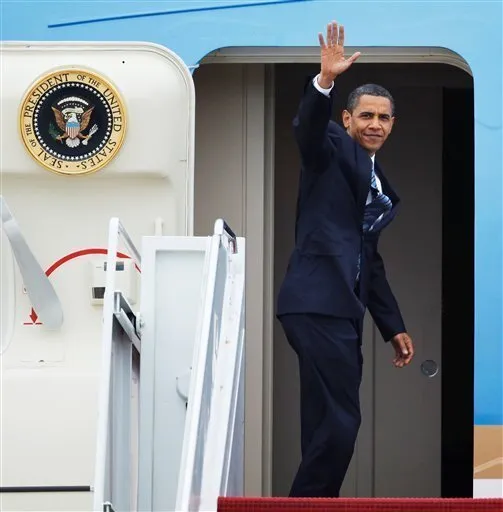
Tomorrow a global Rorschach inkblot test will take place. Obama will speak in Cairo. All around the world there will be cries of alarm and sighs of relief, predictions full of hope and condemnations dripping with outrage, disappointment and celebration, denunciations that the speech was too soft and accusations that it was just more of the same.
The diverse reactions will have little to do with what he actually says though. It will be due to the fact that what the "Muslim World" wants and thinks remains a mystery to most people, including many Muslims who live in it. And because it remains a mystery, when people express policy prescriptions and opinions concerning it, they reveal more about themselves than shed any light on that world or their relationship with it.
As long as this is the case, regardless of what Obama says, there will be continued instability, miscalculation, and danger from all sides.
Yet it doesn't have to be this way. Though it will get only a fraction of the attention of tomorrow's speech, tonight at Georgetown University, former Secretary of State Madeleine Albright keynotes at the World Premiere of a documentary based on a recent Gallup Poll of the Muslim World called Inside Islam: What a Billion Muslims Really Think. The documentary, and the poll it is based on, draws the first comprehensive, scientifically based picture of the Muslim world and presents the actual views of Muslims on religion, democracy, the U.S., and other key issues.
How did the Muslim World become the great Rorschach inkblot test of our time? Much of it has to do with end of the Cold War when people began thinking about what the world would - or rather should - look like now.
To those who want the U.S. to become the hyper military power of our time, they see the Muslim world as an existential threat to Western values, similar to what Communism once was. Expect them to consider the speech as defeatist and too soft.
But as the documentary points out--and the poll reveals--Muslims share and admire most of these same Western values, and want many of the same things that Americans do.
To those, such as Bin Laden, who regarded the fall of the Soviet Union as the harbinger for a new, united Islamic Caliphate, the Muslim world is a moribund place needing an event like 9/11 to awaken its people and rally them around the strict Wahhabist doctrine that they believe Muslims need.
Of course, the popular uprising that Bin Laden predicted and called for didn't happen (which Al-Qaeda in Iraq takes out on the Shi'ites), and the actual opinions of Muslims show why this is no surprise. Only 7% of Muslims worldwide feel that the 9/11 attacks were fully justified. Moreover, among that 7%, most support it based on secular, anti-colonial sentiments, rather than on religious grounds.
In fact, among those who completely reject 9/11, religion is one of the leading reasons, prompting one of the scholars in the film to point out that Islam may be the force that ultimately defeats Bin Ladenism.
To those in the U.S. who yearn for a more isolationist path, the Muslim world is too irrational to deal with, and Obama's engagement will seem dangerous. To those who feel the U.S. is to blame for all the problems, the Muslim world is simply misunderstood, and Obama's speech will leave them wanting more and feeling disappointed.
But as the documentary shows, both of these are also caricatures of a complicated reality that we can now understand using the polling data.
To be clear, it isn't just one big misunderstanding. There are important differences between the West and the Muslim Worlds, but they aren't based on irrationalities or religion. They are primarily due to divergent national interests as represented by our policies. This is not to say that we should change our policies to suit the national interests of others, but by understanding them we can better craft our policies in ways that can at least lead to stability.
Skillful oratory and pragmatism have been Obama's leading strengths. You can bet that the former will be in evidence on Thursday. But what ultimately matters will be whether the latter also comes into play.
We will only arrive at stability and peace when an actual portrait of the Muslim world replaces our various projections upon it, when we use the evidence the film sets before us to look at the Muslim world as more than just blots on a page.