iPhone app iPad app Android phone app Android tablet app More

Featuring fresh takes and real-time analysis from HuffPost's signature lineup of contributors
Amanda Moreno, Ph.D.

GET UPDATES FROM Amanda Moreno, Ph.D.
 

Killing Kindergarten

Posted: 03/29/2012 1:31 pm

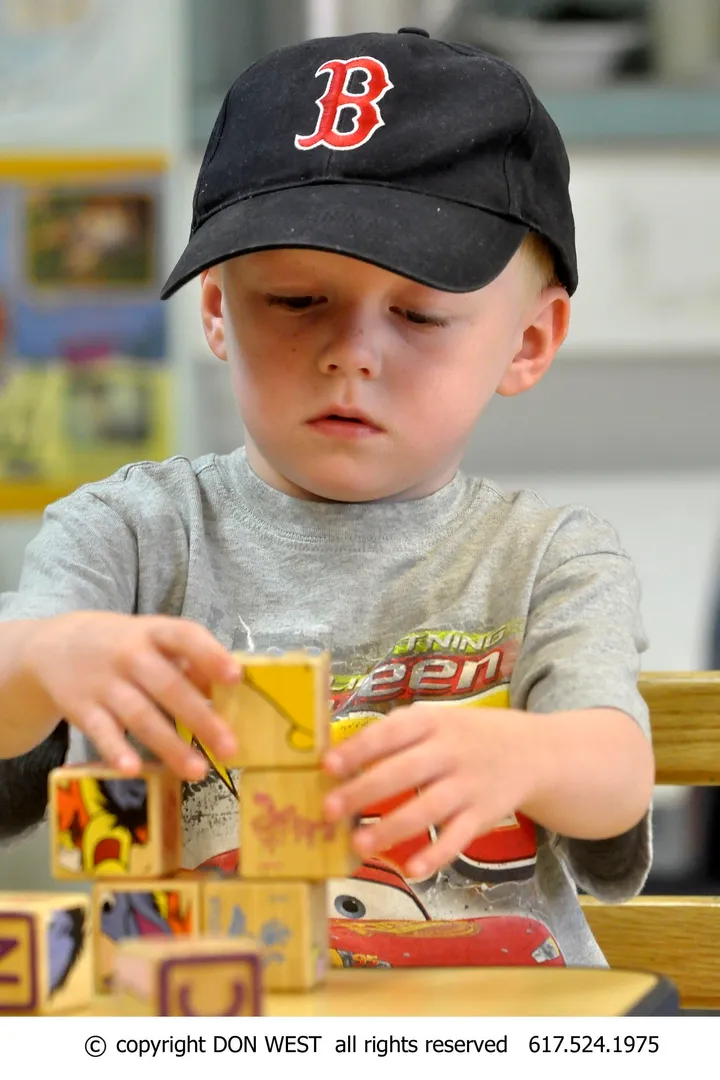
I want you to know it took a lot of self-discipline not to title this post "Killing Kindergarteners." In addition to being an early education researcher, I am also a mother of a 5-year-old currently in kindergarten, so I can tell you that is pretty much the way it feels. All around this country, families are trying to figure out why their small children already dread going to a place that was supposed to serve as a gentle transition to formal learning. They are struggling with ambivalent allegiances, not wanting to be the over-protective parent who babies their child, but at the same time not being fully convinced that their child has a behavior problem just because they don't enjoy sitting at a desk, independently going through worksheets for a solid hour.

It has become axiomatic in my field to say that early learning expectations are a full year ahead of what they were 20 years ago. Alfie Kohn points out an even more critical piece of this puzzle when he says that "The typical American kindergarten now resembles a really bad first-grade classroom" (italics mine). Somehow I don't think Robert Fulghum's list of essential lessons learned in kindergarten would have the same ring to it if among "share everything" and "play fair" appeared "100 sight words," "command of capitalization and punctuation," and "compose and decompose numbers 11-19." Cynicism aside, a year's worth of additional expectations isn't in itself the biggest problem if you have a highly skilled teacher who can individualize to suit just about any learning style, and can make just about any learning task age-appropriate and engaging. That is a huge if, I would guess, according to most kindergarteners today.

Is teaching 5-year-olds really that complex an enterprise? It is true that little kids are like sponges in that they absorb discrete pieces of knowledge daily, naturally, and without effort, such as new vocabulary, locations of things in their house, how specific toys work, and what their family dinner and bedtime routines are. But in formal learning settings -- at least as they are on average in the U.S. -- the game completely changes. For better or worse, the "great divider" in formal learning settings may be whether the learner can decide to tackle new tasks or problems, not because she wants to but simply because she is being asked to. Is it OK for my 5-year-old to learn about Native American history and culture? Sure it is. The parts of the eye and inner ear -- why not? But there is no intrinsic motivation when the lesson emphasizes the proper spelling "Tlingit" or "cochlea" and there never will be. No, the kindergarteners who do well with this kind of task are the ones who have already developed the ability to override their intrinsic motivation. This takes more than compliance -- it takes executive function, which is in part attention and memory, and in part the ability to inhibit a pre-potent response. You know, like my daughter's pre-potent response to color with the crayon that most attracts her eye, rather than limiting her choices to the browns, yellows, and oranges that were actually found in traditional Native American garb, as the curriculum required.

This sounds awful -- like the only successful kindergartener is one with a broken spirit. It wouldn't have to be this way if the educational system were structured to accommodate the natural, normal, and highly variable rates of development that occur in early childhood. All typically developing children acquire the basics of executive function eventually. So universal a finding across cultures is this, that it came to be known as the "5-to-7 year shift" -- and it is the reason why formal schooling starts around this age worldwide. In this country, the word around makes all the difference. Given the range of ages at which children enter kindergarten (there is about a 25-month spread between the youngest and oldest students), and the three-year age range within which executive function skills begin to become more adult-like, children can be anywhere between preschool and third grade when the complex set of abilities required to decide to learn comes online sufficiently well. Even after controlling for age, kindergarteners still show greater variability in executive function than either fifth graders or preschoolers, indicating there is something unique about the cognitive reorganizations that take place during this period of life.

Our educational system is not equipped to support the application of this kind of knowledge.
John Medina has said, "If you wanted to create an education environment that was directly opposed to what the brain was good at doing, you would probably design something like a classroom."

In early childhood, when children are just beginning (and did I mention, at highly individualized rates?) to acquire the ability to focus under non-optimal circumstances and learn anyway, this is not only unproductive (as it is for learners of all ages), it is dangerous. For young children for whom intentional learning isn't even on the radar screen yet, every day they spend sitting at a desk and filling out worksheets is like being in a foreign language immersion program with a teacher who believes they're fluent.

This is not a debate about exploratory vs. direct instruction in the early grades, or play vs. structure, or creative learning vs. traditional academics, or any other label for this false dichotomy. Research supports both, depending on the group of children studied and methods used. While I staunchly believe that play is a human right, you don't fix the misguided question of how to stuff knowledge into a 5-year-old's brain simply by doing it "through play." Similarly, when people tell you direct instruction "works," ask them what it worked for. If the answer was standardized tests, then you merely have an unsurprising match between method and outcome. Either way, bad teaching will be the result if a kindergarten teacher practices (or is forced to practice) any style in the extreme, and without an arsenal of creative tools for individualizing to children. For those brilliant kindergarten teachers who do possess such a toolbox, the standards and testing craze has tamped their best instincts into hiding.

I agree with Holly Robinson who says that, from a parent's perspective, the immediate answer lies in finding the right fit for your child -- a process we are right in the middle of with our own daughter. Unfortunately, good options are not nearly plentiful enough, and those that exist are not accessible enough to families and children that likely need them the most. In the meantime, my colleagues and I are trying to do our part by speaking out for differentiating education reform efforts for young children, incorporating modern child and brain development principles into teacher and principal prep programs, and consulting to early education initiatives about how to answer to the pressures of accountability without "killing kindergarteners" in the process.

 
I want you to know it took a lot of self-discipline not to title this post "Killing Kindergarteners." In addition to being an early education researcher, I am also a mother of a 5-year-old currently i...
 
 
  • Comments
  • 214
  • Pending Comments
  • 0
  • View FAQ
Comments are closed for this entry
View All
Favorites
Recency  | 
Popularity
Page: 1 2 3 4 5  Next ›  Last »  (6 total)
04:29 PM on 05/21/2012
How about the Montessori Method?
HUFFPOST SUPER USER
FWJames123
Well behaved women rarely make history
12:20 PM on 04/29/2012
My son is in a classroom of 14 children (k and 1st grade) and all of the children love school! We are nearly at the end of the year and my son reads (his weakest skill but now he is rapidly increasing his skill because he loves story problems in math) and loves math and science. He speaks Spanish pretty well and is playing two musical instruments. I'd say in some areas he's behind the curve for his class and in others he is ahead. But he loves it. He did a pre kindergarten last year and it was boring for him. I watch the kids in class now and see minds open to the fun of learning.

Seeing this in action it's clear that five year old minds are ready to learn and even happy to do so. No one could walk into his classroom and think differently. Psycho babble wouldn't change that. Study all you want, but it's clear that little minds do enjoy learning as young as five. Perhaps the writers daughter isn't happy because she isn't in a good school? Or there may be an issue that needs discussing with the school district, but the kids my son plays with generally love school (public and private).
11:04 PM on 04/17/2012
I'm curious about the "likening it to an immersion school" comment. I'm actually thinking of sending my daughter to an immersion school for kindergarten. The classrooms are signficantly smaller, and she is already bored in preschool. She is reading, but they are just learning letters. She is obsessed with reading and learning and doesn't do well in large classrooms. She also can't get enough of her spanish learning cd's (bought them for me). It seems like a good fit to me, especially the small classroom. I was the same as a child - couldn't get enough. But am I setting her up for failure? Is it too much?
photo
HUFFPOST BLOGGER
Amanda Moreno, Ph.D.
11:48 AM on 04/18/2012
No, no not at all. The key part was the last part of the sentence - "with a teacher who believes they're fluent." Your child's teacher will know your child's level of comfort in both languages. Immersion is the way to go for bilingualism, and evidence supports the idea that bilingualism is good for brain and cognitive development because it teaches children that labels are arbitrary (this thing is both an apple and manzana), and this leads to more flexible thinking. Sounds like a great fit for your daughter!
02:20 PM on 04/16/2012
Finland's Educational Success video on BBC is amazing - kids start at 7 yrs old and keep the same teachers for years. Better late than early!

http://news.bbc.co.uk/2/hi/programmes/world_news_america/8605791.stm
12:21 AM on 04/17/2012
Agreed....and one of the best education systems in the world. Starting school later shows how important that longer nurturing period is for later development.
02:12 PM on 04/16/2012
Children require guidance and sympathy far more than instruction.
– Anne Sullivan, Tutor to Helen Keller
11:54 AM on 04/16/2012
Check out the Underground History of Amercan Education by John Taylor Gatto.
03:52 AM on 04/16/2012
Just be glad you aren't in the UK where all this starts when children enter full-time school at 4. Of course it's difficult to find actual teachers who support the increased formalisation of the early school experience, but very easy to find politicians who think you can test a 4 year old into being able to read.
06:42 AM on 04/14/2012
Killing kindergarteners one boring worksheet at a time ...
04:47 PM on 04/13/2012
I love my Waldorf Charter School. The Kindergarten experience consists of playing outside, nature walks, eating wonderful whole food snacks, painting, creative play, listening to stories and more outside time. It is what kindergarten truly should be. No "structured" learning in a traditional sense. I am so glad he has this experience.

My older son did the normal public school kindergarten and he hated it from the start. It was not a positive experience for him at all.
09:23 PM on 04/10/2012
I wonder what the author thinks of Primrose? A balance between Montessori and a traditional class room.
photo
HUFFPOST BLOGGER
Amanda Moreno, Ph.D.
03:56 PM on 04/13/2012
I haven't observed in a Primrose classroom myself, although I do know a few parents I trust that have their children there. It's often difficult for researchers to get into nationwide child care chains. Not a criticism at all, just makes it harder for me to have those as a comparison.
09:24 PM on 04/09/2012
Amanda: Here's a great "fit" for just about any child: HOMESCHOOL! :)
09:02 PM on 04/26/2012
Or Afterschooling for those of us who have to work:) Great resources out there.
07:03 PM on 04/09/2012
I homeschooled my son and then he had 1/2 day kindergarten. Why are they there all day anyway? Maybe parents should complain less and stay home more and raise their children instead of sending them off to institutions that have so little flexibility. Classrooms and subjects are for older children and the more we compensate teachers on test results the more we don't put our money where our mouth is in early childhood education. So pay the teacher to do show and tell and all that delightful stuff you did as a child. It does not happen because the game has changed for testing.
This user has chosen to opt out of the Badges program
09:36 AM on 04/08/2012
Before my children went off to kindergarten, they were happy, confident, joys. Five and three years later, respectively, and they are miserable.

Public school teachers are miserable, angry people who take out their life's frustrations on your children. The worst thing I ever did to my kids was send them to public school.
11:22 PM on 04/12/2012
I am a parent and a public school teacher! I find your attitude towards public school teachers is totally ignorant and misguided. Most public school teachers are not angry people who want to take their life's frustration out on children. We go into education to provide the safe, positive environments that support learning, development, and growth. You are buying into the BS sold to you by the politicians and charter schools. There are plenty of great teachers out there working for hours before and after school, on weekends, and in the summer just so instruction can be well planned, organized, and individualized. The true enemy of public education has been the politics demonizing teachers, when without teachers, there could be no other professions and the mandated state testing. In order for schools to look good on paper, teachers are forced to teach to the test based on both internal and external pressure. There needs to be accountability for everyone involved, parents, children, teachers, and school administrators. The current system only puts accountability on the shoulders of teachers. We need to work together for the benefit of the our children.
photo
HUFFPOST BLOGGER
Amanda Moreno, Ph.D.
03:54 PM on 04/13/2012
Agreed Jeremy. I have seen brilliant teachers, and a few crotchety ones too (um, human beings, yes?) but the problems you address are absolutely problems with the system. How do you and the other good teachers you know find that balance between what you are forced to do and more creative or appropriate things you know are good for children?
06:05 PM on 04/14/2012
Well said, Jeremy. I am also a public school teacher who works my tail off from August-June with my students' best interest in mind every step of the way. I do have to admit that I do get frustrated often, but this is mainly due to the lack of support and appreciation given by politician and parents.
photo
HUFFPOST SUPER USER
Baneblade
Subversive Individual
09:04 AM on 04/08/2012
What ever happened to show and tell and coloring? Being an only child, the most important part of Kindergarten for me was just learning how to behave around other children and how to interact with my peers. What about that?
HUFFPOST SUPER USER
kld31
08:13 PM on 04/08/2012
My class still colors but it's way behind that. It's so different than when I went to Kindergarten over 40 years ago. All I did was play. Things are getting so demanding now.
HUFFPOST SUPER USER
kld31
08:14 PM on 04/08/2012
I meant to say way beyond that referring to coloring. We do so much more than I ever did in Kindergarten. No way was I reading and writing in Kindergarten. It was more like 2nd grade.
photo
HUFFPOST SUPER USER
see-ellen2001
11:13 PM on 04/07/2012
All I can think, after reading some of these posts is that the school systems' philosophy is rather Borgian "resistance is futile; you will be assimilated".
07:05 PM on 04/09/2012
The parents need daycare so they send the little lambs to slaughter...I mean school at age 5. That is the day care you get....but it is FREE so parents go along.