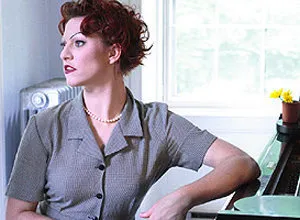
My record label in the UK has recently been gearing up to promote "Oasis," a song from my new album, Who Killed Amanda Palmer. A few days ago I got this email from someone at roadrunner:
I just thought I'd let you know that we have been met by fierce opposition on the Oasis track. Which is disheartening, as combined with the video, we all felt it was a great promotional tool and track. All our TV outlets have refused to play the video due to it "making light of rape, religion and abortion". This is the audio as well as visual. Many of the stations... NME tv, Scuzz, kerrang, MTV, Q, the box... like the track, and even the video but are bound by strict broadcasting rules. I personally find this quite ridiculous.
Well, it isn't a simple issue, obviously. But the fundamentals seem clear to me.
I sat down one day in or around 2002 and wrote a tongue-in-cheek, ironic, up-tempo pop song about a girl who got drunk, date raped, and had an abortion. She sings about these things lightly and happily and says that she doesn't care that these things have happened to her because Oasis, her favorite band, have just sent her an autographed photo in the mail. If you cannot sense the irony in this song, you're about two intelligence points above a kumquat. I recorded this song with Ben Folds (who is way more intelligent than a kumquat) for my record. He produced the song to sound fantastically happy -- a beach-boys style number complete with ba ba ba back-up vocals. Then I made a video with Michael Pope that portrayed a very literal play-by-play of what was being related in the song. This all made perfect sense to me and wasn't in any way calculated to offend. It was created to be funny and dark.
Now people in the UK are telling me that the song "makes light of rape, religion and abortion."
Can I simply state: When you cannot joke about the darkness of life, that's when the darkness takes over.
The song is not a lecture... it's a reflection, a character sketch. As I was walking over to the BBC the other day and my rep mentioned that they might not let me play "Oasis" on the air, I suggested that I might be allowed to play it if I just slowed it down and played it in a minor key. Think about it: if they heard the same lyrics against the backdrop of a very sad and lilting piano, maybe with some tear-jerking strings thrown in for good measure, would they take issue?
Imagine these lyrics to the tune of "Strange Fruit", or "Yesterday":
"When I got my abortion / I brought along my boyfriend / we got there an hour before the appointment / and outside the building / were all these annoying fundamentalist Christians / we tried to ignore them"...
Would this make radio happy? Maybe. It would be within a context they could rely on, feel safe in, write off. "Of course she's sad! She had an abortion! Abortion is sad!"
I think it makes people uncomfortable to hear the truth about a very real and sick situation. If you don't know, or have never encountered, a teenager who is going through intense heavy experiences (like rape, abortion, eating disorders, abuse, you-name-it) and is laughing these things off like they don't matter, then you are not alive and awake and living on this planet.
This song is about denial; it's about a girl who can't find it in herself to take her situation seriously. That girl exists everywhere. You probably know her. You've probably met her. You might be her.
So, you ask, should we joke about cancer? Dead babies? The Holocaust?
Have you seen Life is Beautiful? That movie is not a joke. It does not "make light" of the Holocaust, the same way that my song does not "make light" of abortion. It shows how humor exists in darkness. How it must.
Humor saves us. Humor is one of the strongest weapons that human beings have against suffering, death and fear.
I could try to win points by talking about how I've been date raped (I have been, when I was 20) or how I have every right to joke about this if I want to because I've had an abortion myself (I have, when I was 17, complete with fundamentalist Christian protesters shouting at me), but I actually don't believe those experiences should lend me any credibility, any more so than I believe the director of Life is Beautiful had to have been at Auschwitz in order to direct that film.
In the US in 1996, about 1.3 million women had an abortion, half of them under the age of 25. And I can assure you, there were approximately 1.3 million different reactions, experiences and stories behind those abortions. Countless girls have been raped or date-raped. Are we allowed to talk about it, joke about it, turn it over from every side and try to figure out our own confused reaction to it? Or is that just too icky, uncomfortable... and shameful?
Or should we just cry about it demurely and hope that the proper reaction, the one that society deems appropriate, will make things go away? Come on.
The first argument, properly championed by John Wesley, is about the legitimacy of the laws that label the song and video as offensive or unairable. Whatever your views on restraint, free speech, or censorship essentially all such arguments come down to the letter of the law. The song and video violate the regulations these organizations abide by.
The flaw in John Wesley's appealing to this strict letter-of-the-law mentality is the same weakness of the regulations themselves. They come off as arbitrary even when they are not.
The second point to be made, and the point that Amanda Palmer seems to be making, is that despite whatever regulations may exist or the myopic reading of those regulations that are banning her material, the material itself has something to say and censorship and rejection of that statement is not just wrong but revolting. We cannot live in a society where the way that someone reacts to something determines the legality of the material.
I can't define pornography but I know it when I see it.
The spirit of the law is what should be upheld, not the letter. And you should be responsible for how you react to things. And owning your reaction because it is YOURS and no one elses is kinda sorta, in part, the thing the song is conveying.
But you might see it differently.
Sex is part of life. But sexual images are notoriously complex and ambiguous. Feminist, liberal and conservative theories have avoided blanket controls by appealing to rating systems that direct and stream content. In this sense Freedom of Expression is not absolute but a compromise with other worthwhile competing public interests. Censorship is avoided by matching viewers and content and nowhere is the right to hold opinions without interference violated.
In this case, even a small sample (hardly random) of the artist’s fans and supporters shows a wide diversity of opinion about the meaning and implications of the video even when accompanied by the artist’s explanatory notes.
It would be very difficult to find a compelling overriding reason for a broadcast executive to put this kind of image on TV intended for a general TV audience.
Yes, I totally agree with this. But the intersection between freedom of speech/expression and other freedoms is not static, they have always been hotly contested. For example: how to reconcile freedom of speech and the law of defamation?
This is an argument about speech vs. regulation. Not all regulation is censorship because in many cases the benefit of regulation outweights the benefit of speech. You believe the song is one of those cases and that is fine. However you don't seem to understand the other people (including myself) are making equally valid arguments that the benefit of the speech far outweighs its regulation - what many believe to be censorship.
Obviously the broadcast executive agrees with your reasoning in this case but there are arguments to support both sides.
You can write or call the ITC and/or the BSC and ask them to change the rules, which in fairness will apply to everyone, to allow more of the kind of thing you are looking for other people in the general population TV viewing audience to see.
Here's a synopsis of the current rules. What should be changed?
The ITC Programme Code contains guidance on the portrayal of sex and nudity which needs to be defensible in context and presented with tact and discretion. Generally, representation of sexual intercourse must be reserved until after 9.00 p.m. Portrayal of violent sexual behaviour is justifiable only very exceptionally.
The BSC’s Code of Guidance also contains a section on the portrayal of sexual conduct.
The problem is that the argument on the other side, ie that you really like the song and the message and believe the artist's heart is in the right place, has to be able to be generalized so that it can apply to everyone. That's a hard do.
As you can imagine, most of the complaints the ITC gets would be from people, actual viewers, saying they don't think child rape scenes should be portrayed on TV intended for a general audience for any reason.
My problem, from the beginning, has been trying to say that the 'argument' or discussion or thread, whatever is not really about free speech v. regulation. I'm ready to abandon that effort though and I'm happy to discuss the argument as you have defined it.
But I think this is the comment where the whole conversation really jumps the shark. I don't think there really has been any criticism of the song in this thread (though one poster did meekly say they didn't care for the singers voice).
Clearly, no one wants anyone killed or oppressed or censored. No one has shamed anyone.
My point from the beginning is that the author has made more of this issue than warranted and in doing so distracted from the facts: songs (and humour) are subtle things, the author wrote and recorded a purposefully over the top song and hoped it would promote her new CD. The broadcaster(s) did not want want to play a song that portrayed rape on television for a general audience. That's all we have folks. There is just no more real information here and even that bit is hearsay. There is no indication that anybody didn't 'get' anything except for the many posters who interpreted the song in dead earnest as above... which is scary.
It's supposed to be tongue in cheek sarcasm.
This song is actually supposed to be a serious discussion of the issues that face certain young women, and how some of them would choose to react. It is very clever to contain that issue inside of an upbeat sounding song, which mimics the self-imposed mental attitude of a person who was as flippant as the girl of the song. See? It's like a very clever socio-political statement.
If you don't understand the issue, then you might think this song is just a disrespectful, controversial ploy, but that is ridiculous. If AFP really wanted to promote her new cd through controversy, she would have been better off singing about drugs or how much sex she has or how many diamonds encrust her umbrella.
I think it is pretty disturbing that you think you 'get' the issue. It is people who interpret the song in dead earnest like you... who scare me.
he he
Amanda's right, who has the authority to say that someone can't find humor in the darkest of places? Are we supposed to mourn everything all the time and be miserable because the topic is "too serious?"
I laughed, but then again I have a dark sense of humor, which is pretty much the only way I haven't lost my mind. So people go back under your rocks, go back to your little world that you must have dream t up
"Oh no! It's horrible! Someone is attempting to present certain realities, but she's not doing it in a way that is conventional. This is different! We don't know what to do! IT MUST BE BAD!" (I wonder if this is thought process, well, thought process...that MIGHT be assuming TOO MUCH.) Who thinks anymore, right?
Nicely done as usual, Amanda. Nevermind the bullocks.
simple.
In spite of the long essay explaining how the whole thing was meant tongue in cheek (ironic sarcastic or whatever), more than half the posters see the song and video as about empowerment, about how no matter what happens a girl can always find redemptive joy in pop music. Many feel so strongly about it that they want to take on the "censorship" of the piece so that more people in the mainstream audience can share in this art... without coming to terms with the fact that rape, in any form or for any reason, is just not portrayed in media intended for a general audience.
The discord between the author's I was only joking/ you have to laugh sometimes world view and the dead earnestness with which the posters personally interpret the song is ... well it just kind of makes my heart sink.
There's a danger in insisting all media regarding rape be deadly serious--it leads to people having a harder time dealing with the subject than necessary. How can a victim heal if not feeling terrible makes them feel guilty?
But as Palmer says, the song's more about how a lot of people deal with this sort of date rape. It's absurd, but life is very often absurd.
To hear more back story on why we did the humor issue, read my blog here:http://aspenbaker.wordpress.com/2009/02/05/the-humor-issue-is-here/
Bottom line is, mainstream entertainment only wants to deal with certain "things". Wholesale slaughter of the lines of any of the Saw movies is PERFECTLY acceptable, of course. Bubble gum pop like "I kissed a girl" or cliche Hip Hop symbolism is KOSHER. But heaven forbid you push the taboo...
This is why old media is dying. Forget MTV, seriously!
I know the examples you are giving. I can't think of any that portray rape. People aren't stupid. the mainstream is just that, the middle, people of average competence and values. I'm all for rebels changing the world. I just don't think this qualifies.
I do, but I'm a rebel. Are you?