More

Featuring fresh takes and real-time analysis from HuffPost's signature lineup of contributors
GET UPDATES FROM Andrew Beahrs
 

Birth of an American Cookie

Posted: 11/30/10 01:45 PM ET

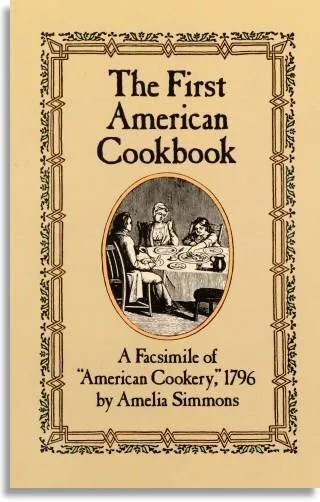
America's first cookie recipe begins by telling you to scum the sugar. This gives you some small sense of how far the world has moved since 1796, when Amelia Simmons published American Cookery, the first cookbook ever written by an American. In our age of processed, over-refined foods, the idea of having to boil your sugar to skim off impurities is totally alien. But that's what Simmons and her contemporaries did, scumming away to ensure clean sugar even when the cone it came from was made from the dregs of a hogshead.

Cookies had been eaten in the colonies from very early on, especially in areas settled by the Dutch; the word is derived from the Dutch koekje, meaning "small cake." But the first printed recipe (and also the first appearance of the English word "cookie") had to wait for Simmons:

Cookies

One pound sugar boiled slowly in half pint water, scum well and cool, add two teaspoons pearl ash dissolved in milk, then two and a half pounds flour, rub in 4 ounces butter, and two large spoons of finely powdered coriander seed, wet with above; make roles half an inch thick and cut to the shape you please; bake fifteen or twenty minutes in a slack oven--good three weeks.

No eggs. A single stick of butter to two-and-a-half pounds of flour. A cookie that lasts three weeks. This all sounds--let's be honest--completely awful, more like hardtack than pastry.

Still, this was America's First Cookie Recipe. Trying to reproduce an earlier American koekje is pure guesswork, since we have references but no recipes; Simmons's formula lets us taste an old flavor, one that we know people appreciated and worked to make. So however spare the recipe seems now, the idea of making America's First Cookie was interesting enough to recruit my six-year-old soon and send us both to the kitchen.

We had to make adjustments and judgment calls the whole time we were baking. Though we didn't need to skim foaming impurities from our sugar, we still melted ours down with water to keep the proportion of liquid the same, and used a blend of brown and white sugar to approximate an older product. We used two teaspoons of baking powder in place of potash, dissolving it in a best-guess two tablespoons of milk. We "rubbed" butter in by pinches, working each until it vanished.

As we worked, I started getting hopeful; it was all coming together into a recognizable cookie dough. Maybe there was something alchemical at work here, something that would transcend what seemed like major missteps and produce our nation's ubercookie, something to be produced at potlucks for years to come. That? Oh, nothing, just America's First Cookie. Yes, I agree that it is ungodly good.

But no, it was not. Or at least, not really. America's First Cookie was more like a floury shortbread--a shortbread that lacked shortening. The relative lack of fat made it seem very sweet, as though it was intended as a pure carrier for sugar. In a blind tasting I think most would find it dry, and sweet enough that it demanded tea or something equally astringent. Still we liked it, if only because, hey, America's First Cookie. It was a cookie you can imagine enjoying after a long day of casting tankards or dipping candles or scumming sugar.

Having made it, the original recipe reads differently to me. Simmons could have included eggs, or more butter (she had plenty of both in other recipes). Instead, it seems to me, she wrote with an eye towards hospitality, towards sharing something she thought luxurious. There's plenty of sweetness in our cooking today (too much, in fact) now that sugar, and especially corn syrup, are cheap. But the first cookie recipe--the recipe for a dry, sweet cookie, still very much like a little cake--made me think of a time when sweetness wasn't a cheat, or a mask. It was sugar, and in humble households that was special.

Sugar, the recipe says. We have sugar. Have some yourself; here it is.


Amelia Simmons's Cookie
(I cut the original recipe by half)
3/4 cup white sugar
1/2 cup brown sugar
1/2 cup water
4 cups flour
4 oz butter
2 teaspoons baking powder
1 Tablespoon milk.
Coriander seed

Simmer sugars in water to dissolve. Dissolve baking powder with milk and mix in, then stir liquid into flour. Cut cold butter into small pieces and mix into dough; working quickly, rub each bit of butter between your fingers until it disappears. Roll out dough on a floured surface to 1/2" thick, cut into whatever shape you want, and sprinkle with coriander seed. Bake in a 325 degree oven until golden, about 15 minutes.


America's first cookie recipe begins by telling you to scum the sugar. This gives you some small sense of how far the world has moved since 1796, when Amelia Simmons published American Cookery, the f...
 
 
  • Comments
  • 18
  • Pending Comments
  • 0
  • View FAQ
Comments are closed for this entry
View All
Recency  | 
Popularity
This user has chosen to opt out of the Badges program
09:41 PM on 12/03/2010
It should be noted that this is the first European-American cookie recipe. Meso-America had some dynamite chefs, as did the League of Nations.

Don't ya just hate how those darn liberal experts re-write history!
photo
HUFFPOST COMMUNITY MODERATOR
timo96
mediocre poster, resplendently bald.
06:12 PM on 11/30/2010
not certain why my original post has been redacted, but this article has me thinking.

to be authentic (without resorting to potash or a wood fired oven - although the wood oven would probably taste pretty good):

first off, I would use jaggery in place of the brown sugar / white sugar mix. jaggery is easy to find in indian markets -- can also get all the coriander seed you could possible eat there. http://en.wikipedia.org/wiki/Jaggery

second, I'm thinking the "flour" referenced could be any type of grain: corn flour, rye, wheat, buckwheat, etc -- whatever was regionally available I suppose. If you live in New England (as quite possibly the author did), you might use rye flour. here's an article on flour mills: http://www.angelfire.com/journal/millrestoration/history.html

cool article, thanks.
photo
HUFFPOST BLOGGER
Andrew Beahrs
07:02 PM on 11/30/2010
Great suggestions, thanks! One of the things I love about historic cooking is deciding how far to take the details--you can try to do it with what's in the kitchen or spend a long (often fun) time searching out elements closer to those in the original. Then there are the techniques, the equipment, even the kind of wood you use if you're lucky enough to have access to a wood-fired oven. I'll try jaggery the next time I bake something along these lines, hopefully soon.
photo
mlaiuppa
Pres. Sarcasm Society. Like we need your approval.
02:16 AM on 12/03/2010
Yes. It would have been a corn flour (or maybe rye or potato) as wheat wasn't grown very successfully at this time in the U.S. so they would not have used anything like our refined white flour, wheat flour or even bread flour.

For reference, try Slumps, Grunts, and Snickerdoodles: What Colonial America Ate and Why by Lila Perl Yerkow
photo
HUFFPOST COMMUNITY MODERATOR
timo96
mediocre poster, resplendently bald.
11:36 PM on 12/03/2010
thanks.

I'm going to try these some time next week, just for [redacted] and giggles.
photo
HUFFPOST COMMUNITY MODERATOR
timo96
mediocre poster, resplendently bald.
05:51 PM on 11/30/2010
what would the consistency of the milled flour have been like in those days?
04:05 PM on 11/30/2010
Remember visiting an old home of a famous figure in Canadian history on a school field trip. There, they served us the most delicious cookie. Not too sweet and something I hadn't had before or since. Think they said it was a cookie made from a recipe from the late 19th century. Anyway, I've wondered about how to make it since. I
I've also wondered about the proper recipe for vanity cakes - mentioned in the Little House book - "On the Banks of Plum Creek."

Anyone who knows, please let me know.
09:13 AM on 12/01/2010
It sounds like something they say my great grandmother used to make called "Tea Cookies". No one got the recipe but on line there are several different ones.
03:11 PM on 12/01/2010
Thanks, will try them out.
photo
HUFFPOST SUPER USER
Treehuggindirtworshiper
Steward of God's Creation
03:12 PM on 11/30/2010
Quite interesting. I'll stick with my homemade shortbread.
photo
HUFFPOST SUPER USER
BlueKansas
Stop calling us 'ordinary Americans'!
04:07 PM on 11/30/2010
I'll have some of your homemade shortbread, too! Want me to make the tea?
photo
HUFFPOST SUPER USER
Treehuggindirtworshiper
Steward of God's Creation
04:39 PM on 11/30/2010
Sure! I like Earl Grey with organic honey!
photo
HUFFPOST SUPER USER
BlueKansas
Stop calling us 'ordinary Americans'!
04:08 PM on 11/30/2010
BTW, fanned because I'm a diehard tree hugging dirt worshipper too...but I call it soil!
photo
HUFFPOST SUPER USER
Treehuggindirtworshiper
Steward of God's Creation
04:40 PM on 11/30/2010
My husband gave me that nick name! I'm guessing by your's that you're a Jay Hawk fan.
09:14 AM on 12/01/2010
And I am a dopeless hopehead.
photo
Red45
We can turn the tide
02:25 PM on 11/30/2010
We've sure come a long way since cookies required scummed sugar and pearl ash. I can't imagine what they must have tasted like. Sounds like a recipe for hockey pucks.
photo
HUFFPOST SUPER USER
FPhoebe
HP badges make me feel validated.
10:21 PM on 11/30/2010
Maybe that's where dipping cookies in milk came from? If they were hard as rocks, they would have had to do something to soften them up.