This week the House of Representatives passed a bill instructively titled "Repealing the Job-Killing Health Care Law Act." Neither platitudes nor hypocrisy are new in Washington, but the "job-killing" rhetoric has reached overkill. In recent weeks, the "job-killing" bromide has been tacked to the front of government spending, stimulus, tax hikes, deficits, and government regulation. Thoughtful discourse has given way to meaningless and misleading talking points, with many policymakers simply ignoring economic theory and analysis. The irony is that many of the conservatives raving about "job-killing" legislation have repeatedly stood in the way of job-saving economic stimulus and instead proposed spending cuts that would result in steep job loss.
For all its misuse, the job-killing rhetoric underscores a very real anxiety felt by the American people: that there aren't enough jobs. If unemployment were down around 5%, the "job-killing" accusations would hold little traction. Instead, employment remains 5.2% below pre-recession levels, and the unemployment rate has been stuck above 9% for twenty months.
So what were the "job killers" that got us here? Look to the financial crisis and the Great Recession, which lowered private-sector employment by 8.5 million, peak to trough. Better oversight of Wall Street could have averted much of the economic pain inflicted, but that didn't prevent many of the "job-killing" firebrands from opposing financial reform legislation that will hopefully prevent more devastating financial meltdowns. Patchy financial regulation risks recessions and job loss.
To stop the economic free fall, Congress enacted the American Recovery and Reinvestment Act. The Recovery Act was first opposed and then decried a failure by conservatives, but the only failure was their inability to look at objective analysis. The nonpartisan Congressional Budget Office (CBO) estimates that the Recovery Act increased employment by up to 3.6 million jobs and lowered the unemployment rate by up to 2.0 percentage points by the third quarter of 2010. Alternatively, economists Alan Blinder and Mark Zandi estimate that without the aggressive monetary and fiscal stimulus used to combat the downturn, payroll employment would have been roughly 8.5 million jobs less than it was in 2010, and the economy could have slumped into depression. These stimulus policies saved millions of jobs, and accelerated job creation would not have been possible without widening the budget deficit. In times of depressed economic activity, deficit-financed fiscal stimulus unequivocally saves and creates jobs.
For all the talk about "job-killing" legislation, it's conservative policymaker's own economic proposals that would cost millions of jobs and jeopardize the economic recovery.
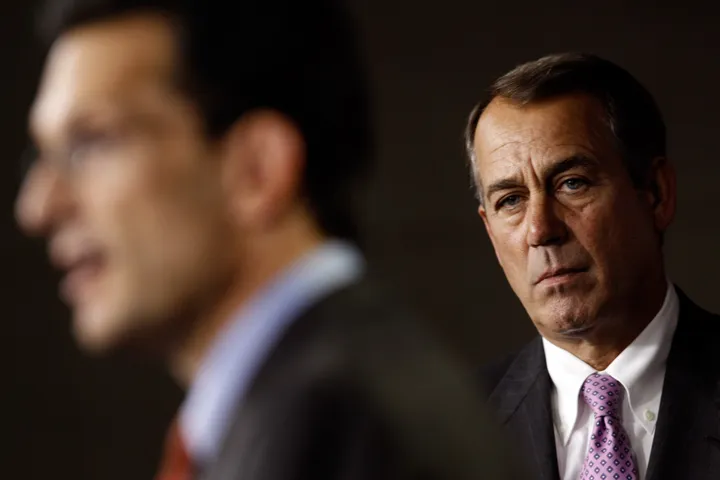
This week's symbolic vote for repealing health care reform belies any genuine concern about job creation. Health care reform is expected to slow the growth of insurance premiums and employers' benefit costs, making it easier for managers to hire new employees. Research by David Cutler and Neeraj Sood shows that slowing health care cost growth by the amount expected from health care reform will actually boost employment by 250,000 to 400,000 jobs a year. Separately, CBO estimates that repealing health care reform would add $230 billion to deficits over the next decade; larger savings on the order of half a percentage point of GDP would be forgone in the following decade. Speaker Boehner recently brushed aside this politically inconvenient budget assessment, remarking that the CBO is "entitled to their own opinion," demonstrating a total disregard for objective analysis. Health care reform is not a job killer, and expanding insurance coverage to 32 million Americans will unquestionably be a life saver.
Another symbolic cornerstone of conservative economic policy is the pledge to cut back discretionary spending by roughly $100 billion (exempting favored agencies such as the Departments of Defense, Veterans Affairs, and Homeland Security). Draconian cuts to the non-security discretionary budget (on the order of 22% for next fiscal year) would result in upwards of a million job loss and counteract much of the expected economic boost from the recent tax compromise. Slashing public investments in transportation, education, and basic scientific research will irrefutably decrease employment and erode long-term economic competitiveness.
Aside from the perennial calls for tax cuts for the wealthy, there is little appetite for actual job creation measures among conservative legislators. Trickle-down, supply-side snake oil was tried and failed; the Bush-era tax cuts presided over the worst post-war economic expansion in terms of economic growth, investment, employment, wages and salaries, and labor participation. The tax compromise--which extended the Bush tax cuts and some provisions of the Recovery Act--will turn the dial on employment in the right direction, but revised forecasts still show years of high unemployment and that more stimulus is needed. As for job-killing tax hikes, the biggest threat posed to employment was when Senate Republicans filibustered permanent middle-class tax relief.
On the other hand, we have seen conservatives attempt to rescind unobligated Recovery Act funds, scuttle continuation of unemployment insurance, and block funds to keep teachers in the classroom. Like proposals to slash the nonsecurity discretionary budget, these actions would weaken the economic recovery and put more Americans out of work.
Slapping the label "job-killer" onto a piece of legislation won't ease the crisis in the labor market. Any policymaker who cares about putting Americans back to work would support the Recovery Act, push for more fiscal stimulus, and defend public investments in the nonsecurity discretionary budget. It's time to turn the legislative agenda from obstructionist theatrics to proactive job creation.