
iPhone app iPad app Android phone app Android tablet app More

Featuring fresh takes and real-time analysis from HuffPost's signature lineup of contributors
Andrew Kimbrell

GET UPDATES FROM Andrew Kimbrell
 

Food Safety in the US: We're on Red Alert

Posted: 04/12/10 11:37 AM ET

The United States once had one of the safest food systems in the world, but now, 70 million Americans are sickened, 300,000 are hospitalized, and 5,000 die from food-borne illness every year. It is a sad fact: since 9/11, far more Americans have been killed, injured or hurt because of our lack of a coordinated food safety system than by terrorist acts that challenge our Homeland Security system.

The culprits in this assault on American wellbeing aren't shadowy terrorist figures, but rather, they are what most consumers would identify as wholesome -- not harmful -- foods. Peanuts, lettuce, pistachios, spinach, hamburgers sold to Boy Scout camps, peppers, tomatoes, and pepper-coated sausages are among the foods that have sickened and killed Americans in just the last few years. Our children are most at risk from these food threats, with half of all food-borne illness striking children under 15 years old.

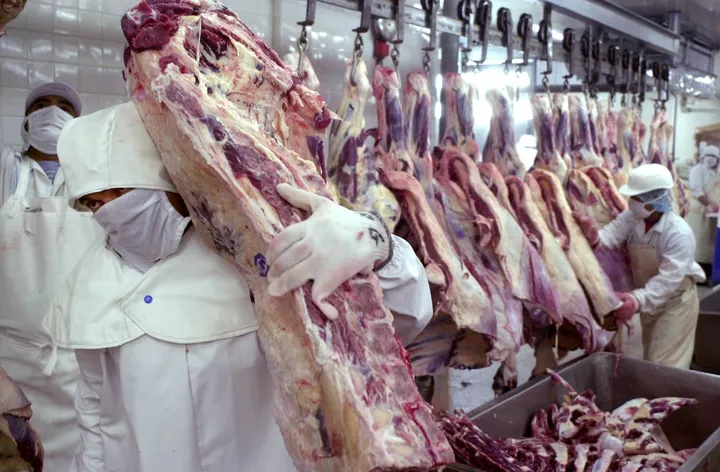
The Bush administration constantly claimed it was protecting Americans from potential security threats, yet it completely failed to protect the public from the clear and present danger of deadly food. 2010-04-10-sSLAUGHTERHOUSEBEEFFOODSAFETYlarge300.jpg
Due in part to that administration's cuts in funding and staff, the Food and Drug Administration (FDA) currently inspects less than 25% of all food facilities in the U.S. More than 50% of all American food facilities have gone uninspected for five years or more. During President Bush's last term, regulatory actions against those companies selling contaminated food to Americans declined by over a half (Office of the Inspector General: FDA's Food Facility Registry. Report: OEI-02-08-00060, December 2009).

The result is tragically predictable. Large processing facilities, which now mix foods from across the country and the world, are not being inspected. Illnesses caused by contaminated foods, which could be prevented with proper government oversight, are instead causing the hospitalization of hundreds of thousands and the deaths of thousands of Americans. Again, the victims are, disproportionately, our children.

The tens of millions of victims of food-borne illness represent only one segment of the casualties from our failure to require safe and nutritious food. Because of lax regulation of agricultural chemicals, many of the fruits and vegetables that should bring us health and nutrition are instead laced with dangerous pesticides, dozens of which are known carcinogens. Much of the food marketed to our children and served in their schools are confections brimming with trans-fats and high-fructose corn syrup; these contribute mightily to the epidemic of obesity in the young and heart disease and diabetes in our older populations. Under pressure from agribusiness, our federal agencies and legislators continue to commercialize genetically modified foods with no safety testing and no labeling for consumers. And, despite the strong potential of health hazards, food made with new, nanotechnology-based chemicals are getting waived through to the market, without any independent testing at all.

Clearly our food safety system is broken and needs a complete overhaul. With the continuing string of food contamination scandals, even Congress has begun to pay attention. The Food Safety Enhancement Act (HR 2749) was passed by the House of Representatives in the summer of 2008 and takes some steps in the right direction. It gives more authority to the FDA, restoring some of its power to conduct food inspections and strengthen oversight.

However, it's far from perfect. Bowing to pressure from agribusiness, lawmakers have exempted livestock producers and any other entity regulated by the USDA from the new regulations of both this act and its Senate companion, the Food Safety Modernization Act (S.510). In fact, members of Congress were so committed to the interests of big industrial meat producers that they also prohibited the FDA from "impeding, minimizing, or affecting" USDA authority on meat, poultry, and eggs. As a result, these bills contain the stupefying provision that no attempt by the FDA to combat E. coli and Salmonella will be allowed. These bacteria are the most common causes of deadly food-borne illness and are found in products contaminated with animal feces. Since January 2010, over 850,000 pounds of beef -- mostly from industrial feed lots -- has been recalled due to E. coli O157:H7 contamination. The members of Congress have essentially protected the interests of corporations who are bad actors, while condemning the public to continued sickness from these contaminants.

Another major problem with both bills is that they begin with the flawed premise that all producers and processors of food -- whether massive corporate farms or small family farms -- are equally at fault for our broken food safety system. New food safety legislation should target the largest causes of food-borne illness. These include concentrated animal feeding operations (CAFOs), water and field contamination due to manure lagoon leakage, and industrial processing systems, not small farms.

The "one size fits all" regulatory approach in these bills fails to take this disparity into account. It instead places an undue and unsupportable burden on family farms, small processors, and direct marketers of organic and locally grown food. These have not been contributors to the contamination events which have caused major food-borne illness outbreaks. Further support for this view is that , at a July 2009 House Oversight Subcommittee on Domestic Policy hearing on Ready-to-Eat Vegetables and Leafy Green Agreements, then-Senior FDA Adviser Michael R. Taylor acknowledged that "since 1999 outbreaks of food-borne pathogens were traced to leafy greens involved in precut packaged leafy greens and not whole leafy greens".

It is unconscionable that factory farms would get a pass under the proposed legislation while family farmers, who often struggle to stay in operation, are held to stringent, unnecessary and potentially bankrupting requirements. Small operators would bear the brunt of large fees that generate the revenue sufficient for the overall food safety program to operate. Food safety regulation at the farm and processing level must be appropriate to scale and level of risk.

Fortunately, some Senators are addressing the gaps in their bill. Perhaps the most critical action so far is that of Sen. Tester (D-MT), who has introduced an amendment to exempt small-scale and direct marketing farmers and processors, who are already well regulated by local authorities.

However, most problematic is that the legislation in its current state perpetuates the regulatory tangle that is our food safety system. Arcane mixes of regulatory authority between the FDA, USDA and EPA make for dangerously inefficient government. It is long overdue that we establish a separate and effective government agency dedicated to food safety. We need to separate out the 'Food' part of the Food and Drug Administration and consolidate all authority under a new Food Safety Agency.

We did this for Homeland Security; we should also do it for food security. After all, it is the lack of food safety in this country that is the far more imminent threat to all of us, our families and, especially, our children.


Follow HuffPost Food on Twitter and Facebook!

 
The United States once had one of the safest food systems in the world, but now, 70 million Americans are sickened, 300,000 are hospitalized, and 5,000 die from food-borne illness every year. It is a ...
 
 
  • Comments
  • 23
  • Pending Comments
  • 0
  • View FAQ
Comments are closed for this entry
View All
Recency  | 
Popularity
photo
HUFFPOST SUPER USER
SilentSolidarity
So what do you need? Besides a miracle.
06:23 PM on 04/13/2010
Coming from the European Union, I'm shocked about what the FDA approves. We definitely need way more consumer protection as soon as possible.

In the meantime I always check what is legal in Germany where I used to live
http://www.bmelv.de/cln_181/EN/Homepage/homepage_node.html
10:45 AM on 04/13/2010
More "small = safe" nonsense. Americans get sick every year from farmer's markets. But we don't see it because our surveillance systems are geared to catch large outbreaks, like the bagged spinach one. That outbreak shows how what happens on one farm on one day can have far reaching consequences into the food supply, but outbreaks represent only 5% of actual foodborne illnesses. The rest are "sporadic" illnesses that occur 1 or 2 or 3 at a time.

There's no science to support the statement that a serving of local/small produce is safer. Studies of organic and conventional produce show no difference in pathogenic risk. Furthermore, the 2006 spinach outbreak farm was in transition to organic, growing organically but not yet certified. Also, proximity to livestock (not a CAFO, btw) was the cause, and we know that small farms are MORE likely to maintain livestock and to use animal manures and compost that can contain pathogens.

I see the arguments for integrated small-scale farming. I love my local produce! But it's wrong and unsupported by science to say that small production is "safer." You start with the 76 million foodborne illnesses & then take a left turn into GMOs, nutrition, environmentalism, etc, but if we stick to the definition of safe food as food that doesn't make you barf (thx, Doug Powell), local small-scale food is not safer. But why argue. Clearly, "small = safe" is a matter of faith, never to be disproven by evidence.
04:22 PM on 04/13/2010
Small does result in smaller outbreaks, whereas the national giants create giant nation outbreaks.
photo
HUFFPOST SUPER USER
raker
09:57 AM on 04/15/2010
We doan need no steenking study! Thirty, forty years ago there was no such thing as ecoli. Cutting boards were not biohazards. People even ate raw beef and raw eggs and rarely got salmonella or any other illness. Like all things whose priority is to serve corporate interests, our food supply has become toxic.

Today, one of the most dangerous things in your house, the thing you'd never let your child touch with his bare hands is the raw chicken in the fridge. It's maddening that people accept this as normal and proceed to bleach their utensils and work areas instead of demanding change.
photo
HUFFPOST SUPER USER
iblogleft
Certifiable
07:14 AM on 04/13/2010
I spent 10 years managing food service, and was thinking about becoming a food safety inspector. Not a chance. After looking into the industry, the pay is poor, the staffing is poor, and there is almost no ability to hold producers accountable for violations.

The regulators of food safety, right along with every other regulatory agency in this country, has been decimated.
schatsie
Wall Street is Worse than Vegas
09:38 PM on 04/13/2010
Decimated, denigrated and demoralized....
This user has chosen to opt out of the Badges program
photo
ziger123
All you need is unconditional love and acceptance
04:04 AM on 04/13/2010
We deserve better for ourselves and our families. We are only 1 of many families starting a garden this year - we've always bought from the local farmers market. This year we hope to sell some of our harvest to others for their families' health. We must make the changes ourselves and teach our children how to work, live and survive in our rapidly changing world. We can no longer leave it up to "the other guy" to make things right. Make your voice heard by doing what you know is right. Let your conscience be your guide.
HUFFPOST SUPER USER
shivasquest
02:06 AM on 04/13/2010
Rethink floride in the water..europe doesnt allow it.
photo
HUFFPOST SUPER USER
Ralph Boyd
Look, . . right behind you!
01:42 AM on 04/13/2010
Like all American horror stories this started under Reagan with the mantra of getting government off the back of business. During the Reagan Administration the number of food safety inspectors were cut and the number of plants requiring inspection increased. Here's a article from 1988 detailing a Congressional report.

http://findarticles.com/p/articles/mi_m3190/is_n36_v22/ai_6639022/

Nothing compared to what happened under G. W. Bush.
11:49 PM on 04/12/2010
This is the same story over and over again. Food safety. Hospital Safety. Insurance companies:
http://krugman.blogs.nytimes.com/2010/03/17/demons-and-demonization/ Wall Street. Eight years of Bush led to deregulation, anything-goes, and the public at risk. It will take a decade to undo.
10:25 PM on 04/12/2010
Buyer Beware.

You should know the quality of the food you buy.

Right Conservatives????????

Yes, of course. Let the Republic hire inspectors to prevent these outbreaks and police the food supply.
08:52 PM on 04/12/2010
The real time bomb is not so much the pesticedes and insecticedes. GM (genetically modified) seeds especially those used(either whole or in part) in stock feeds are the silent killers.
photo
HUFFPOST SUPER USER
Rogan
05:44 AM on 05/13/2010
I understood that there are many worries regarding genetically modified seed stock... but I thought we were largely worried, because we don't know what such seed stock will cause or lead to, eventually. In what sense are genetically modified seeds "silent killers"?
06:17 PM on 04/12/2010
I just found out my "heavy cream" I put in my coffee has carrageenan in it--which is a seaweed which is farmed in the Phillipines, which they turn into a gel and add it to dairy products......very disappointed to find that out.Only alternative is milk I guess--think it's still seaweed free anyway.

You'd think with the amount of milk on the market, they wouldn't feel the NEED to stretch it with friggin' seaweed!? Why add it to ice cream to thicken it? It's frozen and doesn't need thickening..... They keep using the excuse of profit loss due to higher prices---I'd like to know where the REAL food is, since they are stuffing food with chemicals, sugar and fillers? Why haven't prices gone DOWN--since they are saving so much by using these additives in our food...? I wish my coffee cream didn't have seaweed in it and my beef gravy mix didn't have high fructose sugar in it........
photo
HUFFPOST SUPER USER
Rogan
05:45 AM on 05/13/2010
Everything corporate works that way... Remember how CDs are cheaper to produce than records, but the price per unit doubled, during the changeover...? Just off the top of my head...
This user has chosen to opt out of the Badges program
05:59 PM on 04/12/2010
Gotta worry about the food we put in our mouths as well. What a nightmare!
HUFFPOST SUPER USER
MaurizioMaranghi
Environmental Entrepeneur
05:46 PM on 04/12/2010
It's really sad when you can't really trust your government anymore with regard to food safety. There are no labels on our meat anymore. We have no idea where things come from. We are sicker than we have ever been, all the while, more of us have less health insurance coverage. What is going on?
The only person you can trust is yourself with regard to what you eat, what hormones are in your food, the mercury levels you consume, etc.

This is overtly unethical government behavior!

- Maurizio Maranghi -

Reduce, Reuse, Recycle
schatsie
Wall Street is Worse than Vegas
09:40 PM on 04/13/2010
Consume and Conform....Steppenwolf.
02:50 PM on 04/12/2010
We are particularly concerned that the bill which passed the House and S.510, the Senate version, rather than protecting the food supply will in effect force the industrialization of all local, organic and natural food production. That is why Natural Solutions Foundation mobilized hundreds of thousands of consumers to email their Senators to educate them on the risks in the bill; maybe Sen. Tester got the message, since we've been asking the Senate to write into the bill specific protections for local food production.

As written, the bills apply industrial standards, which may be necessary to address the safety failures of factory farming, to other food production in a way that creates such barriers against entry as to perpetuate industrialized farming.

See:

http://www.healthfreedomusa.org/?p=4608

And if you really want safe food... grow your own!

http://www.FoodFreedomeJournal.org
Linda from Deerfield
Paying attention
04:27 PM on 04/14/2010
Thank you for your efforts, I think. I just really bemoan the level of analysis that is required to determine the agenda and legitimacy behind any legislation, regulation, organization, or publication. I know that lobbyists and others are counting on our being too busy to work through it all. It is a terrible shame when it is our food supply that is at issue.
02:20 PM on 04/12/2010
This is another one of the results of 3 decades of republican misrule. Bush should be in jail for this, among other crimes.
12:53 PM on 04/12/2010
I agree, I grew up in a commercial farming region of dryland crops and witnessed the near extinction of the American eagle due to DDT, these companies want us to believe that they have changed thier ways. Now of the thousands of chemicals that have been sprayed on our lands for decades to grow food these contaminants are an integral part of our food chain. With all kinds of childrens health issues on the increase.
Health care for all is a solution that is similar in nature as a broad spectrum antibiotic is for an unkown infection.

Treating the symptoms not the problem.
Linda from Deerfield
Paying attention
04:19 PM on 04/14/2010
What a good point. There is definitely something wrong when random counties across the U.S. are reporting declining life expectancies among women, and in spite of expansive government funded health/medical research, the life expectancy of age 15-64 has not increased for years, while costs have increased dramatically. We are evidently looking in all the wrong places for the answers.