In a recent post, I argued that today's political climate -- defined by soaring voter alienation and dissatisfaction with the major party candidates -- is ripe for a successful independent presidential campaign.
The post was based on a lengthy research paper that I wrote in which I emphasized that an improving economy would not slake Americans' thirst for an independent candidate.
The political alienation that drives independent voting surged before the economy collapsed in 2008, persists notwithstanding improving economic conditions and thus reflects widespread and engrained insecurity regarding the federal government's ability to solve problems.
Still, the fact that an independent presidential campaign could flourish begs the important question: Would such a campaign actually be good for the nation and improve our political health?
The answer is an unqualified, yes, even though apologists for the major parties say the risks of an independent presidential campaign outweigh the rewards.
A third viable presidential candidate, a non-ideological centrist, would give moderate voters the additional choice they so desperately crave, would force the two major party candidates to act more responsibly and could temper the hostility Republicans and Democrats now feel toward each other.
The need for a new voice is evident. The major parties have proven themselves incapable of proposing, and implementing, intellectually honest solutions to the problems undermining the long-term health of our country.
The last time Democrats and Republicans brokered a fiscal compromise that antagonized their core constituencies was in 1990 when Congress and President George H.W. Bush agreed to reduce the deficit by cutting spending and increasing tax revenues.
Now, after dogma has calcified our politics, the budget deficit exceeds $1 trillion -- for the fourth year in a row. Our $15.4 trillion debt is now larger than the size of the entire United States economy. Entitlements threaten to bankrupt the nation.
This year, as in most years past, the two major parties have not produced a presidential candidate committed to proposing, and aggressively advocating, real solutions to our fiscal problems. Presidential politics mirrors the dithering and partisan brinksmanship gridlocking Congress.
Presumably fearful of alienating liberal constituencies, President Obama refuses to publicly embrace the sensible policy prescriptions contained in the bi-partisan Simpson-Bowles deficit reduction plan. To date, he has been unwilling to speak candidly and specifically about the need for true entitlement reform.
As the election year begins, President Obama appears to have settled on a strategy focusing on the important issue of income inequality -- but at the expense of asking Americans to confront the reality that problem-solving requires shared sacrifice.
Moderates are sick of waiting for the president to lead, to use the power of his presidency to energetically advocate change in which we can truly believe.
The recent State of the Union speech was the final straw. In it, President Obama disingenuously suggested that increasing the tax rates on millionaires could extricate the country from its budgetary morass. He shunned the Simpson-Bowles plan for the umpteenth time; he did not propose systemic tax or entitlement reform.
The president, to paraphrase Charles Sumner, wasted our time with driblets. He telegraphed that his re-election campaign will be fueled by populist rhetoric, not policy prescriptions calculated to win an electoral mandate.
Hand-cuffed by their allegiance to, and dependence on, groups zealously opposed to any tax increases, the Republicans lack seriousness, too. The GOP starkly demonstrated its obdurate practice of pandering to ideologues when, during a recent presidential debate, all Republican candidates raised their hands after being asked if they would oppose a long-term budget deal that included 10-to-1 spending cuts to tax increases.
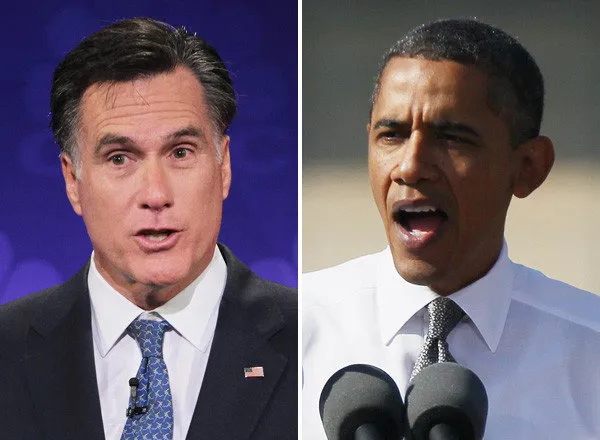
What feasible solutions has GOP front-runner Mitt Romney embraced to balance the deficit, to narrow the gap in income inequality, to reform our labyrinthine, increasingly regressive tax code? Gov. Romney loudly assaults the president with ad hominem and dishonest attacks calculated to woo the conservative base, but, when it comes to policy specifics, his silence is deafening.
Thus, we desperately need a new, a courageous and -- most importantly -- an independent actor on our political stage, a candidate who does not feel beholden to ideological constituencies, whose decision-making is based on empirical analyses, who is not forever calculating how his or her actions would be received by well-financed special interest groups with narrow agendas. Imagine how invigorated our politics would be if a Mitch Daniels, a Kent Conrad or any one of the 11 members of the Simpson-Bowles commission who supported its budgetary blueprint were to run as an independent.
This is not a pipe dream. Americans Elect, whose mission is to nominate a nonpartisan ticket in 2012, has collected on its website more than 2.4 million signatures to place a presidential candidate on ballots in all 50 states.
An independent presidential candidate would create a political marketplace that would cater to all voters, not just hyper-partisans, that would respond to the large majority of Americans who believe the best way to balance the budget is through a combination of entitlement cuts and tax increases, that would no longer only sell us political junk food.
An increase in the choices available to voters would incentivize the major party candidates to squarely confront problems plaguing us.
No longer could President Obama afford to offer disillusioned moderate Democrats the Hobson's choice of voting for him or whatever unpalatable candidate emerges as the Republican nominee. An independent candidate would compel the major party candidates to earn our votes -- just like Ross Perot did during the 1992 presidential campaign when his deficit reduction plan thrust budgetary issues into the political spotlight and forced Bill Clinton and George H. W. Bush to confront them.
The right independent candidate, an "honest broker" of competing ideologies, could also inject into our body politic a palliative that would combat the tribalism ravaging our two-party system. In litigation, a third-party mediator often brings together feuding adversaries. Why couldn't an independent presidential candidate play the same constructive role?
The fear expressed by some partisans -- that an independent candidate would merely play the role of spoiler, siphoning votes from a major party candidate and delivering the election to his opponent -- is ill-founded.
Contrary to what some conservatives allege, in 1992, Ross Perot took votes from Bill Clinton and George H. W. Bush nearly equally. The claims of liberals who believe that Ralph Nader "stole" votes away from Al Gore in 2000 presidential election are similarly over-wrought. Research shows that the vast majority of the 2.7 percent of voters who supported Nader would have voted for other independent or third-party candidates, or would not have voted at all, had he not run.
But even if the emergence of a viable independent presidential candidate were to inject uncertainty into this year's election, it would be an uncertainty we should welcome. The status quo so vigorously protected by the two major parties is intolerable.
After decades of political dysfunction, we simply have no alternative other than to pin our national aspirations on an independent candidate unshackled by the dictates of our sclerotic two-party system.