- BIG NEWS:
- Health
- |
- Parenting
- |
- Grandparenting
- |
- Relationships
- |
Depression can be devastating. Its worst form, major depressive disorder, is marked by all-encompassing low mood, thoughts of worthlessness, isolation, and loss of interest or pleasure in most or all activities. But this clinical description misses the deep, experiential horror of the condition; the suffocating sense of despair that can make life seem too arduous to bear.
Here's something else we can say confidently about depression: it is complex. The cause is often a mix of factors including genetic brain abnormalities, sunlight deprivation, poor nutrition, lack of exercise, and social issues including homelessness and poverty. Also, cause and effect can be hard to tease apart -- is social isolation a cause or an effect of depression?
Unfortunately, we can make one more unassailable observation about depression: the disorder -- or, more precisely, the diagnosis -- has gone stratospheric. An astonishing 10 percent of the U.S. population was prescribed an antidepressant in 2005; up from 6 percent in 1996.
Why has the diagnosis become so popular? There are likely several reasons. It's possible that more people today are truly depressed than they were a decade ago. Urbanized, sedentary lifestyles; nutrient-poor processed food; synthetic but unsatisfying entertainments and other negative trends, all of which are accelerating, may be driving up the rate of true depression. But I doubt the impact of these trends has nearly doubled in just ten years.
So here's another possibility. The pharmaceutical industry is cashing in.
In 1996, the industry spent $32 million on direct-to-consumer (DTC) antidepressant advertising. By 2005, that nearly quadrupled, to $122 million. It seems to have worked. More than 164 million antidepressant prescriptions were written in 2008, totaling $9.6 billion in U.S. sales. Today, the television commercial is ubiquitous:
The message -- all sadness is depression, depression is a chemical imbalance in the brain, this pill will make you happy, your doctor will get it for you -- could not be clearer. The fact that the ad appears on television, the ultimate mass medium, also implies that depression is extremely common.
Yet a study published in the April, 2007, issue of the Archives of General Psychiatry, based on a survey of more than 8,000 Americans, concluded that estimates of the number who suffer from depression at least once during their lifetimes are about 25 percent too high. The authors noted that the questions clinicians use to determine if a person is depressed don't account for the possibility that the person may be reacting normally to emotional upheavals such as a lost job or divorce (only bereavement due to death is accounted for in the clinical assessment). And a 15-year study by an Australian psychiatrist found that of 242 teachers, more than three-quarters met the criteria for depression. He wrote that depression has become a "catch-all diagnosis."
What's going on?
It's clear that depression, a real disorder, is being exploited by consumer marketing and is over-diagnosed in our profit-driven medical system. Unlike hypertension or high cholesterol -- which have specific, numerical diagnostic criteria -- a diagnosis of depression is ultimately subjective. Almost any average citizen (particularly one who watches a lot of television) can persuade him or herself that transient, normal sadness is true depression. And far too many doctors are willing to go along.
The solution to this situation is, unsurprisingly, complex, cutting across social, medical, political and cultural bounds. But here are three major changes that are needed immediately:
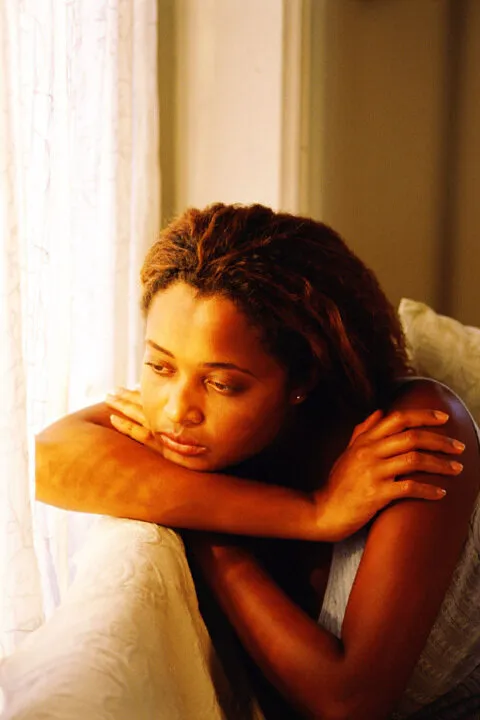
Finally, recognize that no one feels good all the time. An emotionally healthy person can, and probably should, stare sadly out of a window now and then. Many cultures find the American insistence on constant cheerfulness and pasted-on smiles disturbing and unnatural. Occasional, situational sadness is not pathology -- it is part and parcel of the human condition, and may offer an impetus to explore a new, more fulfilling path. Beware of those who attempt to make money by convincing you otherwise.
Andrew Weil, M.D., is the founder and director of the Arizona Center for Integrative Medicine and the editorial director of www.DrWeil.com. Become a fan on Facebook. Follow Dr. Weil on Twitter.
Follow Dr. Andrew Weil on Twitter: www.twitter.com/DrWeil
Charles D. Ellison: Eulogy for Mom ...
Whenever I've thought about American writer James Baldwin's take on life, I've always - for varied reasons - thought about my mother and the joy and sorrow that defined her life.
Jason Mannino: Lessons in Loving While My Father Was Dying
Fifteen years ago at my grandmother's funeral was the last time I saw my dad. Two weeks ago I was standing in front of him face to face. It wasn't the visit I had hoped for. He had departed his body 3 days earlier, and I was in attendance at his funeral.
Kari Henley: Resiliency Tips From The 100+ Crowd
This week I decided to explore the "centenarians" - people living to be over 100 years old, for clues to resiliency and joie de vive.
Want to reply to a comment? Hint: Click "Reply" at the bottom of the comment; after being approved your comment will appear directly underneath the comment you replied to
Weil is significantly off the mark, here, in that he doesn't even remotely refer to psychology in a discussion about depression.
I get up, i brush my teeth, i take a shower, get dressed, drink my coffee, catch the bus, go to work, eat my lunch, come home, watch the new while I eat my dinner, brush my teeth, and go to bed.........and there is tomorrow. What is wrong with our minds.....all we do anymore is work...and exist. How depressing is that! We are so got up in fulfilling Maslow basic's on the heiarchy of needs that we have no time for .....happiness. I do remember a time when I knew who my neighbors were.....when we talked....when I interacted with the world around me.......those were good days.......do you remember? We as a society have got to drastically change how we see our lives.......do we exist to fulfill the needs of the corporations and jobs we serve...........or do they serve our needs in the quest for our ............happiness.
The bottom line: Big Pharm makes huge profits on these anti-depressants, lobbies docs to prescribe them for every ailment from prom rejection to generalized "sadness", when in essence, they are very serious, mind-altering drugs that should be prescribed and monitored only when there is a serious case of "clinical depression" (psychiatric disorder that includes symptoms of severe depression, feelings of hopelessness, exhaustion, obsessive thoughts, sleep disturbance, suicidal ideation). "Clinical depression" can occur within healthy individuals under prolonged and/or extreme stress and loss. Always, indivudals exhibiting severe symptoms of depression should be prescribed said meds for brief periods, with close clinical supervision by physicians and clear instructions to patients to be aware of side effects.
In reality, they are doled out like candy, to children, adolescents, anyone who seems sad or anxious.
The early usage of Prozac was fraught with problems, including suicidal and homicidal behavior in the early stages of treatment; newer versions have fewer "side effects", but are just as potent.
No doubt that Big Pharm is all about the $$, but what ever happened to the hippocratic oath?
Depression is the body or spirits signal that the physical or mental body is contracted. Out of alignment with the natural order. Pure water, pure food, and pure silence will heal the depression.
Right.
I would agree with one commentator. Do not take anti-depressant drugs.Or any of them if you can. Unfortunately my wife of 29 years died and I suddenly got extremely nervous. I had never experienced that before and had hardly ever been to a doctor and never taken any kind of drugs.
I went to a psychiatrist who gave me Well-butrin. This prevented me from sleeping. I have never had a problem sleeping. I began to drink beer mainly to help me sleep. I have never drunk wine or beer or any alcohol before.
I tried Ambien, and Lunesta was suggested to me by another psychiatrist. I got sick on Ambien and threw out the Well-butrin (and librium, which was also prescribed).
The pharmaceutical industry is just peddling poisons.
My generation will nor more recent ones are going to live as long as previous ones. One reason is that there is more economic stress; but the other is because doctors are pill pushers.
Part 2
After my daughter was released from ICU, the hospital social services department, the head of their Psychiatric department and I had a meeting. They insisted I put her on anti-depressants and have her committed . They threatened to severe my parental rights if I didn't.
I called her general practitioner, her neurologist, and my attorney. I spoke with the ICU doctor, and all doctors, felt the medication she was on was the problem and that we should have her taken off everything.
I fought with the hospital. I won. I had my daughter committed into an adolescent center and refused all medications, with her neurologists approval, we took her off the seizure meds. She was detoxed.
Within a month, she was her old, self. I switched neurologists, who found a medication that has worked well controlling her seizures with limited side effects. I hired a nutritionist/personal trainer, to teach her how to exercise and eat right.
She is now 18,, in her second year in college ( started a year early). She only takes anti-seizure meds and is a normal 18 year old. She works out, eats right; goes to school; works part time; has a nice boyfriend,. She gets down sometimes, and she still has seizures . However, she is living a normal, productive life.
I feel I made the right decision for her.
Many doctors are too quick to prescribe possibly dangerous meds and don't provide enough oversight of the meds and the patient.
Doctors are tools of the pharmaceutical industry. Period.
Exactly.
My daughter has severe form of epilepsy. She needs medication to control her disorder. Many of the medications given to epileptics are also anti-depressants. It took a long time to find the right medication for her, due the side effects. When she was 13, she was prescribed a medication, which come to find out later, had the opposite effect on teenagers than adults. In teenagers, one of the side effects was suicidal tendencies and depression. HOWEVER, at the time it was given to her, that research was not yet know or published.
Well, one day, while I was a work, she took an overdoes of aspirin. Did everyone know aspirin, is one of the most toxic items in your medicine chest when taken in mass quantities? I didn't until that day. We almost lost her, she was in a coma for 5 days. Thank god for the head of ICU at our local Children's hospital. His actions that day, and what he coached me to do, saved her life. He told me about the study and how that it was due to be published. He told me to have her detoxed. He is an amazing man. The more I learned about him, I was so thankful that he was on hand that day. He is both a cardiologist and a neurologist. The staff at the hospital were in awe of him, he was kind, diligent and educated.
con't
Doctors are paid to DO something. Under normal but irregular circumstances, this might turn them into pill pushers. As masters of the universe, they must find their humanity a trial. Those whom I have known are earnest well trained professionals and, maybe, more cynical about the trends of their profession than I would have expected. At least one told me, he wouldn't recommend any drug until it had been on the market for a year.
Then again, they have free travel and accommodations to symposiums at tourist spots like Hawaii and Cancun courtesy of big pharma. A computer sales person told me that he couldn't sell a computer to doctors because the drug companies gave them away. Other doctors attend local seminars for lessons on how to price their services more dearly. Drugs for the same mental condition might either raise or lower serotonin levels. Quaker nursing for schizophrenics in the US of the 1830s had a 30% recovery rate that puts modern medicine to shame, (I am inclined to think this implies an infectious disease and ordinary self healing; I have no particular standing but there are known infections that cause schizoid symptoms.)
Like any great art, medicine has its outstanding practitioners like Dr. Weil and prospects of advancement.
Bravo Dr. Weil, Bravo... and Thank you for writing this.
"Personally, be skeptical of all DTC ads for antidepressants. The drugs may turn out to be no more effective than placebos. Many of them have devastating side effects, and withdrawal, even if done gradually, can be excruciating. While they can be lifesavers for some people, in most cases they should be employed only after less risky and expensive lifestyle changes have been tried."
Thank you for this, Andrew. Since my Paxil stint and the subsequent withdrawal I now have severe depression and anxiety, which I never suffered from prior to taking this drug. It is a nightmare that is hard to get out of. The site that helped me stay alive during the absolutely worst of the withdrawal, when the intense suicidal ideations came, was PaxilProgress.org. They're fast approaching 10,000 members. I believe there were around 4,000 when I joined a bit over three years ago. There's over 3 million hits a month. Much of the growth is young adults who were put on this crap as kids, and those are the ones I feel the worst for -- lost identities, severe sexual dysfunctions, inability to feel, etc., problems that can last for years after getting off the drugs. Most adults were given a load of crap by doctors on the drugs -- and, yes, we were outright lied to. But kids, it's worse, because they had no choice in the matter.
A Buddhist view on depression.
http://www.viewonbuddhism.org/depression.html
http://www.viewonbuddhism.org/discussion/viewtopic.php?p=15815&sid=071e93a466f45a0018d085d6fdcfad3c
http://www.psychologytoday.com/articles/200310/buddhism-and-the-blues
http://www.psychologytoday.com/articles/200310/the-dalai-lama-and-depression
http://www.buddhistvillage.net/?q=node/23
We are all in this together whether we know it or not.
Thanks for the link. Namaste.
Absolutely. If you never feel sorrow.......if you never cry......how could you ever know what the difference between being happy and sad are? The words fail to have any meaning if there is no contrast....
Perhaps one of the reasons folks these days aren't happy.......is because they don't know if they are happy or not....sound crazy? Imagine perfect bliss.......everyday.......hahaha....we often refer to those who are uninformed or ignorant as being blissful.
We may have difficulty knowing good from bad without contrast....pain = bad. No pain= good.
How could anyone possibly know what happiness is if there isn't anything to contrast it with...Philosophers would have nothing to speak of....life would be colorless...without compassion...if you never feel sad....if you never feel pain...how could you relate to anyone else's pain?
To be and experience all that is human....we must experience a full spectrum of emotion.......like normal situational sadness....normal grieving.......and just living our lives.
And I fear, many are losing that perspective and with that gone....their compassion and indeed their hearts die.
That was very insightful and I so very agree.
Beautiful.
"The sweet isn't sweet, without the sour"
You make a solid point regarding those who are merely sad and not depressed.
But the problem with depression is that there is no contrast. There are no moments of joy to balance the bleakness. With depression, there is no guarantee of ever feeling better again, and you can forget what feeling good ever felt like.
It's important to recognize that there is a qualitative difference between sadness and depression. The two cannot be equated. If normal emotions are the ups and downs of a hilly landscape, depression is a deep, black pit with steep sides.
That doesn't mean I support prescribing drugs for everyone. I don't. Anti-depressants, IMHO, should be avoided for any but the most dire and immediate cases. For everyone else there are better solutions, short-term and long. But the need for help of some kind cannot be overstated.
I agree with you. Depression is a real condition and isn't the same as sadness and needs professional treatment.
But situational and everyday sadness....even normal grieving shouldn't be treated as though they were pathological....and some of those ads for medications....sure sound like they are advocating the use of them for exactly those situations.
Thank you for being a genuine doctor who thinks for himself and takes health, healing and medicine so seriously. You are a great leader, Dr. Weil.
These are like sodomy laws, the government telling me what feels good. You know what I can figure it out myself, just like the rest of it. You want to regulate something, regulate advertising. But GET OFF MY BACK!!!!!!!
Take a pill, dude.
I thought the article did advocate regulating (only) advertising...
I used LexaPro in low doses for a month, and it really helped me. I think it had a permanent beneficial effect on my brain chemistry.
I'm suffering from economic depression, but I don't want my family or any of friends to know about it. It affects everything else in my life. "How am I going to come up with the money for that bill?"..."No, I can't afford that."..."More bad news -- when are things going to get better?"..."Is there any hope that something good will come my way?"..."I should be reading the job boards, not wasting my time blogging on HuffPost."...
You must be logged in to comment. Log in or connect with