iPhone app iPad app Android phone app Android tablet app More

Featuring fresh takes and real-time analysis from HuffPost's signature lineup of contributors
Dr. Andrew Weil

GET UPDATES FROM Dr. Andrew Weil
 

Fear, Greed and X-Rays

Posted: 08/27/09 08:03 PM ET

Fear and greed are potent motivators. When both of these forces push in the same direction, virtually no human being can resist. And doctors -- despite many expectations to the contrary -- are human beings.

This is one reason why medical costs in the U.S. have spiraled out of control, yet we are among the least healthy people in the developed world.

On the fear side, consider this email I got from a physician friend who had read galleys of my book Why Our Health Matters: A Vision of Medicine That Can Transform Our Future which will be released September 8, 2009:

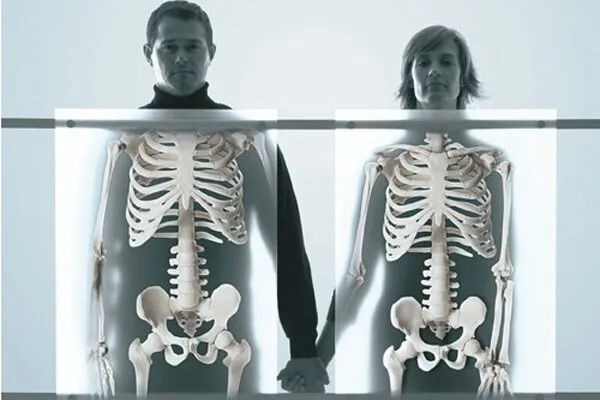
"You should spend some time with me in our ER, which is totally typical of what is going on all over the U.S. Incredibly expensive, unnecessary, and potentially harmful X-ray scans are ordered with gay abandon on all patients to make sure that 'nothing is missed' that a lawyer might later use against the ER. Patients with the most ridiculous complaints are admitted to the CCU [critical care unit] just to make sure that an MI [myocardial infarction, a.k.a. heart attack] is not missed. I would guess that $10,000 dollars per day or more of wasted X-ray radiation studies occur in our ER everyday. Multiply this times 365 and times the thousands of ERs in the country and you come up with billions and billions of dollars of pure waste in our system."

Along with over-scanning, over-biopsying, over-blood-working and other diagnostic excesses, fear propels over-treatment. Anytime a physician diverges from standard U.S. treatment protocols, nearly all of which skew toward expensive drugs and surgery, lawsuit-fear looms. "Defensive treatment" strips physicians of clinical judgment, costs billions and leaves patients less healthy, but it's hard to blame physicians who practice it. As one wearily told me, "You never forget your first lawsuit."


Physicians like to discuss the fear side, because it shifts the blame to lawyers. The greed side, however, deserves just as much scrutiny and reform. Consider "The Cost Conundrum: What a Texas town can teach us about health care," a must-read New Yorker article by Atul Gawande, M.D. Gawande visited McAllen, Texas, to discover why per-capita health care expenditures there are the highest in the nation. He found that many physicians in high-medical-cost cities such as McAllen have a diversified "revenue stream," the result of what one hospital administrator termed "entrepreneurial spirit." This "spirit" often manifested in physicians owning their own medical testing equipment, which meant the more tests they ordered, the more money they made. A 2002 University of North Carolina study showed doctors who own imaging equipment sent patients for roughly two to eight times more imaging tests than those who don't own.

In Gawande's article, a McAllen doctor who refused to hop aboard this gravy train had a more sensible take on the local "spirit." "Medicine has become a pig trough here," he said. "We took a wrong turn when doctors stopped being doctors and became businessmen."

Lest you think the only drawback of over-scanning is wasted billions, note that from 1980 to 2006, per-capita radiation dosage from medical testing more than quintupled. A controversial study published in the November 29, 2007, New England Journal of Medicine estimated that computed tomography (CT) scans -- the type of imaging that has grown most explosively -- administered today could eventually cause up to 2% of cancer deaths.

As with fear, greed also propels expensive, inappropriate treatment. If a clinic loses money each time it counsels a patient to control type 2 diabetes with diet and exercise, but makes a hefty profit when it amputates a foot riddled with diabetic ulcers, how long will it continue to emphasize the former?

Because these problems have two causes, the solution is twofold.

To quell the fear that drives physicians to over-test and over-treat, we need vigorous legal reform to cap malpractice payouts. Staunching the greed motive requires a more dramatic change. Since a single CT scanner can bring in $400,000 a year in profit, it's vital to sever the link between ordering tests and making money. Restricting ownership of testing equipment to nonprofit, government, or independent private entities is crucial.

As for popularizing less lucrative -- but often better -- low-tech treatments, putting physicians on salary can also help. Whether the paycheck comes from a nonprofit organization such as the Mayo Clinic or some variety of single-payer national health care, stabilized incomes would let physicians more readily focus on the health of their patients rather than on their own finances.

Until both of these corrective measures are in place nationwide, it's up to you to ask your physician if the tests or treatments ordered for you are truly essential. You might get an honest answer about the test's potential risks and benefits. Then, together, you can arrive at a decision that satisfies both of you.

Andrew Weil, M.D., is the founder and director of the Arizona Center for Integrative Medicine and the editorial director of www.DrWeil.com. Become a fan on Facebook.


Follow Dr. Andrew Weil on Twitter: www.twitter.com/DrWeil

Fear and greed are potent motivators. When both of these forces push in the same direction, virtually no human being can resist. And doctors -- despite many expectations to the contrary -- are human b...
 
 
  • Comments
  • 316
  • Pending Comments
  • 0
  • View FAQ
Comments are closed for this entry
View All
Favorites
Recency  | 
Popularity
Page: 1 2 3 4 5  Next ›  Last »  (8 total)
This user has chosen to opt out of the Badges program
photo
12:10 PM on 09/03/2009
When my boy was born, he had some fluid in his lungs... which dries up naturally over a period of several days.... but the doctors and hospital staff smelled that I was fatigued from birth so they put hin in ICU!!! For 3 days.... and they tried to xray him 3X a day.... imagine, a newborn, Xrayed 3 times a day. It was very difficult no to have my newborn with me. I of course refused, and until i used the word "lawyer" and started writing things down, they had no intention of giving me my baby.... but rather, they wanted to pump him full of ANTI BIOTICS and rack up as many charges as they possibly could. 3 days later and 10+K later, I had my baby in my arms and left that stinking corrupt scumb pit known as Morton Plant Hospital, on Alt. 19 in Clearwater Florida. What a freakin' scam.... they all know new parents are vulnerable.... and will go for the jugular if allowed. Now they are harrassing me for the 1K that the insurance company refused to pay on this scam..... and they're ruining my credit too. Doctors.... are the new lawyers. Everyone will hate them eventually.

My advice: take things into your own hands and follow your instincts! Believe me, those doctors are NOT looking out for your best interests.... nor health. Just $$$.
photo
HUFFPOST SUPER USER
PhilipTaylor
Legalized Bribery is an Oxymoron - must END
06:27 AM on 09/02/2009
HR 676 Medicare for ALL WHO want it is single-payer!

But add an OPT OUT for those wanting to buy commercial health care Insurance and suddenly you have the Strongest possible Public Option!

People could solve their health care problems simply and effectively!

With from 100,000,000 to 306,000,000 people in Medicare for ALL "FAIR PRICES" can be negotiated with all aspects of health care.

This does away with the 1,000+ pages of loopholes and "duct tape" applied to the existing systemS!

Hr 676 is a simple to read and understand 50 pages - make that 51 when you add the OPT OUT clause! Be sure to add in preventative care requirements so 56 pages!
12:07 PM on 09/01/2009
I don't disagree with the thrust of the argument, however I must take issue with this statement that "(even though medical costs in the U.S. have spiraled out of control), yet we are among the least healthy people in the developed world."

If you correlate by ethnicity, Americans are actually among the most healthy in the world. For example, the average lifespan among white non-hispanic Americans compares favorably to that of white people in any other western country. It's within a few months of the average Japanese lifespan -- the highest in the world. Likewise the lifespan among Asian Americans. The lifespan of Americans who immigrated from Africa or Jamaica within the last two or three generations compares favorably with the lifespan of similarly recent Jamaican and African immigrants to England.

Our overall average is lowered significantly by the lower average life-span among African Americans, but there is no proof that the average lifespan of African Americans would be any higher were they living elsewhere. (Much of the lower average lifespan is due to murder and use of illegal narcotics, which has little to do with the funding of medical care.)

So basically, critics of our health statistics are merely bemoaning America's greater racial diversity. Nationalizing health care isn't going to change that.
01:01 AM on 09/01/2009
Interesting article. Most of the comments are scary.
I agree, expanding Stark is probably a good thing. However, do you really want your MD salaried? If you are on salary, there is little motivation to work or provide quality service. Most MD's work 60-80 weeks. What happens to health care when that drops to 40? Who will see the patients? Who will answer calls after the shift is up? So what if you leave the practice, the doc gets paid either way. In fact, he/she would have to work less if more people leave for another doc. We already have a doctor shortage and a high burn-out rate and its only going to get worse. Much worse.
01:22 PM on 08/31/2009
I don't agree with your assessment of the health care problem .

People on Medicare / Medicaid do not get the same care as someone with plenty of money to pay for good health care .
This is why we do need a single payer system in this country and to repair the Medicare and Medicaid system . Is it really moral that only those who are wealthy receive good health care in the US ? I really don't think so .
Maybe the reason why patients demand tests is because they don't feel their doctors are listening to them . So that leaves the patient to fear a serious problem could be over looked because of the doctors need to quickly diagnose him / her and get you out the door .
The whole system is broken ! Doctors need to go back to their roots and take more time with patients instead of watching the clock .
How many times I have gone to a doctor and found he had over booked and the wait was an hour or more because two of us had the same appointment time scheduled .This is more common than not !
Also a lot of these doctors who do over book belong to a health group corporation with other doctors and the agency sets down rules as to how many patients are seen in an hour etc. These agencies are interested in one thing and that is profit ! Profit is more
05:54 PM on 08/31/2009
Thanks for your post. Here is some more information about Single Payer:

There is a group of physicians called Mad As Hell doctors that are currently criss crossing the country and advocating Single Payer System to reduce billing fraud and waste and improve health care. President Obama has turned them down so far in their request to meet with him and discuss the Single Payer Option.
http://MadAsHellDoctors.com for more info.

Nonethelss, there wil be an up/down vote this Fall on H.R. 676 as promised by Nancy Pelosi according to: http://www.singlepayeraction.org/blog/?p=1431


Ralph Nader reports from Harvard Professor Henry Sparrow that north of $100 Billion per year is currently being wasted in billing fraud and schemes in our Capitalistic system-sometimes from doctors who've been deceased for years-driving up costs of health premiums significantly and rationing care.
http://nader.org/index.php?/archives/2137-The-Drive-for-Single-Payer.html

FactCheck.org reports that of the 48 claims in the house bill about healthcare at least 26 of them are false and many more are misleading coureousy of Republicans and Blue Dogs.
11:41 AM on 08/31/2009
Doctors stick to the routine because they are paid for the routine by the insurance companies. They bill for 20 minute appointments and you must have a diagnosis after that to continue billing. If they can't figure out what's wrong with you in twenty minutes, the doctor has 3 people in the waiting room and can't keep talking to you and weed through your previous lab work and medical file. He makes a half @ss diagnosis and sends you to the lab.
I don't think its fair to say that the problem is the doctors greed or the fear. I've very occasionally felt like a doctor ordered a test to make money for himself and never because he thought I would sue him. I suppose I don't have the personality. I've had a lot of tests I knew were probably unnecessary, but the doctor just didn't have time to think through my case.
We need more doctors and they need to be paid for outcomes rather tests and short appointments. The system is the problem.
This user has chosen to opt out of the Badges program
photo
SkelDaddy
single payer is the only viable solution
08:29 AM on 08/31/2009
A wise nurse once told me on a night shift in the ER why patients come to the emergency room:

"x-rays and antibiotics"

People get pissed when they don't get what they came for and God forbid that you should correct their personal diagnosis.
08:55 PM on 09/03/2009
Yes as a nurse myself I have met nurses like you have discribed who have become cynical and lost their empathy ! Its kind of sad to see someone who maybe once went into the medical profession to help people lose their sense of compassion for their patients .
This user has chosen to opt out of the Badges program
photo
08:12 AM on 08/31/2009
You lost me when you said ". . .it's up to you to ask your physician if the tests or treatments ordered for you are truly essential. . ." And what is the doctor going to say? Is he going to say, "No, I just ordered the tests because I get a kickback?" No. I have tried this tactic and it very much does not work, because the doctor believes he is doing the right thing.

There is no easy answer to overtesting. It is not possible for the patient to make decisions when in the midst of pain or an emergency situation. While it is the doctor's responsibility to discuss risks and benefits of all medications, procedures and treatments, almost no doctors do this anymore. That is because the patient is not the client: the HMO is the client. If the HMO says "go right ahead, we'll pay for it," that's what the doctor is going to do.

Think about this: When did colonoscopies become "routine?" They became routine when insurance companies started covering them. Before that time, they were only done (as they are in Europe today) if symptoms warranted the risks. Today, in the US, most patients are led to believe colonoscopies are essential and everyone should have them. This is one example of how we have stopped being patients and started being the vehicles for doctors to get money from the HMOs.
photo
HUFFPOST SUPER USER
billw8017
History looks like this
10:13 AM on 08/31/2009
Wow! 65%H2O has raised some highly relevant points. Most of all, we see the point that doctors believe they are doing the right thing. Sure, some ER patients are regular visitors, but many will be 1st time strangers. Testing is reasonable because you know nothing about them,while the more you know whatever, the better to treat them. And -- do procedures pass in and out of fashion? Everything else does!

Do doctors discuss with patients. I should imagine so, they will discuss as much as they can in the fifteen minutes an HMO designates for them to spend on the patient.

One of the basic laws of economics is that supply creates demand; only the price is variable. So, having the equipment will cause the use of the equipment even if that use causes 2% of the cancers.

Finally, 65% points out that the patients aren't medicine's customers, the insurance companies and HMOs are the paying customers and always right -- even when they are totally wrong.

Dr Weil, a great man widely admired, seems to recommend the English system where the National Health Care doctors are employees of the state. In the United States this would be the pattern of the Veteran's Administration. The Obama administration is significantly increasing the funding of the VA and liberalizing access. The VA could become a Trojan horse for an incremental increase of health care provisioning: liberalized first to cover all veteran's complaints, then extended to family members.
This user has chosen to opt out of the Badges program
photo
11:48 AM on 08/31/2009
I grew up under military medicine and I lived in the UK for several years, so I have direct experience with both these systems. External mandates on patient care - lengths of visit, limits on prescriptions, referrals and treatments - are still in place in these systems. As you point out giving doctors a salary is a step in the right direction, but in these two other systems the patient still loses out. In these cases the government is the client, and the government rules and regulations must be followed, many times at the expensive of the health of the patient. For instance, under the NHS only certain drugs in any class are on the NHS formulary, and they have to be used as a first line of defense. In my case I knew that the antibiotic the doctor wanted to prescribe was one that made me wildly vomitous, but it didn't matter, because that's what the NHS said had to happen. I have never understood what value a drug has if it's hurled right back up the old alimentary canal, but I digress. My point is that none of the systems is perfect, and none of them focus on what is best for each individual patient.
photo
HUFFPOST SUPER USER
billw8017
History looks like this
10:27 AM on 08/31/2009
It is pleasant to think, President Obama, while he gives Congress the opportunity to do the right thing, is not depending on big changes, but is attacking the problem on a variety of fronts and will improve health care coverage in every possible way. So, the VA is improved even while stimulus funds go to the states to support their Medicaid programs. The Center for Disease Control is working to improve record keeping so as to discover which treatments are only seemingly effective and what works.

So, we observe these matters of life and death, offended that he might be so cool. In the meanwhile, he assures that SOMETHING will be done and alternate avenues of approach are opened up.
photo
HUFFPOST SUPER USER
billw8017
History looks like this
11:14 AM on 08/31/2009
I came across an analysis of Health Savings Accounts w Catastrophic Coverage that called it "the Cadillac of health insurance plans," an excellent tax deferment policy, and therefore good for relatively wealthy people so long as they don't get sick. As you can imagine, this really turned me off on HSAs.

Yet, there are points. The major point is that it makes the patient the medical industry's customer again rather than the insurer. Such programs can be improved by guaranteeing essential coverage and with a pass for an annual checkup.

The essential coverage can be covered with a credit program and by obliging the industry to cover the cost of its mistakes. That is to say, even the tort reform -- so cynically promoted by people who want to abandon the sick -- can be incorporated in a grand plan with arbitration and concern for lost income. This means "pre existing conditions" would shift to under the catastrophic insurance to be fully treated from their first discovery or be irrelevant as pre existing.

It often seems that medical care in the United States is not just expensive but irrational. This may be a matter of being hyper sensitive and sweating the small stuff.

That good doctors might make lousy business people is logical, but shouldn't matter. People with business management training abound seeking jobs and can carry the doctor, enlarging the practice with staff, nurses and paramedics -- and lawyers on retainer if that is necessary.
photo
HUFFPOST SUPER USER
belyeu
05:02 AM on 08/31/2009
Many x rays are not as expensive as the fee that the ER doctor and Radiologist charges to read them. Maybe doctors just need to lower their fees.
This user has chosen to opt out of the Badges program
photo
07:39 AM on 08/31/2009
It's not the fees that are the problem ... it's there are too many tests becasue doctors are practicing defensive medicien instead of corrective medicine. Dr. Weil is saying doctors need to reduce the number of scans and at the same time reform the laws to recognize doctors need legal protection for practicing corrective that doesn't always guarantee success in the short term especially if the patient isn't completely onboard and cooperating.
This user has chosen to opt out of the Badges program
photo
11:27 PM on 08/30/2009
Take out zillionairism from all medicine, western, eastern, or just popular, and listen to Bill Moyers explain, so simply, why Universal Heal Care In America is essential, and why all politicians and doctors and pseudo doctors should be fighting for it, NOW.
http://videocafe.crooksandliars.com/heather/real-time-bill-moyers-health-care-human-ri
11:13 PM on 08/30/2009
Look, we really need a way to bring the costs WAY DOWN to where they can be managed by regular
folks who are NOT RICH.

And that means that someone is going to get a tremendous pay cut...sorry but when a CEO makes thousands of times more than his lowest paid worker something is seriously out of whack

Lastly, like that "Twisted Sister" tune...

"We aren't going to take it anymore"

Either we bring back the jobs that have been outsourced AND we make healthcare affordable..

OR...

There's going to be hell to pay for it!
photo
HUFFPOST SUPER USER
belyeu
10:01 PM on 08/30/2009
Dr Weil: I once had a woman with a 3 year old child come into my office. The child's mother reported her daughter had fallen out of bed and she was complaining that her neck hurt. The child was ambulating normally with no signs of pain or discomfort. There were no neurological signs and all orthopedic tests were normal except mild spasm of the para spinal muscles. I sent her for a 3 view cervical spine series. There was no evidence of abuse.

The results of the study revealed a fracture of C-2 involving the posterior arch. The child was immobilized and referred for a CT scan for further evaluation.

I was very glad I ordered that x-ray on this child.

I have had several incidences where I felt the X ray was going to be negative but they turned out to be significant.

Take from this example what you want but I have never forgotten the lesson I learned from this seemingly healthy 3 year old child.
This user has chosen to opt out of the Badges program
photo
11:29 PM on 08/30/2009
Real doctors know these things. Celebrities just make money.
This user has chosen to opt out of the Badges program
photo
07:48 AM on 08/31/2009
And not all doctors abuse the system. Some really understand what diagnostic tools are, when used correctly, and can open a whole new chapter on a patient's problem that isn't apparent to the most casual observer. I understood the article to be implying there are many, not all, who use the tools as a ends-justify-the-means approach so as to cover themselves in the event they are faced with a lawsuit - quite understandable. The real point I found was doctors need to focus more on preventive and corrective health care and in return the liability issue for malpractice is lowered. That's an agreeable trade-off that should be considered.
TMcKeon
You, who are on the road
09:42 PM on 08/30/2009
Contributing to this long legacy of profit-based healthcare and arbitrary insurance companies are the patients themselves. If they have medical insurance, what do they care how many tests a doctor runs? They're not paying for it. At least not directly. Each of us, however, pays a heavy price when we decline to take responsibility for our own health. We all need to become educated and informed so we can make decisions and convey our wishes to our docs. My dentist finally stopped recommending x-rays after I declined about six times in a row. It's ridiculous to put our lives into the hands of others. "Health maintenance" was something my grandma did long before HMOs.
09:41 PM on 08/30/2009
Twenty years ago I suffered a herniated disk in my lower back, which my primary physician diagnosed with a single CAT scan. But every other doctor, clinic, and hospital I visited over the subsequent two years(and there were quite a few) always insisted on taking X-Rays. Well, I had done my homework, and knew that X-Rays showed only hard tissue(bone), not soft tissue(disks). Quite a few MD eyebrows were raised when I explained this to them, and then promptly refused the X-Rays.

BTW, I also refused the surgery that two doctors recommeded. Today, my back is fine.
This user has chosen to opt out of the Badges program
photo
07:57 AM on 08/31/2009
About 5 years ago, I was on my bike and a car pulled out in front of me - I got to be superman for a whole 5 seconds. I wasn't hurt, but was taken to the emergency room because I landed on a shoulder that 2 years earlier had been severely impinged - rotary socket, tendons and ligaments. As I was sitting there waiting for the doctor, the x-ray tech showed me the results of the scans on a TV monitor. He was able to remove the background noise (soft muscle tissue) and show only the bones. He then removed the bones and showed only soft muscle - all quite impressive.
photo
HUFFPOST SUPER USER
LeftistGuerrilla
07:05 PM on 08/30/2009
this guy goes on and on but he seems to be making a case for government controlled health care (at least i gather from a cursory reading). Contrary to what he wrote a month ago.
11:05 PM on 08/30/2009
Sorry but my eyebrows go up when I hear or read "government controlled".
Medicare works doesn't it? What about Social Security?