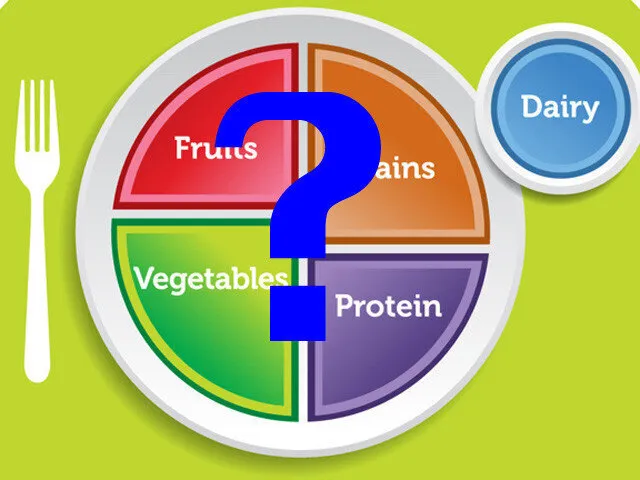
On June 2, a colorful plate replaced the food pyramid as the official icon representing U.S. Dietary Guidelines, and that's generally good news. But there are some conceptual chips and cracks in this new dinnerware. Overall, I fear another opportunity has been lost to give Americans the best up-to-date information about what constitutes an ideal diet.
First, the positives. The icon, called "MyPlate," (http://www.choosemyplate.gov/) easily surpasses the widely reviled "MyPyramid," the confusing, rainbow-hued version of the food pyramid that the U.S. Department of Agriculture unveiled in 2005. The new, simple, plate-shaped graphic is split into four sections: red for fruits, green for vegetables, purple for protein and orange for grains. A separate blue section, shaped like a drinking glass, represents dairy foods. I like the fact that the green section is largest, providing a visual reminder of the most fundamental nutrition truth: Vegetables, the foundation of a healthy diet, should fill most of a plate at every meal.
The MyPlate graphic also lists general dietary principles, and I agree with nearly all of them. I particularly like "Drink water instead of sugary drinks." If Americans would heed that advice alone, the obesity and diabetes epidemics would begin to abate overnight.
To get the specifics, the user clicks on the various sections to read a list of recommended foods (apparently, this graphic works best on computers, but there is also a
). The lists are quite detailed and, again, I agree with most of it. However, there are serious flaws:
In the "Fruits" section, no distinction is made between fruit juices and fruits -- a half cup of fruit juice is listed as equivalent to a half cup of fruit. This ignores the fact that the glycemic load -- an indication of how quickly a food is converted to blood sugar -- is far higher in fruit juices than in fruits. Metabolically, the difference between a glass of filtered, pasteurized apple juice and a glass of soda is minor. It is far better to eat the whole fruit, as the accompanying fiber dramatically slows digestion, leading to more stable blood sugar and a longer-lasting feeling of fullness that can help prevent overeating.
Similarly, in the "Grains" section, there's no difference cited between intact grains -- I term these "true whole grains" -- and grains that are ground into flour. As with fruits, keeping grains intact, rather than pulverized, slows digestion and stabilizes blood sugar.
In the "Protein" section, I appreciate the fact that fish is emphasized -- we are urged to eat 8 ounces per week, which would help Americans improve their woefully deficient consumption of healthy omega-3 fatty acids. But it's unfortunate to see swordfish among the recommended species. Not only is it vastly overfished, but as a predator species, it tends to bioaccumulate toxins such as mercury. I recommend striped bass, wild Alaskan salmon, herring, sardines, anchovies, mackerel and Alaskan halibut, as these meet the dual criteria of abundant stocks and low toxic residues.
In the "Dairy" section, I'm disappointed to see a strong emphasis on low-fat and fat-free choices. This advice is becoming outdated, as new research has revealed full-fat dairy does not pose a heart-health risk, and may offer unique benefits.
Eating according to the dictates of MyPlate would almost certainly improve the average American's nutritional profile, but the Anti-Inflammatory Food Pyramid remains the superior choice. It provides abundant vitamins, minerals and fiber; facilitates stable blood-sugar levels; and helps to control the inappropriate inflammation that underlies many of the developed world's chronic diseases including Alzheimer's and Parkinson's diseases, heart conditions and many cancers. Until the USDA incorporates all of the latest science in its official recommendations, I encourage you to rely on the Anti-Inflammatory Food Pyramid as the most comprehensive graphic guide to how to eat for optimal health.
Andrew Weil, M.D., invites you to join the conversation: become a fan on Facebook, follow him on Twitter, and check out his Daily Health Tips Blog. Dr. Weil is the founder and director of the Arizona Center for Integrative Medicine and the editorial director of www.DrWeil.com.
Our 2024 Coverage Needs You
It's Another Trump-Biden Showdown — And We Need Your Help
The Future Of Democracy Is At Stake
Our 2024 Coverage Needs You
Your Loyalty Means The World To Us
As Americans head to the polls in 2024, the very future of our country is at stake. At HuffPost, we believe that a free press is critical to creating well-informed voters. That's why our journalism is free for everyone, even though other newsrooms retreat behind expensive paywalls.
Our journalists will continue to cover the twists and turns during this historic presidential election. With your help, we'll bring you hard-hitting investigations, well-researched analysis and timely takes you can't find elsewhere. Reporting in this current political climate is a responsibility we do not take lightly, and we thank you for your support.
Contribute as little as $2 to keep our news free for all.
Can't afford to donate? Support HuffPost by creating a free account and log in while you read.
The 2024 election is heating up, and women's rights, health care, voting rights, and the very future of democracy are all at stake. Donald Trump will face Joe Biden in the most consequential vote of our time. And HuffPost will be there, covering every twist and turn. America's future hangs in the balance. Would you consider contributing to support our journalism and keep it free for all during this critical season?
HuffPost believes news should be accessible to everyone, regardless of their ability to pay for it. We rely on readers like you to help fund our work. Any contribution you can make — even as little as $2 — goes directly toward supporting the impactful journalism that we will continue to produce this year. Thank you for being part of our story.
Can't afford to donate? Support HuffPost by creating a free account and log in while you read.
It's official: Donald Trump will face Joe Biden this fall in the presidential election. As we face the most consequential presidential election of our time, HuffPost is committed to bringing you up-to-date, accurate news about the 2024 race. While other outlets have retreated behind paywalls, you can trust our news will stay free.
But we can't do it without your help. Reader funding is one of the key ways we support our newsroom. Would you consider making a donation to help fund our news during this critical time? Your contributions are vital to supporting a free press.
Contribute as little as $2 to keep our journalism free and accessible to all.
Can't afford to donate? Support HuffPost by creating a free account and log in while you read.
As Americans head to the polls in 2024, the very future of our country is at stake. At HuffPost, we believe that a free press is critical to creating well-informed voters. That's why our journalism is free for everyone, even though other newsrooms retreat behind expensive paywalls.
Our journalists will continue to cover the twists and turns during this historic presidential election. With your help, we'll bring you hard-hitting investigations, well-researched analysis and timely takes you can't find elsewhere. Reporting in this current political climate is a responsibility we do not take lightly, and we thank you for your support.
Contribute as little as $2 to keep our news free for all.
Can't afford to donate? Support HuffPost by creating a free account and log in while you read.
Dear HuffPost Reader
Thank you for your past contribution to HuffPost. We are sincerely grateful for readers like you who help us ensure that we can keep our journalism free for everyone.
The stakes are high this year, and our 2024 coverage could use continued support. Would you consider becoming a regular HuffPost contributor?
Dear HuffPost Reader
Thank you for your past contribution to HuffPost. We are sincerely grateful for readers like you who help us ensure that we can keep our journalism free for everyone.
The stakes are high this year, and our 2024 coverage could use continued support. If circumstances have changed since you last contributed, we hope you'll consider contributing to HuffPost once more.
Already contributed? Log in to hide these messages.