iPhone app iPad app Android phone app Android tablet app More

Featuring fresh takes and real-time analysis from HuffPost's signature lineup of contributors
Dr. Andrew Weil

Dr. Andrew Weil

GET UPDATES FROM Dr. Andrew Weil

Turmeric Health Benefits: Have a Happy New Year With Turmeric

Posted: 12/28/10 07:53 AM ET

Looking for a simple New Year's resolution for health? Add turmeric to your diet.

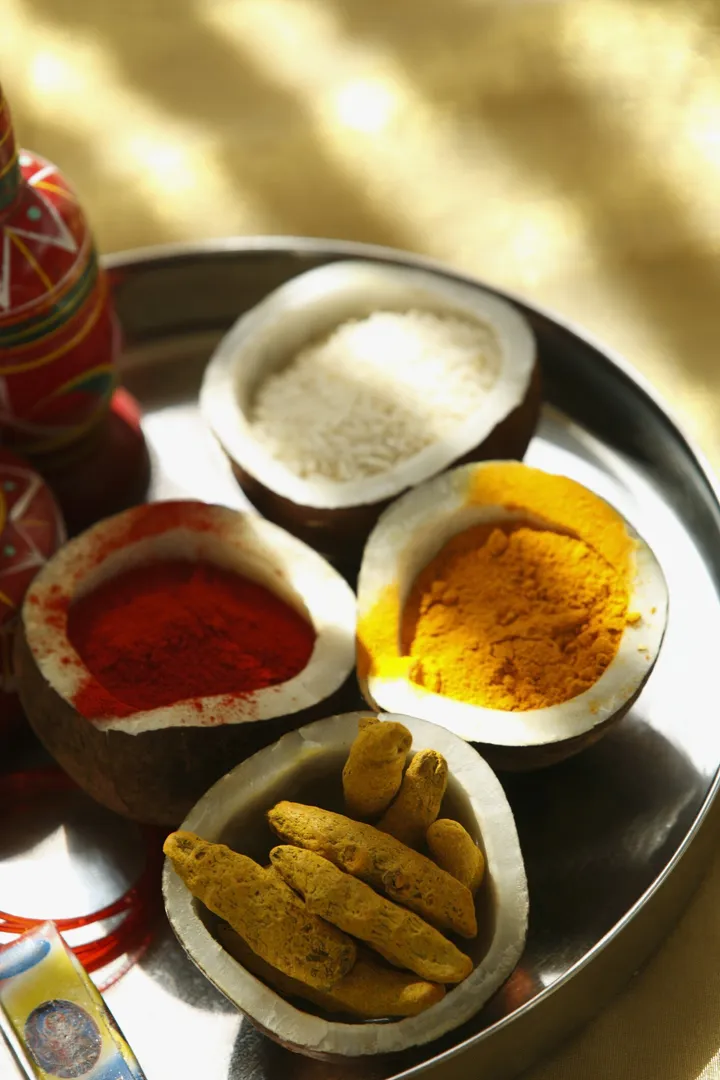
Turmeric (Curcuma longa) is a culinary spice, a major ingredient in Indian curries, and the source of American mustard's bright yellow color. Used as both medicine and food for centuries, accumulating evidence suggests that this relative of ginger is a promising preventive agent for a wide range of diseases, probably due largely to its anti-inflammatory properties.

The National Institutes of Health lists 24 current studies on the effects of turmeric and its chief active component, curcumin. Such studies raise the question of which is better to take: whole turmeric, generally used as a powdered spice with food; or curcumin, which is usually taken as a supplement? Each has been shown to have health benefits, but unless you have a specific condition such as inflammatory bowel disease, I favor using turmeric (especially in cooking) rather than taking curcumin pills. This reflects my general belief that, until proven otherwise in head to head studies, whole plants are usually a better choice than isolates. On the other hand, curcumin appears to have a more rapid and dramatic effect, and may be the better choice as a therapeutic (rather than a preventative) preparation.

Here's a quick roundup of recent research on both turmeric and curcumin.

  • Curcumin seems to delay liver damage that can eventually lead to cirrhosis, according to preliminary experimental research at the Medical University Graz in Austria.
  • Kansas State University research found that adding certain spices, including turmeric, can reduce the levels of heterocyclic amines -- carcinogenic compounds that are formed when meats are barbecued, boiled or fried -- by up to 40 percent.
  • Rodent studies at the University of Texas indicate that curcumin inhibits the growth of a skin cancer, melanoma and also slows the spread of breast cancer into the lungs.
  • Researchers from the University of South Dakota have found that pretreatment with curcumin makes cancer cells more vulnerable to chemo and radiotherapy.
  • Epidemiologists have hypothesized that the turmeric that is part of daily curries eaten in India may help explain the low rate of Alzheimer's disease in that country. Among people aged 70 to 79, the rate is less than one-quarter that of the United States.


And at least one new study suggests curcumin's value for arthritis treatment. Since arthritis is so common and the results so interesting, it's worth a closer look.

This research, from Italy, was a three-month trial involving 50 patients diagnosed by x-ray with osteoarthritis of the knee. The Italian team was investigating the effect on arthritis symptoms of a curcumin-based preparation optimized for better absorption. Participating patients took the formulation in addition to standard medical treatment; those in the second group continued following their physicians' recommendations.

After 90 days, the researchers found a 58 percent decrease in overall reported pain and stiffness as well as an improvement in physical functioning among the curcumin group compared to the controls. They also found, via a standardized testing procedure, a 300 percent improvement in the emotional well being of the curcumin patients compared with the others. And blood tests showed a 16-fold decline in C-reactive protein, a marker for inflammation. Patients in the curcumin group were able to reduce their use of non-steroidal anti-inflammatory drugs by 63 percent, compared to the other group.

The bottom line that the therapeutic advantages of turmeric and curcumin are almost too numerous to list. An overview published in Advanced Experimental Medical Biology in 2007 states that, "Curcumin has been shown to exhibit antioxidant, anti-inflammatory, antiviral, antibacterial, antifungal, and anticancer activities and thus has a potential against various malignant diseases, diabetes, allergies, arthritis, Alzheimer's disease and other chronic illnesses."

If you find this compelling, there are many ways to add turmeric to your diet. Some Americans may find straight turmeric powder bitter or otherwise off-putting, but when a teaspoon or two is added to a pot of soup or stew, the flavor disperses and adds a subtle depth and complexity that most people find appealing. If even that's too much for you, both turmeric and curcumin supplements are now widely available -- just take one along with your daily multivitamin. Note, however, that turmeric and curcumin are poorly absorbed from the G.I. tract. A recent finding is that absorption is enhanced in the presence of piperine, a constituent of black pepper. Indian cuisine commonly uses turmeric and pepper together. I suggest using only turmeric and curcumin supplements that contain piperine or black pepper extract.

If, like me, you love the flavor of turmeric, try this recipe for turmeric tea.

Naturally, there's far more to good health than adding this spice to your meals. But as part of an overall plan that includes an anti-inflammatory diet, regular exercise, stress-reduction and prudent supplementation, a daily sprinkle of turmeric in your cooking can be a valuable addition to your healthy lifestyle, and a great habit with which to begin a happy new year!

Andrew Weil, M.D., is the founder and director of the Arizona Center for Integrative Medicine and the editorial director of www.DrWeil.com. Become a fan on Facebook, follow Dr. Weil on Twitter, and check out his Daily Health Tips Blog.


Follow Dr. Andrew Weil on Twitter: www.twitter.com/DrWeil

Looking for a simple New Year's resolution for health? Add turmeric to your diet. Turmeric (Curcuma longa) is a culinary spice, a major ingredient in Indian curries, and the source of American mustar...
 
 
  • Comments
  • 164
  • Pending Comments
  • 0
  • View FAQ
Comments are closed for this entry
View All
Favorites
Bloggers
Recency  | 
Popularity
Page: 1 2 3 4 5  Next ›  Last »  (5 total)
11:32 PM on 02/12/2011
Funny thing happened to me. I got laryngitis through acid reflux and a salesperson in a health food store recommended tumeric. Well, I took it faithfully for a week (a little powder in almond milk). No change in the laryngitis, but I noticed my memory got better (you know like when you walk into the next room and forget why you went there), my joints felt better and my blood pressure went down. Needless to say, I've been taking it ever since.
This user has chosen to opt out of the Badges program
sillyfrog
Pastafarian and UU student
09:38 AM on 01/04/2011
I use it instead of warfarin.
photo
HUFFPOST BLOGGER
Dr. John Salerno
11:33 AM on 01/03/2011
Once again, Dr. Weill gets it right. The anti-inflammatory properties of ever-yellow turmeric make it high on our list of commendable ingredients for weight loss. www.thesilverclouddiet.com
07:44 PM on 01/02/2011
You had me sold at the anti-inflammatory, Doc. I don't need a medical education to know the source of my health problems--allergies, chemical sensitivites, peripheral neuropathy, edema, hypertension, a glass shoulder and knee, etc.--is inflammation. I have one hell of a time convincing strange young MDs of this, especially since my bloodwork comes back normal. If my primary doc wasn't allergic to half the modern world, too, I swear, I wouldn't get any effective treatment.

I'm already on a handful of antiseizure meds a couple times a day for the neuopathy. And a few months ago, I broke out in a bad case of hives while I was halfway through a course of methylprednisolone (for an unrelated problem).

I already swear by garlic as a decongestant. While I'm not wild about the bitter flavor of turmeric, I rinsed down about a quarter teaspoon of it anyway since I read your article. I suppose if I can lose my taste for soda pop, I can get used to the taste of that.
05:07 PM on 01/02/2011
Did I miss the link to this or did Dr Weil not include it: "The National Institutes of Health lists 24 current studies on the effects of turmeric and its chief active component, curcumin."

Come on Dr Weil or HuffPo editor,,,, link?
01:55 PM on 01/02/2011
I have a great source of turmeric. It is in an elixir with herbs and olive oil, and can be found here.

http://www.rawguru.com/store/raw-food/golden-spice-elixir.html
photo
phoebequeen
I blame the dog
01:46 PM on 01/02/2011
Sounds interesting. Just wondering how I can add it to my diet without adding yet another vitamen pill. Love curry though.
01:57 PM on 01/02/2011
I love drinking it in this elixir. Delicious!

http://www.rawguru.com/store/raw-food/golden-spice-elixir.html
This user has chosen to opt out of the Badges program
photo
06:28 PM on 01/02/2011
Good question. I'm thinking yet another capsule may be a good idea. I never get anything in tablets because many of them don't even get digested, but the powder in a cap can be quite effective. There are lots of places where you can buy the spice in bulk and make your own caps.
HUFFPOST SUPER USER
DanEboi
01:12 PM on 01/02/2011
There also is much anecdotal evidence that a paste of turmeric removes plantar warts
theepoxyman
Reaching point of diminishing returns in 3,2,1
12:42 PM on 01/02/2011
Thank you Dr Weil and the HP for this article. It is very informative and I am on my way to the local herb shop to get some and add it to my spice rack. I will also look into growing it, fresh is always better. I already grow a lot of my own herbs and there is a huge difference from the store bought stuff in flavour and probably medicinal properties.
This user has chosen to opt out of the Badges program
02:27 PM on 01/02/2011
its yummy on rice and kids love the yellow color.
theepoxyman
Reaching point of diminishing returns in 3,2,1
04:50 PM on 01/03/2011
How much do you use? I am new to using this stuff. And thanks for the tip.
HUFFPOST SUPER USER
silverhair01
10:56 AM on 01/02/2011
Something else everyone might find interesting...curcumin is poorly absorbed in the GI tract. Piperine, a compound in black pepper, may increase the absorption of curcumin. So take some pepper with your supplements to increase absorption...
This user has chosen to opt out of the Badges program
photo
12:49 PM on 01/02/2011
You might find it interrsting that this was mentioned in the article.
07:27 AM on 01/02/2011
Wow, now I can feel so saintly cooking up curry dishes. If anyone objects, I shall send them to India where they will get even more curry. Only trouble is curry powder with turmeric as the main reason for YELLOW, colors up everything from wooden chopsticks to dishes, and clothes.
On the other mood, I have always governed my dietary practices by eating as many colours as I can. Colors come from the ingredients reflecting light that we see. So it must be some special ingredient that give rise to yellow, orange, purple etc. I eat colors of the rainbow and hope to keep my inner citizens supplied with a masala of good stuff.
This user has chosen to opt out of the Badges program
photo
01:30 AM on 01/02/2011
"...They also found, via a standardized testing procedure, a 300 percent improvement in the emotional well being of the curcumin patients compared with the others."

Most likely due to the MAOI properties of curcumin.

Let's all take antidepressants!!
This user has chosen to opt out of the Badges program
photo
12:54 AM on 01/02/2011
Caution: Not mentioned in the article: curcumin is a MAO inhibitor. Large doses may cause drug interaction problems!
photo
HUFFPOST SUPER USER
Oceras
Tax High Incomes!
06:41 PM on 12/31/2010
There are lots of dishes that you could add turmeric to, rice for example, and thereby enhance the flavor or not even be noticeable or only slightly noticeable. It's really easy to add it to your diet. You can make a great chicken soup by first sauteing onions with a little turmeric and cinnamon (which you could omit, but it has health benefits as well) and then adding chicken, vegetables, and other flavorings, and some lemon, too, if you wish.. It's a great spice.
03:16 AM on 12/30/2010
I am going to personally vouch for this and much more: Without Tumeric, I believe there's a very good chance I'd be dead now.

I suffer from a progressive, excruciatingly painful and disfiguring skin disease with no known cause, no cure, and no EFFECTIVE treatment: Hidradenitis Suppurativa (http://en.wikipedia.org/wiki/Hidradenitis_suppurativa). I was at stage 3-4 of the disease, and my dermatologist told me it had become "unmanageable" without major surgery, which would have involved skinning my legs, scraping the glands from my flesh, and re-attaching the skin and/or doing skin grafts. The operation had a very high mortality.

I have been taking 2000 mg of Tumeric (capsules) 4 times a day and my disease has gone into remission, and over the last 6 months, my legs have HEALED.

My doctors are AMAZED, and I am amazed and more than thankful.

If you know anyone who suffers from Hidradenitis Suppurativa, PLEASE, tell them about Tumeric. I consider this stuff nothing short of a miracle.
HUFFPOST SUPER USER
alteredstory
Hold on to the center
11:56 AM on 12/31/2010
Glad to hear you got better!
photo
HUFFPOST COMMUNITY MODERATOR
Pippilangstrumpf
03:32 PM on 01/01/2011
wow...JayEsbe, that is a fantastic story and so happy to hear that you found a way to get relief!!
I've heard about tumeric in the past and I get lazy about remember to use it in more everyday ways...it really seems to be a miracle herb!! I'm definitely going to start using it more, especially after hearing your story!!
10:10 AM on 01/04/2011
Since I started taking tumeric, my arthritis has also improved markedly. I truly think it's one of the few natural remedies I've tried that genuinely exceeds all expectations.