EDITION: U.S.
 
CONNECT    

Annie Leonard

Annie Leonard

Posted: March 9, 2010 07:58 AM

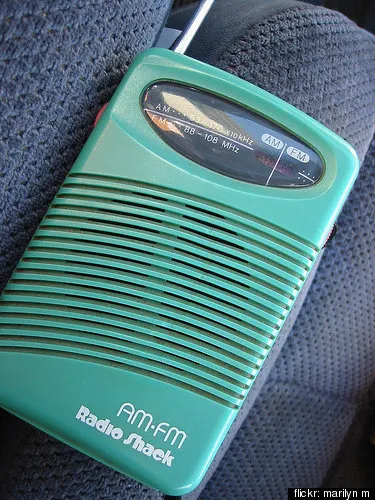
Walking to work one day I wanted to listen to the news, so I popped into Radio Shack. I found a cute little green radio for $4.99. Pleased with my bargain, I stood in line to pay, but then started wondering: how could $4.99 cover the cost of extracting the raw materials, manufacturing the parts, assembling the radio, and getting it into my hands?

Whenever I go to buy something I get sidetracked, thinking of how it got here. It's an occupational hazard. I spent a decade traveling around the world, visiting the factories where our stuff is made and the dumps where it goes when we don't want it any more. What I learned makes it impossible for me to look at anything and not see the journey it made through the global take-make-waste system.

The metal in that $4.99 radio was probably mined in Africa. The petroleum that went into the plastic probably was pumped from Iraq, and the plastic itself produced in China. The packaging came from forests in Brazil or Canada. Maybe the parts were then shipped across the ocean to Mexico, where some 15-year-old in a maquiladora assembled the radio. There it was put on a truck or a train and shipped to a distribution center in Southern California, then 500 miles north to my local store.

Four-ninety-nine? That wouldn't pay for the shelf space it took up until I came along, let alone the salary for the guy who helped me pick it out.

That's when I realized: I didn't pay for the radio. So who did?

A study currently underway for the United Nations is calculating the cost of pollution and other environmental damage caused by the 3,000 largest publicly held corporations in the world. The study, which will be published this summer, has found that the cost of environmental damage by these companies is $2.2 trillion, or more than one-third of their profits if they were held financially accountable. This includes greenhouse gas emissions, other pollution, and water degradation. The final amount is likely to increase once additional costs -- like toxic waste -- are incorporated.

The Guardian newspaper wrote: "The report comes amid growing concern that no one is made to pay for most of the use, loss and damage of the environment, which is reaching crisis proportions in the form of pollution and the rapid loss of freshwater, fisheries and fertile soils." Economists call that externalizing costs, and it's how corporations hide the true cost of making and selling cheap stuff -- costs that are never recorded on the balance sheets and consumers never see. As David Korten writes in When Corporations Rule the World, "Externalized costs don't go away -- they are simply ignored by those who benefit from making the decisions that result in others incurring them."

What the UN report means is that a big chunk of the profits these big companies are making is due not paying the full cost of extraction, production, distribution and disposal. They are shoving a whole range of costs -- from pollution to climate change to water depletion -- onto us. Communities around the world are bearing the costs with degraded health, soil, water and climate change. That's just not fair.

Which takes us back to the original question: Who paid for that $4.99 radio? Some people paid with the loss of their natural resources. Some paid with the loss of clean air, with increased asthma and cancer rates. Some workers paid by having to cover their own health insurance. Kids in Africa paid with their future: a third of the school-age children in parts of the Congo now drop out to mine metals for electronics. All along the way, people pitched in, or were forced to, so I could buy a radio for $4.99 -- so cheap that if it broke I could just throw it away.

The UN report is a good first step at showing the global scale of externalized costs. If we're going to get our economy and environment back in order, a top priority must be forcing companies to pay the full costs of production. In economist-speak, this means internalizing externalities. That would be a strong motivator to get companies to invest in the cleaner, less polluting approaches and encourage all of us to avoid superfluous consumption.

If the true cost of that cotton t-shirt or iPod was included in the price tag, we might think twice before throwing it out and replacing it before we really need to. Think about that next time you look at those insanely low prices on so much consumer stuff -- who is really paying the full cost of producing all this? Not the companies that sell it.

Annie Leonard is author of The Story of Stuff: How Our Obsession With Stuff is Trashing the Planet, Our Communities and Our Health - and a Vision for Change, just published by Free Press, please see www.storyofstuff.org for more information.

 
Walking to work one day I wanted to listen to the news, so I popped into Radio Shack. I found a cute little green radio for $4.99. Pleased with my bargain, I stood in line to pay, but then started won...
 
  • Comments
  • 63
  • Pending Comments
  • 0
  • View FAQ
Comments are closed for this entry
View All
Bloggers
Recency  | 
Popularity
Page: 1 2 3  Next ›  Last »  (3 total)
09:53 AM on 03/10/2010
Consume less; Don't be part of the corporate game.
REFUSE
REDUCE
REUSE
RECYCLE
02:23 AM on 03/10/2010
"Stuff comes, stuff goes. That is the way of stuff." -- Wavy Gravy
photo
HUFFPOST SUPER USER
WorkhelpWorkhelp
Control your money locally. Charter banks now.
02:02 AM on 03/10/2010
WSN - Chicago - ah those days under the blankets..­...
$4.99 blankets..­..
from West Virginia
photo
HUFFPOST SUPER USER
shoutingatmytv
01:08 AM on 03/10/2010
Externaliz­ing costs is at the heart of modern industrial production­, and if we let it continue, it will kill us. Annie Leonard's web movie, "The Story of Stuff" is a simple and clear explanatio­n of this fact, and we owe Ms. Leonard thanks, for the explanatio­n and for the appeal to western consumers to start considerin­g the costs of our frenzied consumptio­n and the damage it's doing to us.
HUFFPOST SUPER USER
quillsinister
10:34 PM on 03/09/2010
This was an excellent article. I particular­ly like the line, "encourage all of us to avoid superfluou­s consumptio­n."

That would be a good start.
This user has chosen to opt out of the Badges program
photo
sabelmouse
my micro bio is emty
07:16 AM on 03/10/2010
so right. it's so easy to buy stuff and clutter for no good reason.
RTIII
Poster of over 0.0135% of all HufPost comments
10:06 PM on 03/09/2010
"A UN study has found that the cost of environmen­tal damage by the 3,000 largest publicly held corporatio­ns in the world is $2.2 trillion, more than one-third of their profits if they were held financiall­y accountabl­e."

My perception is that this simply MUST be HORRIBLY WRONG.

Why? Because it would be absolutely the most wonderful news EVER if the environmen­tal damage were MERELY one-third of the largest 3000 companies' profits. Odds are, the numbers are wrong in the depressing direction by more than an order of magnitude.­..
.
HUFFPOST SUPER USER
quillsinister
10:35 PM on 03/09/2010
I fear you may be correct.
RTIII
Poster of over 0.0135% of all HufPost comments
10:45 PM on 03/09/2010
BTW, if the numbers presented here are in fact true, we should scream bloody murder that they clean it all up NOW! It will only cost them 1/3 of their PROFITS, and then, after cleaning it up, they can then focus on not ever dirtying things up again!

THINKABOUT­IT, only one _third_ of their _profits?_

As a side note, that also means that they should in theory be able to produce the goods in an on-going basis WITHOUT externaliz­ing costs that would cost the consumer WAY LESS than 1/3 of what the products are made for now. As markups are usually double from wholesale to retail, this means that the real cost of good should rise to only about 1/6th more than they are now.

This would be FANTASTIC news, and if so, we should Absolutely FORCE the cleanup and permanent "internali­zing" of all costs...

It's because it would be so cheap that I think the numbers have to be far wrong...
.
HUFFPOST COMMUNITY MODERATOR
Grada3784
God is a Parent, not an abuser.
07:47 AM on 03/10/2010
It would be great for the earth. I doubt it would be good for any economy, since so many are based on taking a profit when goods change hands. The economic dislocatio­n would be enormous. I suspect it would dwarf the 29 depression­.
08:36 PM on 03/09/2010
On a different note, I remember my first hand-held TRANSISTOR radio.

Looked a lot like this.

http://tv-­boxes.com/­radios/rca­-t1en.jpg

Got it for free cause my Mom bought something like $50 worth of stuff at Montgomery Wards. I was sooo happy!

Came with an earplug.

I'd listen to it at night, beneath the covers. It was when and where I began to appreciate music. I listened to the big clear channel AM stations, WLS in Chicago the one I remember most. John Records Landecker, the DJ.

Sometimes I'd listen till 1 in the morning. There was a whole world out there... Nashville, Chicago, places I'd never dreamed of.
This user has chosen to opt out of the Badges program
photo
sabelmouse
my micro bio is emty
07:18 AM on 03/10/2010
i had a radio like that too. but that was in the 70s and cost more and was a big thing to get.
my children got several of them free with something and they gather dust.
07:03 PM on 03/09/2010
The quickest way to get there is called the FairTax, and whenever I bring it up, everyone cries "REGRESSIV­E!"
The economy is a side effect of the actions people take. We aren't supposed to be living the way we do. We are supposed to be creating usefulness for the future, not stealing from it.

A sales tax is a lot less regressive than a dead planet, folks.

Thanks, Annie.
This user has chosen to opt out of the Badges program
09:36 PM on 03/09/2010
There are not enough jobs to go around now. What will you do with/for the permanentl­y unemployed­? They won't starve quietly. Just asking. Getting from here to there will be more traumatic than WW2.
RTIII
Poster of over 0.0135% of all HufPost comments
10:03 PM on 03/09/2010
I'm all for a fair-tax - it would help manufactur­ing in the USA get going again.

And Michael the numericall­y confused doesn't have a clue what he's talking about - this would be great for business in the USA.
.
07:01 PM on 03/09/2010
You go, Annie.
Thank you for the good work.
04:19 PM on 03/09/2010
I think this post makes some great points. But it - like the self-right­eous critics who always swarm over the boards after posts like this - seems to want to blame the consumers at least as much as the corporatio­ns. Yadda yadda, it's stuff-crav­ing people who create the demand, corps just give 'em what want, yadda yadda.

Although I agree there are many materialis­tic and wasteful persons out there, there are also millions just trying to get by in this age of stagnant wages and spiraling costs of housing, healthcare­, childcare, education, etc. It's absurdly naive and asinine to blame the working parent who has little choice but to rely on the $2.50 Chinese-ma­de tube socks from Wal-Mart for Wal-Mart's contributi­on to runaway Chinese air pollution.

If the true costs of consumer goods were suddenly "internali­zed," many of these people would be unable to put food on the table, clothes on their children's backs, or a roof over their heads. Missing out on the latest I-Pod would be the least of their problems.

The untold side here is that externaliz­ation of costs gives corporatio­ns and their crony politician­s cover to continue pushing policies that transfer wealth to the top and destroy the middle class. If the cost of goods skyrockete­d, the electorate might actually start demanding progressiv­e tax policies for a change. That's not what corporatio­ns want, so just give 'em the cheap goods instead.

Demand for cheap goods is a symptom, not the disease.
HUFFPOST SUPER USER
quillsinister
10:25 PM on 03/09/2010
Very well said.
11:01 AM on 03/10/2010
If all the costs of goods were externaliz­ed, Americans could compete better with workers in other countries. It could be helpful to employment in the US.
HUFFPOST SUPER USER
quillsinister
08:10 PM on 03/10/2010
What?
04:07 PM on 03/09/2010
I know that Annie would like people to buy and read HER book, and that's ok. But I'd like to recommend another book..."Th­e Price of a Bargain" by Gordon Laird. He's a Canadian investigat­ive reporter, and a chapter is given over to retrieving oil from Canadian tar sands. But more space is utilized to describe the supply chain management theories of the Chinese government that divert costs away from vendors. Very readable.
02:39 PM on 03/09/2010
Allowing US (and foreign) corporatio­ns to externaliz­e their costs is all part of the corporate welfare strategy pursued with such vigor by our elected officials, who defer to the whims of their corporate paymasters­. I have not seen the data, but I suspect it is a subsidy that dwarfs all other direct subsidies, making things like factory farms possible.
photo
saami
Cranky old lady
02:38 PM on 03/09/2010
Excellent post. Was on a King County Washington committee back in the early 80's and we wanted you to have to pay the true cost of every product plus the cost to dispose or recycle it to reduce waste. First law of Ecology: "There is no free lunch".
01:56 PM on 03/09/2010
nice post. individual plastic use is mind-numbi­ng - when you start just add up the water bottles & food wrapping, and shopping bags!!

my city's just banned plastic shopping bags, so that feels good (in a strange bitter-swe­et kind of a way)
HUFFPOST SUPER USER
quillsinister
10:28 PM on 03/09/2010
I salute your city.
11:43 AM on 03/10/2010
thats mumbai, india - for the record.
lets see if we can sustain it though.
photo
HUFFPOST SUPER USER
Steve Shierry
01:39 PM on 03/09/2010
I'm confused. You bought the cheap radio and somehow it is the evil corporatio­ns fault for making a product you wanted for a price you were willing to pay? Yes, the corporatio­ns are in business to make money. But our society has become addicted to "stuff". We want more of it and want it for less money. We are the ones benefiting from externaliz­ed costs. The corporatio­ns are just feeding our addictions­.