
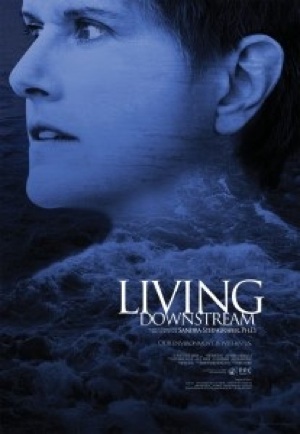
When I was invited to a private screening of Living Downstream, the new documentary about biologist, author and cancer survivor, Sandra Steingraber, I was a bit hesitant. The showing was sponsored by the Breast Cancer Fund and Pesticide Action Network North America, two organizations that like to scare me out of my complacency. Both groups are determined to make us aware of the latest medical and scientific studies linked to cancer, our environment and our collective health. They want us to wake up, pay attention and be an educated, clued-up society. SAY WHAT? But that would mean turning off Dancing with the Stars and Jersey Shore.
Note to self: We are doomed . . .
Living Downstream is a poignant, enlightening and visually graceful documentary that was released earlier this year. The film is based on Sandra Steingraber's widely acclaimed book of the same title. (Coinciding with the release of the movie is an updated second edition of Living Downstream, originally published in 1997.) The film weaves in scientific research and interviews with several experts in the fields of toxicology and medicine along with the personal story of Steingraber's struggle with bladder cancer. Watching her attend periodic cancer check-ups shows the harsh reality of what a cancer patient and their family must endure, always wondering if the next phone call is going to bring them bad news from the pathology lab.
Steingraber, raised in Illinois, was diagnosed when she was twenty. Many of her close family members also struggle with the disease; but while cancer runs in the family, she cannot say cancer is in her genes. Steingraber is adopted. Thus, she asks, "What do we all share in common?" Her meticulous scientific research points to our contaminated environment. To many of us, Sandra Steingraber is our modern-day Rachel Carson. She takes technical theory and data and chops it into bite-size bits the rest of us can understand. She then presents it in a cool, calm and powerfully poised argument.
The film corroborates a connection between cancer and her hometown's polluted waters from PCBs (a class of manmade chemicals used in flame retardants, paint, adhesives etc.) and the ubiquitous contamination of atrazine, the 2nd most widely used weedkiller in the world. Atrazine is used on more than three-quarters of the cornfields in Illinois. Bay Area biologist Tyrone Hayes makes a cameo appearance highlighting his research studying frogs that have changed sex from atrazine exposure. We're introduced to poor, oblivious Darnell, the first frog in the UC Berkeley Lab experiment to be exposed to atrazine at 1 part per billion, as a tadpole. Darnell started out male but has grown into an adult female with ovaries. He now births male frogs who are female, as well. (I know. It hurts my head too.)
"Why is this important? Changing testosterone into estrogen is very important because breast cancer is often estrogen dependent," says Hayes. "We use the same hormones, have many of the same genes and we use the same water as these frogs. In agricultural areas such as Salinas, all those pesticides that have run off the crops are in the water destroying immune systems, destroying reproduction and lowering sperm counts in frogs. But the first species that are exposed to those same pesticides are humans and they're exposed at much, much higher levels."
Atrazine, sold by Syngenta, is illegal to use in Switzerland, the country where it is made, and in 2004 it was banned in the entire European Union. In March 2010, 16 cities in the Midwest sued the company for contaminating their drinking water. In the last few years, Professor Hayes has testified in various Senate hearings claiming the EPA is accepting flawed chemical industry-funded studies as evidence of atrazine's safety. Hayes resigned from Syngenta Crop Protection in 2000 because the company prevented him from presenting research data that showed the herbicide to be a potent endocrine disruptor.
Just this spring, the President's Cancer Panel submitted its report "Reducing Environmental Cancer Risk: What We Can Do Now," assessing the effects of environmental exposures on cancer risk. An elite group of doctors selected by both President Obama and former President George Bush sat on the panel. The report states:"The entire U.S. population is exposed on a daily basis to numerous agricultural chemicals, some of which are also used in residential and commercial landscaping. Many of these chemicals have known or suspected carcinogenic or endocrine-disrupting properties. Pesticides (insecticides, herbicides and fungicides) approved for use by the U.S. Environmental Protection Agency (EPA) contain nearly 900 active ingredients, many of which are toxic." A consensus statement was signed by many members of the cancer research and advocacy community and submitted to the President's Cancer Panel. It concluded with, "The most direct way to prevent cancer is to stop putting cancer-causing agents into our indoor and outdoor environments in the first place."
TA-DA!
"The mounting evidence that our environment is playing a bigger role in the story of cancer than previously supposed is good news because we can do something about it. The cynical joke that 'everything causes cancer' is not true," says Steingraber. "Most of the chemicals implicated as carcinogens are derived from the same sources as those responsible for climate change; coal and petroleum. Finding substitutes for these two substances is already on the collective to-do list. Investing in green energy is therefore also an investment in cancer prevention."
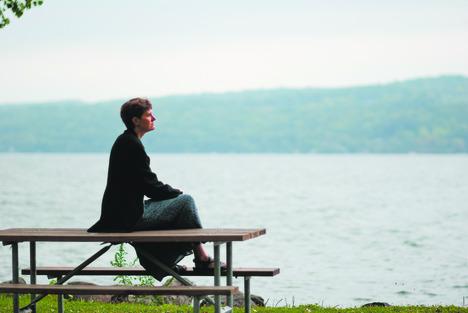
Living Downstream was produced by The People's Picture Company of Toronto, an award-winning independent production company that specializes in the production of thought-provoking documentary films. The film's director, Chanda Chevannes, spent four years bringing the book to the screen. "I've always been interested in biology and the environment, and like most of us, I have cancer in my family. I first read Sandra Steingraber's book when I was just out of high school," says Chevannes. "My first impression was that the book was very visually written; that it was very cinematic. What really interested me in making the film was Sandra's unique perspective-the blend of the personal and the scientific. It was unusual and captivating. I wanted the film to honor Sandra's different perspectives and her poet's voice."
In 1964, the U.S. Surgeon General warned-on the basis of good but partial evidence-that smoking causes lung cancer. Proof for a link between smoking and lung cancer was not demonstrated until 1996, three decades later. Steingraber would like to bring that same precautionary approach to other carcinogens, known and suspected.
"There are individuals who claim that links between cancer and environmental contamination are unproven and unprovable. There are others who believe that we are obligated to act . . . To ignore the scientific evidence is to knowingly permit thousands of unnecessary illnesses and deaths each year," says Steingraber.
The filmmakers are dedicated to creating a year-long endeavor to bring Living Downstream into theatres, homes, classrooms, town halls and libraries, churches and hospitals. They're collaborating with educators, activists and professionals to create resources to guide the use of the film in their work.
"The film doesn't attempt to tell people what they should do. Hopefully it inspires people to want to get involved and do something. But it's not prescriptive," says Chevannes. "What a person can do is very tightly tied to who they are-what they're talents, skills, and interests are-and also where they live-what specific issues are in their own community and what the opportunities are for them to get involved. We've just completed an educational DVD of the film with guides for community involvement and a guide for educators who wish to use the film in their teaching."
Kathryn Gilje, director of Pesticide Action Network and Jeanne Rizzo, R.N., CEO of Breast Cancer Fund are humbled to be by Sandra's side.
"We stand ready to engage, mobilize and agitate- to create public and political will for change. We stand together."
(Visit www.Livingdownstream.com and www.steingraber.com to learn more, find or create a local screening or to order the DVD and supplementary educational resources.)
Sandra Steingraber will be speaking in San Francisco, California on Thursday, October 28th at the Jewish Community Center at 7:30Pm. For tickets visit:www.ecobirth.blogspot.com or call 415-292-1233
Steingraber will also be speaking at Maria Shriver's Women's Conference in Long Beach, California on October 25, 2010:Visit: http://www.womensconference.org/night-at-the-village/
Some sobering statistics (Pesticide Action Network North America, www.panna.org):
.
- Childhood cancers jumped 22% between 1973 and 2000 alone.
- U.S. women still have the highest breast cancer rates in the world and adjusting for early detection, breast cancer rates have risen steadily at a rate of 1-2% per year since WWII.
- The death rate from cancer is only 6% lower than it was in 1950.
- At present, 45% of men and 40% of women will be diagnosed with cancer, a far higher proportion than 50 years ago
Paddle alongside Annie at www.dirtdiva.com