
iPhone app iPad app Android phone app Android tablet app More

Featuring fresh takes and real-time analysis from HuffPost's signature lineup of contributors
Annie Spiegelman

GET UPDATES FROM Annie Spiegelman
 

Prop 37: California Soil Scientist Says Label Up!

Posted: 10/06/2012 11:08 am

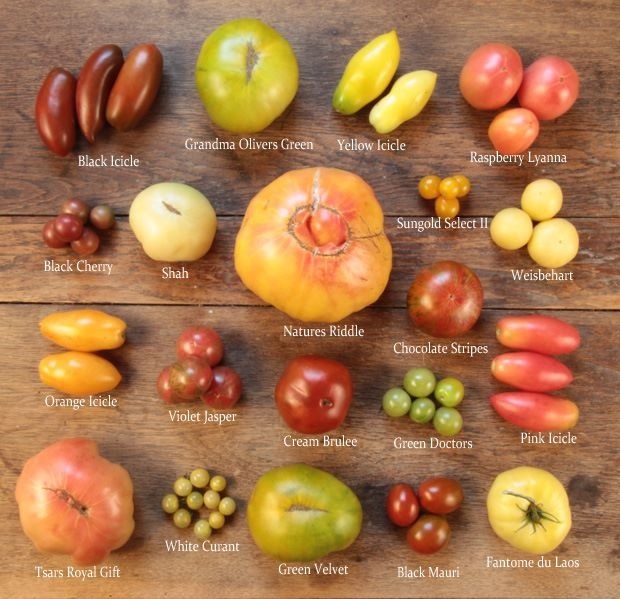
2012-10-05-tomatoprotrait3jere.jpg
Photo Courtesy of www.Rareseeds.com where you can still find non-hybrid, non-GMO, non-treated and non-patented seeds. Mother Nature approved.


This November, Californians will vote on a historic proposal that would require genetically modified foods in supermarkets to be labeled. For some reason, Proposition 37, or The Right to Know Genetically Engineered Foods Act, has the food, biotech and pesticide industries shaking in their fancy, fat-cat boots. They've already spent $25 million in opposition as they try to stifle the voices of a bunch of tree-hugging, kale-loving moms, farmers, nutritionists, scientists, non-profits and meddlesome eaters who want to know the ingredients in the food they eat and feed their children. "What are these food and agriculture companies so afraid of?" asks soil scientist and professor of environmental science, Stephen Andrews. Andrews has been teaching college students to respect the soil for over two decades and follows the research on 'dirt' closely. "If GMOs are so great and wonderful for us to eat, be upfront about it and declare your GMO greatness on the label. It's label up, or go crawl back into your plasmid!"

First introduced into the U.S. food system in the late 1990s, genetically altered ingredients are now found in 70 percent of processed foods. Eighty-five percent of the corn and 91 percent of the soy grown in the U.S. are also genetically altered. The U.S. Federal Drug Administration does not require labeling or health and safety studies for these foods, even though recent independent studies show links to allergies and other health risks. Some other unintended problems from growing these crops are an increase in pesticide use, weed resistance, the development of super-weeds, harm to bees and animals, and contamination of non-GMO fields.

I asked Professor Andrews if we should finish our lunch or run for the hills.

How is the process of inserting a gene from a bacterium or virus into a seed in a biotech lab different from traditional breeding of plants?

Selective breeding of plants and animals has been occurring for centuries. You may recall the name of Gregor Mendel, and his experiments on plant hybridization using peas, from your high school biology days. Like Mendel, many plant breeders create new hybrid varieties of vegetables and flowers from established lines via cross-pollination. Cross-pollination also occurs naturally among plants.

What separates hybridization and cross-pollination from genetically engineered varieties is the introduction of a gene or set of genes unrelated to the genetic material of the parent organism (species). Simplified, hybrid zucchini are produced by crossing the pollen of different zucchini plants possessing the characteristics desired (crossed within the same species). Genetically engineered zucchini on the other hand have incorporated into their genetic code DNA snippets from other species. For example, genes from a strawberry or a bacterium. Plants bearing the genetic material of a different species within its DNA are called transgenic. Genetically engineering or genetically modified organisms (GMOs) do not occur "naturally." Creation of these organisms requires the use of genetic engineering techniques like recombinant DNA technologies.

We have centuries of knowledge based on plant hybridization, much less on genetically modified organisms or transgenic plants. Cutting-edge or creepy?

The GloFish was one of the first genetically modified animals to be sold as a pet. GloFish is a patented and trademarked "brand" of genetically modified fluorescent fish. Similarly, seed produced from transgenic plants is patented and trademarked.

Now common in agriculture are two general categories of transgenic seed engineered to influence crop input and output. Input traits refer to engineered plant performance characteristics that influence yield. This includes herbicide (Ht) resistance and insect (Bt) resistance. Transgenic corn, soybean and cottonseed are ubiquitous within U.S. agribusiness. Output traits are engineered to affect the value of the crop, for example high oleic soybeans.

Within "traditional" plant breeding we can statistically predict the outcomes of each pollen cross. When it comes to genetically modified organisms, predicted outcomes may be less certain. Do we know enough about genetically modified organisms to make them the rule rather than the exception? Fifty years ago Rachel Carson warned us about the dangers of better living through chemistry in Silent Spring. Might we not be on the verge of another Silent Spring via better living through GMOs? Could we be opening an evolutionary Pandora's box?
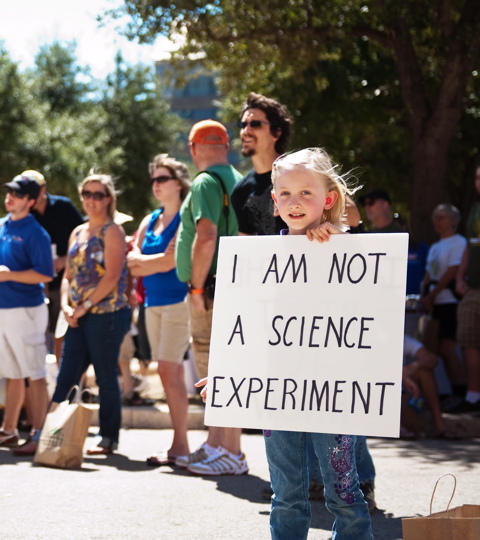

2012-10-05-LifeinMotionPhotographyLyndsayStradtner_1.jpg

Photo Credit: www.lifeinmotionphotography.com


Fifty countries including Japan, Australia, Russia, China and the EU have either banned or labeled GMOs. Why didn't those countries drink the Kool-Aid?

From my viewpoint, I see labeling and banning of GMOs as the prudent application of the precautionary principle to both assess and manage risks. In spite of industry claims that GMO products are no different in terms of nutrition, quality, safety and healthfulness -- do we really know? We don't have the long-term studies that are really necessary to assess and manage the risks associated with GMOs. Our bodies are already hosts to chemical cocktails that we are only just beginning to investigate in depth. Is it not wiser to engage in long-term studies of GMOs and their potential interactions before we unleash them all over the planet?

Why have companies such as Monsanto, Bayer, Dow, DuPont, Coca-Cola and Nestle poured $25 million into opposing food labeling? Seems like they want Californians to just shut up and eat.

You'd have to ask the industry folks why they're so hell-bent on spending millions to defeat a straightforward labeling initiative. From where I stand, the only "real" explanation is corporate greed and control. Quite simply, the agri-corps want to monopolize food production, your diet, your health and your well-being to get what's in your wallet. In the eyes of agri-business a person is no different than a hog or a steer.

If I were entrusted with the management of one of these agri-giants, I would be welcoming a ballot measure to include GMO labeling on products. Heck, I'd be jumping up and down at the opportunity to toot my horn about the accomplishments of my company's GMO research. Better yet, I'd open the petri dishes to transparent review and analysis. I'd seek opportunities to have my company's GMO products subjected to cumulative-impact testing, and long-term studies to demonstrate that we did the right things, and things right.

2012-10-06-VandanaShiva.jpg
Courtesy of Dirt! The Movie.
Physicist Vandana Shiva says "Native seed is going through a holocaust as corporations are controlling seed supply. The future of our world depends on how we steward our land, soil, water, and seeds, and pass them on to future generations."

We keep being told that we need GMOs to "feed the world," but Doug Gurian-Sherman, senior scientist at the Union of Concerned Scientists, writes, "GMOs may pose serious health and environmental risks and their benefits may be overstated." Your thoughts?

The GMO debate is complex, nuanced and universal. To reasonably make decisions about GMO products, use and regulation requires that we each become engaged in the debate. We must collectively educate each other, and mandate that the GMO industry be transparent via labeling and product licensing.

I think that all of your readers should listen to the PandoHouse Rock -- The GMO Song: "OMG GMOs!" Find it at pandodaily.com

Here's a tease from it:

"It's a challenge to feed 7 billion and counting

Droughts and food prices are causing world hunger

So what's the big deal if we make the crops stronger?

But with GMOs you can patent the breeds

And sue the farmers if they replant the seeds

The idea is to help developing nations

But who benefits: communities or corporations?

There are also ecological risks involved

You can make a new problem like the one you've just solved

Like corn that's bred with a built-in pesticide

The pests evolved and now superbugs thrive"


For more information on Prop. 37, the campaign to label GM foods, visit www.carighttoknow.org

For more about GM health risks, visit Jeffrey's Smith's informative Institute for Responsible Technology at www.responsibletechnology.org and www.geneticroulettemovie.org


Visit Annie at:

www.dirtdiva.com 2012-10-05-GardenPoster.jpg


FOLLOW FOOD
Photo Courtesy of www.Rareseeds.com where you can still find non-hybrid, non-GMO, non-treated and non-patented seeds. Mother Nature approved. This November, Californians will vote on a historic pro...
 
 
  • Comments
  • 117
  • Pending Comments
  • 0
  • View FAQ
Comments are closed for this entry
View All
Favorites
Recency  | 
Popularity
Page: 1 2  Next ›  Last »  (2 total)
09:49 PM on 10/24/2012
What I really find to be so disheartening about this issue is that not only are these major chemical companies potentially poisoning our crops and foods, they are also poisoning our public discourse on the topics of food safety. These major corporations have unlimited funds when it comes to promoting their own agenda, in this case the opposition to GMO labeling. All it takes for them is several million dollars (chump change to them) to put out a commercial with false statements to cloud the minds of voters.
If you really want to hear what real California farmers and citizens have to say about GMO labeling, check out KnowGMO.org… I don’t want to sound like I’m plugging anything here, but after checking out this group on facebook, I really think I found the truth about why it is important to label GMO foods.
02:48 PM on 10/21/2012
Just like labeling cigarettes killed the industry? Comeon on...

Support prop 37
10:55 PM on 10/13/2012
I received a flyer in the mail today saying Prop. 37 would increase the food cost by $400 a year per household. The truth is the cost of transgenic food will go down- the lack of labeling functions as an artificial price support, with transgenic food in the USA now getting the same price as non-transgenic food, while in other parts of the world non-GMO (conventional) food sells for more than GMO food. Monsanto, Dow and the food processors are not spending +-35 million on this intitative to save you money on your grocery bill. They are spending this much money because they know if they label it, fewer people will buy it (particularly if it is the same price) and they will lose money. There never was any consumer demand for genetically engineered food, and for the consumer there is only risk. It is not about saving consumers money or being a poorly writtten law as the biotech companies would still oppose a well written labeling law, or one that cost nothing. The brochure carefully avoided any discussion of GMO safety or whether they should be labeled and instead reframes the arguement via hypothetical future lawsuits, onerous recordkeeping and potential consumer "confusion." Over 50 countries currently require GMO's to be labeled, and they have not seen increased costs & lawsuits. Biotech companies need to be accountable for their DNA cocktail creations- and both required safety studies and labeling will help.
06:51 PM on 10/12/2012
I'm sitting here with my absentee ballot and learning the 'pros' and 'cons' of approving Proposition 37. I've survived advanced stage three colon cancer and grow much of my own food in my gardens as I no longer trust what I consume from the stores. I think we need to KNOW what we are consuming and will vote YES on this proposition. If it is proved to be invalid we, the people of California, have the power to overturn this in the future but I think we will enjoy the benefits of knowing what we are eating and feeding to our loved ones.
04:47 PM on 10/09/2012
Those who think Prop 27 should read the bill. It was written by a civil litigation lawyer and greedily crafted to allow trial lawyers to sue food producers, growers, distributors, mom and pop grocery stores, and anyone who is connected with packaging and selling food products for infractions in labeling. The lawyers will use this law, if it passes, as a shakedown tool to extort monies in lieu of defending the respondent in court.

The law places the burden on the person who is being sued. They have to prove (at great expense) the food they sell, distribute, or grow is in compliance with what is in the label. The person being sued will settle rather spend a fortune to defend themselves against the shakedown.

If you want a history on this look at Prop. 65. this was sold to the voters as necessary to warn people of possible exposure to carcinogens. The trial lawyers took this and ran with it, suing everyone in sight and lining their pockets. The lawyers don't even have to sue on behalf of someone. They can declare themselves the injured party. This will cost you big in the grocery store and put thousands of people out of work.

Don't fall for the feel good language. READ the damn law being proposed before you vote.
photo
Zonatron
Agrarian Hippie
10:16 PM on 10/09/2012
Pass prop37! The corporate shills are desperate! Occupy the food system!
photo
HUFFPOST SUPER USER
Judson Parker
05:44 PM on 10/13/2012
Uhm, those are Monsanto talking points and they are all false. Please don't get all of your information from TV ads.
04:33 PM on 10/14/2012
I got my information from reading the text of the Proposition that came in my sample ballot.  They aren't talking points, they are text in the proposed law.
photo
HUFFPOST SUPER USER
Lisa Seville
Put the lime in the coconut
02:45 AM on 10/09/2012
We do have a right to know

http://youtu.be/RB1xHFwSYIg
photo
HUFFPOST SUPER USER
Lisa Seville
Put the lime in the coconut
05:07 PM on 10/08/2012
Yes on Prop 37
12:13 PM on 10/08/2012
This researcher must not get most of his research funding from the Monsanto cohort. Patented Input Ag and their allies In Big Food have already gathered over $34 million to fight this practical, elegant labeling regulation. Pretty sure it will be $37 mil plus, to match the Prop number, by the election. The Stanford "Scientist" from an Institute receiving major funding from Monsanto, Dow, Cargill, Et al, is deliberately lying about "confusing" elements of the law. Such as meat for humans not labelled, but pet food is. Pet food would be labelled as containing GMOs because, and if, it has grains or vegetables in it that come from transgenic crops; not because the meat is treated differently than that for human consumption. These funding companies are protecting their business models and patents, not your food supply or the true livelihood of farmers. They will spend a lot of money and spread many lies to do just that.
PS. I'm a farmer and an Ag consultant in CA.
photo
Mr Bobo
Punk Rock Libertarian. Different. Better.
12:42 PM on 10/09/2012
I was born and raised on a farm in Central CA and will be voting YES ON 32!!
HUFFPOST SUPER USER
jelun
04:52 AM on 10/08/2012
One might think that rather than spend all of this money to fight a "sunlight" legislation these corporations might use it to educate people to the benefits... if they really believe that there are benefits besides cash in their pockets.
Genders
Love, Tolerance, Enlightenment
09:48 PM on 10/07/2012
GMO corn causes cancer, liver and kidney damage. All so they can use more roundup.

http://www.youtube.com/watch?v=3SzXvBwvhd4
http://www.biolsci.org/v05p0706.htm
mothergrace
If they knock you down, bite 'em on the ankle.
08:58 PM on 10/07/2012
Another great source for heirloom seeds is Baker Creek.
mothergrace
If they knock you down, bite 'em on the ankle.
07:30 PM on 10/07/2012
It is not my job, nor the government's job to ensure an income for a company.

Monsanto and every other company involved in biotech, has had pretty much a clear field (no pun intended) when it comes to foisting their products on the public.

The reason for putting this law on the books is clear, in that people are tired of being jerked around by the industry.

Frankly, while I do have some concerns about health effects, the environmental and social effects of these food products have a lot of potential impact as well and they should be banned outright for some of those reasons.
12:14 PM on 10/08/2012
"The reason for putting this law on the books is clear, in that people are tired of being jerked around by the industry."

LOL.

So you'd rather be jerked around by trial lawyers?
photo
HUFFPOST SUPER USER
Lisa Seville
Put the lime in the coconut
05:09 PM on 10/08/2012
That trial lawyer myth is a LIE
mothergrace
If they knock you down, bite 'em on the ankle.
07:45 PM on 10/08/2012
No need to be jerked around by anyone.

Pass the law, comply with the law.

However, if I had to choose, then yes, I would rather be jerked around by a lawyer than Monsanto.
photo
deepintheheartoftejas
Middle o/t Road = Yellow stripes & dead armadillos
07:00 PM on 10/07/2012
I don't mind the labeling of GM food. I support it. But the big problem I have with the proposition: it gives consumers the rights to sue grocery stores and farmers market sellers that they believe may be violating the law, even through ignorance or accident. And the legislative analysis of it says that the primary responsibility will be on end sellers to implement (that is not propaganda by opponents--it's what the government actually says: http://www.lao.ca.gov/ballot/2012/37_11_2012.aspx "Retailers (such as grocery stores) would be primarily responsible for complying with the measure")

That's something that is radically different from the implementation of similar laws in the EU, in Japan, and elsewhere. It's going to be a bonanza for lawyers and a big head-ache for store owners (again, from the analysis: "For each product that is not labeled as GE, a retailer generally must be able to document why that product is exempt from labeling." Anyone that fails to provide positive documentation can be sued by any consumer).

The big chains can afford to force suppliers to do the documentation for them. Small stores, the big losers. This is not the way to implement a GM labeling law. Whole Foods is already salivating at the thought of smaller competitors being put out of business, and has donated millions in support of the proposition.
mothergrace
If they knock you down, bite 'em on the ankle.
08:29 PM on 10/07/2012
Individuals have always been able to sue for a variety of reasons. Lack of disabled access comes to mind, and yet, while that was a fairly comprehensive law and there were suits, plenty of businesses both large and small survived.
HUFFPOST SUPER USER
jelun
04:57 AM on 10/08/2012
I am not sure where you see a problem. As a retailer it IS my responsibility to ensure that people know how to use the product I sell reasonably and safely.
I make children's items available, I often must point out that a toy is meant for age 3+, or that crib bumpers are not appropriate for infants.
Some people are just not aware of these issues.
I like to think that especially with older customers I am presenting alternatives so that there will be one less generational conflict over gifts.
This user has chosen to opt out of the Badges program
photo
sabelmouse
i love to tumble , ask me why .
07:20 AM on 10/08/2012
how lovely. it's so rare these days to find a shop owner/assistant that cares or even knows what they'r selling.
01:25 PM on 10/07/2012
"Within "traditional" plant breeding we can statistically predict the outcomes of each pollen cross. When it comes to genetically modified organisms, predicted outcomes may be less certain. Do we know enough about genetically modified organisms to make them the rule rather than the exception?"

LOL! Ths would be true except for the fact that every single study that has ever looked at this has said that GMO is much more precise than any other method. Id love to see the author or the "soil scientist" prove otherwise.
mothergrace
If they knock you down, bite 'em on the ankle.
08:03 PM on 10/07/2012
Not true.

Meticulous records are kept every time one plant is crossed with another as to outcome.

Do you really think it is possible to accurately predict what happens when you incorporate genetic material from fish or shellfish into a strawberry?
10:48 PM on 10/07/2012
When you're able to isolate the genes responsible for the desired phenotypic trait that when transcribed and translated leads to the production of only ONE specific protein? Yes.

That and the overwhelming majority of transgenic research uses genes derived from bacterium or other commonly edible plants. The one study that you're referring to where there was an attempt to isolate genes that were responsible for anti-freeze like qualities in fish was discontinued a long time ago. The vast majority of transgenic research involves the transfer of genes from plants that are already commonly consumed to other plants.
Genders
Love, Tolerance, Enlightenment
09:50 PM on 10/07/2012
BS. http://www.youtube.com/watch?v=3SzXvBwvhd4
http://www.biolsci.org/v05p0706.htm
GMO corn causes cancer, liver and kidney danage.

GMO is mostly done with a gene gun. Totally random insertion of the desired genes, followed by selective breeding of the few seeds that germinate.
12:10 PM on 10/08/2012
Oh, of course! I shouldve gone to youtube instead of pubmed fro my answers to biotechnology questions! How could I have been so naive?????? lol
12:55 PM on 10/07/2012
I find it interesting that the bill would exempt foods that are "administered for treatment of medical conditions." That's got Jeff Mercola written all over it. As the top donor to the "pro" side, he probably insisted it be put in there as a condition of his donation. Of course, as a leading "anti-GMO" crusader he would be extremely cautious of every ingredient going into his "huile de serpent" and would respect his customers' "right to know" if there were any genetically engineered ingredients in his products (perhaps genetically modified salmon in his salmon oil).

Then again, nothing on his website can be sold for the treatment of a medical condition. Some of it can be marketed as a possible way to reduce some risk of developing certain health problems, but none as a treatment for an existing condition. Still, it strikes me as odd that a supposed carcinogen so dangerous to human health that it should be avoided at all costs even WOULD be sold as a treatment for a medical condition.
photo
Zonatron
Agrarian Hippie
10:23 PM on 10/09/2012
Was wondering when you'd show up Tickler! Nothing like poisoning the pot and trying to create disrepute than actually dealing with the issues.