iPhone app iPad app Android phone app Android tablet app More

Featuring fresh takes and real-time analysis from HuffPost's signature lineup of contributors
Ariane Zurcher

GET UPDATES FROM Ariane Zurcher
 

Debunking the Theory of Mind

Posted: 06/18/2012 6:34 pm

Bring up the word autism and you'll hear a great many theories. Simon Baron-Cohen, the man who I believe has singlehandedly done more damage to the perception of autistics than any other human being (though there are arguably a number of people vying for that title), has a number of theories regarding autism.

His most famous is the "Theory of Mind," based on the results from the now-famous "Sally-Anne" test. The Sally-Anne test, where 61 children (20 autistic, 14 Down's Syndrome and 27 neuro-typical) were shown two dolls, is an example of bad "science." Sally has a basket in front of her, while Anne has a box. The Sally doll, presumably made to move by an adult, which further complicates the test, puts a marble into her basket and leaves the room. While she is gone, Anne takes the marble from Sally's basket and places it in the box. When Sally returns, the child is asked, "Where will Sally look for the marble?" Only 20 percent of the autistic children were able to correctly answer the question -- Sally will look in her basket.

From the test results Simon Baron-Cohen concluded "that the core problem in autism is the inability to think about other people or one's own thoughts" according to the blog, holah.co.uk. Except that his test did not take into consideration the challenges many autistic children have in sequencing, language problems, misunderstandings of prepositions, the level of anxiety or stress levels of the autistic participants at the time of testing. Nor did it take into account literal thinking, something many autists have, all of which made the test and the questions asked that much more challenging.

My 10-year-old autistic daughter, Emma, when asked what her doll's name is, will reply, "Doll" or "Girl." This is just one example of Emma's literal mind at work. She is not wrong -- her doll is a doll and yes, the doll is a representation of a girl. If I say to Emma while she is in the shower, "Em, wash the soap off," she will take the bar of soap and hold it under the water, even though what I meant was she should wash the soap off her body -- she understood my request literally. Was she wrong? No. To draw some other conclusion from her answers would be. When the child, during the Sally-Anne test, was asked, "Where will Sally look for her marble?" a literal-minded thinker, who also has trouble with prepositions would have difficulty arriving at the "correct" answer.

Simon Baron-Cohen based his theory, which is taken by many as proven fact, on the assumption that the autistic participants understood the question. He then set about publicizing his theory, which inadvertently or not is used by many in the neuromajority to justify the abuse and mistreatment of the very people whom he categorizes as lacking empathy. Does anyone else see a problem here?

When Emma was diagnosed I came upon the "Theory of Mind" paper early in my research. At the time I thought this explained why, when any of us were upset, Emma seemed oblivious. But as I continued along the road of educating myself, coupled with observing my daughter, I began to question his theory. I read about autistics who avoided looking in people's eyes because it was too intense. One autist described it as akin to seeing into a person's soul. Others talked about how they could sense immediately upon entering a room the various occupants' emotional state and became so overwhelmed they would seek refuge in a corner, try to leave or would stim as a way to counter the intensity of what they were experiencing.

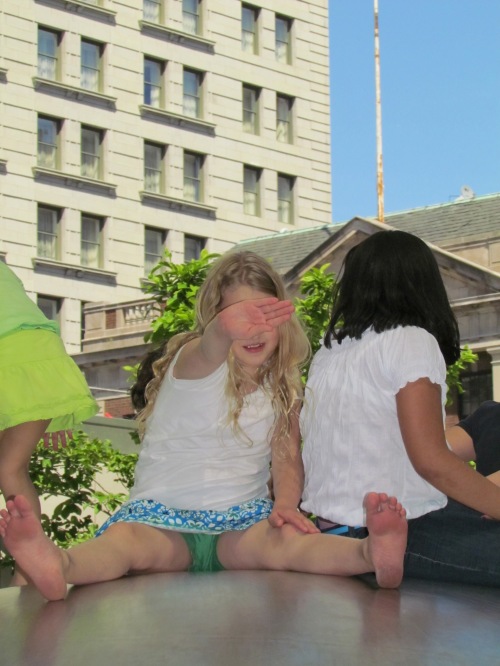
There are times when Emma will, with outstretched arm, put her hand out in front of her face like a shield. Often it is done when she's very happy and having a good time. I believe it is in response to the intensity of feelings, either hers or others or both. Or as Jessy Park, Clara Claiborne Park's autistic daughter, was quoted as saying, "It's too good."

Simon Baron-Cohen is doing damage with a theory that was based on just 20 autistic participants. His most recent book, Zero Degrees of Empathy, includes autistics along with psychopaths and people with borderline personality disorder as examples of groups who lack empathy, which will further the suffering of autistics. Even though in one interview he explains, "Their low empathy doesn't lead them to commit acts of cruelty any more than anyone else in the population, but it does often lead them to feel socially isolated, with the added risk of depression." Which begs the question: Why include them then? This statement adds to the ingrained misperception that autists lack empathy and will possibly serve to further their "risk of depression." For a man claiming autists lack empathy, he is bizarrely unaware of his own in publicizing a theory based on a questionable test using less than two dozen autistics.

For those who would like to read an opposing theory and one that seems much more in keeping with what I see demonstrated by not only my daughter but the many autistics I know, read this interview with the neuroscientist Dr. Henry Markram.

Emma with outstretched arm, shielding her eyes
2012-06-13-img_1680.jpg

Ariane Zurcher's Blog is Emma's Hope Book.

For more by Ariane Zurcher, click here.

For more on autism, click here.


Follow Ariane Zurcher on Twitter: www.twitter.com/EmmasHopeBook

FOLLOW HEALTHY LIVING
 
 
  • Comments
  • 35
  • Pending Comments
  • 0
  • View FAQ
Comments are closed for this entry
View All
Favorites
Recency  | 
Popularity
Page: 1 2  Next ›  Last »  (2 total)
08:26 PM on 08/12/2012
Expressed differently, the ToM work is intended to be constructive, not destructive.

Finally, as will be evident for those who visit our website at www.autismresearchcentre.com, ToM work is just a tiny part of what we investigate as scientists, and as open-minded researchers, we are testing many other aspects of cognition in autism, including sensory processing and non-social perception, to try to understand if ToM difficulties are primary or secondary and to understand the biological basis of autism.

And all of this research is conducted with an overarching aim, which is to help understand and support people with this special condition of autism.
08:24 PM on 08/12/2012
Some discussants raise the question of the contribution of language or sequencing or other cognitive factors in ToM. These are excellent points since every ToM experiment involves multiple processes and it remains a possibility that ToM difficulties are secondary do something more fundamental.

Some discussants seem to think my book 'Zero Degrees of Empathy' is suggesting people with autism are cruel. This sadly again reflects they haven't read the book since that book isn't about autism and only deals with autism in passing. Where it does mention autism, it argues the opposite! that people with autism are NOT cruel.

To reiterate, the book is not about autism but is about how humans can lose their empathy, and the book suggests that people with autism and psychopaths are mirror opposites in arguing that people with autism have difficulties with 'cognitive empathy' (or ToM) but have intact 'affective empathy' (e.g., they are upset to hear about others who are suffering) whilst psychopaths have intact cognitive empathy (hence being able to deceive others so convincingly) but lack affective empathy (being uncaring towards their victims).

It is sad that some people in the autism community see the ToM work as destructive when the aim behind it is to identify the areas of difficulty (for special educational reasons) and then design teaching materials that might be helpful (such as the Mindreading DVD www.jkp.com/mindreading) or the Teaching Children with Autism to Mindread (Wiley, 1997) or The Transporters animation (www.thetransporters.com).
08:22 PM on 08/12/2012
I'm pleased to see this discussion forum because science is all about questioning evidence, not simply accepting the results of experiments.

Some discussants ask why did the original ToM experiment use dolls, not people? My response is that later experiments checked the results hold even when real people are used instead of dolls. Some discussants ask why build a theory (about impaired ToM) on one experiment? My response to this is that over the subsequent 25 years since the original experiment was published, there have been literally hundreds of studies broadly confirming there is a ToM deficit in autism.

Some discussants cite adults with autism who can pass ToM tests as evidence that the theory is incorrect. My response to this is to remind people that many of these ToM tests can only be used appropriately with someone who is around 4 years old chronologically, or with an equivalent 'mental age' of a 4 year old. Many people with autism (especially those with average or above average IQ) do eventually learn to pass ToM tests, but years later than a typical child would. So we are rarely seeing a total ToM deficit, but rather 'degrees' of ToM difficulties. This was the key point in my 1995 book Mindblindness which may not have been read by some of the discussants in this forum, since it reviewed (at that time) 10 years of relevant evidence.
03:29 PM on 07/06/2012
A problem with the "theory of mind" idea is that it assumes that this lack of understanding of other perspectives is a flaw inherent in autism. Take it from someone with the disorder -- NT people do it too ("come on, it's not really that loud"). The difference is, an autistic person assuming that someone else's brain functions in the same basic way theirs does only has a 1 in 88 chance of being right, while an NT person has an 87/88 chance.
04:39 PM on 08/07/2012
Exactly - I've noticed that NTs aren't actually as good at "theory of mind" as many would have us believe - they're just projecting their own assumptions, desires, and experiences onto others, and accidentally happen to be right more often than autistic people. When I've pushed the issue before, it turns out that the "dominant" personality in the room assumes that s/he knows what other people are thinking and/or want, and everyone else just goes along with it in order to avoid conflict. This is exacerbated when the group involves systemic inequalities - males and females, whites and minorities, Christians and non-Christians, adults and children, and heterosexual and GLBT.
photo
HUFFPOST SUPER USER
John Richard Smith
Social Justice Advocacy
07:53 AM on 07/05/2012
Nice post Ariane good to see someone is challenging Baron-Cohen especially surrounding theory of mind and empathy.

Cohen sets what may appear a simple test but in fact is quite complex in reality for as I would term 'rogue' elements. Why use a doll and a girl ? Why not two girls ? Why not two boys considering the gender ratio ? Why a box and a basket ?

It's overcomplicated for no apparent reason ... and as you say you prevent this to children with a known language and communication disorder. That kind of complicates matters.

As far as Zero Degrees of Empathy ... why would you name a book about children with a disability and then make a comparison to psycopaths.

There's the lack of empathy ... language has effects.
photo
jf12
Esta vez saldré como las otras y me escaparé.
11:55 AM on 06/29/2012
Yes, experimental designs can usually be improved dramatically. But the real problem in this sort of thing is the tendency to overfit the data, even if the experimental design were better.
photo
HUFFPOST SUPER USER
The Ghost of Awesome
02:54 PM on 06/21/2012
Finally! An NT reached the same conclusion as me! Thankyou very much! Can I get in to contact with you about this? You seem very open-minded
09:06 PM on 06/21/2012
Good idea: I am sure glad to know this excellent writer! She is indeed open-minded as well as smart, funny, caring and really real. A credit to society. Feel free to get in touch with me and others in ASAN too while you are at it. :)
photo
HUFFPOST SUPER USER
The Ghost of Awesome
06:25 AM on 06/22/2012
Ibby, mind if we talk via an email somewhere? Is there a way to send personal messages?
photo
HUFFPOST BLOGGER
Ariane Zurcher
Writer and blogger
08:23 PM on 06/22/2012
Aww.. Ibby, you mean more to me than I can express. So FF!
photo
HUFFPOST BLOGGER
Ariane Zurcher
Writer and blogger
08:21 PM on 06/22/2012
Yes! Would love to be in touch. Comment on blog - emmashopebook.com or emmashopeblog@gmail.com
01:49 PM on 06/19/2012
Baron-Cohen study is flawed and does not measure anything other than maybe his lack of understanding of the uniqueness of each autistic. Professionals who follow his theory should spend time with us in "real" life to understand empathy and how external factors affect our reactions to certain situations and how we express our emotions when faced with these situations
photo
HUFFPOST BLOGGER
Ariane Zurcher
Writer and blogger
07:41 PM on 06/19/2012
Thanks so much Amy for commenting. For those of you who are not familiar with Amy's work, she is a non-verbal poet, writer and self advocate, and yes, she is Autistic. To read some of her writing you can go to the blog Ollibean - http://ollibean.com/2012/06/10/amy-sequenzia-respect-how-i-choose-to-speak/
A book of her poems sits on my bedside table. I read them every night before I drop off to sleep. They are a beautiful expression of a beautiful human being. Amy gives me hope that one day these theories that objectify, theories that treat the participants as no more than specimens that fascinate, will no longer be taught in schools. They will no longer be taken as a given. They will be seen for the absurdity that they are; the thoughts and ideas of a group of people who lack the imagination to see anything more.
03:34 AM on 06/19/2012
Difficulty empathizing can be due to communication deficits, theory of mind issues, or plain old psychopathy. I'm pretty sure Baron-Cohen was explicitly differentiating autistics from the lattermost category.

Also:

Autism: The Eusocial Hominid Hypothesis

ASDs (autism spectrum disorders) are hypothesized as one of many adaptive human cognitive variations that have been maintained in modern populations via multiple genetic and epigenetic mechanisms. Introgression from "archaic" hominids (adapted for less demanding social environments) is conjectured as the source of initial intraspecific heterogeneity because strict inclusive fitness does not adequately model the evolution of distinct, copy-number sensitive phenotypes within a freely reproducing population.

Evidence is given of divergent encephalization and brain organization in the Neanderthal (including a ~1520 cc cranial capacity, larger than that of modern humans) to explain the origin of the autism subgroup characterized by abnormal brain growth.

Autism and immune dysfunction are frequently comorbid. This supports an admixture model in light of the recent discovery that MHC alleles (genes linked to immune function, mate selection, neuronal "pruning," etc.) found in most modern human populations come from "archaic" hominids.

Mitochondrial dysfunction, differential fetal androgen exposure, lung abnormalities, and hypomethylation/CNV due to hybridization are also presented as evidence.

https://docs.google.com/open?id=0B3dPqM3qgNSiY3p5TmFRMjhSekdyaV8wWUw0MTZiUQ

A short video introduction: http://www.youtube.com/watch?v=Jk_85vNaSMA

The full 2-hour video presentation: http://www.youtube.com/watch?v=r6-6Naz-C0M
photo
HUFFPOST SUPER USER
Xenia Grant
denver, co
02:25 AM on 06/19/2012
My beef with Simon Baron-Cohen is that he doesn't understand that people come with different thoughts about different things. Coming from a political science background, I assume that people aren't going to think alike anyway. And all people have feelings, we on the autism spectrum express them differently. Same goes for empathy. Sometimes we feel too much. And some of us have problems with sequencing, processing of all sorts, and even environmental factors, like the room where the person was tested may have too hot or too cold.

I have always maintained that Baron-Cohen ideas would not stand up in a Political Science 101 class simply because the idea of theory of mind is so lacking.
photo
HUFFPOST BLOGGER
Ariane Zurcher
Writer and blogger
07:43 PM on 06/19/2012
Thank you Xenia for commenting. It's always good to hear your thoughts!
02:06 AM on 06/19/2012
While the points made are valid, I think it's too strong a generalization to say there is nothing in the theory of mind...well, theory, I guess. My understanding from Uta Frith's book is that it's a question of degrees; that is people on the autism spectrum have a less sophisticated TOM which characteristically develops later than in neurotypicals. My 11 year old son with ASD can read emotional expressions and tone of voice but is hopeless at understanding that I can't see the page of the book he's reading if he's facing away from me.

Also why do many otherwise sweet kids on the spectrum laugh inappropriately at funerals (a commonly reported stressor for their parents) if they don't have a few deficits in this area? I'd be happy to hear an alternative explanation for this behaviour.

It would be interesting to see Baron-Cohen defend himself. And yes, I believe it's unfair to place him in the same category as Bettleheim or, in my view, the Jenny McCarthy crowd who talk loudly and publicly about their 'damaged' children without no thought to how their children might actually feel about this.
07:42 AM on 06/19/2012
Your understanding is much more nuanced than what is normally brought to mind for a group of people reputed to have "no empathy." The garden-variety swallowing of the whole idea is what endangers folks.

But an alternative explanation of funereal nervousness: at funerals, people almost invariably say things that are logically inconsistent with things they have said on the same topics while the decedent was alive. Also, it is a large social gathering with unknown rules to start with, making the discomfort-with-inconsistencies come to the forefront as well as being magnified. Autistics without theater training will no doubt be at a loss as to how to act. Perhaps they will laugh nervously to let off steam if they know they are not allowed to for example knock themselves in the head or "elope."
07:54 AM on 06/19/2012
Laughing can be a form of stimming.
12:35 AM on 06/19/2012
This is a good and sensitive article, and it is important for people to get a chance to think about whether the fact that something has been a "prominent theory" for x many years is really a good reason to continue to believe it when better evidence comes along and presents itself to you. Thank you Ariane Zurcher for listening to your daughter and other real people and for believing our experiences are more convincing than the accidentally dehumanizing misinterpretations that I'm sure SBC would regret if he were focusing on his own empathy at the time.
08:26 PM on 06/18/2012
The author is disagreeing with the conclusions that Simon Baron-Cohen drew and draws from the "Theory of Mind" study. These conclusions go way beyond ToM into area such as empathy, which SBC says that autistic people also lack. This is simply not true (talk to autistic people, please!), which Baron-Cohen acknowledges in other work. Yet he sticks with ToM.

About ToM: Lauie noted that even though her autistic son "understands the implications of Baron-Cohen's theory, he still gets tripped up by his common assumption that others share the information his brain has." I believe she is saying that although her son is a smart young man, he doesn't understand what others are thinking.

Well, a lot of us don't understand what is in the mind of others. But that's not even the experiment that SBC- and others- did. What they did was a particular set of sequences that autistics have well known difficulties with. To generalize this as "Theory of Mind" is grand in the extreme.

Autism is a neurological disability, and autistic people will test differently that neurotypicals in certain ways, on average. But going from "testing differently" to ToM is a leap in thought that is characteristic of poor experimental design, in general and poor external validity in specific.
08:21 PM on 06/18/2012
I can give my 15 yr old autistic son " the look" that moms give and he knows exactly what I'm thinking...hmmm..
11:29 PM on 06/18/2012
That could be because that look has been paired with a particular consequence in the past, not necessarily because he's reading your mind.
07:23 AM on 06/19/2012
Can anyone read minds?
This user has chosen to opt out of the Badges program
photo
07:54 PM on 06/18/2012
My daughter stims intensely when she is excited or happy. It seems to help her manage the sensations of the emotion. When we brush her hair she has learned to say "ow" quietly with each stroke to pre-emptively vent any potential pain, otherwise she can't endure much brushing, and she does the same for her dolls when she brushes their hair. When something worries her, such as her sister not having had breakfast, it is very hard for her to put aside those concerns and focus on anything else, until her sister gets some food. Sometimes I think us, so-called, neurotypical types must seem like a rather unempathetic, unfeeling bunch to her, but she still loves being with us anyway.
photo
southingtonian
"I'm a Capricorn and you can't make me do sh*t.."
02:35 AM on 06/19/2012
I have asperger's diagnosed 40 years ago at age 20. I think what appears as unempathetic behavior is just my difficulty with socially expected lying. I say what I see, but without any intended malice. Come in with a new haircut and I will notice and tell you truthfully how I respond to it. It's only when you have a negative reaction to my statement that I realize you can't handle the truth. Then this 'unempathetic ASD' person feels intense pain at the effect of my inadvertent injury.