More

Featuring fresh takes and real-time analysis from HuffPost's signature lineup of contributors
GET UPDATES FROM Arianna Huffington
 
GET UPDATES FROM Rob Johnson
 

Move Your Money: A New Year's Resolution

Posted: 12/29/09 06:02 PM ET

First posted on December 29, 2009

Take the pledge to Move Your Money!

Too-big-to-fail banks are profiting from bailout dollars and government guarantees, and growing bigger. Tell us which community bank you use, and why.

Last week, over a pre-Christmas dinner, the two of us, along with political strategist Alexis McGill, filmmaker/author Eugene Jarecki, and Nick Penniman of the HuffPost Investigative Fund, began talking about the huge, growing chasm between the fortunes of Wall Street banks and Main Street banks, and started discussing what concrete steps individuals could take to help create a better financial system. Before long, the conversation turned practical, and with some help from friends in the world of bank analysis, a video and website were produced devoted to a simple idea: Move Your Money.

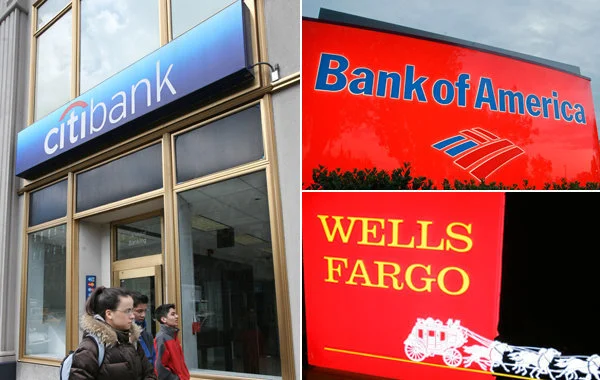
The big banks on Wall Street, propped up by taxpayer money and government guarantees, have had a record year, making record profits while returning to the highly leveraged activities that brought our economy to the brink of disaster. In a slap in the face to taxpayers, they have also cut back on the money they are lending, even though the need to get credit flowing again was one of the main points used in selling the public the bank bailout. But since April, JP Morgan/Chase, Citibank, Bank of America, and Wells Fargo -- all of which took billions in taxpayer money -- have cut lending to businesses by $100 billion.

Meanwhile, America's Main Street community banks -- the vast majority of which avoided the banquet of greed and corruption that created the toxic economic swamp we are still fighting to get ourselves out of -- are struggling. Many of them have closed down (or been taken over by the FDIC) over the last 12 months. The government policy of protecting the Too Big and Politically Connected to Fail is badly hurting the small banks, which are having a much harder time competing in the financial marketplace. As a result, a system which was already dangerously concentrated at the top has only become more so.

We talked about the outrage of big, bailed-out banks turning around and spending millions of dollars on lobbying to gut or kill financial reform -- including "too big to fail" legislation and regulation of the derivatives that played such a huge part in the meltdown. And as we contrasted that with the efforts of local banks to show that you can both be profitable and have a positive impact on the community, an idea took hold: why don't we take our money out of these big banks and put them into community banks? And what, we asked ourselves, would happen if lots of people around America decided to do the same thing? Our money has been used to make the system worse -- what if we used it to make the system better?

Everyone around the table quickly got excited (granted we are an excitable group), and began tossing out suggestions for how to get this idea circulating.

Eugene, the filmmaker among us, remarked that the contrast between the big banks and the community banks we were talking about was very much like the story in the classic Frank Capra film It's a Wonderful Life, where community banker George Bailey helps the people of Bedford Falls escape the grip of the rapacious and predatory banker Mr. Potter.

It was a lightbulb moment. And, unlike the vast majority of dinner conversations, the excitement over this idea didn't end with dessert. It actually led to something -- thanks in great part to Eugene and his remarkable team, who got to work and, in record time, created a brilliant, powerful, and inspiring video playing off the It's a Wonderful Life concept. Watch it below.

Within a few days, the rest of the pieces fell into place, including an agreement with top financial analysts Chris Whalen and Dennis Santiago, who gave us access to their IRA (Institutional Risk Analytics) database. Using this tool, everyone will be able to plug in their zip code and quickly get a list of the small, solvent Main Street banks operating in their community.

The idea is simple: If enough people who have money in one of the Big Six banks (the four we mentioned earlier, plus Goldman Sachs and Morgan Stanley) move it into smaller, more local, more traditional community banks, then collectively we, the people, will have taken a big step toward re-rigging the financial system so it becomes again the productive, stable engine for growth it's meant to be. It's neither Left nor Right -- it's populism at its best. Consider it a withdrawal tax on the big banks for the negative service they provide by consistently ignoring the public interest. It's time for Americans to move their money out of these reckless behemoths. And you don't have to worry, there is zero risk: deposit insurance is just as good at small banks -- and unlike the big banks they don't provide the toxic dividend of derivatives trading in a heads-they-win, tails-we-lose fashion.

Think of the message it will send to Wall Street -- and to the White House. That we have had enough of the high-flying, no-limits-casino banking culture that continues to dominate Wall Street and Capitol Hill. That we won't wait on Washington to act, because we know that Washington has, in fact, been a part of the problem from the start. We simply can't count on Congress to fix things. We have to do it ourselves -- and the big banks are the core of the problem. We need to return to the stable, reliable, people-oriented approach of America's community banks.

So watch Eugene's amazing video, then go to www.moveyourmoney.info to learn more about how easy it is to move your money. And pass the idea on to your friends (help make this video -- and this idea -- go viral!).

JP Morgan/Chase, Citi, Wells Fargo, Bank of America, Morgan Stanley, and Goldman Sachs may be "too big to fail" -- but they are not too big to feel the impact of hundreds of thousands of people taking action to change a broken financial and political system. Let them gamble with their own money, not yours. Let's turn big banks into smaller banks. We'll all be better off -- and safer -- as a result.

Make it your New Year's resolution to move your money. We can't think of a better way to start 2010.

WATCH:

Too-big-to-fail banks are profiting from bailout dollars and government guarantees, and growing bigger. Tell us which community bank you use, and why.

UPDATE -- Credit Unions: Some commenters have written us suggesting that we also include credit unions. Like the FDIC for banks and thrifts, the National Credit Union Administration insures the deposits of credit unions and is a good resource for financial data on specific institutions. Credit unions do not disclose financial data in the same way as FDIC-insured banks. As a result, credit unions are not presently included in the IRA ratings database, which covers over 8,000 federally insured banks and thrifts. IRA is developing a method to rate credit unions in a way that is comparable to the IRA bank stress ratings. We'll be updating users of "Move Your Money" on this issue early in 2010.

For more info, go to: www.moveyourmoney.info

(Coming soon: How to get your municipal and state governments to take their money out of the big banks too.)

Pledge to Move Your Money!
Take the pledge, join the movement, and invite your Facebook or Twitter friends to get involved.


Follow Arianna Huffington on Twitter: www.twitter.com/ariannahuff

First posted on December 29, 2009 Take the pledge to Move Your Money! Too-big-to-fail banks are profiting from bailout dollars and government guarantees, and growing bigger. Tell us which community ...
 
 
  • Comments
  • 5,117
  • Pending Comments
  • 0
  • View FAQ
Comments are closed for this entry
View All
Favorites
Bloggers
Recency  | 
Popularity
Page: 1 2 3 4 5  Next ›  Last »  (167 total)
photo
HUFFPOST SUPER USER
whisperindave
Published author and journalist for
05:59 PM on 03/02/2010
I now have two bank accounts. Well Fargo has one little thing it does for me. It has a "direct deposit advance" deal, where I can put money in my account based on money coming in from direct deposit the next week. Without it I would be starving or broke many times over. After fifteen years banking with them, I have not even been allowed a credit card or loan. Chase is my bank because when I became unemployed the State of Arizona used Chase Bank to produce these "debit cards" where they put the money on electronically. So I had to set up an account just to be able to get the money to live on. I would take my money out in a second from both banks if I and my wife were not both now unemployed! Recently i wrote to the President about arresting the big bakers as war profiteers. You can see my letter at:http://hubpages.com/hub/A-Letter-to-Obama . He actually wrote back in almost complete agreement! Except he isn't going to arrest these bankers. The moment I can get my self out of this terrible place I am in financially, is the moment I take all my money to some local or state bank. the banks MUST be made to pay for their awesome crimes this time!
04:42 PM on 02/28/2010
For those interested, I forgot to give you the link to Computershare. It is: https://www-us.computershare.com/Investor/default.asp
HUFFPOST SUPER USER
bonkin
01:27 PM on 02/28/2010
AH: Please don't be fooled. You have a well meaning idea but misguided. Community banks aren't any more pure, just smaller. Incestuous, inbread, clicks of nepotism, little clubs lending to their friends and nephews of friends etc. etc. They don't lend any more to unconnected average working people than any of the "too big to fails" and most are floundering. The only reason more aren't on the FDIC lists is because there aren't enough FDIC examiners to go around. I work at one. They are legends in their own small minds and think nothing of lending hundreds of thousands of dollars unsecured to people with out a dime in the bank but from the right family. They may not be into derivities, and the bonuses are smaller, but they will piss off your money faster than you can deposit it.
12:08 PM on 02/28/2010
Great thread. I like the suggestion about moving away from investments in the big banks too. Sell their stock, get out of mutuals that own them, basically shun them.

We have too long lived under the falsehood that says "Bigger is better." We have paid a heavy price for our willingness to "follow" and be influenced by media. But we do have a choice and it is about time we recognize the consequences of our decisions on our communities and our families. GO LOCAL!
photo
HUFFPOST SUPER USER
sunnybunny
09:57 AM on 02/28/2010
I haven't been able to afford the fees at bank of america and banks like that for years. I used to be in a constant state of crisis worrying about the overdrafts and fees.Living paycheck to paycheck, my money is tight. It was like the bank was charging me money because I couldn't afford to keep enough in there (in fact I think I may have got charged a fee for not being able to keep a minimum balance). Surprisingly , I was able to solve a lot my issues just by changing banks. Little things like the cutoff for deposits being 5pm instead of 2pm has helped me extremely when it comes to avoiding having overdrafts all the time. Since I changed banks, those kinds of problems are rare. The services and benefits vary a lot from bank to bank and if you do some research you can find the one that meets the needs of your personal situation. Arvest, who I bank with now not only gives free overdraft protection, the fees that they do charge are low, their hours are convenient (7am-7pm) and their service is great.
09:43 AM on 02/28/2010
Some of the Banks did not want the TARP money. Chase Bank only took the money at our countries request. They paid it back as soon as they could with interest. It's very easy to condem folks and demonize.
04:09 PM on 02/22/2010
Thanks to a segment I saw of Arianna on MSNBC, I made up my mind to move our money from a large bank to a local Savings and Loan. We were treated like valuable customers as soon as we walked in the door, were greeted by name and even better yet, given a decent interest rate on our CD.
Thanks Arianna!
This user has chosen to opt out of the Badges program
09:59 PM on 02/18/2010
This was a great new year's resolution! Have moved from Bank of America after 25 years, to Mission National Bank in the SF Bay Area. Now I just have to learn Spanish, read Dante's Inferno and lose 20 pounds!
photo
HUFFPOST SUPER USER
drxcreatures
07:06 PM on 02/15/2010
My mother and I use a community bank and we love it! She once wanted to use 'Bank of America'. That caused us to have fictional debt for a LONG time.
12:40 AM on 02/11/2010
Bremer Bank is a bank to consider. Not only is it a community bank, it's one owned by a charitable foundation:

"The Bremer Foundation ranked ninth among all Minnesota grantmakers in 2007, according to the Minnesota Council on Foundations. It gave away $31.1 million, with $21.7 million in Minnesota.

While banks typically have foundations, Bremer is unique. It doesn't own the foundation; the foundation owns the bank. It's the only one like it the country, Morrow said. And there won't be another one. After Congress approved the Bremer model, "a law was passed that there won't be any more models like this," she said."

In Jan 2009 when the outlook for the financial sector was pretty bleak, Bremer created a fund for direct grants to help North Dakota, Minnesota and Wisconsin families in crisis--keep the heat on, pay medical bills, etc.

"Bremer, a bank built for charity, creates new fund to help individuals hitting hard times", Minnpost.com, http://www.minnpost.com/scottrussell/2009/01/29/6247/bremer_a_bank_built_for_charity_creates_new_fund_to_help_individuals_hitting_hard_timeshttp://www.minnpost.com/scottrussell/2009/01/29/6247/bremer_a_bank_built_for_charity_creates_new_fund_to_help_individuals_hitting_hard_times
photo
Yeah-Me
Well... Just who else would I be? Palin?
12:01 AM on 02/11/2010
Ahhh.. tax season has arrived and I have dropped US Bank (who cashed in on 6.6bil in tarp funds), and am now in a local Credit Union.

God it feels good
photo
froidytoidy
Underwhelmed Independent
11:26 PM on 02/09/2010
Don't take out any more than $10,000 cash or you will be flagged by the bank.
photo
froidytoidy
Underwhelmed Independent
11:24 PM on 02/09/2010
Please don't foget that banks are required by the government to flag any withdrawals over $10,000 - something about funding terrorists!

We went into Chase and asked for $10,000 in cash out of our savings, we were told they had $2,000. We went down the way to another Chase and asked for $10,000 cash. We were given the money in hundreds, fifties, and twenties and asked a gazillion questions. The manager of the bank actually followed us out to our car in the parking lot. I felt like a criminal. Yikes - not easy to get your own money.
11:27 PM on 02/05/2010
Today I sent this letter to Chase. I hope others move there money as well. If Congress won't outlaw too big to fail, we must use our power to shrink them down to size.

Mr. James Dimon, CEO/Chairman
J. P. Morgan Chase
270 Park Ave.
New York, NY 10017

Re: Checking Account #xxxxxxxxxxx
Savings Account #xxxxxxxxxxxx

Dear Mr. Dimon:

I am writing to request that you close above captioned checking and savings accounts.

The American people have taken extraordinary steps to salvage a financial services industry that was on the edge of collapse. We were told we had to make the sacrifice because companies, such as the one you lead, were too big to be allowed to fail.

Now, after the crisis has passed, you have chosen to return the favor of the protection we offered by hiring an army of lobbyists to fight against financial reform. It seems that you are seeking to protect your privileged status as too big to fail and thus securing a permanent claim on the public treasury at the expense of those of us who saved you. This is unacceptable.

So I, and I hope millions of other Americans, have resolved to see to it that, if you are going to work against our economic and political interests, I will do my little part to shrink your company in hopes that you will never again be too big to be subject to the natural discipline of a capitalist market.

Sincerely,
10:10 PM on 02/09/2010
I dont think many people know this but at least with my 401k I can pick my own stocks.
Dont just move your money out of big banks but 401k brokerages also that use your 401k mutual funds as their own profit toys. Pull all your money out of of mutual funds and make your own mutual fund and you also wont have to pay management fees. Dont invest in any huge corporation that is "too large to fail" maybe only try investing in community companys as well as communtiy banks.
04:40 PM on 02/28/2010
Rdp: Loved your post. I also wanted to add to your post, that if a person is not uncomfortable in managing their own money, there are other alternatives such as:

1) sharebuilder.com - You can purchase stocks for as little as $4 with automatic investing

2) Go directly to the company you want to purchase shares from. For instance, if you are interested in purchasing Disney stock, you can do so with either an initial investment of $250 or set up monthly deductions of $50 from your checking account. For more information, the link to Disney's stock purchase site is:http://corporate.disney.go.com/investors/faq_investmentplan.html

3) Go to Computershare, a company which lists hundreds of company Direct Stock Purchase Plans where you can purchase, for example, Walmart & IBM stock for $50 per month deductions from your checking account.

Investing your money takes time & research. But if you want to save fees, you can do it. Just research the company(ies) you want to invest in & see if they have a direct investment plan. The same applies for mutual funds as well. If interested in purchasing bonds, go to: Treasurydirect.gov to research purchasing bonds for your portfolio. But if you are too busy & don't want to manage your own money, look for a reputable investment firm.
photo
HUFFPOST SUPER USER
Clayton139
11:18 PM on 01/29/2010
I am going to also...!!!