Art Brodsky

Art Brodsky

Posted April 3, 2009 | 05:12 AM (EST)

The Answer for Amazon's Kindle Catastrophe Can Be Found In The Twilight Zone

digg Share this on Facebook Huffpost - stumble reddit del.ico.us RSS

There is a lot that Amazon has done right over the years. Just the other day, the Washington Post ran a story about companies that have done well in the face of the recession. Amazon's sales are up 18 percent, profit up 9 percent. In this day and age, that's fabulous.

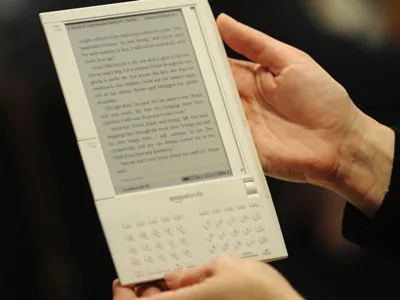
That's why it was disappointing to read that Amazon folded like a flimsy book page on the issue whether their new Kindle should be able to sound out words. Amazon had already taken a big step in that direction, allowing sufficient encryption, at the publisher's discretion, so that the Kindle text is forever tied to the Kindle. Some authors even object to the digital rights management. Update: Amazon has loosened the ties to the Kindle with a new iPhone app that will allow Kindle-like functions.

In doing so, Amazon established a new legal standard. Rather than be governed by law, the Amazon statement said that the comfort of the rights holders will be the basis for their actions. So while the company believes that no copies were made, and no new derivative work was created, "we strongly believe many rightsholders will be more comfortable with the text-to-speech feature if they are in the driver's seat." That's sheer nonsense. Copyright law exists for a reason, even if the law itself can be unreasonable. As my colleague Sherwin Siy demonstrated a couple of weeks ago, the idea that authors can claim any royalties from a text-to-speech function is simply a half-baked notion. The Los Angeles Times called Amazon's actions a "capitulation."

The idea that a computer, or the Kindle, is "reading" a work is simply ludicrous. It is now, and will be for some time. In fact, in his appearance on the Daily Show, Amazon CEO Jeff Bezos even made a point of describing the "freaky" computer voice that reads the book. Actor and author Wil Wheaton demonstrated the point by reading some of his latest novel and by having the computer read some.

Insisting on rights for the purely mechanical function of having a computer process text to voice will open up a whole new round of litigation and controversy for a technology that has been around for years.

Science fiction author John Scalzi made the right argument on his blog. The best programmer couldn't come up with the code to allow a text-to-speech program duplicate a human performance.

That's the key. Can it really be a "performance" when there is no performing involved? Does the computer really "read" or "perform"? Of course not. The Kindle, or the computer, has no idea what it's doing, whether it's translating a bit of code into sound or displaying a spreadsheet. In making that comparison, technophobic, greedy authors degrade themselves.

The ultimate answer, perhaps, lies in a place where no one would think to look: The Twilight Zone. The great Rod Serling wrote a show called "The Mighty Casey." On the show, a scientist invents a robot which pitches for a forever woebegone team. When the new pitcher is beaned, the other team discovers Casey is mechanical. Asked for a ruling, the commissioner of baseball decides that the rules of the game require nine men make up a team. Casey isn't a man, so he's disqualified. But, the commissioner rules, give him a heart and he will become a man. So Casey is given a heart, and then has too much compassion to strike out the hitters on the other teams.

When a text-to-speech program has a heart, and a soul, can convey love, fear, anger, greed, shame, sarcasm and the entire gamut of human emotion, then maybe the authors have a case that a Kindle is something other than mere data processing. Until then, they should just go away. And Amazon should be ashamed it wants to charge customers $359 and $9.99 per book and the buyers don't even get the chance, if they wish, to hear the damn thing make some automatic noise. It's pathetic all around. Our goal at Public Knowledge is to protect the digital rights of consumers against some of the most powerful business forces on earth. It doesn't help when otherwise progressive companies which should know better give away the store.

There is a lot that Amazon has done right over the years. Just the other day, the Washington Post ran a story about companies that have done well in the face of the recession. Amazon's sales are up...
 
Comments
25
Pending Comments
0
iPhone App Promo

Want to reply to a comment? Hint: Click "Reply" at the bottom of the comment; after being approved your comment will appear directly underneath the comment you replied to

View Comments:

t's been apparent for years that the consumer has migrated to the web, e-books, Iphones and now, the Kindle. All the book publshing industry has done is curl up in a ball and suck their thumbs under a DRM blanky, wishing it would all go away. You'd think they'd have learned from the music business's death-bed conversion to MP3 downloads! The goal of book publishers should be to have 10 million Kindles and 40 million Iphone e-book software downloads out there--this year. With Kindle alone having a capacity of 1000 books stored on each device, they've done nothing to partner with Amazon to make the $359 price pay for itself through discounts offered on e-books. How about 35 e-books FREE with each Kindle sold? How about a Kindle credit on any cloth and paper book sold through Amazon? Or on any cloth and paper book sold anywhere? How about converting your extensive backlists of titles--many of them public domain-- into E books, then offering them at .25cents per book in exchange for a $25 up front one-time fee? Modern Library, Penguin Classics, are you listening? Why not offer e-books at a lower price if the consumer accepts advertising? The ads could last 30 days at a time and be replaced with other ads. NONE OF THIS IS HAPPENING! Instead we have Harper Collins in a major "Missing the Point" moment planning to publish books from Tweets????

    Favorite    Flag as abusive Posted 01:09 PM on 03/06/2009
- S1m0n I'm a Fan of S1m0n 99 fans permalink
photo

Rights holders can claim any royalty they like, because they have the power to shut down Amazon's ability to sell their work. Without authorial sign-in, Amazon has no business model. They can sell empty readers but not the texts to be read.

    Favorite    Flag as abusive Posted 09:03 PM on 03/04/2009
photo

Constitutionally, in the United States, copyright is a limited privilege, not a "right". That copyright holders are using their control over a distribution channel to create additional restrictions on end users they are not otherwise constitutionally entitled to is I think a classic example of "misuse of copyright".

http://digital-law-online.info/lpdi1.0/treatise15.html

"The exclusive rights given to the copyright owner – reproduction, adaptation, distribution, and public performance and display – are quite broad, even when the special exceptions are considered. But sometimes copyright owners may try to use their exclusive rights to gain even more protection than is granted under the copyright laws. This is considered copyright misuse."

And at the end:

"The penalty for copyright misuse – unenforceability of the copyright in court until the misuse has been purged and its effects no longer exist – is tantamount to losing the copyright.­"

Which is a good reminder that copyright is a revocable privilege, and NOT a "right". Termination of copyright for misuse is something we do need to see being used again, much like the ability to revoke (dissolve) corporate charters.

    Favorite    Flag as abusive Posted 12:00 PM on 03/05/2009
photo

It seems to me this is a classic example of "misuse of copyright", a legal principle under-utilized in federal law. Copyright, in it's constitutionally sanctioned scope, only pertains to distribution (copying), not "use". Even cases where "temporary copies" are created for "use", such as copying a program to ram to execute it, or creating shared caches of web pages, are already "settled" parts of the law. I think the problem is that Amazon itself depends on a business model based more on "use" and other aspects tied to contractual law though eula's that try to surrender basic constitutional rights, so perhaps this is why they were so eager to support someone else's equally flawed interpretation of copyright, which for example would equally try to deny the right of a mother to read a book to her child. In any case, like a drinking fountain that says "no blacks", as a sight impaired individual, I can "see" this product does not want my business, and as such I "see" it clearly also as a case of discrimination.

    Favorite    Flag as abusive Posted 07:09 PM on 03/04/2009
- rain39 I'm a Fan of rain39 6 fans permalink

All the media have missed this Amazon story because you are just reading the news, not the Amazon customer comments. As soon as the new Amazon2 came out, the prices on about 400 Kindle books jumped to $12-14-16 instead of the $9.99 we had always paid before except for academic books and a few others. The old customers from Kindle noticed right away. We have started putting 9.99boycot­t keywords in all the books we find that have gone up in price which is how we know roughly how many have gone up in price. By that the boycott group is promising not to purchase the Kindle books with the outrageous prices. They are charging close to or exactly the price for the Kindle book and the Hard Cover. This is for a product we can't share, sell, or give away like you can with a hard cover.

I have purchased 90 books since I got my first Kindle in June of last year. Until two 11.99 books in December, I had NEVER paid more than $9.99 for any book there and never checked the price on any book I bought.. All my books and charges are in my Kindle account on Amazon.

All I am seeing is great PR for Amazon. Well, many of us who used to absolutely glow about Kindle and Amazon are singing a different tune now.

    Favorite    Flag as abusive Posted 06:25 PM on 03/04/2009

Precisely why one should never place their intellectual eggs, as it were, in one basket.
Frankly, you set yourself up by buying Kindle in the first place.
Same for for poor shmes whop make most of thier living off fEbya... I mean FeeBay,
Apple computer owners--ditto.

Fact:Much of academic Kindle content is priced much higher than hardbacks. At times 200% higher.

    Favorite    Flag as abusive Posted 01:10 PM on 03/05/2009

I've posted pictures of all three Kindle devices, open to the same book, comparing fonts and graphics between them:

http://booksontheknob.blogspot.com/2009/03/kindle-iphone-pictures.html

    Favorite    Flag as abusive Posted 04:55 PM on 03/04/2009

I'm confused as to how this is a legal issue. The legality of a function (text-to-speech) doesn't obligate the use of that functionality.

Amazon designs, produces and sells the device. They get to decide what it does and how it works provided it's legal. They are not required to make available every legal functionality available to their end-users. I don't see how it's illegal to provide only the functionality that a given content owner wants.

Amazon has made a business decision to change the device's functionality in response to its business constituents. They aren't stopping any end-user from finding the text-to-speech functionality elsewhere, they are simply refraining from facilitating it. That is a business story, not a legal story.

    Favorite    Flag as abusive Posted 03:36 PM on 03/04/2009
photo

I have a sight problem...­I have a program on my computer that reads to me and another program that I dictate to and it does my typing. Why would I buy a Kindle if it is not going to do what I needed..I would certainly rather hold a book.

My program that reads to me has a robotic voice..in fact Robbie's voice would seem human in comparisan. But it is a life saver to me when I have long passages to read on line. Kindle should be able to read to those who need that option to enable them to "read" that book.

That voice option is expensive and hard to find...Kin­dle should come with it.

    Favorite    Flag as abusive Posted 04:15 PM on 03/04/2009
- S1m0n I'm a Fan of S1m0n 99 fans permalink
photo

If you'd rather have a book, buy a damn book.

    Favorite    Flag as abusive Posted 09:06 PM on 03/04/2009
- Sumocat I'm a Fan of Sumocat 32 fans permalink

"Can it really be a 'performance' when there is no performing involved?" -- So it's okay as long as the performance sucks? That seems a pretty weak argument to me.

I think the only question is whether the author is being fairly compensated. If an author feels that buying a copy of their book does not entitle the buyer to having a computer read it to them, I say that's their prerogative. Of course, it's also our prerogative to not buy the book at all. Maybe the Authors Guild should weigh out those two options and see which one works better for their members.

    Favorite    Flag as abusive Posted 02:58 PM on 03/04/2009
- Clavis I'm a Fan of Clavis 38 fans permalink

Copyrights should go back to lasting 15-20 years. Cultural material needs to become available to the next generation of artists in order for art and culture to progress.

"Paul's Boutique" could not be made today because of the law surrounding use of copyrighted material. It serves the needs of the few and the rich and the soulless corporations; it doesn't serve humanity.

    Favorite    Flag as abusive Posted 02:18 PM on 03/04/2009

I hope this doesn't get bogged down in litigation. One of the most important aspects of screen-reading software is making text available to blind and visually impaired people. We sighted folks may laugh at the mechanical delivery of computer-read text, but for blind people it's a lifeline. I know - I work for an organization that creates distance education materials, and we make strenuous efforts to ensure that all our text products are screen-readable.

    Favorite    Flag as abusive Posted 02:02 PM on 03/04/2009

The authors are the creators. They have a right to dispose of their work as they see fit. It's ludicrous to talk about consumer rights - author rights trump consumer rights in this scenario. If you have issues with TTS being unavailable, take it up with Amazon - they were the ones who didn't work with authors to ensure authors would be comfortable with TTS prior to the big unveiling.

    Favorite    Flag as abusive Posted 01:56 PM on 03/04/2009
- ynp7 I'm a Fan of ynp7 2 fans permalink

Bullshit, if I pay the asking price they can't, and shouldn't be allowed to, tell me what to do with it.

    Favorite    Flag as abusive Posted 02:52 PM on 03/04/2009

Amazon isn't telling you what you can do with the content. The content owners are. You are free to either buy a Kindle or not. You are free to buy books for the kindle based on whether the book allows TTS. (Ideally, that capability should impact the asking price.)

I don't see how Amazon is legally obliged to make a particular function available simply because the law allows them to. Allowed and Obligated are not the same thing.

    Favorite    Flag as abusive Posted 03:40 PM on 03/04/2009
- ecotopian I'm a Fan of ecotopian 13 fans permalink
photo

I keep wondering when the Kindle will be hacked. I can imagine a hack that would allow files from the Kindle to be downloaded on to a computer and then using the computer's text to speech function to read the books aloud. Not that I'm advocating it, I just have a wild imagination.

    Favorite    Flag as abusive Posted 01:41 PM on 03/04/2009
- Infostream I'm a Fan of Infostream 12 fans permalink
photo

you say : "Our goal at Public Knowledge is to protect the digital rights of consumers against some of the most powerful business forces on earth."

Seems to me like you're protecting the profits of corporations to help keep them from paying authors all they are owed.

Eventually the technology for "reading" books will be indistinguishable from a human reading it, only better, since the listener will have many choices for the type of voice doing the reading. If authors get additional royalties from books on tape then clearly they should get royalties for this. One basic difference is that a book, digital or printed, can only be read by one person at a time, once converted to sound it can be listened to by several people or broadcast.

    Favorite    Flag as abusive Posted 01:11 PM on 03/04/2009

I'm all for artists and authors getting all they're owed, but your arguments are flawed.

There is no way that a computer read book can ever be considered the same as a performance done by a live person. Computer reading won't ever replicate the inflections, tone and nuances of a performance - the same way a computer can't emulate a live actor without the extensive interaction of artists manipulating CG to make it realistic. Having the kindle read the book out loud is akin to creating a Braille edition of a book.

If I pay the license for media, I should be able to consume in a way that's convenient to me so long as I don't redistribute it.

And a digital and print book can be freely distributed just as easily as sound can.

    Favorite    Flag as abusive Posted 01:52 PM on 03/04/2009
- Infostream I'm a Fan of Infostream 12 fans permalink
photo

If you buy a book for the kindle that it can turn into audio, that is the same as buying a package of a printed book and an audio recording. How can you see the progress of technology in the last 20 years and not see that the "reader" will soon give you a good "performance" with a choice of voices, from Laurence Olivier to Jessica Rabbit?

"If I pay the license for media, I should be able to consume in a way that's convenient to me so long as I don't redistribute it." Really? So all these cassette tapes and vinyl albums I own gives me the right to free copies in other media? You're kidding right?

The point is this isn't protecting consumers, they should have the choice to buy whatever they want, text and/or audio, at a fair price. This article is about allowing corporations to sell a more attractive product without having to pay authors their fair share of those profits..

    Favorite    Flag as abusive Posted 06:52 PM on 03/04/2009

One other note. Authors aren't getting "additional" royalties from the sale of an audio book, because virtually no one is buying the physical book AND audio book. They're buying it once and paying for it once. This is the same situation. You buy it once, the author gets paid - but you choose to listen to it rather than read the text.

How are the authors hurt in this? Unless, as noted, the book is illegally pirated, which can be done in any case and needs to be dealt with through legal means.

    Favorite    Flag as abusive Posted 02:09 PM on 03/04/2009

I agree with your argument regarding the text-to-speech rights of the book, but Amazon isn't in a position to make it.

They're entirely at the publisher's mercy right now; they need content in order to make the kindle worth buying, and right now there aren't enough kindles out there for the publishers to need that revenue. Amazon has little to win by challenging the publishers and everything to lose.

You're completely right in principle, but I can't blame Amazon too much for caving.

Maybe in a hypothetical future when everyone has a kindle and 30%+ of book sales are electronic Amazon can push back, but we're not there yet....

    Favorite    Flag as abusive Posted 12:47 PM on 03/04/2009

The electronic age certainly has muddied the waters for the traditional royalty based pay system. But even Amazon's decision seems illogical. Ebooks should be sold to allow electronic readers with speech capability to read them aloud. After all, I am not violating any copyright laws when I read aloud to my niece. Or when I read aloud to my classroom of seventh graders. (Even though their parents are paying a high, private school tuition for their kids to hear my "performan­ce".) What's the difference? (Other than, I hope, my superior tonal quality.)

    Favorite    Flag as abusive Posted 09:19 AM on 03/04/2009

Good point. Some of these copy rights claims are regressive in nature from the point of view of the benefits that the society can acrue otherwise.

    Favorite    Flag as abusive Posted 10:12 AM on 03/04/2009

I would never read a book on a Kindle because I love physical books. But...

Can the text be copied and pasted? If so, I can read it aloud on my Mac using a vast selection of voices, for example Cepstral Lawrence if I want a British accent. I can do the same with any book on Guggenheim. The speech software comes with the Mac.

    Favorite    Flag as abusive Posted 12:17 AM on 03/04/2009
Comments are closed for this entry

 You must be logged in to comment. Log in  or connect with 

Connect