
I was pretty shocked to learn, back in March, that hundreds of city schools use dirty, dangerous oil. Well before I was exiled to the trailers behind our building, I'd often notice a strong oil smell outside our school. I'd call the office and ask if I could move my class elsewhere, and someone would tell me that it was just an oil delivery, nothing to worry about. I'd sit there with my 34 kids and hope for the best. Reading this, though, I had second thoughts: "The health risks are so bad that the city's commissioner of Environmental Protection, Cas Holloway, said in a statement back in January, 'The facts are clear: dirty heating oil costs lives.'"
Some say it's not the oil delivery that's hazardous, but the actual oil burning in the air. So perhaps the people in the offices were right. Whether or not that's true, those in the surrounding communities were not well served. I work in Fresh Meadows, a quiet little quasi-suburban patch of Queens, and it was pretty shocking to learn that our school had been using no. 6 oil, the very worst, for about half a century.
Is it a risk to kids, who typically spend four years at our school? Perhaps. What about people living in the community, or those of us who work here for decades? Wouldn't prolonged exposure increase the risk? I'd be easily persuaded. Four years ago, I developed cancer, with no risk factors anyone could determine. Two years earlier, a colleague of mine developed exactly the same cancer, also with no risk factors. While we're both still around to talk about it, either of us could tell you that it was no fun at all, and to be avoided whatever the cost.
So what is the city doing about this oil it considers so unacceptable? At dozens of schools, it's converting dirty no. 6 oil to marginally less dirty no. 4 oil. Short term, this is a money-saving step. After all, Mayor Bloomberg spent months claiming he needed to fire 4,000 teachers and close 20 firehouses in order to balance his 2012 budget.
But how will this save money, if the dozens of schools set for this conversion will require yet another conversion (to the no. 2 oil that Bloomberg's people say the whole city ought to use)? Doesn't common sense dictate that one change is cheaper than two? And if no. 4 oil is unacceptable, why on earth are we bothering to install it in dozens of school buildings?
I've been teaching teenagers for 27 years, and I've got a very strong-minded one at home. I'm no stranger to compromise. Yet if we consider the health of 1.1 million kids, over 100,000 working adults and millions of community members, there's no doubt that getting rid of potentially carcinogenic oil ought to be a priority.
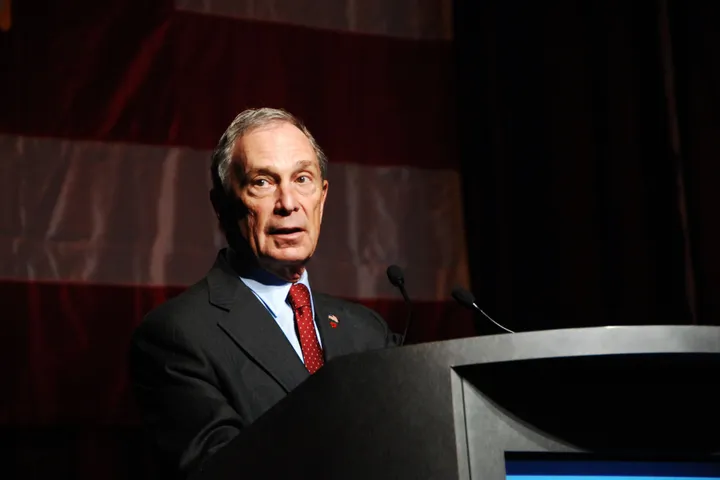
Mayor Bloomberg says he puts "Children First." Regardless of who comes first, second or last, shouldn't everyone in New York breathe air that's as clean as possible? An arrangement that costs fewer lives might be construed as an improvement. Nonetheless, there's a better, cheaper option, and no ultimate advantage in procrastination. I leaked this story to Gotham Gazette, and some people will see it here, too.
But Mayor Michael Bloomberg, according to his own people, is "costing lives" to save money. For the life of me, I can't figure out why local network affiliates won't stop blabbering about Casey Anthony and start telling New Yorkers that lives are on the line while the mayor counts his pennies. Quite simply, if Bloomberg can find millions for no-bid contracts with Rupert Murdoch, why can't he pony up for the health of those of us who live and work here?