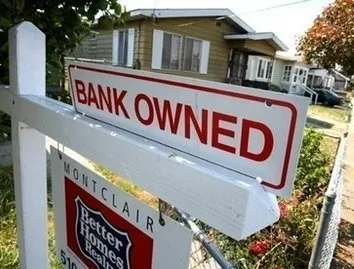
A few days before Congress passed its Housing Bill, Carlene Balderrama of Taunton MA found her own solution to the housing crisis. Just a little over two hours in advance of the time her mortgage company, PHH Mortgage Corporation -- may its name live in infamy -- was to auction off her home, Balderrama killed herself with her husband's rifle.
This is not the kind of response to hard times that James Grant had in mind when he wrote his July 19 Wall Street Journal essay entitled "Why No Outrage?" "One might infer from the lack of popular anger," the famed Wall Street contrarian wrote, "that the credit crisis was God's fault rather than the doing of the bankers and the rating agencies and the government's snoozing watchdogs." For contrast, he cites the spirited response to the depression of the 1890s, when lawyer/agitator Mary Lease stirred crowds with the message that "We want the accursed foreclosure system wiped out.... We will stand by our homes and stay by our firesides by force if necessary..."
Grant could have found even more bracing examples of resistance in the 1930s, when farmers and tenants used mob power -- and sometimes firearms -- to fight foreclosures and evictions. For more on that, I consulted Frances Fox Piven, co-author of the classic text Poor People's Movements: Why They Succeed, How They Fail, who told me that in the early 30s, a number of cities were so shaken by the resistance that they declared moratoriums on further evictions. A 1931 riot by Chicago tenants who had fallen behind on their rent, for example, had left three dead and three police officers injured.
According to Piven, these actions were often spontaneous. A group of unemployed men would get word of a scheduled eviction and march through the streets, gathering crowds as they went. Arriving at the site of the eviction, they would move the furniture back into the apartment and stay around to protect the threatened tenants. In one instance in Detroit, it took 100 cops to evict a single family. Also in Detroit, Piven said, "two families protected their apartments by shooting their landlord and were acquitted by a sympathetic jury."
What a difference 80 years makes. When the police and the auctioneers arrived at Balderrama's house, the family gun had already been used -- on the victim of foreclosure herself. I don't know how "worthy" a debtor she was -- the family had been through bankruptcies before, though probably not as a result of Caribbean vacations and closets full of designer clothes. It was an Adjustable Rate Mortgage that did them in, and Balderrama, who managed the family's finances, had apparently been unwilling to tell her husband that their ever-rising monthly mortgage payments were eating up his earnings as a plumber.
Suicide is becoming an increasingly popular response to debt. James Scurlock's brilliant documentary, Maxed Out, features the families of two college students who killed themselves after being overwhelmed by credit card debt. "All the people we talked to had considered suicide at least once," Scurlock told a gathering of the National Assocition of Consumer Bankruptcy Attorneys in 2007. According to the Los Angeles Times, lawyers in the audience backed him up, "describing clients who showed up at their offices with cyanide, or threatened, 'If you don't help me, I've got a gun in my car.'"
India may be the trend-setter here, with an estimated 150,000 debt-ridden farmers succumbing to suicide since 1997. With guns in short supply in rural India, the desperate farmers have taken to drinking the pesticides meant for their crops.
Dry your eyes, already: Death is an effective remedy for debt, along with anything else that may be bothering you too. And try to think of it too from a lofty, corner-office, perspective: If you can't pay your debts or afford to play your role as a consumer, and if, in addition -- like an ever-rising number of Americans -- you're no longer needed at the workplace, then there's no further point to your existence. I'm not saying that the creditors, the bankers and the mortgage companies actually want you dead, but in a culture where one's credit rating is routinely held up as a three-digit measure of personal self-worth, the correct response to insoluble debt is in fact, "Just shoot me!"
The alternative is to value yourself more than any amount of money and turn the guns, metaphorically speaking, in the other direction. It wasn't God, or some abstract economic climate change, that caused the credit crisis. Actual humans -- often masked as financial institutions -- did that, (and you can find a convenient list of names in Nomi Prins's article in the current issue of Mother Jones.) Most of them, except for a tiny few facing trials, are still high rollers, fattening themselves on the blood and tears of ordinary debtors. I know it's so 1930s, but may I suggest a march on Wall Street?
One, that America has lost it's way in that the system of capitalism is a cold, cruel and compassionless way of life which doesn't care for those who make it possible. Like this woman who decided she had seen enough of the cruelty. I tend to agree with this and don't see any way to correct it as the system has it's heels dug in deep.
Two, that US citizens don't know their boundries and put themselves into these positions and that we should have no pity for them. This overly simplified view doesn't even attempt to take into account an individuals circumstances and therefore is totally ignorant and has zero merits.
That said, the well-to-do, wall streeters, corporations and our government (especially) have a duty to step up to the plate when the country is quickly heading to the craphouse. However, none of the groups I mention think it is their duty to do so. In fact just the opposite is true. Individuals need to fend for themselves even when faced with the grizzly bear that is facing most Americans right now. What an effing joke!
That is America's brand of capitalism. While our government ensures more protections for the Corporatist Vampiric Institutions, the average citizen is now being FAR outpaced by inflationary prices as opposed to wages. The cycle has swung FAR to the corporate side and the average citizen can no longer keep up. How did it become this way? Too many people getting too rich off of Wall Street that CAN afford these ridiculous prices.
Oil companies dinged up almost 12 B this quarter. WTF??!! Oh, yeah but, oil and the expense to refine it is so great that we have to charge you suckers like this or else we'll go under and you won't have any fuel. What about the 12 B profit, EFFface? How about giving our ailing economy some of that? Like half. Give our government half of that and you still have 6B profit. Pretty effing good for 3 months of "work".
Face it, people. American capitalism as it exists is a massive failure for a big chunk of people fighting tooth and nail to simply exist, in vain.
The important thing that book, and its comprehensive analysis of numerous movements gives us, is "mass turmoil" theory - the idea that social change happens when institutional channels are disrupted. THAT is the central idea.
As long as today's TV-indoctrinated modern-commoners think that peaceful protest inside the court-approved fence will spur change, change is guaranteed not to happen. It is time for some proverbial landlord lynchings once again!
When I waas refinacing my home they kep trying to push that idea to my partner and I. The interest rate was like 2.5% for the first five years. We are both professionals...she a college professor and my a software engineer. We knew it was a scam and did a 15 yeaar fixed. WE are in a different place than many folks in that we ear good livings and have no children.
I doublt most people understand how desperate some poor people are when it comes to housing. Housing is not a privledge it is a right. All Americans deserve the right to a clean, safe envirorment to raise their kids.
WE are a nation of greed...from sun up to sun down we are an all about me society. The poor are not always poor because they are dumb, stupid, lazy etc as the GOP would like us to believe. Sometimes they are poor because they do not have the same access to the same loans. jobs , education and health care that many other Americans take for granted. The difference between us and them is simply-- privledge and how we hord it.
So the lending institution offered you a ARM and you declined it. Why are other people not able to make a similar decision? Why aren't they willing to realize what they are getting themselves into? Why is it my responsibility to fix things for them?
What is wrong with greed? Greed is what made the lending institution want to loan the money to you to refiance your home. If they weren't greedy for the interest you must pay they would never loan you the money to begin with.
If poverty is determined by access to loans, jobs, education and health care then why have some people born into crushing poverty become huge successes? Why have others born into unbelievable wealth died paupers?
How long will it be before people realise that suicide is not the answer.
That they would be killing the wrong person?
We have allowed our credit collection agencies, to destroy the lives of people because they are debtors.
America, is a country that's biggest product is debt.
Selling debt overseas, and to debt buyers, we have allowed them to create wage slavery. Bankrupcy reform and credit card reform are destroying this country, while those that profit on our indebtedness to reap forturnes.
Personally if I gave loans and the government was going to prohibit me from evicting deadbeats who don't pay the rent for whatever reason then I would be very careful who I loaned money to. Credit rating less than stellar? Sorry, no loan for you. Wanting to buy a commercial property in a high crime or economically depressed area? Nope, not with my money. For the few people who I do grant loans to the interest rate will be higher so that I can get as much money out of them before they defaulted. This should last until enough people decide to default with no repurcussions and I go out of business and now there are no new loans for anyone.
I have never gotten a loan, had a credit card, or asked to borrow from any kind of place, ever. Except for one time, I was working at a car dealership, when my house burned down. Then the transmission went on my car. Since I have always paid for everything in cash, never missed work, and was a loyal employee, I asked for help in getting one of the cheapest used cars on the lot. If they did not trust me, they had my paycheck every week and my 401k MONEY. well, they only help they would offer me was a loan with 36% financing. the salesman came right out and told me they had gotten the car for nothing. I had no problem paying, with intrest, but these corporations, who knew that I had just lost everything I have ever owned, and almost lost my life, did not care. if they had paid me a livable wage, i may have been able to build some credit. but when your paycheck, every penny of it, goes straight to pay rent, lights, water, etc., how can you start to build credit?
The poorer you are the more they charge you.
This has only gotten worse since the selection of pres bush.
this country has fallen into the most evil of sins these so called christians call. GREED!
What is a livable wage? Is it $25/hr? $50/hr? Personally I believe I could live pretty well at $100/hr. We should make that the new minimum wage.
Why should the lending institution make an allowance because you lost your home and car? If anything I would be more wary of lending a person in that situation money because they have no credit history so I don't know if they will pay me back, and they just lost their home and belongings. What if they decide to put paying me back on the backburner and decide to get a new wardrobe instead?
If you don't like the offer made to you then don't buy the car. Go somewhere else. If you don't like the wage they offer, quit. Go work somewhere else. Is this auto dealership the only employer in your town? There are no other businesses at all?
Why is greed a sin? The lending institution made money available to you to borrow at a set interest rate. You were free to accept or decline. This money isn't available because they care about how you get to work. They make the money available because they want the interest you will pay. Their greed made the money available for the loan, without it what would you do to purchase a car?
The gov't, especially the Federal government, would like the sick and disabled, those who aren't able to maintain a place in this heavily impractical consumer culture, to die. This is a natural extension of the ideology they profess.
Isn't it astounding that an uninsured adult who becomes ill in this country will not be treated beyond the 'emergency'. So, if you get cancer and you are an uninsured adult without a dependent child who earns more than a pittance a month and who is not permanently disabled by your illness, you will not be treated unless you can pay for the care. People think, like our stupid president, that emergency rooms will pick up the slack. They don't. Emergency rooms are simply required to stabilize 'your' emergency for which they WILL bill you (they can't turn you away for the inability to pay, but they will bill you). After that, you are on your own. It is a heartless system. People with insurance just don't get how heartless it really is. There is no care out there for the middle class worker who can't afford premiums and can't afford health care.
If you really want to be a "radical' in our culture...freely admit to people that you work to live rather than live to work...and then stand back and watch the disapproval. People will accuse you of a lack of ambition, a lack of intellect or of just being a lazy slacker. As if there is no middle ground...being a diligent worker 9:00 - 5:00 and also enjoying a vibrant life outside between 5:00 and 9:00.
We can get into all kinds of discussion about the erosion of our rights in the workplace and technological tethers that keep us anchored to our virtual desks 24/7. But, psychologically, we have played into this worldview of careerism/consumerism at all costs.
I answered "I work. What do you do again?"
I cannot describe the return response, but the answer comes highly reccomended.
That said, I have to add that no amount of money or property is worth the life we've been given. Hard times and an absence of a home is not the end of the world, or shouldn't be viewed as such. Just look at all the people who lost thier homes to the NAZIs in WWII. (and much more than thier homes) They struggled and suffered, and I am sure that some did commit suicide, but those that didn't and "stuck it out," went on to better lives and eventually got new homes to live in. Life is precious, far more precious than any structure, no matter how ornate or comfortable.