Belleruth Naparstek

Belleruth Naparstek

Posted: September 19, 2009 04:23 PM

Finally Figuring Out What Helps Troops With Posttraumatic Stress

digg Share this on Facebook Huffpost - stumble reddit del.ico.us RSS
What's Your Reaction?

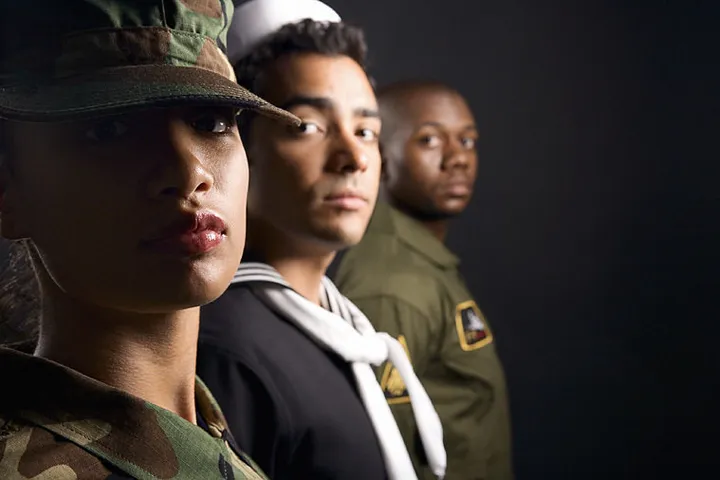
We're finally figuring it out, people. Research from around the country is giving us the keys to helping our traumatized troops coming back from Afghanistan and Iraq. The only problem is, it will be at least a year - maybe two - before these studies are published.

Meantime, our warriors suffer mightily - PTSD is a terrible condition that often worsens over time. Researchers can't talk about their results in any detail until their work is published. But I'm under no such constraints. So I'm dedicating this column to sharing the evolving info about what actually helps heal PTSD.

The tools that work so well are neither complicated nor expensive. They're interventions that ping on the primitive structures in the brain, where posttraumatic stress sits and wreaks its havoc. These are tools like guided imagery, relaxation, meditation, hypnosis, breath work, acupoint pressing & tapping, yoga, Qigong, Reiki, massage therapy, Healing Touch and more. I'll explain, but first let me back up a bit and start from the beginning.

What we clinicians have been learning ever so painfully over the past 2-3 decades is that standard psychotherapy doesn't help much with PTSD (and, to no one's surprise, most soldiers won't go to a therapist anyway.)

I'm one of those clinicians who for years toiled fecklessly in the swampy fields of PTSD, getting sucked into the mire, just like everyone else. Even though I was pretty skilled at my craft - a therapist's therapist, if you will - I regularly failed at making a dent on PTSD.

I could no more fix the ugly re-experiencing symptoms (flashbacks, repetitive nightmares & intrusive thoughts) than I could the dramatic swings between intense terror & rage and its dreary opposite: emotional numbness and isolation.

In fact, sometimes my standard talk therapy seemed to make things worse. Asking somebody to describe what happened would generate a fresh flood of flashbacks and nightmares, followed by more swings between terror and numbness. When somebody in my care did improve, I had the sneaking suspicion that this was someone who would have gotten better anyway.

Here's the thing: we've been trying to fix a problem that sits in the primitive, survival-based structures of the brain - areas that deal in sensation, emotion, perception, muscular reactivity and instinct - using a higher cortical technique whose currency is talking, thinking and analyzing. No wonder it misfires.

Keep in mind, a traumatic event is defined as anything that produces the perception of impending annihilation by overwhelming force, generating a mix of terror and helplessness that floods the body's biochemistry with survival-driven stress hormones and natural opioids. This imprints the nervous system to remember, always. It's nature's way of saying, "Don't make this same mistake twice or you'll be dead".

Left to its own progression, this hyper-reactivity stays embedded in the nervous system, gaining in intensity as it loops back and forth between stressed re-arousal and the body's attempts to settle itself back down, through an increasingly sensitized, irritated neuronal network. This is why symptoms often get worse over time. And this is why symptoms will look pretty much the same, whether generated by a car crash, a hurricane, a rape or a combat encounter - it's all the same survival response.)

For this nasty condition, we need tools that re-regulate the body and allow the owner of these symptoms to put his or her stress management on "manual" - tools that go straight to instinct, not thinking. No wonder immersive, right brain methods make such dramatic inroads on symptoms - guided imagery and hypnosis; certain kinds of body work, such as massage therapy, Reiki, Healing Touch; and new protocols combining imagery with acupoint tapping or pressing, with odd alphabet names, such as EMDR, EFT, SE, TIR, IRT, TAT and the exuberantly named WHEE.

Wonderful results have emerged from 3 different guided imagery studies with traumatized troops at Duke Medical Center/Durham V.A. hospital, showing that after 6-8 weeks of listening five times a week to a half hour's worth of calming guided imagery downloads, symptoms drop dramatically. This is true for male or female warriors, middle aged or young adult, Vietnam or Iraq vets. It works for military sexual trauma or combat trauma or both; and with or without active substance abuse. Improvements appear to hold over time, too. The imagery is a simple, portable, user-friendly and non-threatening group of audio downloads - an intervention that stays the same each time it's used and can even go back to Iraq with the user on his or her MP3 player. And it's not only inexpensive - it's bootleggable, for heaven's sake.

Scripps Hospital is finding the same and then some in its study of a couple hundred traumatized Marines coming back from Iraq and Afghanistan: when guided imagery downloads are combined with a simple body-calming technique called Healing Touch, symptoms of PTSD drop impressively.

Keep in mind that two separate surveys establish that our troops prefer getting their help via audio self-help by over 70%. Medication comes next at around 55%. Last on the list? Yep, you guessed it: sitting with a therapist.

So, people, we've got a lot of intensely distressed warriors coming home, and the sooner we remediate these PTSD symptoms, the better. If you or someone you know is suffering from posttraumatic stress, find some solid self-regulation audio tools, like guided imagery, hypnosis or relaxation, to listen to a minimum of a half hour every day. (Check out some samples on this page, developed for a Veteran's Advocacy group.) And find a certified Healing Touch practitioner and get regular sessions, a couple of times a week (better yet, listen to your audio while getting a treatment).

Within weeks of regular, dedicated practice, the agitated neuronal network and extreme biochemical swings that drive so much of PTSD's distress will start to settle down. Then, in a year or so, when the research data get published, you can read why these methods worked so efficiently and effectively. In the meantime, get the help now.


Follow Belleruth Naparstek on Twitter: www.twitter.com/Belleruth

We're finally figuring it out, people. Research from around the country is giving us the keys to helping our traumatized troops coming back from Afghanistan and Iraq. The only problem is, it will be...
Featured Comments:
Pippen
I have PTSD but not from combat though I served in the Navy.

This is long over due. I'll be consuming this from cover to cover. My psyche is great, she's walked me through every... more >>

 Favorite Reply
photo klbrz
It's exciting to hear that there are more things out there for people dealing with this. I think it's especially important to have different sorts of therapy available as not everyone responds... more >>

 Favorite Reply
Have something to say?

 
Comments
27
Pending Comments
0
iPhone App Promo
Post Comment

Want to reply to a comment? Hint: Click "Reply" at the bottom of the comment; after being approved your comment will appear directly underneath the comment you replied to

View Comments:
Page: 1 2 Next › Last » (2 pages total)

As a therapist I recommend to my clients Belleruth's guided imagery CD's for use between sessions and find that they are effective in reducing symptoms and promoting healing. However, the PTSD CD has provided the most dramatic results in the shortest amount of time. Thanks for these great tools!

    Reply    Favorite    Flag as abusive Posted 07:21 AM on 10/03/2009

Yea once again to Belleruth and now Huffington Post for sharing this info. I was dxd with pts many years ago while working in the public funded behavioral health system in a large city. I had years in therapy behind me doing everything I thought would bring healing and getting worse and finally breaking down. It was before we knew about the healing reality of guided imagery.
The news that I would never recover was almost overwhelming even tho' I had survived a seriously abusive childhood and built a successful life and career. I am fortunate that I have been married to an amazing man for almost 30 years who is steadfast, grounded, and determined. We kept looking for answers and found guided imagery and Belleruth's research and work shortly before her book, Invisible Heroes, was published in 2004.
Today I am recovered and healing on a deeper level that I even knew was possible. Guided Imagery is a key piece of pts treatment...it works...and I am living, breathing proof!
I'm convinced that if we were talking about any other illness and this healing treatment that it would be posted on the front page of every news publication and talked about on every nightly news cast. Again..thankyou!

    Reply    Favorite    Flag as abusive Posted 05:46 PM on 09/30/2009
- Belleruth Naparstek - Huffpost Blogger I'm a Fan of Belleruth Naparstek 10 fans permalink
photo

You're welcome! And thanks for writing. You made my day.

    Reply    Favorite    Flag as abusive Posted 06:31 PM on 10/01/2009
photo

I am thrilled that Belleruth is highlighting the effectiveness of different techniques to help PTSD. Over a year ago I was contacted by a social worker at a FL USAF base who requested permission for their therapists to make copies of my hypnotic guided imagery CD, Relax, Release and Dream On for her PTSD and Anxiety groups because the CD already had been so helpful. I immediately granted permission once I had the official request in writing and had spoken to the person in charge. I would grant permission to any of the official government-run programs if they so desired and followed the same protocol. I also would do the same for any not-for-profit organization dealing with traumas. This CD helps for sleeping peacefully as well as releasing the negative emotions that fuel the flames of fear, anxiety, sadness and low self-esteem. One of my greatest blessings is to be of service to others who can benefit from my work.

    Reply    Favorite    Flag as abusive Posted 10:16 PM on 09/29/2009

How very exciting to learn that there are real answers to the terribly real challenges presented by PTSD. Now there is an urgent need to get these answers out to those who can provide healing and those who can be healed. The clock is ticking and lives are in the balance.

    Reply    Favorite    Flag as abusive Posted 09:27 PM on 09/29/2009
- NWReader I'm a Fan of NWReader 2 fans permalink
photo

If guided imagery works, I wonder if traditional spiritual practices such as meditation or praying the rosary would be effective. Something else to research...

    Reply    Favorite    Flag as abusive Posted 10:38 PM on 09/25/2009

Probably depend on what "traditional spiritual practices" meant to the PTSD sufferer in the past.

Chaplains might be too gung-ho to understand--even now.

    Reply    Favorite    Flag as abusive Posted 11:57 PM on 09/25/2009
- Belleruth Naparstek - Huffpost Blogger I'm a Fan of Belleruth Naparstek 10 fans permalink
photo

Yes, there has actually been considerable research on mindfulness meditation and somewhat less on prayer, and they have mostly been found quite effective, for particularly for anxiety and depression and somewhat for PTSD.
We post new abstracts every week and I really enjoy diving into the Entrez Pubmed data bases to see the latest stuff that's showing up. These are exciting, hopeful times in this field.

    Reply    Favorite    Flag as abusive Posted 08:54 AM on 09/26/2009

It's great to see a simple method of treatment made accessible. Congratulations Belleruth.

    Reply    Favorite    Flag as abusive Posted 02:13 PM on 09/25/2009

It's great to see such a simple method of treatment made accessible. Good work Belleruth.

    Reply    Favorite    Flag as abusive Posted 02:11 PM on 09/25/2009
- klbrz I'm a Fan of klbrz 15 fans permalink
photo
Moderator's Pick

HuffPost's Pick

It's exciting to hear that there are more things out there for people dealing with this. I think it's especially important to have different sorts of therapy available as not everyone responds well to the same thing. I know lots of therapists and this is one of the tougher things to deal with, as you mention (did I help or were they going to get better anyway?).

I just read in a doctor's office an article from the 04/09 Scientific American, here is the preview of it - http://www.scientificamerican.com/article.cfm?id=post-traumatic-stress-trap. It discusses the problem with diagnosing (including what many believe is over diagnosing, because treatment for anxiety, depression might be different than for PTSD, though symptoms can be similar) and the fact that once PTSD is diagnosed in the VA system, the system sort of encourages the disability - it's not set up to get people functioning again. Good read, also, if you can find it.

    Reply    Favorite    Flag as abusive Posted 12:24 PM on 09/25/2009
- Pippen I'm a Fan of Pippen 20 fans permalink
Moderator's Pick

HuffPost's Pick

I have PTSD but not from combat though I served in the Navy.

This is long over due. I'll be consuming this from cover to cover. My psyche is great, she's walked me through every week and every month for 3 years. I'm now able to do things again that I lost what I thought was forever.

I can stay calm in a crowded restaraunt
I can stay in a tense business meeting (provided there are frequent breaks)
I can talk about any topic with anyone and often do
I can be the center of attention for brief periods of time again
I can meet new people and go on job interviews
And I can go to my family events with courage
I sleep 5 hours a night sometimes more

It's not easy and it might not ever be again, but knowing learned people are working for some help gives me peace of mind. Much needed. Thank you.

I was diagnosed after a series of emotional events, I lost my best friend and brother in law, followed two months later by my mother unexpectedly, then my girlfriend left me, and soon after passed away, then I lost my job and then in a tragic car accident that I survived untouched save a few bruises. All of this in the span of 4 months. The Dr said I had been harboring this panic for years because I never dealt with grief in a healthy way from childhood.

Now we have hope.

    Reply    Favorite    Flag as abusive Posted 10:56 AM on 09/25/2009
- Angie Cordeiro - Huffpost Blogger I'm a Fan of Angie Cordeiro 60 fans permalink
photo

Great post!

Have you seen this book?

"War and the Soul: Healing Our Nation's Veterans from Post-Traumatic Stress Disorder" by Edward Tick.

He has contact information and videos that are well worth the watch.

Peace to you and all those close to you ( and a hearty "thank you"!)

    Reply    Favorite    Flag as abusive Posted 01:44 PM on 09/25/2009

What a tragedy that such helpful and cost-effective therapy isn't available to every soldier. I think we also have to educate the powers-that-be in the military -- still -- not to stigmatize PTSD and to encourage people to get help.

    Reply    Favorite    Flag as abusive Posted 10:08 AM on 09/25/2009
photo

Wonderful, at last we have the equivilant of the poetry and bonsai cultivation of the samurai warriors to deal with the effects of war. Maintaining a calm center is the only true way of the warrior, neglect of that leads as we know to much trauma.

    Reply    Favorite    Flag as abusive Posted 10:06 AM on 09/25/2009
- Belleruth Naparstek - Huffpost Blogger I'm a Fan of Belleruth Naparstek 10 fans permalink
photo

Hey, I never knew that. Makes so much sense. Thanks for the insight.

    Reply    Favorite    Flag as abusive Posted 09:07 AM on 09/26/2009
- ERAL I'm a Fan of ERAL permalink

Finally - someone worrying about our boys' mental health! We hear news reports on the men who have died, which is definitely important to know, but how many are tortured of mind and soul? What is being done for them?

    Reply    Favorite    Flag as abusive Posted 10:02 AM on 09/25/2009
photo

I;m thrilled to see this coing to fruition through Belleruth's dogged determination and skill. There is so much that can be done with such great results and little expense. We need mor people who are as determined to aide our troops in their mental health and well beign as Belleruth is.

    Reply    Favorite    Flag as abusive Posted 08:28 AM on 09/25/2009
- dandypuddin I'm a Fan of dandypuddin 165 fans permalink
photo

Excellent article. I have also been interested in equine assisted therapy in PTSD in vets. Anyone familiar with results of this?

    Reply    Favorite    Flag as abusive Posted 02:34 AM on 09/25/2009
- OtayPanky I'm a Fan of OtayPanky 66 fans permalink
photo

In dealing with my own PTSD I found the work of Dr Peter A Levine (Google him) remarkably easy and useful.

Specifically, I picked up his book HEALING TRAUMA, read the intro material, and did the exercises every times I felt myself starting to slip into a PTSD experience.

From Amazon:

===

About the Author

Peter A. Levine received his Ph.D. in medical and biological physics from the University of California at Berkeley, and also holds a doctorate in psychology from International University. During his 35-year study of stress and trauma, he has contributed to scientific and medical publications and served as consultant for NASA's space shuttle project. He has taught at the Hopi Guidance Center, and at hospitals, trauma centers, and pain clinics throughout the world. His bestselling book Waking the Tiger has been published in 13 languages.

===

    Reply    Favorite    Flag as abusive Posted 12:48 AM on 09/25/2009
- Belleruth Naparstek - Huffpost Blogger I'm a Fan of Belleruth Naparstek 10 fans permalink
photo

I too am a fan of Peter Levine's work, Somatic Experiencing, which I think is brilliant. I wish there were some randomized, controlled studies on SE, because I think it would totally kick butt. Many colleagues of mine swear by it.

    Reply    Favorite    Flag as abusive Posted 07:35 AM on 09/25/2009
Page: 1 2 Next › Last » (2 pages total)

 You must be logged in to comment. Log in  or connect with 

Connect