More

Featuring fresh takes and real-time analysis from HuffPost's signature lineup of contributors
Ben Mankiewicz

GET UPDATES FROM Ben Mankiewicz
 

Why Clarence Clemons Matters to Race Relations

Posted: 06/21/11 11:36 AM ET

2011-06-20-ClarenceBruce

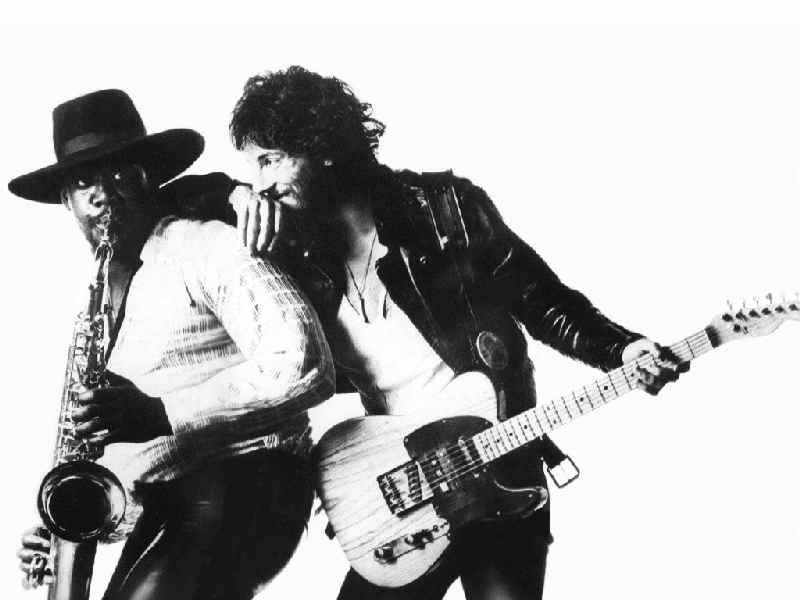
Iconic is a wildly overused word, but the cover photo of Born to Run -- Bruce Springsteen grinning and leaning on Clarence Clemons' broad shoulder -- is a powerful and memorable picture, one that meets the standard for iconic rock n' roll images. And its status is rooted in the beautiful story that picture tells.

You've got this enormously talented, giant black man -- literally "The Big Man" -- saxophone between pursed lips, essentially supporting Springsteen. The look on Bruce's face is honest and authentic, a genuine moment captured in a photo shoot. There's a giddiness in Bruce's smile: "I'm working with my friend," he seems to be saying, "and our music has never been better."

The photo made an instant impact on me, long before their music did.

I was eight when Born to Run was released and that image meant a hell of a lot more to me than anything my teachers could tell me about race. It sealed a point my brother Josh, now a Dateline correspondent, made a few years earlier.

This is an embarrassing story, one I'm hesitant to tell, but remember, I was five years old. We were playing Nerf basketball with Josh -- who is 12 years older -- on his knees so we'd be close to the same height. He blocked my shot or stole the ball or otherwise foiled one of my vintage mid-70s Elvin Hayes Washington Bullets moves. And then I called him an N-word. I'd clearly heard it at school and recognized it as an insult. I had no earthly idea what it meant, but boy was I about to find out.

Within milliseconds Josh was up off his knees, hands grasping my shoulders, picking me up and placing me on the bed. "You never, ever say that to anyone," he said. "That's something very bad white people say to black people when they want to be mean on purpose. It's about the worst thing you can say." I remember crying hysterically at this point because my brother never yelled at me, which could only mean I had done something seriously wrong.

When I had calmed down, I remember asking him about the equivalent, what does a bad black person say to a white person? "There really isn't one," he said, refusing to simplify a complicated issue. "They might say 'honky,' but it's really not the same thing."

Since I still remember the conversation roughly 35 years later, I'd say my brother's "teaching moment" was successful.

And three years later -- on the cover of one of the greatest albums ever released, one of the first records I owned -- was the next step in my education about race relations in America, a shot of a black guy and a white guy, clearly good friends, working together to make something great.

Critically, it delivered a subtle lesson to impressionable young rock n' roll fans. Nobody was beating us over the head with a mallet of racial unity. It's not that those messages shouldn't have been delivered, but kids have a tendency to tune out words of wisdom from overly earnest After School Specials. Instead, you had Clarence playing his sax and Bruce somewhere between a knowing smile and laughing, conveying a sense that this friendship between black and white, this artistic collaboration, wasn't such big a deal.

Being told that black people and white people were equal was one thing. Being shown it was something else.

When Born to Run solidified Bruce as one of the great artists of his generation, the photo took on even more symbolism. The second single from album is "Tenth Avenue Freeze Out" (Number 4 on my list of the Top 25 Springsteen songs, compiled last fall), which Bruce regularly calls "the story of the E Street Band." It's a joyful song, brimming with optimism, and it has one of the lines that matters most in the Springsteen catalog, words that regularly draw thunderous cheers in concert, "When the Change Was Made Uptown and the Big Man Joined the Band."

Obviously, Clarence's impact on the band will last forever. And his impact on how I -- and others, I'm sure -- view race in America will last a lifetime.


Follow Ben Mankiewicz on Twitter: www.twitter.com/benmank77


  • Comments
  • 9
  • Pending Comments
  • 0
  • View FAQ
Comments are closed for this entry
View All
Recency  | 
Popularity
03:26 PM on 06/23/2011
Nice piece, but in looking at your top 25 Boss tunes, while any list is subjective, you are completely lost with having "Cynthia" on that list. Top 5 worst maybe, but c'mon, that song is plain bad...
08:50 AM on 06/23/2011
I agree w/FTracy3: Even at a very young age (I discovered this album in my teens, in the 80's), I never even thought of the fact that there was black man on the cover. To me, it was all about the music, and when you have great music, great musicians there is no line between color and race. This was certainly the case by the 70's when this was released. I think your tribute is heartfelt, but it certainly doesn't speak for the majority of E-Street fans.
photo
FTracy3
My micro-bio is as empty as the rest of my life.
10:45 PM on 06/22/2011
Well that's the difference between some people..A lot of us saw it first as a picture of Bruce and the sax player. A few well meaning people obsessed with race saw it first as an enlightening picture of Bruce and a black guy. Thank God the cover of Born to Run taught all us white folk about equality. Sorry to be snarky about what is obviously a heartfelt tribute, but 95% of E Street Band fans never thought twice about the race of its members. Yes your brother shaking you was a teachable moment. The Born to Run cover might have been-- if had been released in 1962. RIP Big Man.
photo
camanokat
Outta this world
12:22 PM on 06/26/2011
I bought that album when it first came out and played it over and over. I knew it had a photo of Bruce and Clarence on the cover but it didn't "register" with me that one was white and the other black...it was just a pic of the 2 musicians.

The music won't be the same without The Big Man.
HUFFPOST COMMUNITY MODERATOR
elle359zee
Raised Liberal and see no reason to change
06:08 PM on 06/22/2011
I grew up and still live in Monmouth County (Asbury Park is part of the county), I am 52 so my early teen years were spent learning all the words to the songs on "Greetings from Asbury Park"...back in the late 70's I met Bruce and Clarence in two different venues...Bruce at the infamous Inkwell and Clarence in a book store. Both men were so down to earth, just regular guys. Clarence just filled the room in more ways than one...by size, by his smile (which lit up a room), he truly was a presence! Thank you Bruce and Clarence for so many wonderful summer nights cruising Asbury blaring your music
11:03 PM on 06/21/2011
I was 12 when " Born To Run" .and as Springsteen and his group were about to head into the stratosphere of musical popularity,rock and roll was undergoing yet another sea-change as it fended off the challenges of it's ugly sister disco.The E-Street Band kept music real,meaningful,and fun-and in no small part kept rock alive. Bruce and Clarence represented the thing that many of us felt without putting much thought into it,that a buddy was a buddy,a friend a friend,and whatever differences there were really had very little to do with skin pigmentation.The integrated E-Street Band ( african-american David Sancious was also an early member) mirrored our society back then,and like the music it worked because it was effortless. I was lucky enough to see him and the band perform in person 7 times,and I will cherish those times for as long as I live.This sad week is an end of an era for literally millions of us,and I want to thank Clarence .for his music,his demeanor,and that great big joyful smile.In 1975 a 6 foot 5 inch black man that graced so many t-shirts and album covers wasn't a menacing figure to be feared by the ignorant ,but rather someone to emulate and admire.I never got to meet Mr. Clemons, but little did I know at the time that I had made a life-long friend.RIP Big Man,I'm going to miss ya.
12:59 PM on 06/21/2011
Bruce is one of the nicest "down home from the heart" guys you'll ever want to meet and the camaraderie in his band is legendary. But this inclusiveness is not unique to the E Street Band, if you study the history of R&R, this has been going on from the beginning. In the Doo Wop days and even before that, you had groups like "The Del Vikings", "The Marcels" and others that were "mixed".
Later on you had "Booker T & The MG's" and one of the most exemplary of them all, "Sly And The Family Stone". The great thing about Rock And Roll music and music in general is it's openness.
Thanks to Bruce and the Big Man for everything they've shared with us.
12:25 PM on 06/21/2011
You nailed it.
photo
HUFFPOST SUPER USER
Jazmo
Cause they're hip to the bull and hip to the lies.
11:26 AM on 06/21/2011
I love this post for many reasons, but mainly because Bruce and Clarence were amazing collaborators and race never entered the picture. In a way, I'm hesitant to commend them because their friendship is as it should be ... a shared love of music that transcended anything else. That's what bonded them and kept them together. As it should be, race was a non-issue. I'm in my mid 40's and my sister, 12 years older, is a huuuuuuuge Bruce fan. Her musical choices shaped alot of my early music choices and the E Street Band has been a part of my life for as long as I can remember and the example of Bruce and Clarence together made an impression on me as well. For as much as I'm going to miss the E Street Band and Mr. Clemons, Bruce is going to miss him so much more.