iPhone app iPad app Android phone app Android tablet app More

Featuring fresh takes and real-time analysis from HuffPost's signature lineup of contributors
Benyamin Cohen

GET UPDATES FROM Benyamin Cohen
 

'Kosher Nation': An Interview with Sue Fishkoff

Posted: 11/27/10 08:41 PM ET

There's a shocking statistic in Sue Fishkoff's new book, Kosher Nation: The majority of people who buy kosher products are not even Jewish.

Fishkoff, a national correspondent for the Jewish Telegraphic Agency, made full use of her journalistic toolkit to deliver what is a fascinating look at a seemingly niche industry. Following the investigative DNA of Eric Schlosser (Fast Food Nation) and Michael Pollan (The Omnivore's Dilemma), Fishkoff shines a light on a national food trend that needed investigation.

I recently caught up with Fishkoff on her cross-country book tour to discuss why rabbis push buttons in cheese factories, positive kosher wine trends and the kosher meat scandal that rocked the nation.

I'm sure you get this a lot. Why would non-Jews read a book about keeping kosher?

2010-11-17-fishkoffhuff.jpgFirst, this isn't a book about keeping kosher. It's about two things -- the changing ways American Jews have looked at kashrut, which may or may not be interesting to non-Jews; and the incredible growth of the kosher food industry, which should be of interest to all Americans because it affects them all.

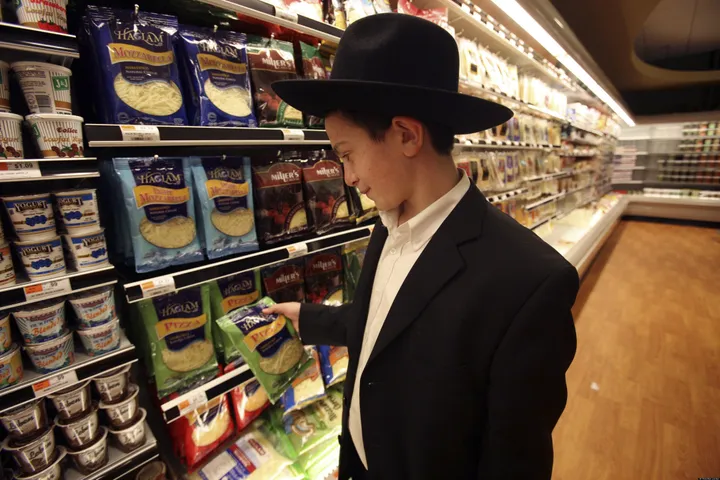
Considering that up to 40 percent of domestic food sales come from kosher-certified products, and Jews are less than 2 percent of the population, it's clear that most of the people buying kosher food are not Jewish. They might want to know why the ketchup or soup or breakfast cereal they pick up at the supermarket is kosher-certified. They might want to know what makes it kosher, and it's not because a rabbi blessed it. They might want to know the hidden costs behind the global kosher supervision and certification business. They might ask whether kosher meat is safer or healthier than non-kosher. With all the interest today in where our food comes from and how healthy it is, I think these questions are worthy of attention.

What are some common misconceptions about the kosher industry?

The most common misconception is that food is kosher because a rabbi has blessed it. The only blessings going on are those Jews say before and after eating or drinking, not in the factory where the food is produced. There's another exception: the blessing a shochet, or ritual slaughterer, says before slaughtering animals or poultry. But that's about it.

Another misconception is that kosher food is produced for Jews. While that's true of the so-called Jewish ethnic foods like gefilte fish and kosher-for-Passover matzo, even then it's not entirely true. Many non-Jews buy matzo, and sweet Concord wines from Manischewitz and Mogen David are popular among Asians and African-Americans as well as Jews. But the overwhelming majority of kosher-certified food products are mainstream items that everyone buys, usually without even noticing they're kosher. That label is there for the distributors, the supermarkets, and the 11 to 13 million consumers who buy kosher food on purpose for dietary, health or religious reasons that may have nothing to do with kashrut.

What have been the biggest changes you've seen in the kosher wine sector?

It's a lot better than it used to be! Until quite recently, kosher wine meant sweet, syrupy stuff, typified by the Manischewitz bottle everyone's grandparents kept for years in the corner cupboard, dragging it out for Passover and other holidays. The Herzog brothers were taking a big chance when they started making non-sweet kosher wines in the mid-1980s in California. But they were tapping into a growing trend. Today you can buy some excellent kosher wines, notably those from Hagafen Cellars in Napa, not to mention the dozens of great wines from Israel. And Jeff Morgan is making incredible kosher wines under his Napa-based Covenant label.

These wines are not cheap, which is another change.

Another interesting point is that this new emphasis on quality is driven largely by baalei teshuvah, or newly observant Jews. Because many of them know good wine from their non-observant days, they're not willing to accept plonk just because it's kosher. The kosher wine industry no longer has a pliant captive audience.

In your book, you devote an entire chapter to the scandal at the Postville, Iowa Agriprocessors kosher meatpacking plant. Sholom Rubashkin, who ran the facility, was accused of many things including animal mistreatment, hiring illegal workers and minors and bank fraud, just to name a few. Has there been anything positive that came out of this scandal?

One positive thing that emerged from this scandal is that Jewish dietary practice and the kosher food industry are on the Jewish radar like never before, and in wide-ranging ways. Liberal Jews who have been talking about ethical kashrut for years -- the need to protect workers, treat animals right and respect the earth -- are now exploring the spiritual potential of traditional kashrut. And Orthodox Jews are waking up to the ethical abuses that can be perpetrated in the name of kosher food production, and are talking about their responsibility to ensure it doesn't happen.

Jewish dietary practice is a hot topic of conversation all along the denominational spectrum, and that would not have happened, unfortunately, if not for the publicity surrounding Agriprocessors.

Another positive outcome that has not yet occurred would be if Americans began demanding investigations into every slaughterhouse in this country, and if the authorities and plant owners took seriously their responsibility to prevent abuse of the animals and workers involved. It's time to clean up the meat industry. And if that makes meat more expensive, then let's eat less of it.

What was the strangest thing you learned while researching this book?

I learned a lot of strange things about bugs in fruit and vegetables, and the lengths observant Jews go to get rid of them. Kitchen mashgiachs, or kosher supervisors, spend so much time cleaning bugs from fresh produce that one certifying rabbi said they've become lettuce washers instead of food supervisors.

Factory automation has caused some odd permutations of kosher law. For instance, a mashgiach is supposed to add the rennet in the cheese-making process -- it's a delicate operation that could involve mixing meat and milk if not done properly, at least in the old days when rennet could be derived from an animal. Until recently, rennet was poured into the milk mixture from a bucket. But today, in most factories you push a button and the rennet is added automatically. Still, in order to get kosher certification, a mashgiach has to push that button. I talked to one mashgiach who slept in a room at the cheese factory, and every time his alarm rang -- every 40 minutes -- he'd wake up, push the button, and go back to sleep. He's so far removed from the actual physical process of making the food that the requirement seems a bit extreme.

Many of the laws of kashrut, and the requirements of kosher food production, seem unusual or arbitrary. For a people that enjoys food so much, we sure make it hard to eat.


Follow Benyamin Cohen on Twitter: www.twitter.com/myjesusyear

There's a shocking statistic in Sue Fishkoff's new book, Kosher Nation: The majority of people who buy kosher products are not even Jewish. Fishkoff, a national correspondent for the Jewish Telegraph...
 
 
  • Comments
  • 33
  • Pending Comments
  • 0
  • View FAQ
Comments are closed for this entry
View All
Favorites
Recency  | 
Popularity
10:57 AM on 12/04/2010
The scam here is that manufacturers are paying people to certify that products are kosher when, in fact, they are inherently kosher.

Do we need to have milk, Coke, cereals, grains, candy and other such products that are not unkosher certified?

Puzzled? Read the ingredients.

If you want to eat kosher, stay away from seafood; products where milk and meat are combined (although that's questionable since the bible says nothing about this and is purely a man-made concoction); and meat-products not slaughtered by the kosher method and you're ok.
HUFFPOST SUPER USER
Anne Mccormick
02:13 AM on 12/03/2010
what i don't get is why, in some jewish homes, there are two fridges, two sinks each in opposite ends of the counter, even, in some cases, two different ovens/stoves.
09:20 PM on 12/03/2010
Separate dishes and cooking apparatuses for meat and for dairy. They are never supposed to mix. For those Jews who can afford it, they get two of each to simplify keeping Kashrut laws.
photo
SF TKF
Cthulhu thinks you'd make a nice sandwich.
04:35 PM on 12/01/2010
***He's so far removed from the actual physical process of making the food that the requirement seems a bit extreme.***

It's pure silliness on par with a Monty Python skit.
photo
HUFFPOST SUPER USER
Mortifyd
10:43 PM on 12/06/2010
We didn't ask you.
03:06 PM on 11/30/2010
as a muslim, i thank our jewish brothers and sisters for establishing the practice of kosher in the USA. this way, we too can eat out or dont have to buy groceries only from middle eastern shops
07:44 AM on 11/29/2010
I go out to lunch with a Vegetarian Kosher person. Always real tough to pick a spot to eat.
07:55 PM on 11/29/2010
I once had to go to lunch with someone who was "frutitarian," as in they wouldn't eat meat or vegetables who's harvesting resulted in killing the organism, so carrots and many other vegetables were out.
10:58 AM on 12/04/2010
If you're in New York check out the Indian places on Lexington in the high-20's.
HUFFPOST SUPER USER
GCHRV
02:04 AM on 11/29/2010
The anti-Semitic element in the Rubashkin case lies in the Iowa establishment's treatment of an otherwise esteemed, white collar businessman as some sort of criminal gang capo, a narcotrafficante, etc.

Because he didn't fit the lilly white, white bread, upper middle class, corporate elite profile of a white collar offender owing to the subjective views of Iowa law enforcers and prosecutors, fuelled by the RCF rhetoric of this blog, PETA and certain organised labour elements, he was singled out for unfair, uncharacteristic and unusual (albeit otherwise legal) treatment.

This anti-Semitic animus toward him filtered up from law enforcers to the trial judge by route of a year's worth of ex parte meetings, telephone calls and other documents not made available to the defence.

Agri made efforts to bring itself into the 21st Century, by hiring -- to the best of its limited understanding -- lawyers, PR experts and others to troubleshoot what had become a collection of difficult and troubling issues, ranging from immigration compliance to animal treatment during slaughter.

Because of its negative perception of Rubashkin and that alien outpost of Hasidic Jews in lilly white, Anglo-Saxon Iowa -- I maintain this initial perception is anti-Semitic, he was never given the fair shake or invitation to cooperate that any other business similarly situated would have received. Indeed, Agriprocessors OVERTURE to cooperate was rebuffed!

...

Still, I believe he was the victim of at least anti-Semitic animus, and should be retried accordingly.
photo
HUFFPOST SUPER USER
OtayPanky
You're welcome
11:19 AM on 11/29/2010
As I read it, the guy had an opportunity to plea down the charges, but opted to go to trial.

Whether that was his own decision, or the advice of counsel, it was a huge mistake.

The truth is, when you're caught breaking serious laws and you don't take the plea deal, the government is going to look for vengeance, not justice. This isn't anti-semitism - as any good criminal attorney will tell you - it's how the system works.

That's why (for example) Martha Stewart, with all her money and (assumed) influence, decided to cop a plea, and do some time.

Sure there is some anti-semtism in the world, just like there is some racism. But I'm not so quick to listen to those playing the anti-semitism card (or the race card) when there are perfectly good reasons for the outcome that have nothing to do with prejudice.

This guy just dug his own hole.
05:53 PM on 11/29/2010
"the government is going to look for vengeance, not justice... it's how the system works."

That's something very disturbing to hear. Don't strike a deal and you can expect vengeance, not justice? And we are okay with that?

The fact is that just about any scholar of law who has commented on this case has strongly disagreed with the sentence. Breaking the law is a wrong. But when the government dishes out a 27 year sentence to someone with no criminal history, when a one year sentence would have been the norm (in similiar cases), that's a crime in its own right.

(Not to mention the disturbing revelations of extensive ex-parte communications between the prosecutors and the judge).
07:20 PM on 11/28/2010
I love matzoh ball soup and borscht and happy to see then at my Publix.
photo
AbeMartin
The best person fer a job is never a candidate
08:28 PM on 11/28/2010
You should make them from scratch.  The borscht is easy and fresh beets taste different than jarred or cans.  Good matzo ball recipes are available all over the Internet.
08:40 PM on 11/28/2010
Abe, YOU should make 'em from scratch. I'm all about convenience these days. LOL
photo
HUFFPOST COMMUNITY MODERATOR
Weirdwriter
10:37 PM on 11/29/2010
My husband loves matzoh. Unfortunately, he's gluten sensitive. I'm hoping to find a recipe for a matzoh-like bread without the gluten...
photo
HUFFPOST SUPER USER
Mortifyd
10:46 PM on 12/06/2010
They make gluten free maztoh from special flours.
06:05 PM on 11/28/2010
I’m all for Kosher holy water.
03:31 PM on 11/28/2010
I'm surprised that after the vast majority of wild allegations against Agriprocessors have not been shown to have any validity, or have been out-rightly been dis-proven in court, a responsible writer would still be capitalizing on them. And I'm specifically talking about "animal abuse," "worker abuse" and "minor abuse" -- the first was never substantiated in any way, and the latter two were completely dismissed in court.

Does the author believe that it is right to capitalize on wild rumors that have never been substantiated simply to help build a thesis for a book? At what point does one begin to question the moral justice in throwing up a false straw "monster" just to help make a point? Does the end always justify the means?

The real scandal in the Sholom Rubashkin case is how a person convicted of non-major financial misdemeanors is given a life sentence. Abuse of our justice system is certainly not-kosher, although, as it starting to look these days, it might be sort of 'organic'.
photo
AbeMartin
The best person fer a job is never a candidate
05:20 PM on 11/28/2010
Mr or Ms Good~

 First of all, five minutes of fact checking (and by this I do not mean reviewing whatever propaganda the family Rubaskin is distributing) belies all of your allegations.  Rubashkin was not given a life sentence.  The sentence is 27 years, which is consistent with sentencing guidelines for major financial crime.  So, he is up there with Enron's Jeff Skilling, Bernard Madoff and Tyco International's Dennis Kozlowski --the nation's white collar if not black hat elite.  Second, this convict and this family's company were involved in lots of very nasty stuff including employing nearly 400 undocumented laborers (meaning they could not produce papers of citizenship, visas, or green cards), animal cruelty (documented by videos surreptitiously taken) at the Postville IA plant.  The convict was also convicted of shaking down a local bank for millions of dollars and then hiding the money.  This is documented (with accurate citations on Wikipedia).

You might also consider checking out the following blog:  http://mosherubashkinhitsjews.blogspot.com/ which provides background and details of the check kiting, improper use of hazardous chemicals, and details about the loss of kosher certification at another meat processing facility owned and operated by Aaron Rubashkin.  I also respectfully suggest that you visit a law school and actually read the court record (http://mosherubashkinhitsjews.blogspot.com/ ) which is available through LEXIS.

Graduation from a yeshiva and knowledge of Halachic Law does not absolve one from obeying either religious law or civil law.
HUFFPOST SUPER USER
GCHRV
09:05 PM on 11/28/2010
Being so knowledgeable of the Rubashkin case, I'm sure you are well aware that 5 former US attorney generals, many, many legal scholars have come out very strongly against the way the prosecutors and presiding judge handled the case.

They make the case that Sholom Rubashkin was treated MUCH worse then other offenders in similar situations!

Dozens pf congressman have written to attorney general Eric Holder demanding that the Justice Department thoroughly investigate the Rubashkin case!
06:14 PM on 11/29/2010
(Moderator: I'm new to this forum. I guess the response I posted initially was blocked. I've lightened it up, hopefully it will go through now.)

AbeMartin -

Any charges Sholom Rubashkin ever faced on employment issues were either dropped (after they had filled their purpose of defamation) or were dismissed by a unanimous Jury verdict. An anti-meat video by those who brought us the "holocaust on your plate" ad campaign does not a good source make.

Thanks for bringing the examples of Enron and Madoff: On the one hand we have a group of people who have committed fraud on the level of billions of dollars, in amounts never before seen in American history, and on the other side we have a man who was convicted of exaggerating the accounts receivable on a family biz line of credit. You surely are not saying that because he was given a (unjustified) 27 year sentence it means his crime is on par with theirs? That sounds like circular reasoning.

Readers don't need to take my word for it. Just about any legal expert (including a whole list of former US attorneys general) who has examined this case has harshly criticized the 27-year sentence. There is a disturbing abuse of our justice system which is the real scandal here.

Note: The URL you shared is talking about someone else entirely, besides, I think you'd agree, that with a URL name like that, it hardly sounds like a reliable source.
10:43 PM on 11/27/2010
i had assumed kosher was like organic . is organic kosher or is kosher organic ?
This user has chosen to opt out of the Badges program
photo
Moti
Guns 'n Moses
12:34 AM on 11/28/2010
Kosher literally means "ritually correct or proper" and it can apply individually to pots and pans, prayer shawls, or biblical scrolls for example and collectively to foods or homes. Organic food may be kosher or it may not just as kosher food may be organic or it may not. If you google "kosher" you will find a plethora of information on the subject.
photo
HUFFPOST SUPER USER
Mr Charlie
Gravity is only a theory.
02:50 PM on 11/28/2010
A growing industry is the production of meats and other foods that are both kosher and organic.