iPhone app iPad app Android phone app Android tablet app More

Bill Chameides

Bill Chameides

Posted January 21, 2009 | 12:18 PM (EST)

Obama: The Environmental President?


Bill Chameides, recently appointed to the National Academy of Sciences' America's Climate Choices, blogs regularly at theGreenGrok.com.

It's official: Barack Obama is the new U.S. president. Polls tell us Americans are filled with the hope of new beginnings, and the environmental community is especially excited about a new path. Will Obama be able to advance an environmental agenda? If so, he will have distinguished himself from Democratic administrations that promised a lot but delivered little on the environment.

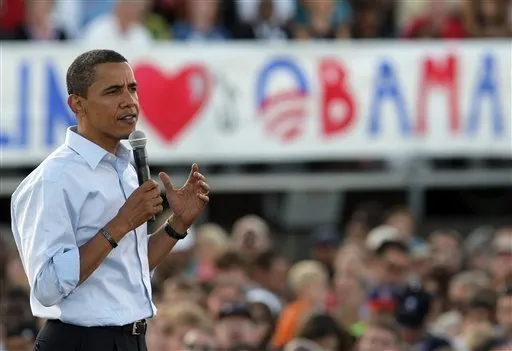
President Barack Obama

Let's face it, the Democratic Party may be associated with environmentalism, but as presidents, Democrats have not been very effective. In fact, if truth be told, the environmental legacies of some Republican presidents are a lot more impressive than those of the Democrats -- a suggestion perhaps vaguely alluded to during yesterday's Inaugural Luncheon, wherein Congress formally welcomes the new president.

There, Sen. Diane Feinstein (D-CA) presented the head table with Thomas Hill's painting of Yosemite to serve as a theme for the inaugural ceremony. In 1864 President Lincoln signed a bill to protect the Yosemite Valley, the first piece of legislation to set aside land for conservation. Lincoln, of course, was a Republican.

Theodore Roosevelt's Tour de Force Environmental Agenda

Teddy Roosevelt, arguably the father of the modern conservation movement, took Lincoln's idea and ran with it. During his presidency, what eventually came to be known as the Wildlife Refuge System, administered by the U.S. National Fish & Wildlife Service, was established. Through it, some 150 million acres of land and waters have now been set aside for public use and protection, including the Arctic National Wildlife Refuge (ANWR), a controversially potential site for oil exploration and extraction, and parts of the marine monuments established by our most recent Republican president "W."

Building on Roosevelt's legacy, a Democratic president, Woodrow Wilson, signed the law that set up the National Park Service.

Richard Nixon Oversaw Passage of Some Top Environmental Laws

President Nixon, for all his faults, made great strides where the environment is concerned. The U.S. Environmental Protection Agency was established on his watch. He also oversaw the passage of a slew of laws protecting the environment, some of which are the most important environmental laws on the books. These include the following, with the two most noteworthy at the top:

The list goes on. Not a bad legacy for a disgraced president.

The First President Bush Signed the Clean Air Act Amendments Into Law

President George H. W. Bush also did well by the environment. Probably most significant was the passage of the Clean Air Act Amendments of 1990, which:

  • established a cap-and-trade system for lowering sulfur oxide and nitrogen oxide emissions from power plants to address acid rain,
  • tightened emissions from automobiles,
  • established procedures for regulating hazardous air pollutants,
  • required states to take more rational approaches to meeting air quality standards, and
  • regulated the use and emissions of ozone-destroying chemicals.

This is what the first George Bush had to say about America's role in solving the world's environmental problems:

"We know now that protecting the environment is a global issue. The nations of the world must make common cause in defense of our environment. And I promise you this: This nation, the United States of America, will take the lead internationally." (Helena, Montana, 1989)

Democratic Presidents' Environmental Record Leaves Room for Improvement

By contrast the environmental records of the two recent Democratic administrations are pretty paltry, without any major new legislation. Jimmy Carter's administration did attempt to move the nation toward a more rational energy policy, but the environmental impacts of those policies are questionable -- for example the initiative to produce synfuels from sources like coal and oil shale. And in any event the Carter initiatives died soon after he left office.

The administration of Bill Clinton, for all the hoopla about the environment and Al Gore serving as vice president, accomplished very little where the environment is concerned. Air quality standards were tightened (see here and here), and rules were promulgated to protect forests, wilderness, and wildlife. But again, no significant new legislation and in particular, and despite Gore's presence in Japan during the negotiations for the Kyoto Protocol, nothing on global warming.

Some Republicans Have Been Environmental Disasters

In fairness, it should be noted that while some Republican presidents have outshone the Democrats, others have been disasters. Ronald Reagan comes to mind (although he did sign the Montreal Protocol), and of course there is the recently departed-for-Texas, George W. Bush. So maybe if you combine the good and bad Republicans legacies, you get an average that's about equivalent to the hohum records of the Democrats.

Against this backdrop, Obama takes center stage. The environmental issues are huge and they must be addressed concurrently with economic and security crises. He has surrounded himself with the very best scientific minds and environmental policy wonks (see here and here), and so does not lack for advice. Obama took the oath of office on President Lincoln's bible, a specific request by the new president from Illinois who feels a kinship with his Illinois predecessor. So, will he do an environmental first, as Lincoln did? Will he deliver like no other Democratic president has on the environment? We'll soon find out.

Bill Chameides, recently appointed to the National Academy of Sciences' America's Climate Choices, blogs regularly at theGreenGrok.com.It's official: Barack Obama is the new U.S. president. Polls tell...
 
 
  • Comments
  • 38
  • Pending Comments
  • 0
  • View FAQ
Comments are closed for this entry
View All
Bloggers
Recency  | 
Popularity
Page: 1 2  Next ›  Last »  (2 total)
10:43 PM on 01/29/2009
President-elect Obama. With sensitive leadership, there is hope to recover our environment. Our economy is dashed, but perhaps with a renewed sense of vigor, we can address our environmental concerns and at the same time help revive our economy through many new jobs in the energy research and technology fields. If we start moving in the right direction, recovery is certainly possible. Our fossil fuel obsession can be ended with strong leadership from Obama. Check out the analysis about global warming at http://www.onebiosphere.com
Perhaps, he can re-invigorate our commitment to environmental action. We can democratize our energy system and begin to reverse the impacts of dramatic climate change.
We will need to undergo meaningful, thoughtful debate about our environmental priorities and then develop long-range action plans to address the most pressing problems. Lets be proud of our heritage and create a sustainable environment for generations to come.
HUFFPOST SUPER USER
zanzig
10:07 PM on 01/26/2009
Here's something for your new president to consider. In July 2009 15,000 US military personnel and 8,000 Australian troops will commence the Talisman Sabre military training exercises aimed at further co-operation between allies. A central location for these war games is the extremely biodiverse area of Shoalwater Bay in central Queensland. Shoalwater Bay includes areas of the Great Barrier Reef, internationally recognised RAMSAR wetlands as well as many endangered flora and fauna species. During the training, these areas will be bombed from land and sea and assaulted by tanks and live fire manoeuvers. We don't know what the effect on the wetlands will be but it is suspected that it won't be good. There is also a strong suggestion that depleted uranium weaponry has been used during previous training exercises.
Here is a link to the information on the 2007 training exercises: http://www.shoalwaterbay.org/ts07.php
A comment from one of your military personnel says it all:""You have to have places to drop bombs, you have to have places to shoot live weapons, places to fly planes over that make noise, places where you can actually test and exercise your capabilities."
Here's the link: http://www.peaceconvergence.com/page/environment
photo
HUFFPOST SUPER USER
knerd
Trapped in a world he never made
01:11 AM on 01/26/2009
Obama appears to be somewhat green....

http://www.visualthesaurus.com/cm/wordroutes/1572/
This user has chosen to opt out of the Badges program
09:30 PM on 01/24/2009
Nixon (& T. Roosevelt) came to mind!
Carter did have grand ideas energy conservation esp. He actually installed solar panels on White House (more symbolic that anything). Reagan had them removed permanently due to a leak!

Do any of you think Carter's attempts were completely lost due to crashing economy. No one really gives a hoot about such things when worried about wallets!
HUFFPOST SUPER USER
realpolitic
Proud member of the reality-based community!
04:41 AM on 01/24/2009
"It seems that the debate on the authenticity of global warming and the role played by human activity is largely nonexistent among those who understand the nuances and scientific basis of long- term climate processes. The challenge, rather, appears to be how to effectively communicate this fact to policy makers and to a public that continues to mistakenly perceive debate among scientists."

http://tigger.uic.edu/~pdoran/012009_Doran_final.pdf

And of course, the statements from dozens of scientific academies:

http://en.wikipedia.org/wiki/Scientific_opinion_on_climate_change

"Given public opinion doesn't match the overwhelming scientific consensus, it's fair to say the deniers are doing well with PR. Propagandists tend to be more influential with public opinion than boring scientists."
HUFFPOST SUPER USER
realpolitic
Proud member of the reality-based community!
04:04 AM on 01/24/2009
It turns out that many of the glaciers are melting so quickly they will disappear by the middle of the century .threatening the livelihoods of more than 2 billion people who depend on melt-water to feed rivers in summer.

http://www.geo.uzh.ch/wgms/mbb/mbb10/sum07.html

http://www.grid.unep.ch/glaciers/

http://www.risknat.org/projets/climchalp_wp5/pages/etudes/haeberli&al_2007.htm

http://www.guardian.co.uk/environment/2009/jan/19/glacier-rising-sea-levels
photo
HUFFPOST BLOGGER
Bill Chameides
08:38 AM on 01/23/2009
I gather some of you found I gave short shrift to Carter's and LBJ's environmental legacies.

Certainly Cater made significant advances on the conservation front -- establishing ANWR (note to vagabondblogger, it's ANWR, not ANWAR) was huge. However, CAFE was initiated during Ford's administration: http://www.pewfuelefficiency.org/docs/cafe_history.pdf

The foundation for the Department of Energy was largely laid during the Nixon and Ford administrations: http://www.energy.gov/about/timeline1971-1980.htm
It's not at all clear to me DOE has been a net positive for the environment; and don't forget that Carter's motivation for DOE and related initiatives was energy security not the environment. One of his energy initiatives - the Synthetic Fuels Program, designed to make liquid fuels from coal, shale, and tar sands - would've been an environmental disaster had it been successful. http://www.presidency.ucsb.edu/ws/index.php?pid=31656

As for LBJ's legacy, it's accurate to say some of his environmental legislation laid the groundwork for the Clean Air Act and Clean Water Act passed by Nixon.

Nevertheless, I still believe, as counterintuitive as it may be, that the most significant, long-lasting environmental advances in the United States occurred under Republican presidents. (I agree that Lincoln and Teddy Roosevelt bear little resemblance to most contemporary Republicans, but one can always hope.)

Finally, no criticism here of Obama - he just got there. I have high, high hopes, but the proof as they say is in the pudding.

Finally, Network TV? What's that?
09:00 AM on 01/23/2009
Excellent post - thank you.
I am curious however as to why there are not more articles / posts / comments regarding the massive amounts of waste and refuse left on the national mall after the inauguration? I live near Washington D.C. and read about the huge mess in the local papers but I haven't seen anything on Huffington Post.
Why not?
05:21 PM on 01/23/2009
How many garbage cans do you need for a couple million people?
07:16 PM on 01/22/2009
I don't believe Nixon gave a hoot for the environment. He just happened to be President when things long overdue finally got done.
11:58 PM on 01/22/2009
That may or may not be true, but if we are going to fault presidents for the negatives in their administration, we have to give credit when credit is due.
08:44 AM on 01/23/2009
Perhaps veto overrides notwithstanding.
07:01 PM on 01/22/2009
As a chemist I am going to stick up for Clinton more. He had some nice caps on things like arsenic which were very much needed. For most of his time he had some real jerks to work with in congress.
01:27 PM on 01/22/2009
Ulysses S. Grant gave Earth its first national park, Yellowstone.
01:13 PM on 01/22/2009
You're kidding, right!!!???

Jimmy Carter signed in RECRA; Superfund; Toxic Substances Control Act, and the act to protect ANWAR, among others - see below.

From The Daily Green: http://www.thedailygreen.com/environmental-news/latest/greenest-presidents-460808

"In response to the 1973 OPEC oil embargo, President Jimmy Carter (1977-1981) created the Department of Energy in 1977, with a key goal being the establishment of a national energy policy that promoted clean and alternative fuels. Carter famously installed solar panels on the White House roof and set the mansion's thermostats at 68 degrees to save energy.

Carter's 1977 speech calling on the country to drastically ramp up energy efficiency and conservation is truly inspiring and ahead of its time. Backing that up, in 1979, Carter implemented "corporate average fuel economy" (CAFE) standards that mandated fuel-efficient cars -- although those standards would soon be relaxed.

President Carter also oversaw passage of a number of other important laws, including the Soil and Water Conservation Act, the Surface Mining Control and Reclamation Act, the Antarctic Conservation Act, the Endangered American Wilderness Act and the Superfund Act (remember when laws that sound green actually were green?). Tighter amendments were passed on the Clean Air Act, and the Alaskan National Interest Lands Conservation Act conserved more than 100 million acres and 26 rivers in America's Last Frontier."

It's hard to believe that you can point out Nixon, and totally ignore President Carter.
12:44 PM on 01/22/2009
Obama hasn't done anything yet, why is he a part of this article. You should judge the results not what is just written.
11:29 AM on 01/22/2009
What gives me the most confidence in Obama's environmental direction is that he has tied environment to energy. We are well past the time when these two issues could be separate. With valleys swamped by ash and mountaintops "removed", the environmental impact of our energy policy is more obvious than ever before. That Obama's plan looks at these issues together and his cabinet is designed to coordinate between these departments are very positive signs. It remains to be seen how things will work out, but the approach shows that Obama understands the current problem.
03:17 PM on 01/22/2009
You always buy your products based on Network TV advertising?
01:06 PM on 01/23/2009
No, I use what's called "research". Aside from what's listed on his agenda, President Obama's cabinet picks and organization show a strategic approach that links energy and environment together. I have not bought into what they'll accomplish since they still need to produce that, but what they've brought to market is a clear direction with which I agree.
05:25 PM on 01/23/2009
Why are so many Americans so anxious to advertise their ignorance?
HUFFPOST SUPER USER
realpolitic
Proud member of the reality-based community!
03:51 AM on 01/24/2009
It turns out that the accelerating rise in sea levels is especially threatening to middle Atlantic states, according to the EPA, NOAA, and the USGS.

http://climatescience.gov/Library/sap/sap4-1/final-report/default.htm
10:45 AM on 01/22/2009
This review of presidential environmental progress neglects the important contributions of Lyndon Johnson through his "Great Society" initiative. These include the following:

* Clear Air, Water Quality and Clean Water Restoration Acts and Amendments
* Wilderness Act of 1964,
* Endangered Species Preservation Act of 1966,
* National Trails System Act of 1968,
* Wild and Scenic Rivers Act of 1968,
* Land and Water Conservation Act of 1965,
* Solid Waste Disposal Act of 1965,
* Motor Vehicle Air Pollution Control Act of 1965,
* National Historic Preservation Act of 1966,
* Aircraft Noise Abatement Act of 1968, and
* National Environmental Policy Act of 1969.

(from: http://www.answers.com/topic/great-society#Environment)
10:44 AM on 01/22/2009
President Nixon? Wasn't he in charge when one of the most toxic chemicals, agent orange, was dumped all over Vietnam that is causing birth defects to this day? Are you suggesting that only the US has an environment to be concerned about?
01:27 PM on 01/22/2009
Nixon was instrumental in passing laws that Boosh worked very hard to circumvent. Someone who makes laws that Bush hates can't be all bad.

Although I do agree wholehearedly with Hunter S. Thompson's eulogy for Nixon.