Most of us think of cell phones primarily as a convenient tool to stay in touch with people and store information. But increasingly, scientists are exploring ways to use cell phones to deliver critical health care to people in developing countries.
If you're like me, you've probably become quite attached to your cell phone. These amazing devices allow us to do things that previously could be done only with a computer, such as search the Internet, read books, watch TV and movies, and purchase things online.
But what I find even more impressive is how researchers are examining ways to put cell phones to use to improve health in developing countries. This week, the foundation announced grants of $100,000 each to eight scientists who are pioneering the use of cell phones to improve health care in communities where resources are limited. The grants are part of Grand Challenges Explorations, a foundation-funded effort to jumpstart unconventional projects that we believe have the potential to improve global health.
For example, Peter Lillehoj and Chih-Ming Ho of the University of California, Los Angeles, received a grant to develop a disposable malaria biosensor based on a SIM-card platform. The SIM-card biosensor will allow malaria detection to be performed using a cell phone, which will make diagnostic testing more widely available in rural and remote areas.
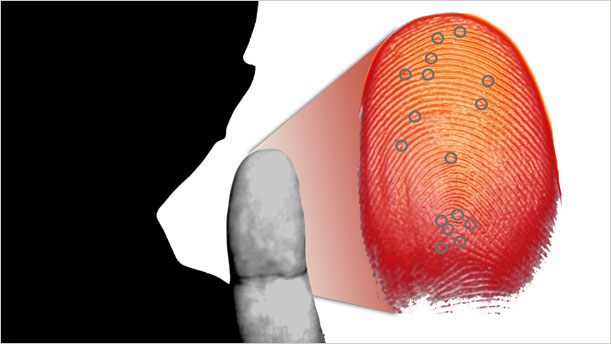
Mark Thomas will be leading a team at VaxTrac to field test a mobile-phone-based vaccination registry that uses fingerprint scans to track people who have received immunizations. The goal is to reduce redundant doses and increase coverage levels in developing countries.
I shared information about these and other innovative cell-phone projects that we're funding yesterday at the 2010 mHealth Summit, an international conference focusing on the use of mobile technology to improve health care in the developing world.
Cell phones are amazing tools. For some of us, they're about staying in touch. For millions of people, it could be about staying alive.
Terry Ferrari of World Vision will be field testing the use of two cell-phone modules that will help community health workers in Mozambique caring for pregnant women and newborns to assess, to take action, and to refer cases with complications and emergencies. Another mobile-phone-based tool being developed by Marc Mitchell of D-Tree International uses clinical algorithms to quickly identify women at risk during labor and delivery and assist with emergency transfer to a hospital. If these tools are successful, they could significantly reduce maternal and infant mortality rates.
This blog post originally appeared on The Gates Notes.
Follow Bill Gates on Twitter: www.twitter.com/BillGates
Cathleen Falsani: The NFL's T-Shirt Donation To World Vision: Charity Or Closet Cleaning?
In a monetary-based society, NO ONE solves any problem that doesn't make money.
While you are at it, could you give that crazy ex-ebay woman some tips on how she could use her money to actually help other poeple beside herself ?
All you need is two cell phones. Before going to sleep each night call one of the phones from the other and place them on either side of your head. It helps if you plug them in, just to be sure that the batteries don't run down and break the connection.
Mobile banking allows us to use our cell phones as wallets which can hold a currency which cannot be stolen.
Right now, in the U.S., cellphones are required by law to have GPS locators. We've come to appreciate the value of GPS, and people use their iPhones to get turn by turn driving directions.
Unfortunately, we also simultaneously surrendering a bit of our privacy to the phone companies. In the United States, as a result of The Patriot Act and National Security Letters, the phone companies are now sharing massive amounts of information with the NSA, who is secretive and accountable to nobody. We can assume that the NSA knows our whereabouts at all times that we are carrying our cell phones.
Under the current arrangement, we pay the phone companies for the privilege of tracking us. I think, in the interest of a Basic Income Guarantee, they should pay us micro-payments for each second that our phone is on the grid, so that at the end of the day, we have enough credits in our phones to live with a high standard of living, including health care.
This would make working for a living an option, not a requirement.
The cell-phone based currency would have a limited lifespan, in order to prevent inflation. It would provide citizens with the daily resources sufficient to cover all modern expenses required to have a high standard of living, but it would be "use it or lose it", so that the amount of currency in the system remains at a steady state. People could still work for a living in order to earn a persistent (possibly gold-backed) currency in order to save and accumulate wealth, but it wouldn't be required.
This means that parents would have the options of staying home with their children to raise them, teach them, nurture them, give them personal attention, answer their questions, encourage their curiosity.
This system would allow us the financial resources to bring fiber-optics to everyone's homes, and even for everyone to have HDTVs that serve internet video and personal computers that allow people to program.
Rather than think of all these ideas as some hippie pipe dream, just consider for a second what the MIT Media Lab would do if they were granted the authority to completely redesign our entire economic system and government.
What would that look like?
Poverty CAN NEVER be eliminated, as long as we continue to create scarcity with MONEY. If you'd like to look into how we could eliminate poverty, you can check out The Venus Project.
-- People over Profits.
http://www.gq.com/cars-gear/gear-and-gadgets/201002/warning-cell-phone-radiation
It still doesn't mean the cell phone companies didn't pay LARGE amounts of money to make the whole radiation notion drop the public's safety radar.
What did the big telecoms do when they fond they couldn't prove again that cell phone radiation was harmless? Pay lots and lots of money to cover up the replicated attempts.
THe world has been sort of puttering along since, with any attention to this issue. But it's stil lthere, and perhaps worse now, given the increase in number of cell phones, the increased bandwidth, and the increased potential of holding the phone close to your chest as you surf, text, e-mail, etc.
You go ahead and trust the telecoms. But if you have kids, you'd be wiser trusting scientists who have no motivation to lie to you about your cell phone's causing radiation. And hey, if you're still confused, go sit in the middle of a room full of electronics (with audio) and let your cell phone ring. Name me one other object in your house that causes this much disturbance your other devices when being used? (I'm talking about the buzzing int he audio, etc.)
It is great to see the investment into real applications for improving life/health and getting beyond games and toys.
Gene Hammett
http://www.crunchbase.com/person/gene-hammett
http://genehammett.wordpress.com/