
What if I told you I'd found a political group that for a 100 years had managed to be absolutely right on every crucial political issue? A political lodestone, reliably pointing toward true policy north at every moment.
Sorry. But I have something almost as good: a group that manages to always get it wrong. The ultimate pie-in-the-face brigade, the gang that couldn't lobby straight.
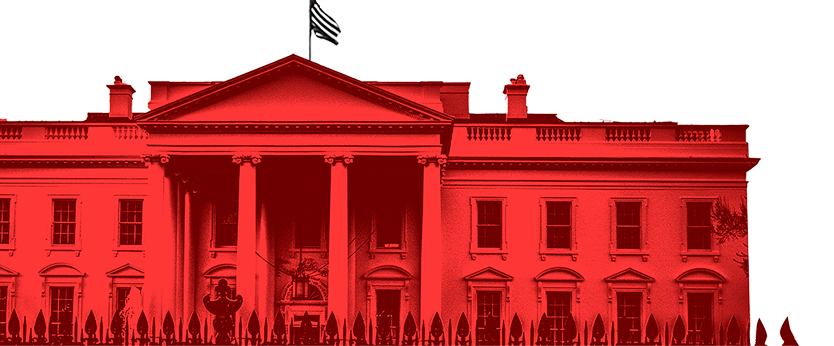
From the outside, you'd think the U.S. Chamber of Commerce must know what it's doing. It's got a huge building right next to the White House. It spends more money on political campaigning than the Republican and Democratic National Committees combined. It spends more money on lobbying that the next five biggest lobbyists combined. And yet it has an unbroken record of error stretching back almost to its founding.
Take the New Deal, which historians have long since credited as saving capitalism in the U.S. FDR was dealing with a nation ruined by Wall Street excess -- a quarter of the country unemployed, Americans starving and hopeless. He gave his first fireside chat of 1935 on April 28, and outlined a legislative program that included Social Security. The next morning, a prominent official of the Chamber of Commerce accused Roosevelt of attempting to 'Sovietize' America; the chamber adopted a resolution "opposing the president's entire legislative package."
Fast forward to the next great challenge for America. FDR, having brought America through the Depression, was trying to deal with Hitler's rise. In the winter of 1941, with the British hard-pressed to hold off the Germans, FDR proposed what came to be called the Lend-Lease program, a way of supplying the allies with materiel they desperately needed.
Only 22% of Americans opposed the Lend Lease program -- they could see who Hitler was - -but that sorry number included the Chamber of Commerce. The lead story in the New York Times for February 6, 1941 began with the ringing statement from the Chamber's president James S . Kemper that "American business men oppose American involvement in any foreign war."
It's not just that this was unpatriotic; it was also plain stupid, since our eventual involvement in that "foreign war" triggered the greatest boom in America's economic history. But it's precisely the kind of blinkered short-sightedness that has led the U.S. Chamber of Commerce astray over and over and over again. They spent the 1950s helping Joe McCarthy root out communists in the trade unions; in the 1960s they urged the Senate to "reject as unnecessary" the idea of Medicare; in the 1980s they campaigned against a "terrible 20" burdensome rules on business, including new licensing requirements for nuclear plants and "various mine safety rules."
As Brad Johnson, at the Center for American Progress, has detailed recently, the U.S. Chamber has opposed virtually every attempt to rein in pollution, from stronger smog standards to a ban on the dumping of hazardous waste. (They're hard at work as well trying to relax restrictions on US corporations bribing foreign governments, not to mention opposing the Lily Leadbetter Fair Pay Act.) If there's a modern equivalent of World War II, of course, it's the fight against global warming. Again a majority of Americans want firm action, because they understand the planet has never faced a bigger challenge -- but that action's been completely blocked in Washington, and the U.S. Chamber is a major reason why. They've lobbied against every effort to cut carbon, going so far as to insist that the EPA should stay out of the fight because, if the planet warmed, "populations can acclimatize via a range of range of behavioral, physiological, and technological adaptations." That is to say, don't ask a handful of coal companies to adapt their business plans, ask all species everywhere to adapt their physiologies. Grow gills, I guess.
There's a reason the U.S. Chamber always gets it wrong: they stand with whoever gives them the most cash (in 2009, 16 companies provided 55% of their budget). That means that they're always on the side of short-term interest; they're clinically, and irremediably, short-sighted. They recently published a list of the states they thought were "best for business," and the results were almost comical -- all their top prospects (Mississippi!) ranked at the very bottom of everything from education to life expectancy.
But that doesn't mean that business is a force for evil. Though the U.S. Chamber claims to represent all of American business, their constituency is really that handful of huge dinosaur companies that would rather lobby than adapt. Around America, the local chambers of commerce are filled with millions of small businesses that in fact do what capitalists are supposed to do: adapt to new conditions, thrive on change, show the nimbleness and dexterity that distinguish them from lumbering monopolies. As Chris Mead, in an excellent history of the local chambers, makes clear, there are a thousand instances where clear-sighted businesspeople understood the future. Who lured the first movie producers to southern California? The LA Chamber, which sent out a promotional brochure in 1907. Why was the Lindbergh's plane called "The Spirit of St. Louis"? Because the St. Louis Chamber of Commerce raised the money -- that was a pretty good call.
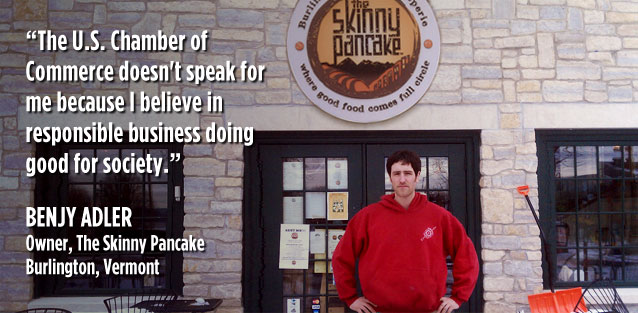
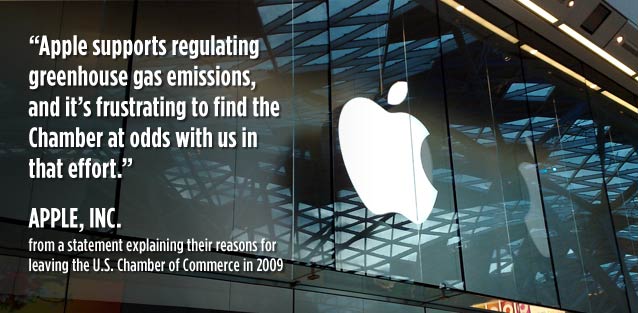
That's why thousands and thousands of American businesses concerned about our energy future have already joined a new campaign, declaring that "The US Chamber Doesn't Speak for Me." They want to draw a line between themselves and the hard-right ideological ineptitude that is the U.S. Chamber. Some of those businesses are tiny -- insurance brokers in southern California, coffee roasters in Georgia, veterinarians in Oklahoma -- and some are enormous. Apple Computer, for instance, which has... a pretty good record of seeing into the future.
There's only one reason anyone pays attention to the U.S. Chamber, and that's their gusher of cash. But the Chamber turns 100 next year, and it's just possible that a century of dumb decisions will outweigh even that pile of money. If you're trying to figure out the future, study the U.S. Chamber -- and go as fast as you can in the opposite direction.