
How has Springfield, Missouri been able to continue to add jobs and maintain a lower-than-average unemployment rate through the worst recession in 50 years? I would like to suggest to you that our advantages may originate from three non-traditional (or at least, not-often-considered) sources.
First, Springfield is a community that, for whatever reason, collaborates. We don't really know the source of this high degree of collaboration (might be in the water), but it's just the way we do things.
Many communities have an economic development corporation or some similar organization to promote economic development. In Springfield, we have a partnership that promotes economic development, including staff from our award-winning chamber of commerce, but also the city, county, and our locally-owned utility. These players work together as a team to ensure any prospective employer receives seamless, top-quality service while considering where to locate. They provide that same level of service to our existing businesses considering expansion, which has proved to be the source of our growth during the recession. Additionally, we take a regional approach to economic development, truly believing that a rising tide lifts all boats.
Second, it might be our Midwest work ethic. People in Springfield work hard and get the job done instead of just putting in their time. They expect to work hard. This is something else that just seems to be in our heritage. As newcomers arrive, they seem to quickly notice that the bar is raised and they are expected to measure up.
Third, Springfield has recently begun to focus on social capital. Thanks to researchers from Missouri State University (located in Springfield), we're focused on civic engagement, building relationships, and building trust. These aren't necessarily the things that most cities focus on, but we are... and we believe that these are the keys to long-term success in our community. Without relationships and trust, nothing else matters.
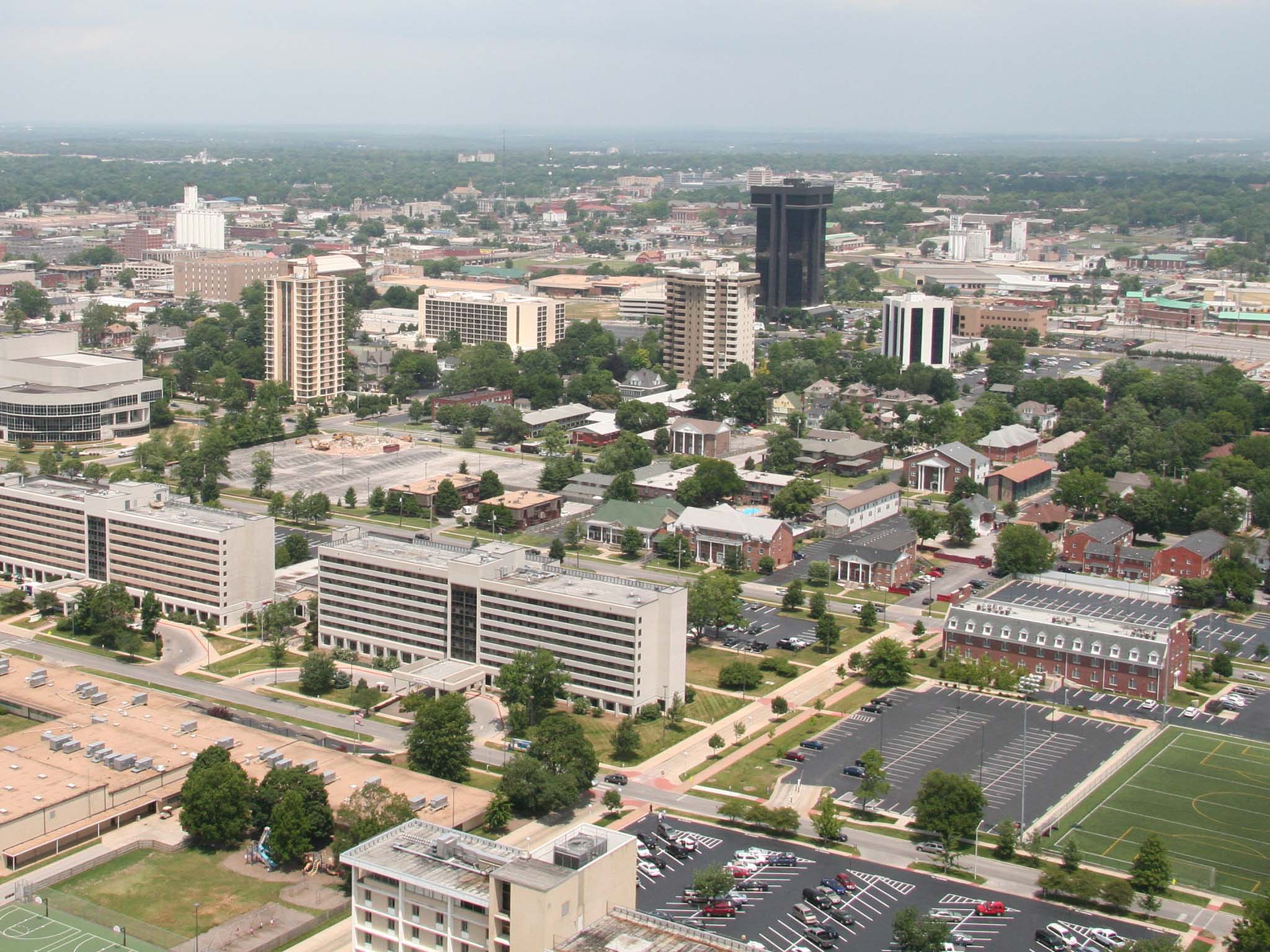
Of course, it doesn't hurt that Springfield continues to invest in its top-notch transportation system since we are a transportation cross-roads, has more than 40,000 college students attending 14 colleges and universities that provide companies with a consistent talent pipeline, and is located in the beautiful Ozarks region that provides a great quality of life at costs far less than either coast. And it doesn't hurt that Springfield's bond rating actually when up during the recent recession and we are growing manufacturing jobs. But these are advantages that some other cities enjoy, as well, so I've tried to focus on a few things that I believe make Springfield unique. It's working. Springfield and Greene County were near the top of various "job creation" rankings last year. If you're doing things right, they will find you.


These are just some of the issues the Mayor won't acknowledge or address. You see, it's not in his interest to highlight these problems because it represents the city's failure in addressing these issues. It's also not conducive to self-promotion.
As the author points out, he cites 3 non-traditional sources. Through my research, I would like to add another non-traditional source that truly benefits Springfield. This source is the way the community responds and recovers while facing adversity.
In my line of business, the focus is not only Organizational Resiliency by Community Resiliency. A great definition of Organizational Resiliency is that an organization is able to achieve its core objectives in the face of adversity. It is not about responding to a one-time crisis or disaster event - it's about continuously anticipating and adjusting to trends that can permanently impair the earning power of the organization.
What the author briefly touched on is the colloboration within the community. This collaboration extends far beyond ethics and Ozarks. True pride and collaboration is measured when friends, families, neighbors and businesses are affected by any disaster and have the ability to quickly pick themselves up, recover and resume life as close to normal, prior to the event, as quick as possible.
The only way this can occur is through years and years of progress, community committment and a strong resolve to develop a culture of unity. To successfully respond together is to prepare together.
This is also significant because a dollar goes farther in Springfield since the cost of living in the 2nd quarter of 2012 was 89.6% of the national average.
Average wages for specific job titles can be found on this site, compiled by the Bureau of Labor Statistics. http://www.bls.gov/oes/current/oes_44180.htm
As a young professional I can personally tell you that I continue to benefit by living in Springfield. The growth has provided me and my wife opportunities to advance our careers and we are continuing to build wealth through home ownership (which we started immediately out of college). Our wages are competitive when combined with the cost of living and the quality of life here makes Springfield almost impossible to leave!
I don't know where to start. Let's see....
The average annual wage is about $17,000. Whoopie! Hardly a living wage.
Yes, this is a college town because there are lots of colleges. So what. This is also a fast food town. And a convenient store town. And a strip mall town (lot's of vacant spaces).
This is also a very RED town. Home of Billy Long (YEEEHAWWW!) and Roy Blunt. It's almost a sin to be a democrat around here! And if you don't go to church, wow, there's really something wrong with you!
Just the beginning....
Similarly, the Seattle area has transitioned from a traditional pure manufacturing basis to a combination of high-tech and knowledge based companies over the same period. As with Rochester, excellent local universities were important in the transition.
Stephen’s profile would indicate he is uniquely qualified to find solutions that focus on community and cooperation.
I am beginning to formulate a theory that communities that have been able to survive during our difficult economic times should provide a “template” for communities that need to focus on economic growth. I think leaders like Bob Stephens hold the “key” to rebuilding economic sustainability for others.
In my state we have a wonderful candidate for Governor who is highly focused on promoting a job creation plan that focuses on public-private partnerships to stimulate and sustain economic growth and success. I wish leaders like Bob Stephens and my candidate for Governor would take their “stories” national.