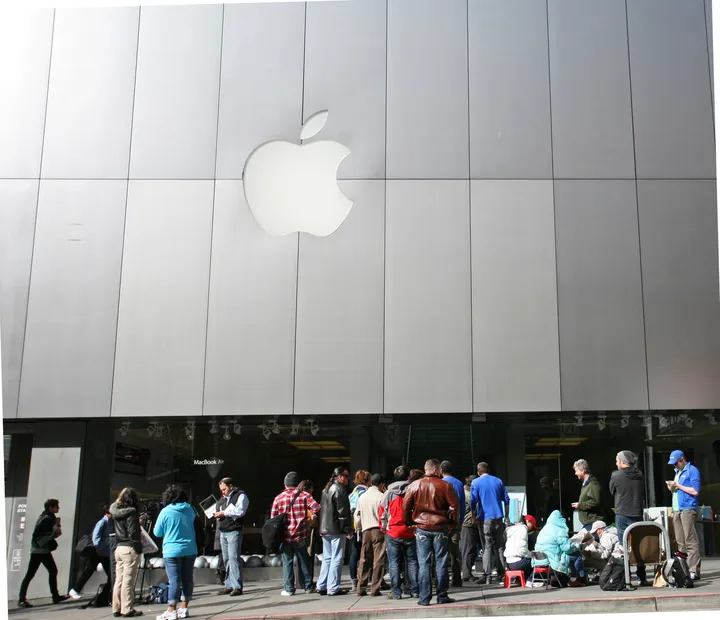
Reports say that Apple might introduce a cloud-based music storage and streaming service. It would compete with Amazon's "music locker" service, and beat Google to the market too.
Music lockers -- online storage of your music collection -- are not new. Michael Robertson, founder of MP3.com, started such a service, called Oboe, in 2005. The appeal is threefold. First, storing your music in the cloud makes it accessible anywhere. Second, there is the backup safety factor. Third, with the right apps you can stream your music files via multiple devices.
So even though iPods and other portable music players can accommodate large libraries and are portable, local storage and playback is still a nuisance when your mobile lifestyle includes several devices.
Music lockers hint at the "celestial jukebox" concept, which theorizes an on-demand music library in the cloud that users can access from anywhere. In the Apple/Amazon/Google models, the celestial jukeboxes are many, built by individuals, and consist of individually owned songs. The grander celestial jukebox vision imagines one universal music library accessed by many, rather than many jukeboxes, each accessed by one.
Universal celestial jukeboxes already exist, and have for many years, but usage has not taken off. Rhapsody is a veteran in this business, having launched nearly 10 years ago in 2001. I have been a Rhapsody subscriber since the beginning, but I'm writing this as a Rhapsody advocate secondarily, and primarily as a true celestial jukebox advocate.
The a-la-carte style of online music store (iTunes and its ilk) is old-fashioned. The model is analog at the core, wrapped in digital clothing. The concept of personal storage makes it old-fashioned, and moving that storage to the cloud doesn't modernize the concept of ownership upon which it is based.
That is really what the cloud represents: a different concept of ownership. I pay Rhapsody a monthly subscription fee to get my ears on the entire library of 11-million tracks. I don't even remember what it costs; 12 or 15 bucks a month. I have an MP3 player optimized for Rhapsody, so I can drag-and-drop from the service to my device. Other apps bring Rhapsody streaming to my smartphones. The web site is a full-featured app in itself, and carries all my settings onto any connected computer in the world.
Most people don't like this deal, because it's not true ownership. Drop the subscription, and you lose all your music, because it's not really your music. I get that. But here's the thing. It feels like ownership, and in the end, that's what counts to me and the minority loyalists who embrace music subscriptions. I feel like I own 11-million music tracks, because I can access them, transfer them, and listen to them as if I had bought them on iTunes.
Let's imagine I did buy them on iTunes. I'd be at least 11-million dollars poorer right now -- and believe me, I can't afford it. How much have I actually spent? Over 10 years, at $15 a month, I've dished out $1,800 for ownership rights to a vast celestial library available anywhere, anytime.
This argument isn't new. In fact, I'm a little embarrassed to be putting it down yet again, when I and so many others have said it all so many times over so many years. The market rules. If people don't like the value of music subscriptions, Rhapsody and others will continue to struggle uphill.
But if Apple is making news with a prospective music locker, which is merely a personal hard drive in the cloud, it's time again to point out that the cloud isn't just about storing what you own. The potential of the cloud is to redefine what it means to own things. For me, access is the new ownership.