

Polls show that on the major issues of our time -- the Afghanistan and Iraq wars, Wall Street bailouts and health insurance -- the opinion of We the People has been ignored on a national level for quite some time. While the corporate media repeats the myth that the United States of America is a democracy, Americans, especially Wisonsiners and Ohioans, know that this is a joke.
On March 3, 2011, a Rasmussen Reports poll declared that "Most Wisconsin voters oppose efforts to weaken collective bargaining rights for union workers." This of course didn't stop Wisconsin Governor Walker and the Wisconsin legislature from passing a bill that -- to the delight of America's ruling class -- trashed most collective bargaining rights of public employee unions. Similarly in Ohio, legislation to limit collective bargaining rights for public workers is on the verge of being signed into law by Governor Kasich, despite the fact that Public Policy Polling on March 15, 2011 reported that 54 percent of Ohio voters would repeal the law, while 31 percent would keep it.
It is a myth that the United States of America was ever a democracy (most of the famous founder elite such as John Adams equated democracy with mob rule and wanted no part of it). The United States of America was actually created as a republic, in which Americans were supposed to have power through representatives who were supposed to actually represent the American people. The truth today, however, is that the United States is neither a democracy nor a republic. Americans are ruled by a corporatocracy: a partnership of "too-big-to-fail" corporations, the extremely wealthy elite, and corporate-collaborator government officials.
The reality is that Americans, for quite some time, have opposed the U.S. government's wars in Afghanistan and Iraq, but We the People have zero impact on policy. On March 10-13, 2011, an ABC News/Washington Post poll asked, "All in all, considering the costs to the United States versus the benefits to the United States, do you think the war in Afghanistan has been worth fighting, or not?"; 64 percent said "not worth fighting" and 31 percent said "worth fighting." A February 11, 2011, CBS poll reported Americans' response to the question, "Do you think the U.S. is doing the right thing by fighting the war in Afghanistan now, or should the U.S. not be involved in Afghanistan now?"; only 37 percent of Americans said the U.S. "is doing the right thing" and 54 percent said we "should not be involved." When a CNN/Opinion Research Corporation poll on December 17-19, 2010, posed the question, "Do you favor or oppose the U.S. war in Afghanistan?" only 35 percent of Americans favored the war while 63 percent opposed it. For several years, the majority of Americans have also opposed the Iraq war, typified by a 2010 CBS poll which reported that 6 out of 10 Americans view the Iraq war as "a mistake."
The opposition by the majority of Americans to current U.S. wars has remained steady for several years. However, if you watched only the corporate media's coverage of the 2010 election between Democratic and Republican corporate-picked candidates, you might not even know that America was involved in two wars -- two wars that are not only opposed by the majority of Americans but which are also bankrupting America.
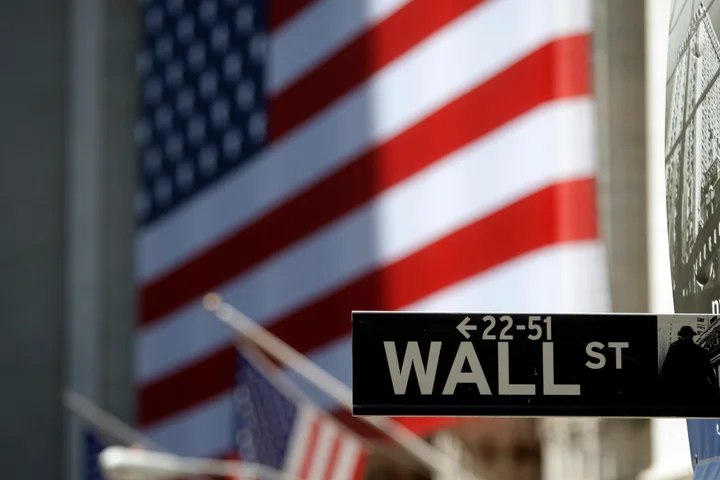
How about the 2008 Wall Street bailout? Even when Americans believed the lie that it was only a $700 billion bailout, they opposed it; but their opinion was irrelevant. In September 2008, despite the corporate media's attempts to terrify Americans into believing that an economic doomsday would occur without the bailout, Americans still opposed it. A Los Angeles Times/Bloomberg poll in September 2008, asked, "Do you think the government should use taxpayers' dollars to rescue ailing private financial firms whose collapse could have adverse effects on the economy and market, or is it not the government's responsibility to bail out private companies with taxpayers' dollars?"; only 31 percent of Americans said we should "use taxpayers" dollars while 55 percent said it is "not government's responsibility." Also in September 2008, both a CBSNews/New York Times poll and a USA Today/Gallup poll showed Americans opposed the bailout. This disapproval of the bailout was before most Americans discovered that the Federal Reserve had loaned far more money to "too-big-to-fail" corporations than Americans had been originally led to believe (The Wall Street Journal reported on December 1, 2010, "The US central bank on Wednesday disclosed details of some $3.3 trillion in loans made to financial firms, companies and foreign central banks during the crisis.")
What about health insurance? Despite the fact that several 2009 polls showed that Americans actually favored a "single-payer" or "Medicare-for-all" health insurance plan, it was not even on the table in the Democrat-Republican 2009-2010 debate over health insurance reform legislation. And polls during this debate showed that an even larger majority of Americans favored the government providing a "public option" to compete with private health insurance plans, but the public option was quickly pushed off the table in the Democratic-Republican debate. A July 2009 Kaiser Health Tracking poll asked, "Do you favor or oppose having a national health plan in which all Americans would get their insurance through an expanded, universal form of Medicare-for-all?" In this Kaiser poll, 58 percent of Americans favored a Medicare-for-all universal plan, and only 38 percent opposed it -- and a whopping 77 percent favored "expanding Medicare to cover people between the ages of 55 and 64 who do not have health insurance." A February 2009 CBS News/New York Times poll reported that 59 percent of Americans say the government should provide national health insurance. And a December 2009 Reuters poll reported that, "Just under 60 percent of those surveyed said they would like a public option as part of any final healthcare reform legislation."
In the U.S. corporatocracy, as in most modern tyrannies, there are elections, but the reality is that giant corporations and the wealthy elite rule in a way to satisfy their own self-interest. In elections in a corporatocracy, as is the case in elections in all tyrannies, it's in the interest of the ruling class to maintain the appearance that the people have a say, so more than one candidate is offered up. In the U.S. corporatocracy, it's in the interest of corporations and the wealthy elite that the winning candidate is beholden to them, so they financially support both Democrats and Republicans. It's in the interest of corporations and the wealthy elite that there are only two viable parties--this cuts down on bribery costs. And it's in the interest of these two parties that they are the only parties with a chance of winning.
In the U.S. corporatocracy, corporations and the wealthy elite directly and indirectly finance candidates, who are then indebted to them. It's common for these indebted government officials to appoint to key decision-making roles those friendly to corporations, including executives from these corporations. And it's routine for high-level government officials to be rewarded with high-paying industry positions when they exit government. It's common and routine for former government officials to be given high-paying lobbying jobs so as to use their relationships with current government officials to ensure that corporate interests will be taken care of.
The integration between giant corporations and the U.S. government has gone beyond revolving doors of employment (exemplified by George W. Bush's last Treasury secretary, Henry Paulson, who had previously been CEO of Goldman Sachs; and Barack Obama's first chief economic adviser, Lawrence Summers who in 2008 received $5.2 million from hedge fund D. E. Shaw). Nowadays, the door need not even revolve in the U.S. corporatocracy; for example, when President Obama earlier in 2011 appointed General Electric CEO Jeffrey Immelt as a key economic advisor, Immelt kept his job as CEO of General Electric.
The United States is not ruled by a single deranged dictator but by an impersonal corporatocracy. Thus, there is no one tyrant that Americans can first hate and then finally overthrow so as to end senseless wars and economic injustices. Revolutions against Qaddafi-type tyrants require enormous physical courage. In the U.S. corporatocracy, the first step in recovering democracy is the psychological courage to face the humiliation that we Americans have neither a democracy nor a republic but are in fact ruled by a partnership of "too-big-to-fail" corporations, the extremely wealthy elite, and corporate-collaborator government officials.
Bruce E. Levine is a clinical psychologist and author of Get Up, Stand Up: Uniting Populists, Energizing the Defeated, and Battling the Corporate Elite (Chelsea Green Publishing, April 2011).