
iPhone app iPad app Android phone app Android tablet app More

Featuring fresh takes and real-time analysis from HuffPost's signature lineup of contributors
C. M. Rubin

GET UPDATES FROM C. M. Rubin
 

The Global Search for Education: Block Building

Posted: 12/06/11 09:36 AM ET

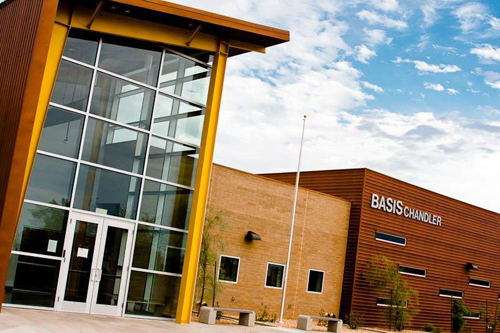
2011-12-05-cmrubinworldbasischandler2500.jpg
"We have implemented very high academic standards that are internationally competitive"
-- Michael Block

The co-founders of BASIS Schools, Michael and Olga Block, aimed to offer the type of education students receive in the top performing education systems around the world, the type of education that would help American students compete in the global economy.

Ten years after BASIS Schools opened its first campus in Tucson, Arizona, the school topped the national rankings, earning the #1 spot on Newsweek's list of America's Best High Schools, and was named a gold medal school by U.S. News & World Report. In addition to BASIS Tucson, today there are a total of 6 operating BASIS charter schools, including BASIS Scottsdale (2003), BASIS Oro Valley (2010), BASIS Chandler (2011), BASIS Peoria (2011), and BASIS Flagstaff (2011). There have been more awards and there are more schools on the way, including BASIS Phoenix (2012), BASIS Tucson North (2012), and BASIS DC (TBA).

What can the rest of the world learn from the BASIS Schools model?

I had the pleasure of chatting with Michael Block, Co-CEO of BASIS Educational Group. Dr. Block received his B.A., M.A., and Ph.D. in Economics from Stanford University. Prior to BASIS, he was a Professor of Economics, Professor of Law and Director of the Office of Economic Education at the University of Arizona.

Can the BASIS Schools model be replicated across the nation?

We are expanding our model and opening BASIS schools in more locations. We have about 4,000 students attending six BASIS schools this year. Next year our programs may reach approximately 6,000 students. This is still very limited reach when considering the millions of students receiving mediocre education across the US. The bigger issue might be 'what is there to learn from the BASIS model?' There are three points I think can be transferred in some manner.

First, we have implemented very high academic standards that are internationally competitive and higher than any American state's requirements. We also require students to demonstrate mastery of those standards before they can progress to the next grade. In the US, not only are standards abysmally low, but the tests used to examine students' mastery of the standards are often poorly designed and unrelated to the content taught in school. Systems used around the world, such as the Cambridge International Exams, the College Board's Advanced Placement exams, the Program for International Student Assessment, and others, can assess mastery of high-level content. That is something I think we do well at BASIS - we teach to very high standards and then assess our students' progress toward reaching those standards using internationally recognized assessments.

The second point is much more controversial. At BASIS we focus first and foremost on recruiting, hiring, and retaining teachers who are experts in the subject they teach. Whether or not the individual is certified to teach by the government or graduated from a school of education - which, in the US, is not often the most distinguished academic institution - is of secondary importance. We believe it is critical that teachers possess a thorough knowledge of the material they present to their students and we believe it is more effective for subject experts to learn the craft of teaching than for pedagogical experts to learn the subject content they may be lacking. At BASIS, we have teachers in our classrooms starting in the Lower School grades that are subject experts; many possess masters and doctoral degrees.

Finally, Americans seem to have given up on teaching rigorous content in middle school. BASIS demonstrates that you can teach serious subject content in these grade levels. Let me give you an example. We visited one of the great schools in America, Thomas Jefferson High School for Science and Technology in the suburbs of Virginia, and were incredibly impressed with the level of education the school imparts on its students. Thomas Jefferson utilizes a selective admissions process to enroll students who are prepared for their rigorous curriculum, but at BASIS we offer a similarly rigorous education to all students who wish to enroll. We are only able to do this because of our accelerated middle school curriculum. By starting at a modest 5th grade level and requiring students to learn more than a year's worth of standards every year, we prepare students to take Honors and AP courses beginning in 9th grade and post-AP courses in 11th or 12th grade, just like their peers at Thomas Jefferson.
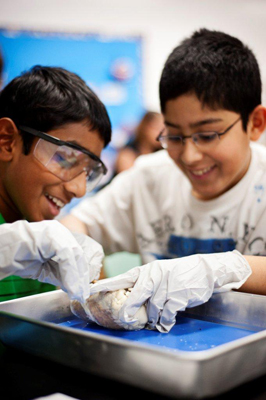
2011-12-05-cmrubinworldbasischandler3400.jpg
"At BASIS, all students complete pre-calculus and take AP-level science courses in the 9th grade" -- Michael Block

Are the BASIS schools for highly motivated students in certain subject areas only?

No, the BASIS education is not focused on certain subject areas. We offer an accelerated program in all core subjects; however, in contemporary America it seems schools that provide high-quality math and science education are pigeonholed. At BASIS, all students complete pre-calculus and take AP-level science courses in the 9th grade; as a result, BASIS is sometimes considered a math and science school. But while our students do outpace their peers in math and science, they also complete a minimum of one AP English and three AP history courses by the end of 11th grade, engage in six years of foreign language, take a college-level economics course in 8th grade, and participate in PE and fine arts classes throughout their academic careers. The BASIS education is much like the gymnasiums in central Europe; we offer a high quality education in all of the liberal arts.

Is the school only for highly motivated students?

Students don't have to be "gifted" to excel in the BASIS program, but they do have to put in effort. We work very hard to create a culture of academic excellence in our schools. We hire educators who can convey passion for their subject in a way that teaches students that learning is exciting. As older students build a sense of personal responsibility for their education, they become models for younger students and create a culture of positive peer pressure. This culture motivates students to excel in their academic exploration and teaches them that success is the function of hard work.

What is your process for selecting a great teacher?

Finding talent is tough. We try to have a very broad base of candidates from which we select our teachers and often search worldwide to fill math and science positions. Our interviews are conducted first by veteran BASIS teachers and then by the Head of School. The candidates then participate in demonstration lessons - in which they teach current BASIS students for two class periods - which I think is unusual in public schools. This allows us to determine whether the candidate is capable of conveying advanced concepts to young students. We have the most senior staff members at BASIS do the final round of interviews before making a decision.

After our teachers are hired, we have a summer training session which all new teachers and many experienced teachers attend. The training session exposes new teachers to the BASIS philosophy and focuses on the teaching techniques used in many of our classrooms. Finally, we try to mentor teachers as they begin their careers at BASIS. We spend a good deal of time with them. The process of finding and developing teaching talent is difficult and of course we make our share of mistakes.
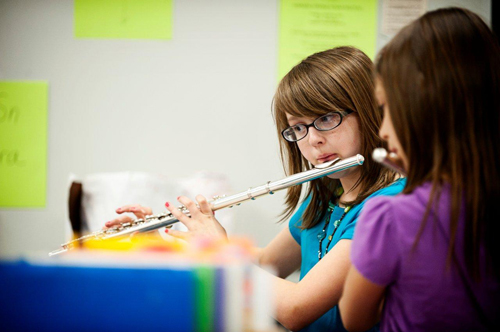
2011-12-05-cmrubinworldbasischandler4500.jpg
"We offer a high quality education in all of the liberal arts" -- Michael Block


Why do we do so poorly in the PISA test?

PISA tests what an education system teaches its 15-year-old students, and in the United States we don't teach math and science well in middle and high school. Many 10th graders in the US have not been exposed to the concepts of an Algebra 2 course and in a many states students can graduate without taking Physics. I think that is inexcusable.

I also believe the US education system focuses too much attention on inputs like teacher certification, class size, student-teacher ratio, length of the school day and school year, the form of supplemental services, the physical plant, and technology in the classroom, and too little attention on outputs like how well students are able to master important academic content. Focusing on inputs is diversionary and means educators and school leaders have less time to assess and improve the quality of the education they provide.

Final thoughts on the education reform issues we face in the US today?

There is one more issue I want to mention that I think BASIS is designed to get at. There are two achievement gaps in the US. The achievement gap that receives almost all the attention in the media - which is real and shameful - is the achievement gap between rural areas and the poorer sections of major cities on one hand and the suburbs across the country on the other. Another much more hidden achievement gap is the international achievement gap. What US suburbanites consider a "good education" is actually mediocre by international standards. That's an important aspect of the BASIS experiment - our academic program addresses the international achievement gap that exists between the United States and other industrialized countries.
2011-12-05-cmrubinworldmichaelblock300.jpg
Michael Block and C. M. Rubin


(Photos courtesy of BASIS Schools, Inc.)

In The Global Search for Education, join me and globally renowned thought leaders including Sir Michael Barber (UK), Dr. Michael Block (US), Dr. Leon Botstein (US), Dr. Linda Darling-Hammond (US), Dr. Madhav Chavan (India), Professor Michael Fullan (Canada), Professor Howard Gardner (US), Professor Yvonne Hellman (The Netherlands), Professor Kristin Helstad (Norway), Jean Hendrickson (US), Professor Rose Hipkins (New Zealand), Professor Cornelia Hoogland (Canada), Mme. Chantal Kaufmann (Belgium), Professor Dominique Lafontaine (Belgium), Professor Hugh Lauder (UK), Professor Ben Levin (Canada), Professor Barry McGaw (Australia), Professor R. Natarajan (India), Dr. Denise Pope (US), Sridhar Rajagopalan (India), Dr. Diane Ravitch (US), Sir Ken Robinson (UK), Professor Pasi Sahlberg (Finland), Andreas Schleicher (PISA, OECD), Dr. Anthony Seldon, Dr. David Shaffer (US), Dr. Kirsten Sivesind (Norway), Chancellor Stephen Spahn (US), Yves Theze (Lycee Francais US), Professor Charles Ungerleider (Canada), Professor Tony Wagner (US), Professor Dylan Wiliam (UK), Dr. Mark Wormald (UK), Professor Theo Wubbels (The Netherlands), Professor Michael Young (UK), and Professor Minxuan Zhang (China) as they explore the big picture education questions that all nations face today.
The Global Search for Education Community Page

C. M. Rubin is the author of the widely read online series, The Global Search for Education, and is also the author of three bestselling books, including The Real Alice in Wonderland.


Follow C. M. Rubin on Twitter: www.twitter.com/@cmrubinworld


  • Comments
  • 24
  • Pending Comments
  • 0
  • View FAQ
Comments are closed for this entry
View All
Favorites
Recency  | 
Popularity
09:25 PM on 12/13/2011
Let's see it work in inner-city or lower SES areas too...I'm just sayin'.
04:31 PM on 12/09/2011
@LittleSuzie-I'm a little surprised at how resistant you are to accepting the opinions/perspectives of parents AND students at Basis schools who are telling you that they have a manageable homework load and time for extracurriculars. No one is negating your comment that the students you have taught who dropped out of Basis had the experiences you say they did. I think others are simply saying that this has not been their experience. Perhaps the students who dropped out reflect the exception in their experience, rather than the rule which may be why they chose to leave. That doesn't mean their experience was universal. Please keep an open mind and remember hundreds of students successfully attend Basis and love it. They aren't all geniuses without lives. They're students committed to a good education.
12:48 PM on 12/08/2011
I have a daughter who loves sports (Basketball) and performs as a singer and guitarist at many different venues. She is a beautiful, well rounded and liked normal 7th. grader. She is consistently in the honor roll and loves Basis Scottsdale. She is focused and knows what she has to do today to achieve her educational goals. She has learned organization, effective note taking, and unbelievable study habits for a 12 year old. We had to move to be near a basis, a small price to pay for the education she is receiving. If you can get your child into a Basis it will truly be the best gift you will ever give them. We owe our children the best, we have no higher duty.
01:05 AM on 12/08/2011
"Why do we do so poorly in the PISA test?"

Who is the "we" who is "do[ing] so poorly"?

Please stop repeating this claim.

http://nas­spblogs.or­g/principa­ldifferenc­e/2010/12/­pisa_its_p­overty_not­_stupid_1.­html
11:17 AM on 12/07/2011
I am quite shocked and dismayed at the post indicating that students are kicked out if the fail "comprehensive exam" in the spring. Is this true??
02:05 PM on 12/07/2011
No - see my post below
09:39 AM on 12/07/2011
My son attend 8th grade in Basis. He is getting best academics compared to all other schools he attended previously. He still find time for his extra curricular activities outside school.
12:49 AM on 12/07/2011
Great academic culture - the high school has a buzz like backstage on opening night - unaffected interactions among teachers and students mingling from all grades.
Not competitive, the students help each other, and my boy is usually done within an hour during the school nights, with an other 2-4 hours over the weekends, not counting tests which sporadically double the time commitment. He's got a full life, as well as interesting things to share that he's learned at school.
The place is extremely well organized.
As the Blocks bring their priceless gift to others I'm grateful that they are remembering their flagship school and are building us a fine new campus in Tucson.
Bravo!
09:57 PM on 12/06/2011
My boys started attending Basis this year. Prior to this year they attended public schools and excelled in the gifted, accelerated programs however were bored and checked out. They love going to school again and are extremely challenged. However, they don't mind it but embrace it. Not only are they learning the academics but they are managing their own academics and setting their future goals. The learning system reminds me of the system I grew up with in India - rigorous but sensical. I know that after Basis the boys will be well prepared for college academics. As far as extra curricular activities - they swim competitively 5 days a week. Their day starts at 5 am and ends at 7pm when they come home to do homework, dinner etc but they are learning a great life skill - managing their time. I hope we can give all our students these skills to become successful citizens.
09:22 PM on 12/06/2011
I am a parent of a current Basis student. I'm thrilled with the education that my son is getting there. Before enrolling my son, I'd heard many rumors about the hours of homework. They're not exactly true. My son does NOT have 3-5 hours of homework regularly. He frequently gets his homework done in an hour or so. Half of the students' fifty minute lunch period is available for studying. He also completes some work on his ride home. There are days when he has completed his homework before getting home! Basis is wonderful! The teachers are teaching substantive material and they teach it well. It is not a good fit for every child, but you do not have to be a genius to succeed at this school. You just have to be disciplined and willing to work hard. It is not just a "techie" school. The English program is phenomenal. He's actually learning the nuts and bolts of good writing, as well as critical analysis of literature and poetry. For kids who are struggling, there is a student support system that identifies them early and has group tutoring set up with their teachers to help those kids. Some complain that Basis is too hard, but those are kids that are used to having one page of homework a day and going home to play video games for 4 hours. Also, my son is on the Honor Roll and still maintains extracurricular activities & hangs out with his friends.
This user has chosen to opt out of the Badges program
photo
IsyFleur
Om, Shanti, Shanti, Shanti. ॐ
08:59 PM on 12/06/2011
Two of my kids go to Basis OV (5th and 7th gr.) here in AZ. It works for them, and we like it. Public schools are pathetic in AZ because of the refusal by Republicans (and retirees in particular) to fund public school. And so charter schools, which can do whatever they want, and in many cases perform even more pathetically than the public sector, get similar state funding as public schools, which takes even more resources away from public schools. In the end, though, the only reason Basis is such an "excelling" school and all that is because kids who fail their "comprehensive exam" in the spring are "kicked out" and have to go back to their local public school. DON'T LET IT FOOL YOU, BASIS IS JUST ONE SCHOOL, NOT THE SOLUTION!!!!!!
03:16 PM on 12/06/2011
I am a teacher in AZ who has had former Basis students in her classes. Basis is great for super-academic motivated students. However, the students have to give up almost every extra-curricular activity to be successful there. Those students are saddled regularly with 3-5 hours of homework, no exaggeration. I am all in favor of high standards and accountability. The disparity I see in the public education system here in AZ versus PA where I am from is gargantuan. I was doing work in 7th grade in PA that is not even asked of seniors here. Basis is great for some students, but not for most.
07:27 PM on 12/06/2011
I think that you are seriously underestimating young people. My daughter currently attends Basis and has time for homework, family, running club, reading, playing, eating, sleeping and watching TV! She has about 2 - 3 hrs of homework a night which she does when she gets home at 4. By dinner time at 7 (yes, both parents work full-time) it's usually done. Yes, it takes some planning and self-discpline, but what's so wrong with expecting a middle-school aged child to be disciplined? Homework does not involve yelling or scolding in our house, it simply gets done because that is what is expected by her teachers and her parents. My daughter is not a genius and would not qualify as "gifted", she works hard, has good teachers and parents who encourage her to do her best. Basis is good for all students whose families are committed to their children and their educations! And may I just say I am glad you are NOT a teacher at a Basis school.
03:08 PM on 12/07/2011
You would be LUCKY for your students to have me as a teacher. I have extremely high expectations for my 7th grade social studies students. Many of them come in not knowing what July 4 is or even the year 1776. By the end of the year, my students can analyze many elements of American History that they could not even grasp before my class. You would again be LUCKY to have all your student's teacher's at Basis have the level of education and intelligence I have. Your student is LUCKY she was born into a family that is involved in her education and has set such high standards. I was too. Your myopic viewpoint from that of a Basis parent is appreciated but until you have worked with the masses and their parents, you have no idea as to what we deal with in the public school system.
03:33 PM on 12/07/2011
Your daughter is great, but an exception to the rule. And she would be LUCKY to have me as a teacher, as I have been nominated for teaching awards and both my parents worked full time, too. My mother taught in the ghetto of Philadelphia for 38 years and my father traveled. I was self disciplined too but so many students are not. Spend a day in my public school classroom before you pass your myopic viewpoints onto me....
This user has chosen to opt out of the Badges program
photo
IsyFleur
Om, Shanti, Shanti, Shanti. ॐ
09:02 PM on 12/06/2011
Agreed 100%!!!! I live in AZ and I wish our local elementary/middle school had worked for my kids. If only our legislature had the guts to levee a property tax or increase the income tax so that we could have enough teachers and pay them adequately, there would be no need for Basis.
10:26 AM on 12/07/2011
I think that it's going to take a lot more than just money to fix the AZ education system (although it would help). The system here is broken beyond belief by ego, avarice and ignorance. Also, Basis doesn't kick students out if they fail the comprehensive exams, the students get held back and try again. Basis does not weed out students to keep their stats up, you either do the work and pass or you don't do the work, fail and try again. Many students opt to go back to their original schools because it's easier. Many parents opt to send their children back to their original schools because it's easier. Monitoring homework and helping your child study for exams takes time and effort and some families aren't willing make that time and effort....those are the students that ultimately leave Basis.

I personally believe that there is absolutley a need for Basis and that it should be a model for schools on the National level! Can you imagine what this country could be if all students were held to Basis standards...?