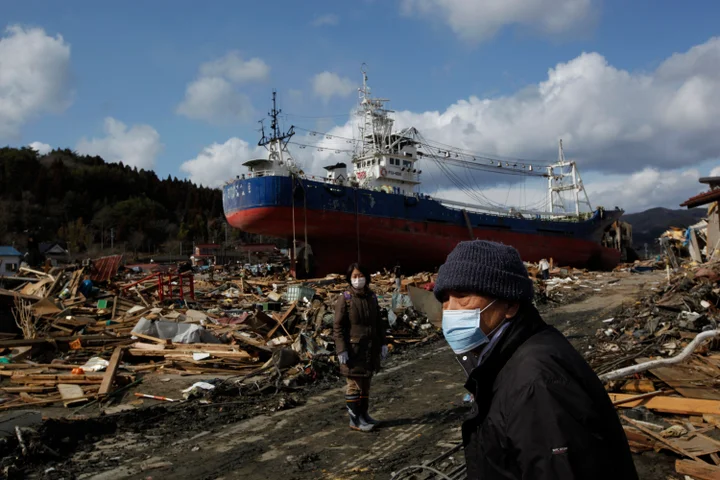
So what should Japan do to keep the lights on? Its nuclear generating plants on the island of Honshu are not available, and a fair amount of the region's thermal (coal and gas) capacity is also unavailable, at least for this year. Earthquakes and tsunamis have a way of doing things like that.
After the OPEC oil embargo and price hikes of 1973, Japan was the society that responded most nimbly. And based on a new report, the opportunity exists for Japan to use the recent disaster to regain its global energy leadership -- but the needle that must be threaded is very fine indeed.
The key to opportunity for Japan is that it is easier to mobilize a society to restore power than to grow power or replace dirty electrons with clean ones. Growing power will meet the needs of communities and businesses yet to come -- these future users are not very good at pounding down doors or signing contracts. But businesses and communities which have lost power can more effectively demand restoration. The cost of rolling blackouts or other centralized responses to lost power generation is less abstract, and more likely to be counted in making investment decisions.
Replacing dirty power with cheaper, cleaner power runs into a different problem: there's no urgency. The lights stay on. The factory runs. Incumbents can block innovation for a long time.
Not so in Japan.
The area hit by the earthquake, and perhaps Tokyo itself, won't have enough power this summer unless something is done. Northeastern Honshu has two energy restoration choices. One choice -- the conventional one -- is to rebuild or replaced the centralized generating capacity. The other -- the progressive model -- is to focus on energy efficiency, demand-side management, and distributed energy. According to the latest Nautilus Institute model, the centralized model is slightly cheaper in terms of levelized cost of electricity, but significantly slower. And when it comes to power, slow and steady does not win the race. In a more modest, short comment, The Economist agrees.
The core problem is that the region will not be able to meet peak demand this summer. Right now this is teed up as rolling black-outs. But the costs of unreliable electricity are incredible, particularly in an economy like Japan's, with its high reliability ethic and expectation. Indeed, the essence of "just in time" manufacturing -- the key to the Japanese world-leading boom of the 1980s -- was the concept that supply chains were reliable and timely. Toyota and other Japanese manufacturers are now confronted with the likelihood of significant market share loss to their competitors because key parts manufacturing on the island of Honshu may be compromised. So, rolling blackouts on Honshu mean slow assembly lines all over the world at Toyota facilities, including here in the U.S.! Indeed, auto companies not dependent on Japanese supply chains are getting ready to make big market share gains.
But the region will be short on power for longer than this summer. And that's where Japan faces the two pathways:
One is to restore the status quo. Find something -- mostly likely natural gas -- to replace the lost nuclear electrons. According to the Nautilus Institute study, this is slightly cheaper in the long term. It will generate electricity at a cost of about $0.12/kwh. (Electricity in Japan is expensive in part because when the nation decided to rely on nuclear power, it had to factor in huge payoffs to local communities targeted for the new plants, and ratepayers are stuck paying for all that "put up with the risk" money. The path most likely not be be taken -- focus on demand-side management and distributed electricity -- will cost about $0.14/kwh.
But -- and here's the kicker -- the demand-side pathway restores power much faster. And speed in this case equates to money. A lot of money.
Here's why. Having lost a lot of generating capacity -- nuclear and fossil fuel -- the two power companies that serve Northern Honshu have a problem. But the region has bigger problems, as well. Factories don't easily tolerate rolling blackouts. "Building additional fossil-fueled capacity -- the fastest would be gas-fired combined cycle plants fueled with relatively expensive, imported liquefied natural gas -- would take two or more years, even with the most aggressive of programs. New coal-fired power plants will probably take a minimum of three to five years to build," says Nautilus.
But using a distributing, highly efficiency strategy -- insulating buildings, installing more efficient refrigerators and motors, installing solar on rooftops, at factories, and at utility substations -- can be done faster. It's a bit more expensive if you do this in a big hurry, which Japan must, because global supply chains are not ready to meet this level of sales. Nor is the Japanese infrastructure in place to ramp up efficiency and renewables as fast as is theoretically feasible.
But if Toyota and Mitsubishi want to get production levels and market share back where they were, they should be worried about how fast the lights come back on, and much less about whether they cost 16% more.
There's a lesson here for China and India. Centralized grid power -- coal or nuclear -- looks cheap and looks fast. It's not. The cost of not having electricity due to disaster is, everywhere, a much bigger deal than the cost difference between different sources of electricity. And a combination of efficiency and distributed renewables is clearly faster, and therefore a much better development strategy, for China, India, and Africa than trying to copy what Europe and America did in the 1950s.