When a Trillion Dollars Looks Like a Bargain

digg Share this on Facebook Huffpost - stumble reddit del.ico.us RSS

Posted July 21, 2008 | 04:42 PM (EST)


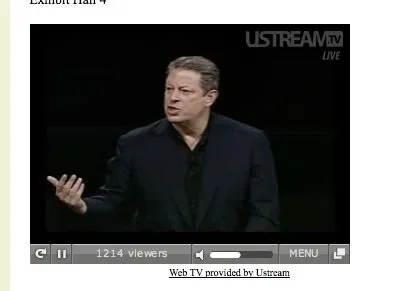
A trillion dollars is the cost former Vice-President Gore attached to his proposed national effort to solve global warming last week.  Saying "together we can solve this challenge," Gore laid down a new, bold marker: Shift our economy entirely to carbon-free, renewable electricity in a decade. "To those who say ten years is not enough time, I respectfully ask them to consider what the world's scientists are telling us about the risks we face if we don't act in ten years," he said. He attached a trillion dollar price tag -- probably as a means of conveying just how big a job this is -- and in that he is right.

But the price tag is actually a bargain -- because every year we currently spend $700 billion importing oil, and we will shortly hit the trillion-dollar-a-year mark for that one fossil fuel alone. The real challenge isn't that we can't afford a carbon-free economy -- because it's not that big a bill. The awesomely difficult -- perhaps impossible -- challenge will be getting it done in a decade. But the closer we can come, the smaller will be the bill we face for all the things we didn't do back when we had more time -- going all the way back to Rio in 1988.

Are Americans ready? Every day, more and more of them are. In his speech, Gore commented that we needed to move from changing lightbulbs to changing leadership. And on the same night that he spoke, ordinary citizens gathered in more than 300 house parties organized by the Sierra Club as part of our Lightbulbs to Leadership campaign -- it's almost as if the Vice-President had read our action kit.

 
Comments
14
Pending Comments
0
iPhone App Promo

Want to reply to a comment? Hint: Click "Reply" at the bottom of the comment; after being approved your comment will appear directly underneath the comment you replied to

View Comments:

Climage change and energy independence are, of course, separate issues. But we tend to mix them together. Sunday, July 21st, Gore spoke on Meet The Press and it wasnt' until the 30th minute that he said the real issue is climate change. The Sierra Club does a magnificent job and heavens bless you, but the trillion dollar deal isn't just in the 700 billion, it is in the quickening climate change. The science keeps gushing in month by month. Three years ago we thought 2100 was fine for CO2 reduction, and now many credible voices say 2020. We now know that 385 ppm is leading to unstable melting, damaging ecoystem change, and perhaps sooner that we like economic and healthcare infrustucture calamity. The issue we need to discuss is what price risk, how long do we wish to doubt scientific uncertainty for the comfort of present day certainty - hasn't the science been clear enough? Gore talks about his own comfortable place, but on another green blog people rightly wonder why Pelosi has time now to take impeachment and climate change off the table until next January. Why do Obama, Clinton, Gore, Pelosi not speak vociferously, publicly now? Why is it that Democrats such as Deval Patrick shamelessly run climate change with Romney holdovers and Clinton pro growth shamans? Where is conviction today?

    Favorite    Flag as abusive Posted 01:10 PM on 07/22/2008

What do distributed wind and solar users do at night or when the wind is not blowing? Are they using storage of some kind, using power from the grid, or what?

    Favorite    Flag as abusive Posted 08:07 AM on 07/22/2008
photo

.
Large upgraded power distribution grids will transfer power to areas that need it.
.
It may not be blowing everywhere but somewhere there is always plenty of blowing.
.
.

    Favorite    Flag as abusive Posted 11:42 AM on 07/22/2008

I assume that in the future, when most people use such a system, the power that will be distributed will come partly from solar (daytime) and partly from wind (all the time). Will individuals build in the excess capacity to allow sharing their power with other parts of the grid that aren't producing enough at a given time, or will there still be room for centrally-generated power for that? In your opinion, I mean.

    Favorite    Flag as abusive Posted 02:16 PM on 07/22/2008

if they are off-grid, they use their batteries. if they are grid-tied, they use grid supply. You have touched on what is, in my opinion, one of four places where ALL our "energy" dollars should be going:

1. R & D into much better storage solutions (think about cellphone batteries from 1995 to now!)

2. Converting the existing grid into a load balancing/storage system rather than a Big Energy Generation and Distribution system, rather than killing off our open spaces to build gigantic, wasteful power plants using the sun and wind we have on our properties.

3. R & D into much better conservation tech (efficiency, etc.) so we can greatly reduce consumption without reducing quality of life - this would require policies encouraging conservation and penalizing excess consumption, which politicians don't want to do!

4. better outputs from more affordable, smaller local, point of use renewable energy generation systems (on our homes and businesses, for example).

we need POLICY CHANGE to support individuals using less energy and using/generating clean energy, and to stop steering all our resources to Big Energy, which always, always rips us off when they get the chance. Big Enviros only support Big Renewables, so we need to do this on our own...

    Favorite    Flag as abusive Posted 02:55 PM on 07/22/2008

Thanks for your answers. I think a non-centralized energy supply system could be implemented. Perhaps the example of grassroots contributions to web content is some kind of a precedent to this. Not exactly, though- web content is almost free compared to energy supply systems. However, this country has always been blessed with an abundance of do-it-yourselfers and I see no reason why an energy supply solution couldn't arise out of the same impulse. With appropriate standards, components, incentives, etc, it might almost be inevitable. That's where the similarity lies between this and the web. At some point, maybe heavy industrial energy supply and transportation energy supply might follow the same example. Greatly improved energy use efficiency will be one key component to this overall effort- twice the efficiency makes it twice as easy, for example. I think appropriate pricing of energy would be even more effective than any other kind of policy change, though. Just a thought, seeing how scarce Hummers have gotten around where I live as the price of gas heads upwards.

    Favorite    Flag as abusive Posted 07:11 PM on 07/22/2008

Nighttime is lower electric demand, utilities give special low rates late at night.

    Favorite    Flag as abusive Posted 07:08 PM on 07/23/2008

Several factor work in favor of rooftop solar:

Solar peak and air condition peak happen at the same time and place guaranteed.

Air conditioner is the peak load for nearly all areas.

every watt the building under the rooftop uses directly, is a watt that does not go on the grid.

Even what goes on the gird has a good chance of being absorbed locally, thus reducing load on city interconnect lines. at that point, all power plants have the same problems with grid limitations.

Rooftop solar will not need need grid infrastructure until it starts to peak above 200% of local needs.

    Favorite    Flag as abusive Posted 07:17 PM on 07/23/2008

well..., i guess that's where batteries come in
they are not primary energy sources
but they do store electricity

    Favorite    Flag as abusive Posted 12:38 PM on 07/24/2008

Teriffic! Let's start by REFUSING TO RE-ENTRENCH BIG ENERGY MONOPOLIES IN A RENEWABLE ERA!!!!!

Some folks are actually trying to convince us that we need to open yet another vein to build out massive, wilderness-killing solar and wind "farms" and tens of thousands of miles of wasteful, homewrecking transmission lines, so that Big Energy can maintain its chokehold over us, manipulate supplies and pricing and hijack us - again - even though sun and wind are ubiquitous and there is no reason why we shouldn't be able to go 90% of the way with point of use systems and investment in conservation/storage technology.

"We need it all" these nature-haters will say, as though carbon is the only enemy of the planet. Uh, what about directly destroying millions more acres of intact, functioning habitat? Isn't that an enemy of the planet? When we have already destroyed so much habitat already, most of which is perfectly suited to have PV, thermal and microwind generated on site? don't believe the propagandists! this can ALL be done without killing any wilderness, or forcing any of us from our homes!!

I'm delighted that we finally have a shot at ENERGY INDEPENDENCE from all Big Energy Profiteers (which definitely includes Big Solar and Big Wind), and really encourage each of you to speak loudly against more centralized, remote power plants and long lines. Feed-in tariffs and capital programs are needed to ramp this up NOW. Check out Germany - it is already working!

    Favorite    Flag as abusive Posted 05:28 PM on 07/21/2008

rooftop distributed solar and wind are by far the best way to go, it actually reduces grid loading unlike centralized production. There is enough rooftop for solar to provide all the power we need. However, the big rural and offshore wind turbines are already cheaper the coal or nukes and can be installed faster then any other source. and they have a small footprint. The NanoSolar price breakthrough is still being used for commercial rooftop farms, but it should hit the residential market in a few years.
See my profile for details.

    Favorite    Flag as abusive Posted 09:55 PM on 07/21/2008

hi. What's the best companies that wholesale nanosolar? I read that it should be ready in late 2008/2009

    Favorite    Flag as abusive Posted 06:40 AM on 07/22/2008

90 percent, eh? well, sure, if storage is developed that doesn't double the cost of the system, and also doesn't entail megatons of batteries or some other drawback. Not there yet, though. So if we want a reliable source of wind power installed and in use, replacing what we think of as baseload today, in the 10-year time frame advocated by some, we'll have to even out the wind power by connecting large enough regions together with enough transmission capacity to let the power flow as necessary when the wind fluctuates here and there. From what I read, there isn't nearly enough transmission capacity for that now. Solar? You'll just have to accept its being available only in the daytime for the time being. To get all this done in 10 years, there's not a lot of time for research- we'll have to go with what we already know how to do.

    Favorite    Flag as abusive Posted 01:11 AM on 07/23/2008
Comments are closed for this entry

You must be logged in to reply to this comment. Log in  or  Connect