iPhone app iPad app Android phone app Android tablet app More

Featuring fresh takes and real-time analysis from HuffPost's signature lineup of contributors
Carl Safina

GET UPDATES FROM Carl Safina
 

How to Make Population Growth Reverse Itself

Posted: 05/11/2012 6:25 pm

Most people seem to think that to reverse population you'd need violence, epidemics, or forced sterilization. Actually, you need literacy; read on. Many other people think technology will save us.

Probably the greatest technological advance ever implemented to ease the likelihood of population-induced starvation was the Green Revolution. Engineered to end hunger, the Green Revolution failed because most of the world allowed the increased food to grow more hungry people than ever. China, partly because of its one-child policy, has eased more hunger, faster, than anyplace ever has. Meanwhile, India's population growth largely erased its food-production increases. Now, a record 1 billion people suffer malnutrition; 10 million more each year. A recent U.N. report titled "The State of Food Insecurity" came with a press release stating, "For millions of people, eating the minimum amount of food to live an active and healthy life is a distant dream."


2012-05-11-Copyofwomen.JPG
2012-05-11-CopyofDSC_2381.JPG

Land, water, population growth -- violence. When Rwanda's population tripled between 1950 and the early 1990s, it became Africa's most densely populated country. Farmland and food -- and tempers -- grew short. And in the ethnic rampage that killed 800,000 in 10 days, whole families were hacked to death lest there be survivors to claim the family farm-plot. Sudan's Darfur genocide was also ignited by disputes over farmland, exacerbated by drought. Sudan's population, about 10 million in 1950, is projected to hit 70 million by 2050. If it does, Sudan will likely fight a newly doubled 120 million Egyptians for Nile water -- unless Ethiopia, having more than doubled to 80-plus million, tries diverting the 85 percent of the Nile headwaters it controls.

Poor people don't want to stay poor. But there's a misconception that it's somehow "unfair" to poor people to let them in on the main secret of wealthy, educated, and successful people: smaller families mean larger lives.
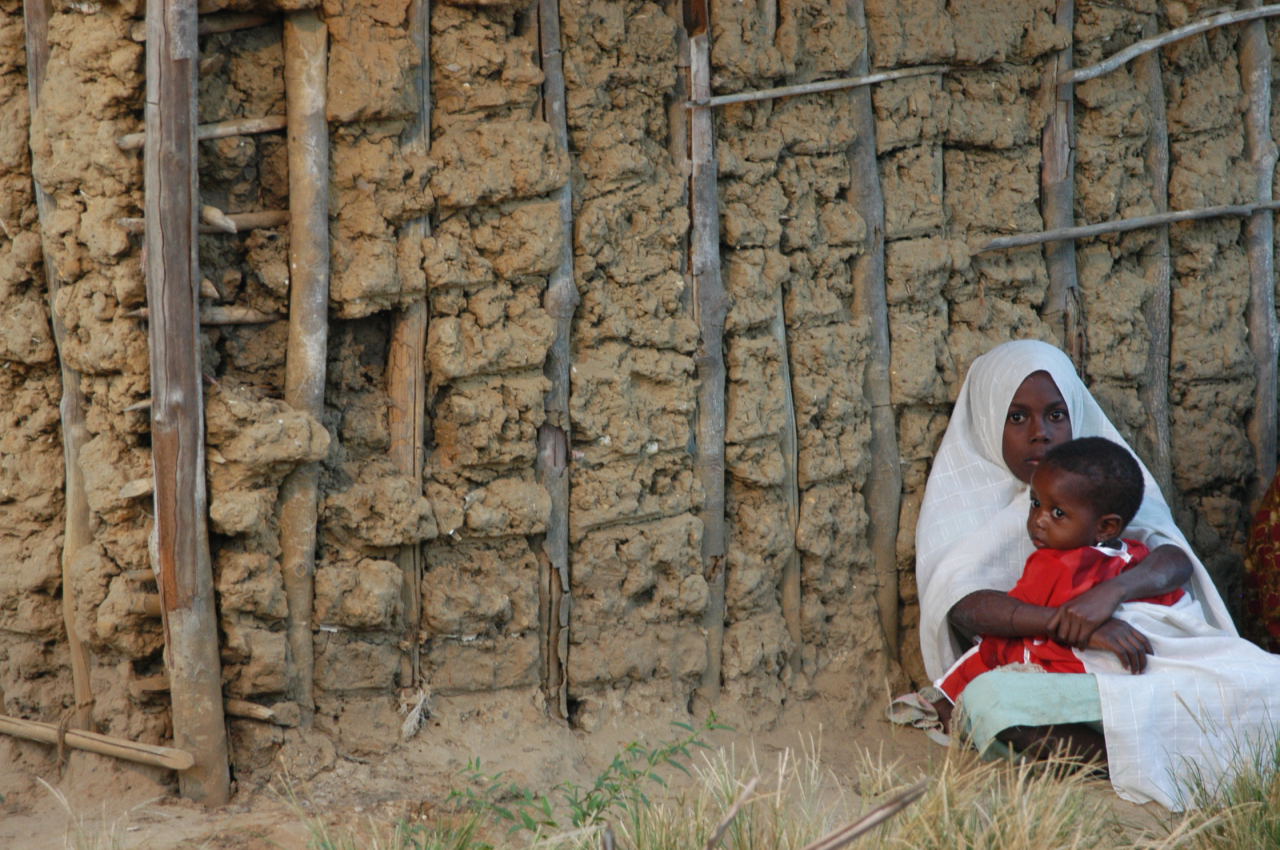
2012-05-11-CopyofGirlandchild.JPG

The thing that brings fertility down fastest happens to be the same thing that brings down poverty: educating girls. Turns out, illiterate women bear three times as many children as literate women, and their children tend to stay poor. Meanwhile, each year of schooling raises earning power 10 to 20 percent. And when people are a little better off, they desire fewer children.

Good news: Things are getting worse at a slower rate; the rate of population increase is easing. More than 40 countries now have populations that are stable or slowly declining, including Germany, Italy, Russia, and Japan. At present trends, the world population will likely peak around mid-century (at between 8 and 11 billion). By then, something like 50 countries will likely already have fewer people than today. People can live crowded and in fear. But real human beings will always need soil, water, food, wood, air, beauty, freedom from oppression, freedom of expression, room for compassion, the company of creatures, and a future.

When the ship Titanic set out to cross the ocean, its proprietors believed it indestructible. So they did not equip it with enough lifeboats for all the people on board. History is sometimes destiny. Believing ourselves too clever to sink our enterprise, we're on another voyage where lifeboat room is limited. And we're discovering there are more passengers than the mothership was built to handle. No known island exists, no opposite shore, no passing ships to call to for rescue. Just us. Just us, and the wish -- perhaps too late -- that we had steered a more careful course while the band gaily played.

As we bravely enter the new time of the Anthropocene and the uncertainties of a world with us at the helm, it's worth reconsidering Thoreau's declaration, "In wildness is the preservation of the world." Wild places produced the living world and its inhabitants in abundance and resilience.

On the other hand, let's not forget that for most of human history, natural things stood poised to recycle us at any moment. Weather, beasts, famine, enemies. We can live safer and better by enjoying those elements that have come under control -- agriculture, medicine. I wouldn't recommend a "return to nature." I like books and science. I like music. I am willing to abandon the concept of Nature. I'm willing to abandon it -- for any approach that works better.

Nature is moot, anyway, because we've so thoroughly changed the world. As oceans get depleted, water tables drop, sea levels rise, and forests fall, you begin to realize that the draw-down of "nature" is just one side of a coin on which hundreds of millions of people face a world wherein likelihood of dignity -- always so elusive throughout history -- now drains away with the fresh water; hope flies away like the birds that no longer return.

If, to paraphrase Aldo Leopold's dictum, "a thing is right when it tends to preserve the integrity, stability, and beauty" of the living community, then we've passed "right" traveling in the opposite lane. If our values change, we might use science and technology to save us. If our failed values persist, science and technology will only press our accelerator.

Adapted from: The View From Lazy Point; A Natural Year In An Unnatural World, by Carl Safina, published by Henry Holt (Hard cover) and Picador (paperback, 2012); winner of the Orion Book Award.

All photos by Carl Safina.

Sources:
Africa populations, relation to Nile water, and population projections and tensions, also Rwanda: Brown, L, 2008, Plan B 3.0, Norton, New York and London, p 117-119. See also: L. Brainard, et al., eds. 2007. Too Poor For Peace? Brookings Institution Press, Washington, D.C.

Education and reduction in fertility: Brown, L, 2008, Plan B 3.0, Norton, New York and London, pp 109, 134.

Getting worse at a slower rate: Longman, P., 2006, "The Depopulation Bomb," Conservation in Practice 7:40-41.

Fifty countries will likely have fewer people: Lierowitz, A. et al., 2005, "Sustainability, Attitudes, Values, And Behaviors: A Review Of Multinational And Global Trends," Annual Review of Environment and Resources 31:413.

"How we think of problems," see:
Lovins, A., 1991, "Technology Is The Answer (But What Was The Question?), in: G. Tyler Miller, Environmental Science, 3rd Edition. Wadsworth. Belmont, CA. pp 56-57.


Follow Carl Safina on Twitter: www.twitter.com/CarlSafina

FOLLOW GREEN
Most people seem to think that to reverse population you'd need violence, epidemics, or forced sterilization. Actually, you need literacy; read on. Many other people think technology will save us. Pr...
 
 
  • Comments
  • 26
  • Pending Comments
  • 0
  • View FAQ
Comments are closed for this entry
View All
Favorites
Recency  | 
Popularity
photo
HUFFPOST SUPER USER
Cannadude
11:55 PM on 05/18/2012
Does Bill Gates still believe that every human on earth should own a computer?
HUFFPOST SUPER USER
3cg
Your rites do not trump my rights..
08:23 AM on 05/14/2012
It's about Eductaion, Education, Education. Education about contraception, education about the benefits of reduced family size, education about options rather than traditions.
02:43 PM on 05/13/2012
The most important thing we can do for the planet - if we want to stay on it.

http://www.huffingtonpost.com/carl-safina/how-to-make-population-growth-reverse-itself_b_1508193.html?ref=green#
photo
HUFFPOST SUPER USER
MrBIgp
If I'm wrong, please show me
12:13 PM on 05/13/2012
Here is an interesting graph: CO2 emissions in tons per person per year by country vs birth rate. The more c02 emission per person, the lower the birth rate.
www.bit.ly/K7MONH

Of course, c02 emissions is a byproduct of prosperity and the benefits of prosperity are longer life, lower child mortality, better health, better education etc....
12:03 PM on 05/13/2012
A great blog which doesn't go far enough. To achieve low birth rates rewuires the destruction of the religulous. Santorum was an example of religious imposition on women. Both birth control and abortion improve the health and survival rates of women and children but it does mean the religions of the world have to give way to mathematics and survival instincts. Charities devoted to feeding the starving must give up their agenda and begin to realize that they are defeating their own purpose. Money must be spent on educating and economically empowering women to insure survival of the planet. On the first earth day population growth was cited as the greatest problem. Nothing was done to halt or reverse it. Instead the malthusain and epressing effect of more cheap labor to tend thewhims of the rich continues. America offshored its own labor needs to have asian slave labor produce the goods they want for less and without having to deal with laws to protect workers and the environment. How ironical it is to know Levis, the icon of America are produced in China. America has sold out its own people in order to have more of what they don't need and more and faster destruction of the planet.
photo
artleads
Let's have a national retreat.
11:21 PM on 05/12/2012
Shocking idea: Polyandry. One woman has several husbands. Since a woman can have only one pregnancy at a time, childbirth will be limited.
photo
HUFFPOST SUPER USER
Cannadude
11:52 PM on 05/18/2012
M:F = 1:1. Are you suggesting we create a society where there are more men than women? How would we go about that?
photo
artleads
Let's have a national retreat.
10:23 AM on 05/19/2012
Let's say you combine it with a lot of celebacy and childlessness as an element in the mix that brings down population. If polygamy can function, then why not polyandry?
01:11 PM on 05/12/2012
Access to family planning services needs to be available to all that want it.

The world added a billion people in the last 12 years and continues to grow.

Endless population growth is not sustainable and only leads to more poverty, suffering and despair.
photo
HUFFPOST SUPER USER
MrBIgp
If I'm wrong, please show me
12:18 PM on 05/13/2012
With prosperity come lower birth rates. Countries with GDP per capita of over $7000 birth rates low enough to eventually reduce populations.
www.bit.ly/vPrRsF
HUFFPOST SUPER USER
Just4theHalibut
12:16 PM on 05/12/2012
And yet there are still pundits, even progressive ones, that have bought into (and promote) the Ponzi scheme of growing population= growing prosperity. They point out the problems with an aging population with too few in the younger generations to take care of the older. I'm not saying that's not a problem for those of us that are aging, but we are just going to have to deal with it. It's worth the sacrifice to have a shot at saving the environment for our grandchildren.
10:58 AM on 05/13/2012
They rarely mention the costs with having a large youth population. It cost the paernts and the country much in educating, feeding, not mention taking mothers out of the labor force to raise children. I not anit chlid, but there are econmic costs that go with having children. Japan has only 13 percent of populaion under 14, and it seems to be doing ok. Germany has just little over 13 percent in this age bracket.
Increasws productivity of the labor fore can off set many of the cncerns that pundits have.
This user has chosen to opt out of the Badges program
photo
datenutloaf
RestInPieces GOP
10:23 AM on 05/12/2012
Tell the Duggar guy about the availabilty of vasectomies......
10:00 AM on 05/12/2012
The good news is more countries fertlty rates are dropping. Columbia is now close to replacemnet. Chile and usgray are below. I would gues most of south america well be below replacent within tens years
photo
HUFFPOST SUPER USER
smoknjoe
Condemnant quod non intellegunt.
01:10 AM on 05/12/2012
I think the thing the writer left out is that prosperity reduces birthrates. Prosperous western countries have a population decline.
09:56 AM on 05/12/2012
Veitnam is u ndere or at replacement as well as Sri Lamka. neither are as prosperoius as the west. However in general you are correct. Whenthe econmics of having children works againist you the pop. drops
photo
HUFFPOST SUPER USER
Linus521
In wildness is the salvation of mankind
01:51 PM on 05/12/2012
He did mention, that literate women bear fewer children than illiterate women. Perhaps, western nations have more literate women.
12:18 AM on 05/12/2012
If you can not provide for yourself you can not provide for a child.
12:17 AM on 05/12/2012
Around the world we have a food crisis, a water crisis, a fish stocks crisis, a financial crisis, an oil crisis, a climate change crisis, a jobs crisis and an over population crisis. Every problem is made harder to solve with the worlds growing population. The world added a billion more people in the last 12 years and continues to grow. This is not sustainable and will only lead to more poverty, suffering and despair.

Access to family planning services needs to be available to all that want it.
06:47 PM on 05/11/2012
The problem with this UN/UNESCO thesis is that of the prosperity/literacy delayed effect.

Prosperity comes but number of children does not fall to three or two. It falls to 6 or 5. Then to 3 or 4. Marrying a little older and having children over a longer period slows rate if increase marginally. And because of the new prosperity almost all children survive.

A big bump follows literacy and prosperity as child survival rates. Family size reduction takes place two generations after prosperity, not immediately.
09:58 AM on 05/12/2012
Saudi Abrabia ferttliy rte went from 5 in 2000 to 2.3 in 2011. fertlty rates can drop fast and furious.
10:43 AM on 05/12/2012
They experienced their prosperity bump in the 1980's. The drop as you accurately describe in Saudi Arabia is third generation of prosperity as I assert, and not the first as so often implied by NGo's optimistically describing UN stats.