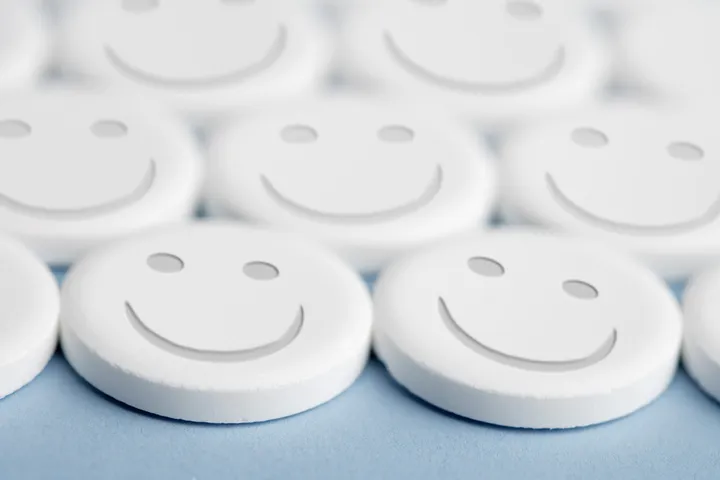
In 2008, we learned that the benefits of antidepressants had been greatly overstated. [1] Former FDA psychiatrist Erick H. Turner, M.D. uncovered some startling information about Selective Serotonin Reuptake Inhibitors (SSRIs), including Prozac, Paxil and Zoloft, the most commonly prescribed antidepressants. In reviewing all the medical literature, he learned that 94 percent of the reports showing the therapeutic benefits of SSRIs were published compared to only 14 percent of the reports showing either no benefits or inconclusive results (of taking SSRIs were published). When he weighed all the literature, Dr. Turner determined that SSRIs were no more effective than a placebo for treating most depressive patients. Those with severe depression were helped, sometimes greatly, but those with mild to moderate depression, the majority of cases, received little relief. British researchers using the Freedom of Information Act uncovered identical findings. [2]
In January 2010, another study published in the Journal of the American Medical Association (JAMA) confirms these findings. The newest study also evaluated another class of antidepressants, tricyclic antidepressants. Again, researchers determined that the typical patient, one with mild to moderate depression, gets the same amount of relief from a placebo as from an antidepressant. [3][4] The first author of the study, Jay C. Fournier, MA, told Medscape, "I think the most surprising part of the findings was how severe depression has to be in order to see this clinically meaningful difference emerge between medication and placebo, and that the majority of depressed patients presenting for treatment do not fall into that very severe category."
The New York Times reported that the co-author of the study, Robert J. DeRubeis, shared this important insight: "The message for patients with mild to moderate depression is 'Look, medications are always an option, but there's little evidence that they add to other efforts to shake depression--whether it's exercise, seeing the doctor, reading about the disorder or going for psychotherapy.'"
To get over it, you must be willing to make some changes that will support healthy brain biochemistry. Otherwise, depression is likely to recur. As studies have shown, antidepressant medication and getting help are associated with a very significant placebo effect. When you feel you are getting help, your body naturally gets better. This is why I have never prescribed antidepressants of any kind unless my patient was also willing to enter some kind of therapeutic relationship with a counselor to help her sort out the aspects of her life that needed improvement. In other words, we, as a society and as individuals, need to understand that getting on the right medication does not guarantee a cure for depression.
One of the best ways to support health brain chemistry is by taking fish oil. Fish oil has been shown time an again to relieve mild to moderate depression. The omega-3 fatty acids are essential to brain health and, according to Capt. Joe Hibbeln, M.D., these important fats support the serotonin system, may help reduce stress and lower your risk of all kinds of mental illness. Dr. Hibbeln, Chief of Outpatient Services for the National Institute on Alcohol Abuse and Alcoholism (NIAAA), is one of the world's leading researchers on omega-3 fats. His findings have been compelling and encouraging. He recently helped organize and spoke at a conference on "Nutritional Armor for the Warfighter" held by the Samueli Group where presenters discussed the role that omega-3 fats may play in stress resilience, wellness and military performance.
Also encouraging is the largest ever clinical trial presenting in 2009 showing that fish oil may benefit half of all people with moderate to severe depression. They received benefits by taking 1,050 mg of EPA a day for two months. [5] What about the other half? These patients were also experiencing anxiety, and researchers determined that when the depressive symptoms were accompanied by anxiety, the fish oil didn't help. [6] Addressing anxiety is key to long-term health, too. Women with anxiety were recently shown to have a 77 percent increased risk of premature death. [7]
Fish oil confers another unique benefit most people don't know about. It helps reestablish and expand the "roadway" that the serotonin has to travel over. The SSRIs cause more serotonin to circulate in the blood stream. But the feel good chemical can't get to the brain without this "roadway." I believe that this is the main reason the antidepressants were shown to be ineffective. Individuals have enough serotonin, just no way to get it where it's most needed.
5-Hydroxytryptophan (5-HTP) is another highly effective natural substance that can increase serotonin production and help the body utilize it. 5-HTP is produced by the body from the amino acid tryptophan, an important precursor to serotonin. Although tryptophan is found in many foods, like turkey, it can be difficult to consume enough tryptophan in the diet to overcome serotonin deficiency. However, 5-HTP is available in supplement form and is very safe. It's also been used for decades in Europe as an approved treatment for depression and sleep problems.
Exercise is another effective strategy for treating mild to moderate depression. You're stuck and you have to get moving! Exercise changes brain chemistry and floods the body with feel good hormones. Both aerobic and nonaerobic forms of activity have been show to be helpful in individuals with mild to moderate depression. [8] In some studies, half of the people with depression experienced significant relief from exercise alone. All you need is 20 to 30 minutes a day, four to five times a week.
it is important to be completely honest with yourself about everything you are feeling--even, and especially, those feelings you've been told you shouldn't have, such as jealousy, anger, guilt, sorrow and rage. All of these feelings are part of being human. They will never hurt you if you simply acknowledge and feel them, accept yourself for having them, and also realize that they are there for a reason. All so-called negative emotions are the result of not getting your needs met. Examples would include the need for closeness, intimacy, validation, recognition and so forth.
I recommend that you go to Marshall Rosenberg's Web site for the Center for Nonviolent Communication and check out the emotions and needs lists. Ask yourself what need is behind what you are feeling. Once you can identify the unmet need, know that, as an adult, you have the power to get that need met directly. Children don't have this capacity, which is why most difficult emotions spring from unmet childhood needs that must now be addressed. When you can state a need directly to yourself, you are well on your way to health.
To learn more about Dr. Northrup or Women's Bodies, Women's Wisdom, go to www.drnorthrup.com.
Excerpted with permission from the fourth edition of Women's Bodies, Women's Wisdom.
Copyright Christiane Northrup, Inc. All rights reserved. Reproduction in whole or in part without permission is prohibited.
This information is not intended to treat, diagnose, cure, or prevent any disease. All material in this article is provided for educational purposes only. Always seek the advice of your physician or other qualified health care provider with any questions you have regarding a medical condition, and before undertaking any diet, exercise, or other health program.
References:
[1] Turner, E.H., et. al., 2008. Selective publication of antidepressant trials and its influence on apparent efficacy, NEJM, Volume 358:252-260, January 17, 2008, No. 3. Accessed online January 17, 2008 at http://content.nejm.org/cgi/content/short/358/3/252
[2] Kirsch, I., 2008. Antidepressants: The Emperor's New Drugs? Huffington Post http://www.huffingtonpost.com/irving-kirsch-phd/antidepressants-the-emper_b_442205.html
[3] Fournier, J.C., et al., 2010. Antidepressant Drug Effects and Depression Severity: A Patient-Level Meta-analysis JAMA, 2010;303(1):47-53.
[4] Carey, B., 2010. Popular Drugs May Help Only Severe Depression, The New York Times, January 6, 2010. Accessed at http://www.nytimes.com/2010/01/06/health/views/06depress.html
[5] Lesperance, F., et al. 2009. The efficacy of eicosapentaenoic acid for major depression: Results of the OMEGA-3D trial, 9th World Congress of Biological Psychiatry, Abstract FC-25-005. Accessed at http://www.wfsbp-congress.org/fileadmin/user_upload/WFSBP_Final_Programme_090625.pdf
[6] Stein, J., 2009. WCBP 2009: Omega-3 Supplements Provide Mixed Results as Antidepressant. Medscape Medical News, July 4, 2009. Accessed at http://www.medscape.com/viewarticle/705508
[7] Denollet, J., et. al., 2009. Anxiety predicted premature all-cause and cardiovascular death in a 10-year follow-up of middle-aged women, J Clin Epidemiol, 62:452-456. Available at: http://www.medscape.com/medline/abstract/19013760 Accessed October 29, 2009.
[8] Northrup, C. 2006. The Wisdom of Menopause. Bantam: New York, p. 325.