One of my goals after any longish school break is always to re-establish our family routines -- to recalibrate, so that our trains once again run on time, so to speak.
My natural tendency is toward messiness and disorganization -- toward, dare I admit, household chaos. I'm not so different from the stereotype of my professor, writer and artist colleagues. As a parent, I'm affectionate, creative, easily distracted -- and always digging through piles of stuff looking for that yellow permission slip.
I have to work very hard to be the kind of person who makes her bed and gets her kids to school on time. As much as I want to be someone who doesn't leave dishes in the sink overnight, I don't come by that clean-up impulse naturally. But I make myself into this person because organization and predictability make us all happier.
All that said, it is one thing to do what it takes to make yourself tidier and more organized; it is quite another to impose organization and household cleanliness on children who also don't come by it naturally.
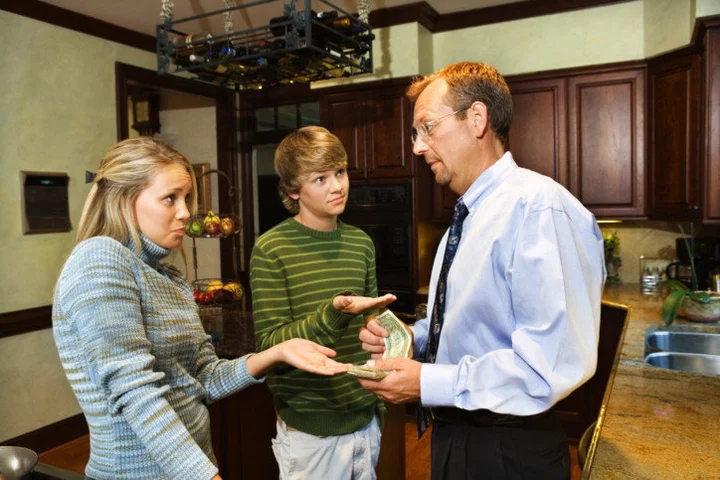
This is where the bribing (if you do X, I'll give you Y) comes in. Often my bribing is incredibly logical: If you get your homework done and laundry put away now, we'll have time for dessert. Natural consequences, right?
There is a windfall of relevant research here related to motivation, most of it ignored by scholars and lay people alike, because it is so counterintuitive. Dan Pink brings much of this research to life in his engaging book "Drive" Before I tell you the implications of that research, I want to say that the way to get kids (and parents) to do things like empty the dishwasher regularly (without complaining) is to make it a habit. To do it at the same time every day, predictably.
But while we are working toward making something a habit, there is often a lot of bribing involved, or at least a reward system. I have a friend who was trying to get her little kids out the door with less nagging, and a counselor advised her to give her kids stickers at every correct turn, like she was training monkeys with a ripe mango. She kept stickers in the kitchen, in her car, in every bedroom. The house was quickly covered in gold stars and "Dora the Explorer," and at first, the sticker plan worked like magic. When we reward people, they work harder, right?
Well, in the long run, rewards systems don't work in most cases, and they often backfire. In fact, a wide body of research has shown the following:
- People (and monkeys, as it turns out) have an "intrinsic drive" that motivates them to learn, solve problems, and generally get things done. In other words, often we do things just because we want to exercise our natural capabilities. This internal drive is the most powerful motivator we have because it's fueled by the positive feelings we get from performing a task.
So where does all this leave me as I'm trying to get my kids to clean up their room and get myself to do the dishes?
As we get back into the swing of our school-week routines, I often hear myself saying things like, "If you set the table now, you don't have to help with dinner," or worse, "... you can have a piece of your leftover chocolate." Both of these are clear if-then reward systems, which I'm offering in a desperate attempt to motivate my children.
But when I look closely at the science, it is beyond clear to me that this if-then habit of mine isn't the best way to motivate my kids. The best way is to work with their natural, intrinsic drive to be productive -- even creative -- contributors to our household.
Chores, the drudgery of household work, make kids feel a part of something larger than themselves, and so kids will even be intrinsically motivated to do boring stuff like empty the dishwasher if we parents set it up correctly.
How to do this? Next week I'll be writing about how to harness kids' intrinsic motivation to help them get their chores and their homework done -- without complaints or nagging. Really.
What types of tasks do you find yourself offering carrots and sticks to your kids to motivate them? Put your examples in the comments and I'll try to address them in a future posting.
Join the Campaign for 100,000 Happier Parents by signing this simple pledge.
Become a fan of "Raising Happiness" on Facebook, sign up for the "Raising Happiness" class, listen to the "Happiness Matters" podcast and get the "Raising Happiness" newsletter.
© 2010 Christine Carter, Ph.D.